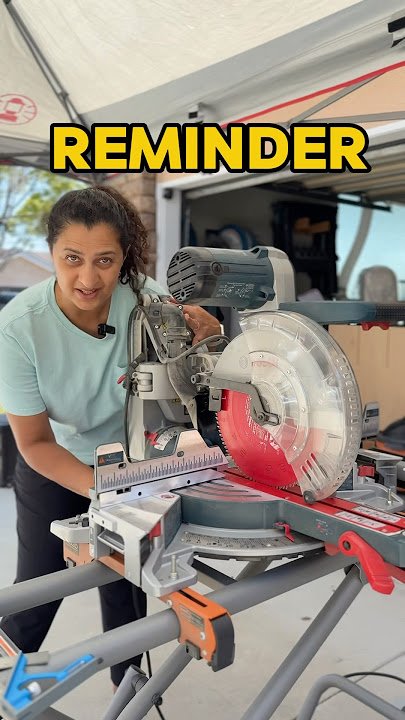
Are your cuts coming out uneven or off-angle? If so, it might be time to align your miter saw.
Getting your saw perfectly aligned can make a huge difference in the quality of your work. Imagine making smooth, precise cuts every single time without wasting wood or effort. In this guide, you’ll learn simple steps to align your miter saw quickly and easily.
By the end, you’ll feel confident tackling any project with accuracy and ease. Keep reading to discover how to make your miter saw work exactly the way you need it to.

Credit: www.youtube.com
Tools Needed For Alignment
Aligning a miter saw correctly helps you make precise cuts. Using the right tools makes this task easier and safer.
This guide shows the essential tools you need to check and adjust your miter saw.
Essential Measuring Instruments
Measuring tools help you check if your saw is cutting at the right angle. They ensure your cuts are accurate every time.
Here are the main measuring instruments you need:
- Combination Square: Measures angles and straight lines.
- Digital Angle Finder: Shows exact blade angles on a screen.
- Carpenter’s Square: Checks 90-degree angles.
- Ruler or Tape Measure: Measures distances precisely.
- Level: Ensures the saw base is flat and even.
Safety Gear To Use
Safety gear protects you during alignment and saw use. It keeps your eyes, ears, and hands safe from harm.
Always wear this equipment when aligning your miter saw:
- Safety Glasses: Protect your eyes from dust and debris.
- Hearing Protection: Guards your ears from loud noise.
- Work Gloves: Shield your hands from sharp parts.
- Dust Mask: Prevents inhaling wood dust.

Credit: www.youtube.com
Preparing The Miter Saw
Before you align a miter saw, you must prepare it well. Proper preparation helps you get accurate cuts and work safely.
This guide covers two main steps: cleaning and inspection, and securing the saw. These steps make sure your saw works perfectly.
Cleaning And Inspection
Clean the saw to remove dust, dirt, and debris. A clean saw moves smoothly and gives better results.
Inspect the blade and parts for damage. Look for cracks, dull edges, or loose screws. Fix any problems before use.
- Use a brush or air compressor to clear dust.
- Check the blade for sharpness and cracks.
- Tighten all screws and bolts.
- Inspect the fence and table for damage.
Securing The Saw
Place the miter saw on a stable, flat surface. This prevents movement that can cause inaccurate cuts or accidents.
Use clamps or bolts to fix the saw in place. Secure the work area so the saw stays steady during use.
- Choose a solid workbench or stand.
- Use clamps to hold the saw firmly.
- Check the saw does not wobble or move.
- Clear the area around the saw to avoid tripping.
Checking The Blade Angle
Aligning the blade angle on a miter saw ensures clean and precise cuts. Checking this angle helps avoid mistakes in your woodworking projects.
It is important to verify the blade angle before starting any cut. This saves time and material by making sure the saw is accurate.
Verifying Bevel Angle Accuracy
The bevel angle controls the tilt of the blade side to side. Check this angle with a reliable tool to ensure it matches the saw’s settings.
Use a digital angle gauge or a bevel gauge to measure the blade angle. Place the gauge on the blade or the saw table to read the angle.
- Set the blade to zero bevel angle.
- Place the angle gauge on the blade face.
- Read the angle on the gauge.
- Compare with the saw’s bevel dial setting.
- Repeat at different bevel settings for accuracy.
Adjusting The Blade Tilt
Adjust the blade tilt to correct any difference found in the bevel angle check. Make small turns to the bevel adjustment knob.
After adjustment, recheck the angle to confirm it matches the desired setting. This step is important for precise bevel cuts.
- Loosen the bevel lock lever.
- Turn the bevel adjustment knob slowly.
- Stop when the gauge shows the correct angle.
- Tighten the bevel lock to secure the blade.
- Make a test cut to verify the tilt.
Aligning The Miter Gauge
Aligning the miter gauge on a miter saw helps you make accurate cuts. Proper alignment ensures your angles are true and your work looks professional.
In this guide, you will learn how to set the 0-degree position and calibrate other angles on your miter gauge.
Setting The 0-degree Position
Start by placing the miter gauge at the 0-degree mark. This position means the saw blade is straight and not angled.
- Loosen the miter gauge locking handle.
- Adjust the gauge until it lines up exactly with the saw’s fence.
- Use a square to check if the blade is perfectly perpendicular to the fence.
- Tighten the locking handle to fix the gauge in place.
- Recheck the alignment to be sure nothing shifted.
Calibrating Other Angles
After setting the 0-degree position, calibrate the other angle marks on the gauge. This step keeps your miter saw accurate at all settings.
| Angle Setting | Check Method | Adjustment Tip |
|---|---|---|
| 15 degrees | Use a protractor or angle finder to verify the blade’s angle. | Adjust the gauge scale if the angle does not match. |
| 30 degrees | Cut a test piece and measure the angle with a bevel gauge. | Fine-tune the pointer or scale to match the test cut. |
| 45 degrees | Confirm the angle using a carpenter’s square set to 45 degrees. | Reset the pointer or scale as needed for precision. |
Testing The Alignment
After adjusting your miter saw, you need to check if it cuts accurately. Testing the alignment helps you find mistakes and fix them.
This step ensures your saw makes clean and precise cuts for your projects.
Making Test Cuts
Start by making small test cuts on scrap wood. Use a piece that is straight and flat for best results.
Cut the wood at different angles, such as 0°, 45°, and 90°, to check the saw’s accuracy at each setting.
- Mark the wood clearly before cutting.
- Make slow and steady cuts.
- Use the same piece of wood for all test cuts if possible.
Evaluating Cut Precision
After cutting, inspect the edges closely. Look for gaps or uneven lines where the pieces meet.
Use a square or angle tool to measure the angles of the cut pieces. Check if they match the saw’s settings.
- Check if 90° cuts are perfectly square.
- See if 45° cuts fit tightly together with no gaps.
- Look for any wobble or uneven surfaces on the cut edges.
Troubleshooting Common Issues
Aligning a miter saw correctly is key to getting accurate cuts. Sometimes, the saw may not cut as expected. Troubleshooting these issues helps you fix them fast.
Below are common problems you might face while aligning your miter saw. Each section explains the cause and how to fix it.
Blade Not Square
If the blade is not square to the table, cuts will be uneven or angled wrongly. This usually happens if the blade or bevel angle is off.
Check the blade angle using a reliable carpenter’s square. Adjust the bevel stop until the blade is perfectly perpendicular to the table.
Fence Misalignment
A fence that is not aligned straight can cause the wood to shift during cuts. This leads to inaccurate angles and poor fit of joints.
To fix this, loosen the fence screws and adjust it until it is perfectly parallel to the blade. Tighten screws firmly to hold the fence in place.
Inconsistent Angle Settings
Sometimes the angle settings do not match the actual cut. This happens if the scale is worn out or the pointer is loose.
- Check if the angle scale is clear and not faded.
- Make sure the pointer or indicator is tight and points exactly to the angle.
- Test the angles by cutting a scrap piece and measuring the cut with a protractor.
- Adjust the angle stop screws if needed to calibrate the saw.
Maintenance Tips For Accuracy
Keeping your miter saw aligned helps you make precise cuts. Regular care ensures the tool stays accurate.
Simple maintenance steps prevent mistakes and improve the saw’s performance over time.
Regular Calibration Schedule
Check your miter saw’s alignment often. This helps catch any errors early.
Set a schedule to calibrate the saw, especially before big projects.
- Inspect the blade angle and adjust if needed
- Test the fence for square alignment
- Use a reliable angle gauge or square tool
- Clean dust and debris before calibration
- Repeat calibration every few weeks or after heavy use
Proper Storage Practices
Store your miter saw in a dry, clean place. This stops rust and damage.
Keep the saw covered to protect it from dust and moisture.
- Use a hard case or cover the saw with a cloth
- Keep it off the floor to avoid dirt and water
- Store in a place with stable temperature and low humidity
- Secure loose parts and cords to prevent damage
- Clean the saw before storage to remove sawdust
Credit: www.woodworkingtalk.com
Frequently Asked Questions
How Do I Align The Miter Saw Blade Accurately?
To align the blade, first unplug the saw. Loosen the bevel and miter locks. Adjust the blade to the desired angle using a square or protractor. Tighten the locks and double-check alignment for precision cuts.
Why Is Miter Saw Alignment Important?
Proper alignment ensures precise, clean cuts and improves safety. Misalignment can cause inaccurate angles, waste materials, and increase the risk of accidents. Regular alignment maintains the saw’s performance and extends its lifespan.
How Often Should I Check Miter Saw Alignment?
Check alignment before each major project or after moving the saw. Frequent use or transport can affect accuracy. Regular checks prevent cutting errors and ensure consistent results in your woodworking.
Can I Align My Miter Saw Without Professional Tools?
Yes, basic tools like a carpenter’s square or combination square work well. A protractor or digital angle finder can increase accuracy. These tools help you measure and adjust the blade angle precisely.
Conclusion
Aligning a miter saw boosts your cutting accuracy. Following these steps ensures safety and precision. Remember to check the blade and fence alignment regularly. A stable work surface is crucial for effective results. Keep tools and materials organized for a smooth workflow.
Practicing these techniques can improve your woodworking projects. Don’t rush; take your time to align correctly. Review your setup before starting each project. This careful approach leads to better outcomes. Happy woodworking!