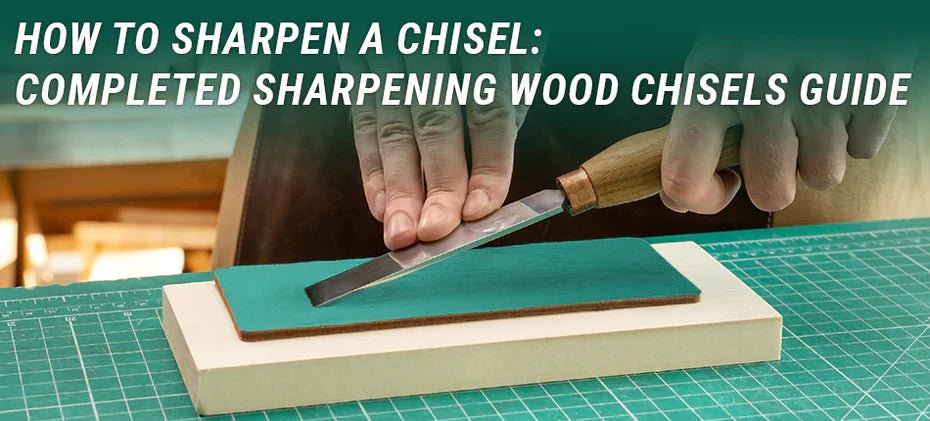
If you want your chisels to cut smoothly and precisely, sharpening them the right way is key. Dull chisels can ruin your fine woodworking projects and leave you frustrated.
But don’t worry—sharpening your chisels doesn’t have to be hard or time-consuming. You’ll learn simple, step-by-step techniques to get razor-sharp edges that make your work cleaner and more enjoyable. Ready to take your skills to the next level? Let’s dive in and sharpen your chisels like a pro.
Choosing The Right Chisels
Sharpening chisels starts with picking the right tools. The right chisel improves your control and the final result. Different types serve different fine woodworking tasks.
Choosing chisels made from good materials also helps. Quality chisels last longer and sharpen better for precise cuts.
Types Of Chisels For Fine Work
There are various chisels designed for fine woodworking. Each type suits specific tasks. Knowing these helps you pick the best chisel for your work.
- Bench Chisels:Common and versatile, good for general use.
- Paring Chisels:Long and thin, used for delicate trimming.
- Mortise Chisels:Thick and strong, ideal for making mortises.
- Skew Chisels:Angled edge, perfect for smooth finishing cuts.
- Corner Chisels:Shaped for cleaning out corners and tight spots.
Material And Quality Factors
Good chisels use high-quality steel. The steel should hold an edge well and resist rust. The handle must be comfortable and sturdy.
| Material | Benefits | Drawbacks |
| High Carbon Steel | Sharpens easily, holds edge well | Can rust without care |
| Chrome Vanadium Steel | Resists rust, durable | Harder to sharpen |
| Tool Steel | Very hard, long-lasting edge | Expensive, brittle if misused |
| Plastic or Rubber Handles | Comfortable grip, shock-absorbing | Less traditional look |
| Wooden Handles | Classic feel, good control | Can crack or swell |

Credit: www.reddit.com
Essential Sharpening Tools
Sharpening chisels well needs the right tools. Using good tools helps keep the chisel edges sharp and smooth. This guide covers the must-have tools for fine sharpening.
Choosing the correct tools makes the sharpening process easier and safer. Let’s look at two main categories: whetstones and honing guides.
Whetstones And Grit Selection
Whetstones are flat stones used to sharpen and smooth chisel edges. They come in different grits that determine how fine or rough the sharpening will be.
- Coarse grit (200–400): Removes nicks and reshapes the edge.
- Medium grit (800–1000): Sharpens the edge for general use.
- Fine grit (3000–8000): Polishes the edge for a very sharp finish.
Start with a coarse stone if your chisel is dull or damaged. Move to finer grits to refine the edge and make it smooth.
Honing Guides And Accessories
Honing guides hold the chisel at a steady angle during sharpening. They help keep the edge even and prevent mistakes.
| Accessory | Purpose | Benefit |
| Honing guide | Holds chisel angle | Consistent edge angle |
| Lubricant (water or oil) | Reduces friction | Protects stone and edge |
| Leather strop | Polishes edge | Removes burrs and smooths |
Preparing The Chisel
Sharpening a chisel starts with good preparation. This step helps you get the best fine work results.
Cleaning and setting the right angle are key parts before sharpening the blade.
Cleaning And Inspection
Clean your chisel to remove dirt and rust. Use a cloth and some light oil or rust remover.
Check the blade for chips or cracks. These can affect your sharpening and cutting quality.
- Wipe off all dirt and grease
- Remove rust with a rust remover or fine sandpaper
- Look for any damage on the blade
- Make sure the handle is secure and not loose
Setting The Bevel Angle
The bevel angle controls how sharp the chisel edge will be. Setting it correctly helps with fine work.
Most chisels have bevel angles between 25 and 30 degrees. You can check this with a bevel gauge.
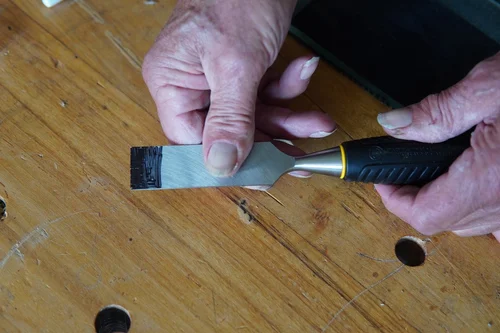
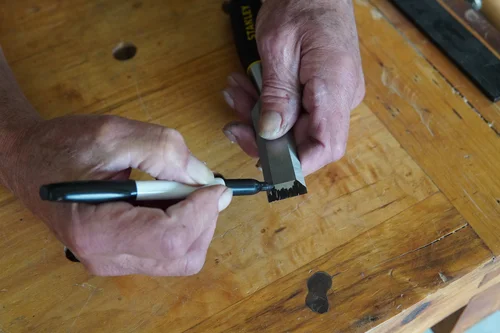
- Use a bevel gauge or angle guide to measure
- Mark the angle on the blade with a pencil
- Keep the angle steady while sharpening
- Adjust angle slightly for softer or harder wood
Sharpening Techniques
Sharpening chisels is key to getting clean, fine cuts in woodworking. Using the right methods keeps your tools sharp and ready.
This guide focuses on three main techniques to sharpen chisels well. Each step helps improve your chisel’s edge.
Using A Whetstone Properly
Whetstones are the best tools for sharpening chisels. Start by soaking the stone in water for about 10 minutes.
Use a circular motion to rub the chisel blade on the whetstone. Apply light pressure to avoid damage.
- Keep the stone wet while sharpening
- Begin with a coarse grit for dull edges
- Move to finer grits for a smooth finish
- Clean the stone after use to keep it flat
Maintaining Consistent Angles
Holding the chisel at the right angle is very important. A common angle is 25 degrees for general use.
Keep the angle steady while moving the blade across the stone. Changing the angle can dull the edge.
| Chisel Type | Recommended Angle |
| Bench Chisel | 25° |
| Paring Chisel | 30° |
| Mortise Chisel | 35° |
Creating A Secondary Bevel
A secondary bevel makes the chisel sharper and stronger. It is a small angle on the edge that supports the main bevel.
To create a secondary bevel:
- Hold the chisel at 5 to 10 degrees higher than the main bevel angle.
- Sharpen only the very tip of the blade on the whetstone.
- Check the edge regularly to keep the bevel narrow and even.
Honing For A Razor Edge
Sharpening chisels is key for fine woodworking. Honing refines the blade to a sharp edge.
A razor edge cuts cleanly and smoothly. Honing removes tiny burrs and sharpens the tip.
Using Leather Strops
Leather strops polish the chisel’s edge. They help keep the blade sharp after honing.
Hold the chisel flat on the strop. Pull the blade backward, away from the edge, to avoid damage.
- Use a clean, smooth leather strop
- Maintain consistent pressure while stropping
- Strop after each honing session
- Keep the strop free of debris
Applying Honing Compounds
Honing compounds improve the strop’s effectiveness. They add fine abrasive particles to polish the edge.
Apply a thin layer of compound evenly on the leather surface. Use a cloth or your finger to spread it.
- Choose a compound suitable for fine sharpening
- Reapply as needed during stropping
- Store compounds in a dry place
- Clean the strop occasionally to remove old compound
Testing Sharpness
Checking the sharpness of your chisels is key for fine work. Sharp chisels cut cleanly and safely.
Use simple tests to see if your chisel is sharp enough for detailed tasks.
Paper And Wood Tests
Try cutting thin paper or soft wood to check the chisel’s edge. Sharp chisels slice smoothly without tearing.
- Hold a sheet of paper and slice with the chisel’s edge.
- Cut a small piece of softwood, like pine or basswood.
- Look for clean, smooth cuts with no splintering.
- If the chisel tears or crushes the material, it needs sharpening.
Visual And Tactile Checks
Use your eyes and fingers to inspect the chisel blade. A sharp edge looks smooth and straight.
| Check | What to Look For |
| Visual Inspection | Edge free of nicks, chips, or shiny spots |
| Touch Test | Edge feels sharp but not rough or jagged |
| Light Reflection | Minimal light reflects off the edge line |
Maintenance Tips
Sharpening chisels regularly keeps them ready for fine work. Proper care helps tools last longer and work better.
Learn simple maintenance habits to protect your chisels and keep edges sharp.
Regular Honing Schedule
Honing chisels often stops them from getting dull. Use a fine sharpening stone or honing guide.
- Hone chisels after each use to maintain the edge.
- Use light pressure for a smooth finish.
- Check the blade angle and keep it consistent.
- Clean the blade before and after honing.
- Apply a light coat of oil to prevent rust after honing.
Proper Storage And Care
Store chisels to avoid damage and rust. Keep blades covered and dry at all times.
| Storage Method | Benefit |
| Wooden tool roll | Protects edges and prevents scratches |
| Magnetic strip | Keeps tools visible and off work surfaces |
| Plastic blade guards | Prevents accidental cuts and blade damage |
| Dry, cool toolbox | Reduces moisture and rust risk |
Credit: www.anneofalltrades.com
Credit: www.anneofalltrades.com
Frequently Asked Questions
How Often Should I Sharpen Chisels For Fine Work?
Sharpen chisels regularly to maintain precision. For fine work, sharpen them before each use or when you notice dullness. Frequent sharpening ensures clean cuts and better control in delicate tasks.
What Grit Stone Is Best For Sharpening Chisels?
Use a combination of stones: start with 1000 grit for initial sharpening. Then, use 4000 to 8000 grit for polishing. Higher grit stones create a sharper, smoother edge ideal for fine woodworking.
Can I Sharpen Chisels Without Specialized Tools?
Yes, you can use whetstones or sandpaper on a flat surface. However, specialized sharpening stones or systems offer better precision and consistent angles for fine chisels.
How Do I Maintain The Bevel Angle While Sharpening?
Maintain the original bevel angle, usually 25 to 30 degrees. Use guides or angle jigs if needed. Consistent angle ensures effective sharpening and prolongs chisel life.
Conclusion
Sharpening chisels boosts your woodworking skills. Clear cuts and smooth finishes result. Practice ensures precision and confidence. Basic tools and steps make the process simple. Keep your workspace tidy for safety. Regular maintenance prolongs chisel life. Each stroke matters for sharpness.
Listen to the sound of sharpening. Feel the smoothness of the blade. A well-sharpened chisel is a craftsman’s best friend. Enhance your projects with sharp tools. Enjoy the satisfaction of fine work. Remember, patience is key. Happy woodworking!