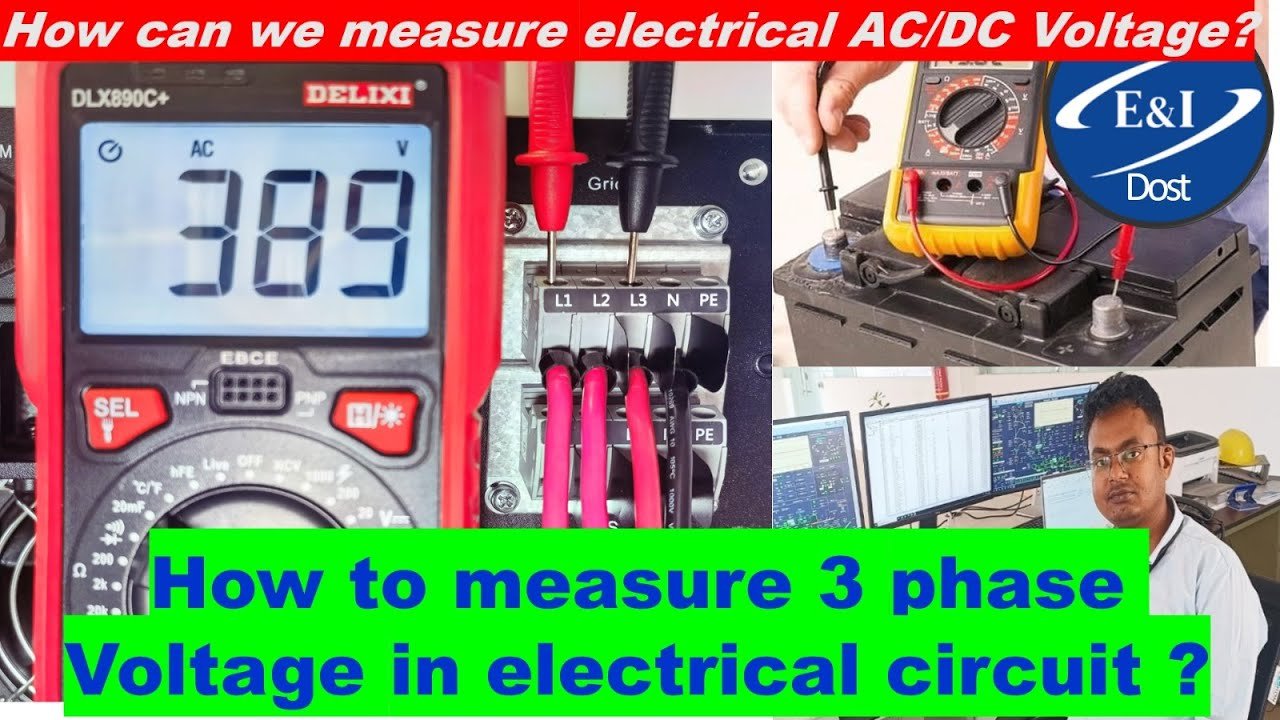
Are you unsure how to measure DC voltage safely and accurately? Whether you’re working on a simple electronics project or troubleshooting a device, knowing the right way to check DC voltage is crucial.
This guide will walk you through easy steps to measure DC voltage with confidence, using tools you probably already have. By the end, you’ll feel empowered to handle your own measurements without guesswork or fear of mistakes. Ready to take control of your electrical skills?
Let’s dive in.
Basics Of Dc Voltage
DC voltage is the electric potential difference that flows in one direction. It powers many devices and circuits.
Understanding DC voltage helps in measuring and using electrical energy safely and correctly.
What Is Dc Voltage
DC stands for Direct Current. It means the electric charge flows steadily in one direction.
Unlike AC voltage, which changes direction, DC voltage remains constant over time.
Common Sources Of Dc Voltage
- Batteries: Provide portable DC power for many gadgets.
- Solar Panels: Convert sunlight into DC electricity.
- Power Supplies: Change AC into DC for electronic devices.
- Fuel Cells: Produce DC power from chemical reactions.
| Source | Description |
| Batteries | Stored chemical energy converted to DC electricity |
| Solar Panels | Generate DC voltage from sunlight |
| Power Supplies | Convert AC mains to stable DC output |
| Fuel Cells | Produce DC power through fuel oxidation |

Credit: www.youtube.com
Tools Needed For Measurement
Measuring DC voltage requires specific tools for accurate results. Choosing the right equipment ensures safety and precision.
This guide covers essential tools to measure DC voltage safely and correctly.
Digital Multimeter
A digital multimeter is the most common tool for measuring DC voltage. It shows readings on a digital screen.
This tool is easy to use and provides quick, accurate measurements. It can also measure current and resistance.
- Clear digital display
- Selectable voltage range
- Probe leads for connection
- Battery-powered for portability
Analog Voltmeter
An analog voltmeter uses a needle to show the voltage level on a dial. It is less common than digital meters.
This tool helps understand voltage changes visually but may be harder to read precisely.
- Needle indicator
- Dial with voltage scale
- Requires manual range setting
- Can be more durable in some cases
Safety Equipment
Safety equipment protects you from electrical shocks during measurement. Always use it when working with electricity.
Wear insulated gloves and safety glasses. Use tools with insulated handles to reduce risk.
- Insulated gloves
- Safety goggles
- Insulated tools
- Non-conductive footwear
Preparing For Measurement
Measuring DC voltage accurately needs proper preparation. You must check your tools and set your meter right.
This guide covers how to prepare before you take any DC voltage reading.
Checking Equipment Condition
Make sure your measuring equipment is in good shape before use. Faulty tools can cause wrong readings or safety hazards.
- Inspect the meter for cracks or damage.
- Check the test leads for cuts or exposed wires.
- Ensure the battery inside the meter is fully charged.
- Clean the meter terminals and connectors.
- Verify that the fuse inside the meter is intact.
Setting The Meter Correctly
Set your multimeter to the right mode and range before measuring DC voltage. This step avoids errors and protects your meter.
| Setting | Description |
| Mode | Select DC voltage (V with a straight line) |
| Range | Choose a range higher than expected voltage |
| Leads | Connect red lead to V/Ω jack, black lead to COM jack |
| Polarity | Observe positive and negative terminals on the circuit |

Credit: www.ventronchip.com
Step-by-step Measurement Process
Measuring DC voltage is simple and safe if you follow the right steps. Using a multimeter, you can check the voltage in batteries, circuits, and devices.
This guide shows how to connect probes, read the display, and record results correctly.
Connecting The Probes
First, turn off the power to the device you want to test. Then, set your multimeter to measure DC voltage (V with a straight line).
Next, connect the black probe to the multimeter’s COM port. Connect the red probe to the VΩmA port.
- Touch the black probe to the negative terminal
- Touch the red probe to the positive terminal
- Keep steady contact to avoid errors
Reading The Display
Look at the multimeter’s screen to see the voltage reading. The number shows the DC voltage between the two points.
Check the unit on the screen. It usually shows volts (V) or millivolts (mV). Make sure the value is stable before noting it.
- A stable number means a good connection
- Fluctuating numbers may need probe adjustment
- Negative sign means reversed probe connection
Recording The Results
Write down the voltage value you read from the display. Include the unit of measurement.
Note the date, time, and the device or circuit tested. This helps track changes or problems later.
- Record voltage value with units
- Note the test date and time
- Describe the tested device or circuit
Tips For Accurate Results
Measuring DC voltage correctly is important for any electrical task. Small errors can cause wrong readings and affect your work.
Follow simple tips to get accurate results every time you measure DC voltage.
Avoiding Common Mistakes
Many errors come from simple mistakes. Avoid these to get better readings.
- Do not mix AC and DC settings on your meter.
- Check battery power in your meter before measuring.
- Never touch the metal probe tips with your fingers.
- Make sure the meter probes are connected to the correct terminals.
- Do not measure voltage on a live circuit without proper safety.
Ensuring Stable Connections
Good contact is key to accurate voltage measurement. Loose or dirty connections cause wrong values.
| Tip | Why It Matters |
| Clean probe tips | Removes dirt that blocks current flow |
| Hold probes steady | Prevents fluctuating readings |
| Use proper contact points | Avoids damage and false readings |
| Check wires for damage | Ensures safe and stable connection |
Calibrating Your Meter
Calibration keeps your meter accurate. Regular checks help avoid errors.
- Turn off your meter before calibration.
- Use a known voltage source or reference device.
- Adjust the meter settings to match the reference voltage.
- Repeat calibration regularly or if readings seem off.
- Keep the meter clean and store it properly.
Troubleshooting Measurement Issues
Measuring DC voltage accurately is important for electrical work. Sometimes, readings may not be stable or may show no values. Troubleshooting helps find and fix these problems quickly.
This guide explains how to handle common issues during DC voltage measurement. You will learn how to manage fluctuating readings, zero readings, and replace faulty tools.
Dealing With Fluctuating Readings
Fluctuating readings mean the voltage changes quickly or does not stay steady. This can happen due to loose connections or electrical noise.
Check all wires and probes to make sure they are tight and clean. Keep your hands steady and avoid moving the test leads during measurement.
- Secure all connections firmly
- Use clean, undamaged probes
- Avoid moving wires while measuring
- Keep the meter away from strong electrical fields
Handling Zero Or No Reading
If your meter shows zero or no reading, check if it is set to the correct mode for DC voltage. Wrong settings can cause no display.
Inspect the test leads for breaks or damage. Test the meter on a known voltage source to make sure it works correctly.
- Set the meter to DC voltage mode
- Check for damaged or broken leads
- Test the meter on a known voltage source
- Make sure the circuit is powered
Replacing Faulty Equipment
Faulty equipment can give wrong or no readings. If your meter or leads are old or damaged, replace them to get accurate results.
Use quality replacement parts and check them before use. Regularly inspect your tools to avoid surprises during measurement.
- Replace damaged test leads
- Use a reliable digital multimeter
- Check batteries in the meter
- Inspect equipment before each use

Credit: www.ariat-tech.com
Frequently Asked Questions
What Is Dc Voltage?
DC voltage, or direct current voltage, is the unidirectional flow of electric charge. Unlike AC voltage, it does not change direction. It is commonly used in batteries, solar panels, and electronic devices. Understanding how to measure DC voltage is crucial for troubleshooting and repairing electrical systems.
How Do You Measure Dc Voltage?
To measure DC voltage, use a multimeter set to the DC voltage range. Connect the red probe to the positive terminal and the black probe to the negative terminal. The multimeter will display the voltage level. Ensure the device is powered off before connecting the probes for safety.
What Tools Are Needed For Measuring Dc Voltage?
The primary tool for measuring DC voltage is a digital multimeter. It features a DC voltage setting, allowing precise measurements. Additional tools include test leads and probes. These tools help ensure accurate readings and safety during measurement.
Can A Multimeter Measure Both Ac And Dc Voltage?
Yes, a multimeter can measure both AC and DC voltage. Modern multimeters have settings for both types. You must select the correct setting on the multimeter. This ensures accurate readings and prevents damage to the device.
Conclusion
Measuring DC voltage is simple with the right tools and steps. Always check your meter before use. Connect the meter leads carefully to avoid errors. Read the values slowly and double-check for accuracy. Practice often to become more confident. Understanding these basics helps in many projects.
Stay safe and follow instructions closely. This skill supports learning in electronics and daily tasks. Keep exploring and testing to improve your knowledge.