If you want your woodworking projects to stand out, mastering the use of a hand saw for fine joinery is key. You might think power tools are faster, but nothing beats the precision and control a hand saw gives you when crafting tight, clean joints.
Imagine creating joints so smooth and exact that your work looks professional and lasts for years. You’ll discover simple tips and techniques that will sharpen your skills and make your hand saw work like an extension of your hand. Ready to take your joinery to the next level?
Keep reading, because what you learn here can transform your woodworking forever.

Credit: www.anneofalltrades.com
Choosing The Right Hand Saw
Using a hand saw for fine joinery needs careful tool selection. The right saw helps make clean, precise cuts.
Choosing the correct hand saw depends on the type of work and wood you use. Comfort and control also matter a lot.
Types Of Hand Saws For Joinery
Different hand saws serve different joinery tasks. Some saws cut across the grain, others cut along it.
- Back Saws: Have a reinforced spine for straight cuts. Good for fine joinery like dovetails.
- Japanese Saws: Cut on the pull stroke. They offer thin blades and precise cuts.
- Tenon Saws: Designed for cutting tenons. They have medium tooth size for smooth cuts.
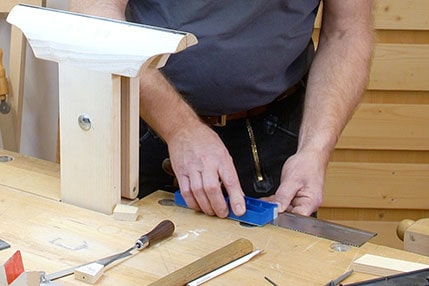
- Dovetail Saws: Small back saws with fine teeth. Perfect for detailed joinery work.
Blade Selection And Tooth Count
Blade length and tooth count affect how smooth and fast the cut is. Choose blades that match your wood type.
Finer teeth give smoother cuts but cut slower. Larger teeth cut faster but leave rougher edges.
- Blade Length: Shorter blades give more control. Longer blades cut faster on large pieces.
- Teeth Per Inch (TPI): Higher TPI means finer cuts, ideal for hardwood and detailed work.
- Lower TPI is better for softwood or quick cuts.
Handle Comfort And Control
A comfortable handle helps you hold the saw steady. This control improves cut accuracy and reduces fatigue.
Look for handles shaped to fit your hand well. Materials like wood or rubber can affect grip and comfort.
- Ergonomic shape supports natural hand position.
- Non-slip materials keep the saw steady during use.
- Secure attachment of handle to blade prevents wobbling.
Preparing Your Workspace
Using a hand saw for fine joinery needs a clean and safe workspace. You must prepare your area well before starting.
A good setup helps you work with more control and accuracy. It also keeps your tools and materials organized.
Setting Up A Stable Workbench
Your workbench must be steady and strong. A shaky bench makes cutting difficult and unsafe.
Choose a bench with a flat surface and solid legs. Make sure it does not wobble or move while you work.
Clamping Techniques For Stability
Use clamps to hold your wood pieces firmly in place. This stops the wood from moving as you saw.
Place clamps near the cut line but not in the way of the saw. Tighten them enough to stop movement without damaging the wood.
- Use quick-release clamps for easy adjustments
- Try corner clamps for angled joints
- Check clamp pressure regularly during work
Lighting And Visibility Tips
Good lighting helps you see your cut lines clearly. This improves accuracy and safety.
Use bright, even light that does not cast shadows on your work area. Natural light or LED lamps work well.
- Position lights to avoid glare on wood
- Use adjustable lamps for focused lighting
- Keep your workspace free of clutter for better visibility
Marking And Measuring Accurately
Accurate marking and measuring are key to fine joinery with a hand saw. Precise lines guide your cuts and ensure joints fit well.
Careful use of tools like marking gauges and squares helps keep your work exact and neat. Avoid mistakes early to save time later.
Using Marking Gauges And Squares
Marking gauges set a consistent line for saw cuts and chisel work. Squares check that corners are true and edges are straight.
- Set the marking gauge to the desired measurement.
- Run the gauge firmly along the wood surface to leave a clear line.
- Use a try square to mark 90-degree lines on the wood.
- Check lines twice to avoid errors before cutting.
Transferring Measurements Precisely
Transfer measurements carefully from your plan to the wood. Use sharp pencils or marking knives for fine lines.
| Tool | Use |
| Marking Knife | Score fine lines for accurate cuts |
| Sharp Pencil | Draw clear but visible lines |
| Combination Square | Measure and mark angles precisely |
| Marking Gauge | Set repeated distances with consistency |
Avoiding Common Marking Mistakes
Small errors in marking cause poor fitting joints. Avoid these common mistakes for better results.
- Don’t rely on worn or dull tools for marking.
- Check your measurements twice before marking.
- Keep your marking tools clean and sharp.
- Mark on the face side of the wood for reference.
- Don’t press too hard or too light when marking.
Mastering Sawing Techniques
Using a hand saw for fine joinery needs skill and care. Sawing with precision helps create clean, tight joints that fit well.
This guide covers key techniques to improve your sawing control and accuracy. Focus on grip, posture, and cutting methods.
Proper Saw Grip And Posture
Hold the saw handle firmly but not too tight. Keep your wrist straight and relaxed. Stand with your feet shoulder-width apart for balance.
Good posture lets you move the saw smoothly. Keep your body aligned with the cutting line to reduce errors.
Starting The Cut Smoothly
Begin the cut with a few light forward strokes. This helps the saw teeth bite into the wood without slipping.
- Place the saw teeth on the line
- Use short, gentle strokes
- Keep the saw angle low at the start
- Check the cut line often
Maintaining A Straight Line
Keeping your saw on the line is key for neat joinery. Focus on steady, even strokes without twisting the saw.
| Tip | How to Do It |
| Watch the line | Look at the cut edge, not the saw teeth |
| Use your off hand | Hold the wood steady to prevent movement |
| Keep the saw vertical | Check the angle often with a square |
| Slow down if needed | Focus on accuracy over speed |
Controlling Cutting Speed And Pressure
Cut at a steady, moderate speed. Push the saw forward with even pressure. Let the saw do the work without forcing it.
Here is a simple guide for cutting pressure:
- Too light:Saw slips and cuts slowly.
- Correct:Smooth cutting and good control.
- Too hard:Saw binds or teeth break.
Fine-tuning And Adjustments
Using a hand saw for fine joinery requires careful adjustments. Small changes improve the fit and look of your joints.
Fine-tuning helps you achieve smooth, precise connections. This step is important for strong and neat woodworking.
Checking And Correcting Cut Accuracy
After cutting, always check your work with a square or ruler. This shows if your cuts are straight and at the right angle.
If cuts are off, trim small amounts with the saw or use a chisel to fix errors. Take light, careful strokes to avoid mistakes.
- Use a try square to check angles
- Mark problem areas with a pencil
- Make small corrections gradually
- Re-check often for accuracy
Smoothing Edges And Corners
Edges and corners often need smoothing after cutting. This makes joints fit better and look clean.
Use sandpaper or a sanding block to gently smooth rough spots. Avoid removing too much material to keep the fit tight.
- Start with medium grit sandpaper
- Finish with fine grit for smoothness
- Sand along the grain to prevent scratches
- Check fit often during sanding
Using Files And Scrapers For Finish
Files and scrapers help refine your joinery after sawing and sanding. They remove small bumps and shape edges precisely.
A flat file can even out surfaces. A scraper removes fine shavings for a clean finish. Use light pressure to avoid over-cutting.
- Use a fine-toothed file for delicate work
- Hold the scraper at a low angle
- Work slowly to control material removal
- Clean the file and scraper regularly
Common Challenges And Solutions
Using a hand saw for fine joinery can be tricky. Many woodworkers face problems that affect the quality of their work.
This guide explains common challenges and easy solutions to improve your cutting skills.
Preventing Tear-out And Splintering
Tear-out happens when wood fibers pull away during cutting. Splintering causes rough edges that spoil the joint.
To avoid these issues, cut slowly and support the wood near the cut line. Using a backing board can also help.
- Score the cut line with a sharp knife before sawing
- Clamp a scrap piece of wood behind the cut
- Use a fine-toothed saw for smooth cuts
- Keep steady pressure and slow sawing motion
Dealing With Difficult Wood Grains
Some woods have grains that change direction or are very hard. These make cutting clean joints hard.
To handle tough grains, use sharp blades and adjust your sawing angle. Take extra care to avoid splintering.
- Identify the grain direction before cutting
- Cut with the grain, not against it
- Use a saw with fine teeth for better control
- Make shallow, repeated passes instead of deep cuts
Maintaining Saw Blade Sharpness
A dull saw blade makes cutting harder and less precise. It can cause rough edges and damage your work.
Keep your saw blade sharp by cleaning and sharpening it regularly. Store it properly to avoid damage.
- Clean resin and pitch from the blade after use
- Use a fine file or sharpening tool on the teeth
- Check for bent or damaged teeth and fix them
- Store the saw in a dry place to prevent rust
Maintaining Your Hand Saw
Keeping your hand saw in good shape helps you cut better and work safely. Regular care makes your saw last longer.
Learn simple ways to clean, sharpen, and fix your saw. Proper maintenance keeps your tool ready for fine joinery.
Cleaning And Storage Tips
Remove dirt and resin after each use. Clean the blade with a cloth and some oil to stop rust.
Store your saw in a dry place. Use a blade cover or hang it to protect the teeth from damage.
- Wipe blade with mineral oil after cleaning
- Keep saw away from moisture
- Use a blade guard or wrap in cloth
- Hang saw on a hook or store flat
Sharpening Techniques
Keep your saw teeth sharp for clean cuts. Use a fine file matching the tooth shape.
File each tooth evenly. Check the set or angle of teeth before sharpening to keep the cut smooth.
- Clamp saw blade firmly in a vise
- Use a triangular file for crosscut teeth
- File each tooth with the same number of strokes
- Check teeth set with a setter tool if possible
Replacing Or Repairing Handles
Handles can crack or loosen after long use. Fix or replace them to keep control and comfort.
Remove old screws or pins carefully. Fit a new handle that matches your saw model.
- Use wood glue to secure loose handles
- Replace broken handles with hardwood ones
- Tighten screws or pins firmly
- Sand handle edges for smooth grip

Credit: kakuritools.com
Credit: www.dictum.com
Frequently Asked Questions
What Type Of Hand Saw Is Best For Fine Joinery?
A backsaw or dovetail saw is ideal for fine joinery. These saws provide precise control and clean cuts for intricate joints. Their thin blades and fine teeth help achieve accuracy without splintering the wood.
How Do I Maintain A Hand Saw For Fine Joinery?
Keep your hand saw clean and dry after each use. Regularly sharpen the teeth and apply light oil to prevent rust. Proper maintenance ensures smooth, accurate cuts and extends the saw’s lifespan.
What Safety Tips Should I Follow Using A Hand Saw?
Always secure your workpiece firmly before sawing. Wear safety glasses to protect your eyes from wood chips. Use slow, controlled strokes to maintain accuracy and prevent accidents during fine joinery.
Can Beginners Use A Hand Saw For Fine Joinery?
Yes, beginners can use a hand saw for fine joinery with practice. Start with simple cuts and gradually work on complex joints. Patience and steady technique improve skill and results over time.
Conclusion
Using a hand saw for fine joinery takes practice and care. Choose the right saw and keep your cuts steady. Take your time to ensure clean, precise edges. This skill helps create strong and beautiful wood joints. Enjoy the process and watch your work improve.
Hand sawing connects tradition with craftsmanship. Small details make a big difference in joinery. Keep practicing, and your confidence will grow. Fine joinery is a rewarding woodworking skill anyone can learn.