Are you struggling to bend PVC pipes without cracking or damaging them? Whether you’re tackling a home project or fixing plumbing, knowing how to bend PVC pipes correctly can save you time, money, and frustration.
In this guide, you’ll discover simple, effective techniques that anyone can use to get smooth, precise bends every time. Keep reading, and you’ll learn the tricks professionals don’t always share—so your next project turns out perfect and hassle-free.

Credit: www.sam-uk.com
Types Of Pvc Pipes
PVC pipes come in different types. Each type serves specific uses in plumbing and construction.
Knowing the types helps you pick the right pipe for bending and installation.
Flexible Vs Rigid Pipes
Flexible PVC pipes bend easily without breaking. They are good for curved runs and tight spaces.
Rigid PVC pipes are stiff and hold their shape well. They need tools or heat to bend safely.
- Flexible pipes are often used for irrigation and drainage.
- Rigid pipes suit water supply and structural uses.
- Flexible pipes resist cracking under stress.
- Rigid pipes offer higher pressure ratings.
Common Sizes And Grades
PVC pipes come in various diameters and thicknesses. The size affects flow rate and strength.
| Size (inches) | Grade | Use |
|---|---|---|
| ½ | Schedule 40 | Residential water lines |
| 1 | Schedule 80 | Industrial applications |
| 2 | Flexible PVC | Irrigation and drainage |
| 4 | Schedule 40 | Sewer and vent lines |
Essential Tools For Bending
Bending PVC pipes needs the right tools to get smooth curves. Using proper tools helps avoid cracks and kinks.
This guide shows key tools you need for bending PVC pipes safely and effectively.
Heat Gun And Hair Dryer
Heat guns and hair dryers warm the PVC pipe to make it flexible. Heat softens the pipe so you can bend it without breaking.
Heat guns give stronger heat for thicker pipes. Hair dryers work well for smaller pipes or gentle bends.
- Keep heat moving to avoid burning the pipe
- Heat evenly for smooth bends
- Test pipe flexibility by gently bending
Pipe Benders And Mandrels
Pipe benders help shape PVC pipes to the right angle. They support the pipe and guide the bend to prevent flattening.
Mandrels go inside the pipe during bending. They keep the pipe’s shape and stop it from collapsing.
- Use pipe benders for sharp or precise bends
- Mandrels suit long or tight curves
- Choose the right size for your pipe diameter
Safety Gear
Safety gear protects you while working with heat and tools. Heat guns can cause burns, and pipes may snap during bending.
Wear gloves to protect your hands and safety glasses to shield your eyes from debris or hot air.
- Heat-resistant gloves to avoid burns
- Safety glasses to protect eyes
- Work in a well-ventilated area
Preparing Pvc Pipes For Bending
Bending PVC pipes needs careful preparation. Getting the pipe ready helps make smooth bends without damage.
Cleaning and marking the pipe correctly are key steps before you start bending. These steps save time and avoid mistakes.
Cleaning And Measuring
First, clean the PVC pipe to remove dirt and grease. A clean pipe bends more evenly and holds shape better.
Next, measure the length of pipe you need to bend. Use a tape measure and note the exact spots for bending.
- Wipe the pipe with a cloth and mild soap
- Rinse and dry the pipe completely
- Use a tape measure to find the bend location
- Mark the measurement lightly with a pencil
Marking Bend Points
Marking bend points helps guide your pipe bending. Clear marks keep bends accurate and neat.
Use a marker or pencil to draw lines around the pipe. These marks show where to heat or apply pressure.
- Use a pencil for light marks that clean off easily
- Draw lines around the pipe at bend points
- Label each bend point if making multiple bends
- Double-check measurements before bending

Credit: www.sam-uk.com
Heating Techniques
Bending PVC pipes requires heating to soften the material. Proper heating makes bending easier and prevents damage.
Different heating tools and methods work well. This guide explains how to heat PVC pipes safely and effectively.
Using A Heat Gun Safely
A heat gun is a common tool for bending PVC pipes. It blows hot air to warm the pipe evenly. Use care to avoid burns and pipe damage.
- Wear heat-resistant gloves to protect your hands.
- Keep the heat gun moving to avoid overheating one spot.
- Hold the heat gun 3 to 6 inches from the pipe surface.
- Heat the pipe slowly until it becomes flexible.
- Do not touch the pipe until it cools after bending.
Keep your workspace clear of flammable materials. Always turn off the heat gun immediately after use.
Alternative Heating Methods
You can heat PVC pipes using other safe methods. Some work better for small or large pipes depending on your needs.
| Heating Method | How to Use | Best For |
| Hot Water Bath | Submerge pipe in hot water (160°F to 180°F) for several minutes. | Small diameter pipes |
| Oven Heating | Place pipe in an oven set to low heat (around 200°F) briefly. | Multiple pipes or uniform heating |
| Heat Blanket | Wrap a heat blanket around the pipe for controlled heating. | Long pipe sections |
Step-by-step Bending Process
Bending PVC pipes correctly is important for plumbing and craft projects. It helps you shape pipes without breaking them.
This guide shows simple steps to bend PVC pipes safely and smoothly. Follow each step carefully.
Applying Heat Evenly
Heat makes PVC pipes soft and flexible. Use a heat gun or hot water to warm the pipe.
Move the heat source around the pipe. This stops one spot from getting too hot or melting.
- Keep the heat source about 6 inches away
- Heat the pipe evenly for 1-2 minutes
- Check the pipe often to avoid damage
Bending Slowly And Smoothly
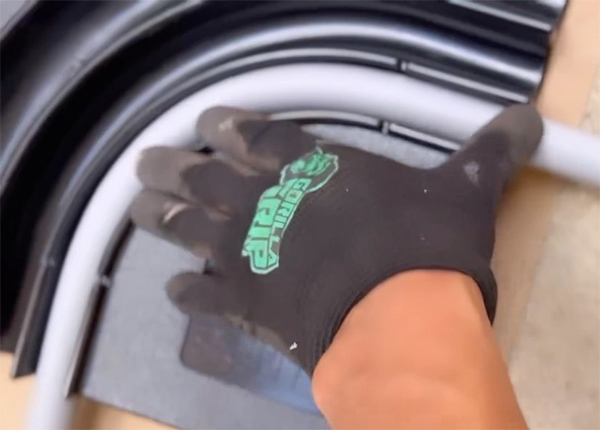
Once the pipe is warm, bend it gently. Slow bending stops cracks or kinks.
Use your hands or a bending tool. Keep the curve smooth and even.
- Start bending at the middle of the heated area
- Apply steady pressure without forcing
- Adjust the angle gradually until you get the shape
Cooling And Setting The Shape
After bending, cool the pipe quickly. This stops it from changing shape.
Use cold water or let the pipe sit at room temperature. Keep the pipe still until it hardens.
- Pour cold water evenly over the bent area
- Or leave the pipe on a flat surface
- Wait 5-10 minutes before moving the pipe
Credit: www.sam-uk.com
Avoiding Common Bending Mistakes
Bending PVC pipes is a useful skill for many projects. Doing it right keeps your pipes strong and leak-free. Avoiding common mistakes saves time and money.
This guide focuses on two key areas: preventing kinks and cracks, and maintaining pipe integrity.
Preventing Kinks And Cracks
Kinks and cracks weaken PVC pipes and can cause leaks. Use proper techniques to keep the pipe smooth and intact during bending.
- Heat the pipe evenly before bending to avoid sharp bends.
- Use a bending spring or form to support the pipe inside.
- Bend the pipe slowly and steadily to prevent sudden stress.
- Keep the pipe at room temperature before heating.
- Avoid bending pipes with visible damage or cracks.
Maintaining Pipe Integrity
Maintaining the pipe’s strength after bending is essential. Proper support and cooling help keep the pipe’s shape and durability.
| Action | Reason |
| Cool the pipe slowly after bending | Prevents cracks from sudden temperature changes |
| Check for uniform bend radius | Ensures even stress distribution |
| Inspect pipe surface for damage | Detects early signs of wear or failure |
| Support pipe during installation | Keeps bend stable and prevents deformation |
Finishing Touches
Bending PVC pipes is only half the job. Finishing touches make your work look neat and last longer.
Properly finishing the ends and checking the pipe strength ensures safety and durability.
Trimming And Smoothing Edges
After bending, cut any uneven or extra pipe length. Use a sharp PVC cutter or saw for clean cuts.
Remove rough edges with sandpaper or a deburring tool. This prevents injury and fits better with other parts.
- Cut pipe ends straight and even
- Use fine sandpaper to smooth edges
- Check for cracks or damage after trimming
Testing The Bend Strength
Check the pipe’s bend strength to avoid weak spots. Gently press on the bend to test its firmness.
Look for cracks, dents, or soft areas. If the pipe feels weak, rebend or replace it to keep safety.
- Press gently on the bent section
- Watch for any cracks or breaks
- Make sure the pipe holds its shape
Tips For Complex Bends
Bending PVC pipes can be tricky, especially with complex shapes. Careful planning helps you make smooth bends without damage.
Using the right tools and techniques lets you create precise angles. This guide focuses on tips for complex bends in PVC pipes.
Multiple Bend Angles
Bending PVC pipes at multiple angles needs patience and accuracy. Measure each bend carefully before heating the pipe.
Mark the pipe clearly where each bend will go. Heat the pipe slowly to avoid weak spots or cracks.
- Use a protractor to mark exact angles
- Heat the pipe evenly along the bend area
- Bend slowly and hold the position until it cools
- Check each bend angle with a square or angle finder
Using Templates And Jigs
Templates and jigs help keep bends consistent and repeatable. They hold the pipe in place while you bend it.
Create a template using wood or metal to fit the desired bend shape. A jig supports the pipe and guides the bend angle.
- Make a template with the exact curve you want
- Use clamps to fix the pipe on the jig
- Heat the pipe while it is secured in the jig
- Let the pipe cool completely before removing it
When To Choose Alternatives
Bending PVC pipes is common in many projects. Yet, sometimes alternatives work better. Choosing the right method saves time and avoids damage.
This guide helps you know when to use other options instead of bending PVC pipes.
Using Elbows And Fittings
Elbows and fittings connect PVC pipes without bending. Use them when sharp or exact angles are needed. They keep the pipe strong and prevent leaks.
- Choose elbows for 90-degree turns
- Use tees to split pipe flow
- Pick couplings to join straight pipe sections
- Fittings work well for tight spaces
- They reduce stress on the pipe
Considering Other Materials
Sometimes, bending PVC is not the best choice. Other materials handle bends better or fit your project needs.
| Material | Best Use | Notes |
| PEX | Flexible water lines | Bends easily without fittings |
| Copper | Durable plumbing | Needs special tools to bend |
| HDPE | Gas and water pipes | Heat can bend pipes smoothly |
| CPVC | Hot water lines | Less flexible than PEX |
Frequently Asked Questions
How Do You Bend Pvc Pipes Without Cracking?
To bend PVC pipes without cracking, heat the pipe evenly using a heat gun. Avoid overheating to prevent damage. Slowly bend the pipe while warm. Cool it gradually to retain the shape and avoid cracks.
What Tools Are Needed To Bend Pvc Pipes?
Essential tools include a heat gun or pipe heater, gloves, and a bending spring. A bending spring helps maintain the pipe’s shape and prevent kinks during bending.
Can Pvc Pipes Be Bent Cold Without Heating?
PVC pipes generally cannot be bent cold without cracking. Heating softens the pipe, making it flexible. Cold bending risks breaking or kinking the pipe, causing leaks or damage.
How Do You Prevent Pvc Pipes From Kinking While Bending?
Use a bending spring inside the pipe to keep its shape. Heat the pipe evenly to soften it. Bend slowly and steadily to avoid sharp bends or kinks.
Conclusion
Bending PVC pipes is simple with the right tools and steps. Always measure carefully before starting. Use heat evenly to avoid kinks and cracks. A heat gun works best for precise control. Safety should always be a priority. Wear gloves to protect your hands.
Practice on scrap pieces first. This helps build confidence and skill. Remember, patience leads to better results. Properly bent pipes improve any project’s efficiency and appearance. With practice, anyone can bend PVC pipes successfully. Enjoy your improved DIY skills and completed projects!