Are you struggling to handle tiny wires and delicate parts in your electronics projects? Needle-nose pliers might be the simple tool you need to make your work easier and more precise.
Knowing how to use them correctly can save you time, prevent mistakes, and help you achieve professional results. Keep reading to discover practical tips and techniques that will improve your skills and boost your confidence every time you pick up your needle-nose pliers.
Your electronics projects will never be the same.
Choosing The Right Needle-nose Pliers
Needle-nose pliers are handy tools for electronics work. Picking the right pair helps you work safely and precisely.
Different features affect how well pliers perform. Think about material, jaw shape, and insulation before buying.
Material And Build Quality
Look for pliers made from strong materials like stainless steel. Good build quality means they last longer and resist rust.
Strong joints and smooth action make the pliers easier to use. Avoid cheap tools that bend or break easily.
Jaw Shape And Size
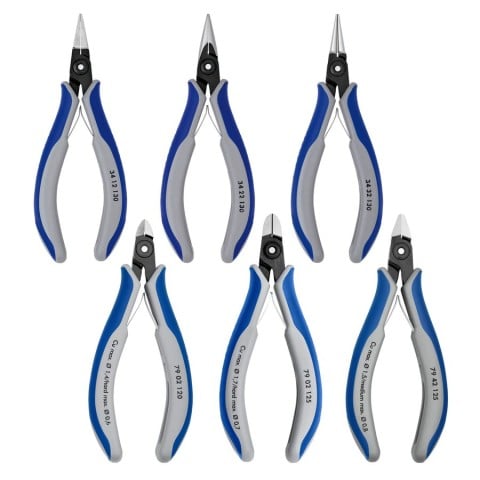
The jaws should be thin and long for tight spaces. Smaller jaws help reach tiny parts on circuit boards.
Some jaws have serrated tips for better grip. Flat or curved jaws serve different tasks in electronics work.
- Long, narrow jaws for precision
- Serrated tips hold wires firmly
- Curved jaws help bend wires easily
- Smaller jaws fit tight spots
Insulation For Electronics Work
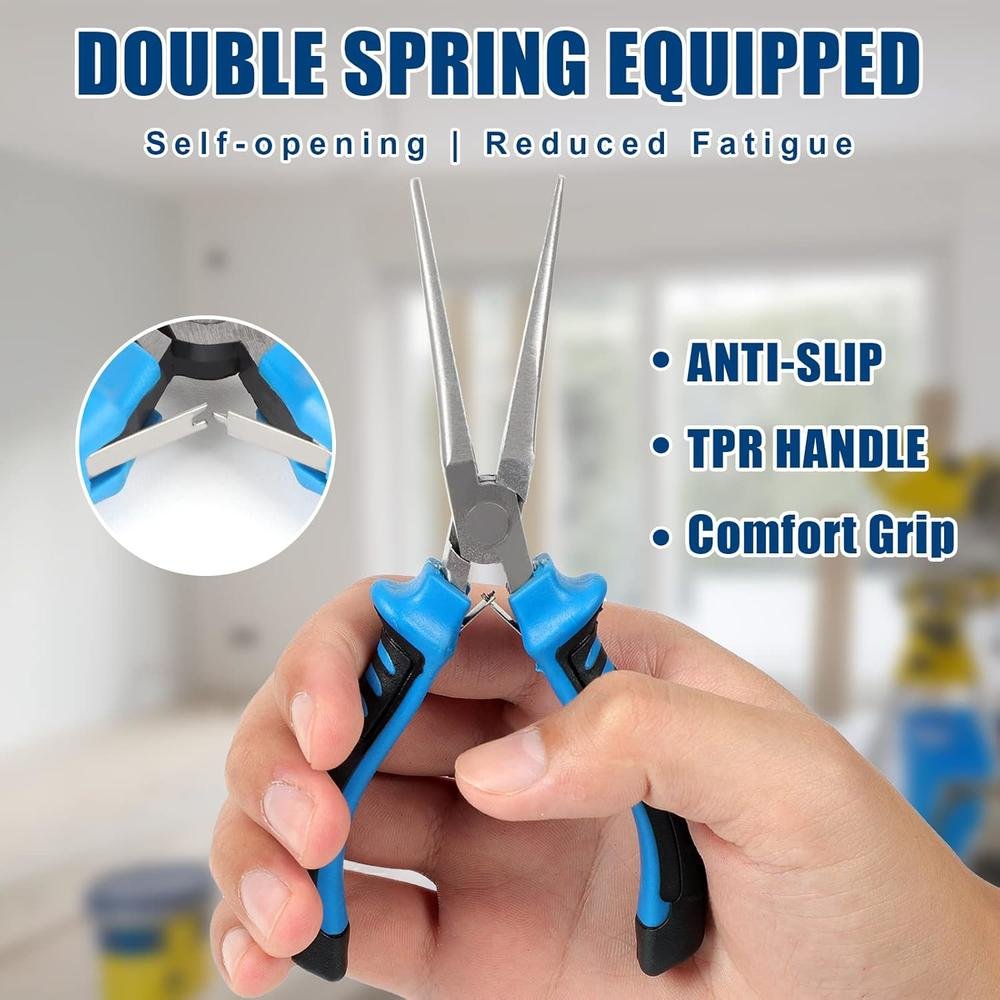
Choose pliers with insulated handles to protect from electric shocks. Insulation helps when working on live circuits.
Look for handles rated for electrical safety. Non-slip grips also improve control and comfort during use.
- Insulated handles rated for voltage protection
- Non-slip grips for better handling
- Comfortable padding reduces hand fatigue

Credit: www.amazon.in
Basic Handling Techniques
Needle-nose pliers help you work with small electronics parts. They allow you to hold and bend wires in tight spaces. Using them correctly keeps your project safe and neat.
Learn simple ways to hold and control these pliers. Avoid damage to delicate parts. Follow safety tips to protect yourself and your electronics.
Proper Grip And Control
Hold needle-nose pliers near the hinge for better control. Use your thumb and index finger to guide the tips. Keep your grip firm but not too tight to avoid hand strain.
- Place your hand so the pliers feel balanced
- Use light pressure to avoid slipping
- Adjust your grip for different tasks, like bending or holding
- Practice smooth movements for accuracy
Avoiding Damage To Components
Electronics parts are delicate and can break easily. Use needle-nose pliers carefully to protect wires and small components. Avoid squeezing too hard or bending parts sharply.
| Common Risk | How to Avoid |
| Damaging wires | Use gentle pressure and avoid twisting |
| Bending pins | Grip close to the base, not the tip |
| Scratching circuit boards | Keep pliers clean and steady |
Safety Precautions
Safety protects both you and your electronics. Always work in a well-lit area. Keep your fingers clear of the pliers’ tips. Avoid wearing loose clothing near tools.
- Wear safety glasses to protect your eyes
- Unplug devices before working on them
- Store pliers safely when not in use
- Check tools for damage before starting
Cutting And Stripping Wires
Needle-nose pliers are useful tools for electronics work. They help cut and strip wires cleanly. Using them correctly keeps your work neat and safe.
In this guide, learn how to use the cutting edge, strip wire insulation, and maintain wire integrity with needle-nose pliers.
Using The Cutting Edge
The sharp cutting edge of needle-nose pliers lets you cut wires with precision. Hold the wire firmly and place it near the cutting edge. Squeeze the handles to make a clean cut. Avoid twisting the wire while cutting.
Stripping Wire Insulation
Stripping insulation exposes the wire without damaging it. Follow these steps for safe stripping:
- Grip the wire with the pliers at the spot to strip.
- Use the wire cutter notch to gently score the insulation.
- Pull the insulation off carefully with the pliers.
- Check that the wire strands are intact and not cut.
Maintaining Wire Integrity
| Action | Tip | Result |
| Cutting wires | Use sharp cutting edges, avoid twisting | Clean cuts without frayed ends |
| Stripping insulation | Score gently, avoid nicking wire strands | Exposed wire stays strong and conductive |
| Bending wires | Bend near the tip, use pliers for control | Prevents wire breakage and loosening |
Bending And Shaping Wires
Needle-nose pliers are a handy tool for working with small wires in electronics. They help you bend and shape wires with accuracy and care.
Using these pliers correctly can make your wiring neat and organized. This guide covers key techniques for bending and shaping wires.
Creating Precise Angles
To create sharp bends, grip the wire firmly with the pliers near the point where you want the angle. Bend the wire slowly to avoid breaking it.
- Hold the wire firmly with the tip of the pliers.
- Use your other hand to pull the wire around the pliers.
- Bend the wire to the desired angle carefully.
- Check the angle and adjust if needed.
Working In Tight Spaces
Needle-nose pliers have a slim shape that fits into small areas. This makes it easier to work on crowded circuit boards or tight spots.
| Tip Shape | Use | Benefit |
| Pointed | Grabbing small wires | Precise control |
| Flat | Bending wires in narrow spaces | Better grip |
| Curved | Reaching around components | Improved access |
Forming Loops And Hooks
Loops and hooks help connect wires to screws or other parts. Needle-nose pliers make forming these shapes simple and neat.
Follow these tips for neat loops and hooks:
- Grip the wire near the end with the pliers.
- Use the rounded part of the pliers to curl the wire.
- Make loops tight to avoid loose connections.
- Check the shape fits the connector or screw.
Holding And Positioning Small Components
Needle-nose pliers are useful tools in electronics work. They help hold and place tiny parts with care.
Using pliers can make soldering and assembly easier. They give you a better grip on small items.
Picking Up Tiny Parts
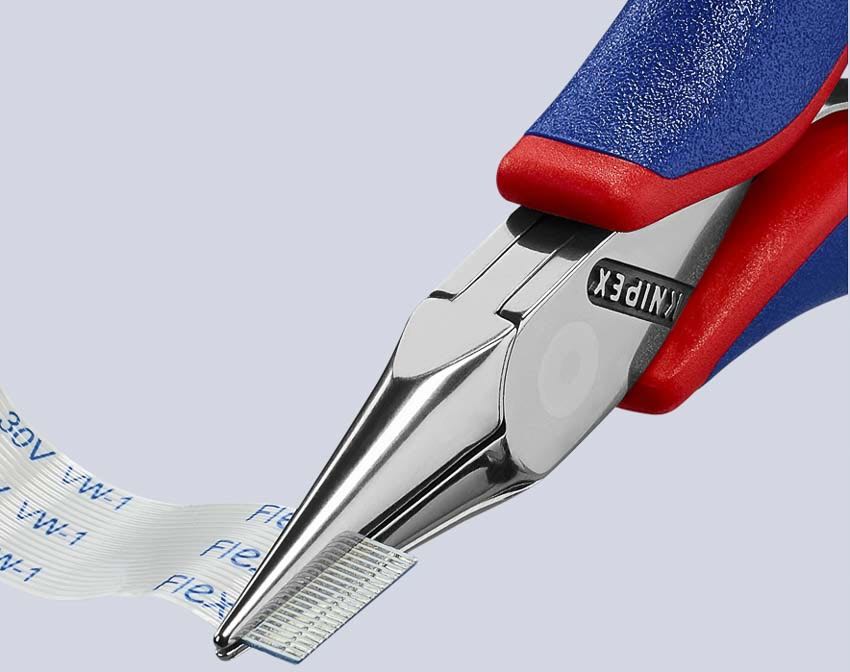
Needle-nose pliers let you pick up small screws, wires, and parts easily. Their slim tips fit in tight spaces.
Hold the pliers gently to avoid crushing delicate parts. Use a steady hand to lift and move components safely.
Steadying Components For Soldering
Use needle-nose pliers to hold parts still while soldering. This keeps your hands away from the hot tip.
Keep a firm but gentle grip to avoid bending or damaging the component. Position parts so solder flows smoothly.
- Hold wires close to the joint
- Keep components aligned with the board
- Use pliers to avoid burns
Avoiding Static Damage
Static electricity can harm sensitive electronics parts. Use pliers with insulated handles to reduce risk.
Touch a grounded metal object before working. This helps discharge static from your body and tools.
- Choose pliers with rubber or plastic grips
- Work on an anti-static mat if possible
- Keep parts in anti-static bags until use
Credit: www.knipex-tools.com
Maintenance And Care Tips
Needle-nose pliers are essential for electronics work. Keeping them in good shape helps you work safely and accurately.
Regular maintenance extends their life and keeps the jaws aligned for precise handling of small parts.
Cleaning And Lubrication
After each use, clean your pliers to remove dust, dirt, and grease. Use a soft cloth or brush for this task.
Lubricate the joint with a drop of light machine oil. This prevents rust and keeps the movement smooth.
- Wipe the jaws and handles clean with a dry cloth.
- Apply oil to the pivot point and open and close the pliers several times.
- Remove excess oil to avoid attracting dust.
- Use rubbing alcohol for stubborn grease or sticky residue.
Storage Recommendations
Store your needle-nose pliers in a dry place. Avoid humid environments to stop rust from forming.
Use a toolbox or a tool rack to keep them organized and easy to find.
| Storage Method | Benefits |
| Toolbox with compartments | Protects from dust and damage |
| Magnetic tool holder | Keeps tools visible and accessible |
| Tool pouch | Portable and convenient for field work |
| Wall-mounted rack | Keeps workspace tidy and tools organized |
When To Replace Your Pliers
Check your pliers for signs of wear before starting a project. Replace them if they no longer work well.
- Jaws that don’t close tightly or slip on parts
- Handles that are cracked or damaged
- Rust that cannot be removed
- Loose or stiff joint that won’t move smoothly
Credit: www.protoolreviews.com
Frequently Asked Questions
What Are Needle-nose Pliers Used For In Electronics?
Needle-nose pliers help grip, bend, and cut small wires and components. They provide precision in tight spaces.
How Do You Safely Use Needle-nose Pliers?
Hold pliers firmly, avoid excessive force, and keep tips clean. Always cut wires at right angles to prevent damage.
Can Needle-nose Pliers Cut Wires In Electronics?
Yes, many needle-nose pliers have cutting edges for light wire cutting. Use them carefully to avoid damaging components.
Why Choose Needle-nose Pliers Over Regular Pliers?
Their long, narrow tips reach confined spaces easily. They offer better control for delicate electronic work.
Conclusion
Mastering needle-nose pliers improves your electronic projects. They help with tight spaces. Delicate components become easier to handle. Always choose the right size for precision. Practice ensures better control and accuracy. Keep your tools clean for longevity. Replace worn pliers to avoid damage.
Remember, safety first with protective gear. Understanding these tips boosts your skills. Soon, you’ll handle tasks with confidence. Explore more electronics projects. Enjoy the process. Happy tinkering!