Are you struggling to figure out how much water is flowing through your pipes? Knowing the flow rate is crucial for saving water, avoiding costly repairs, and ensuring your plumbing works smoothly.
But measuring water flow doesn’t have to be complicated. You’ll discover simple, practical methods to measure water flow in your pipes accurately. Whether you’re a homeowner, a plumber, or just curious, you’ll find easy-to-follow tips that make the process clear and manageable.
Keep reading, and you’ll soon have the confidence to measure water flow like a pro.

Credit: vishalborewell.com
Types Of Water Flow In Pipes
Water flows inside pipes in different ways. Knowing the type of flow helps measure it correctly. Two common ways to describe water flow are laminar vs turbulent and steady vs unsteady.
These flow types affect how water moves and how devices can measure the flow. Understanding them is important for pipe design and maintenance.
Laminar Vs Turbulent Flow
Laminar flow happens when water moves in smooth, straight layers. The flow is calm and steady. Turbulent flow occurs when water moves in a chaotic way. It has swirls and eddies.
- Laminar Flow:Water flows in parallel lines.
- Turbulent Flow:Water moves with mixing and swirls.
- Reynolds Number:It helps to tell flow type by speed and pipe size.
| Flow Type | Description | Typical Reynolds Number |
| Laminar | Smooth and orderly flow | Below 2000 |
| Turbulent | Chaotic and mixed flow | Above 4000 |
| Transitional | Between laminar and turbulent | 2000 to 4000 |
Steady Vs Unsteady Flow
Steady flow means the water speed and pressure stay the same over time. Unsteady flow means these values change. Measuring flow is easier with steady flow.
Differences Between Steady and Unsteady Flow:
- Steady Flow:Constant velocity at any point.
- Unsteady Flow:Velocity changes with time.
- Examples:Steady flow in pipes with constant pump speed. Unsteady flow in systems with valves opening and closing.
Common Flow Measurement Techniques
Measuring water flow in pipes is important for many uses. Accurate flow data helps control systems and saves water.
There are several methods to measure water flow. Each method works best in different situations and pipe types.
Mechanical Flow Meters
Mechanical flow meters use moving parts to measure water flow. These devices count rotations or movements caused by flowing water.
- They are simple and easy to install.
- Examples include turbine meters and paddle wheels.
- They need regular maintenance to keep parts moving freely.
- Mechanical meters work well for clean water with steady flow.
Ultrasonic Flow Meters
Ultrasonic meters measure flow by sending sound waves through water. The time it takes for waves to travel shows flow speed.
They do not have moving parts, so they last longer and need less upkeep.
Electromagnetic Flow Meters
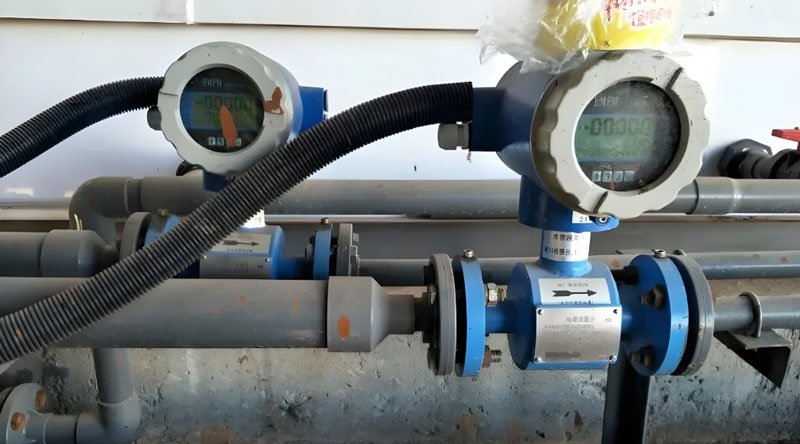
Electromagnetic meters use magnetic fields to measure flow. Water passing through the field creates a voltage that shows flow rate.
| Feature | Description |
| Type of Fluid | Conductive liquids like water |
| Moving Parts | No |
| Accuracy | High |
| Maintenance | Low |
| Installation | Needs full pipe coverage |
Differential Pressure Flow Meters
Differential pressure meters measure flow by the pressure difference across a restriction in the pipe.
Common types include orifice plates, venturi tubes, and flow nozzles.
- They are simple and widely used.
- Require careful installation and calibration.
- Pressure loss occurs due to pipe restriction.
- Suitable for various pipe sizes and fluids.
Using Mechanical Flow Meters
Measuring water flow in pipes helps monitor water use and system health. Mechanical flow meters use moving parts to measure the flow of water.
These meters are simple and reliable for many water flow applications. They come in different types that work in various ways.
Turbine Flow Meters
Turbine flow meters have a small turbine inside the pipe. Water pushes the turbine blades, making them spin.
The speed of the turbine blades shows how fast water flows. A sensor counts the rotations to calculate flow rate.
- Good for clean water
- Works well with steady flow
- Needs straight pipe sections before and after
Positive Displacement Meters
Positive displacement meters trap water in chambers. Each chamber fills and empties as water flows through.
The meter counts how many times the chambers fill to measure flow. This makes them very accurate for low flow rates.
- Works well with dirty water
- Good for low and variable flows
- Has moving parts that need maintenance
Rotameters
Rotameters have a float inside a tapered tube. Water flows upward and lifts the float.
The float’s height shows the flow rate. The higher it floats, the faster the water moves.
- Simple and easy to read
- Needs vertical pipe installation
- Works best for clear fluids

Credit: www.controleng.com
Ultrasonic Flow Measurement
Ultrasonic flow measurement uses sound waves to check water flow in pipes. It is a non-contact method that does not block the pipe.
This method works well for clean and dirty water. Two common ultrasonic techniques are the transit-time and Doppler methods.
Transit-time Method
The transit-time method sends sound pulses between two sensors on the pipe. It measures the time difference as the water flows.
- Two ultrasonic sensors are placed opposite each other.
- Sound pulses move with and against the water flow.
- The time difference shows how fast the water moves.
- This helps calculate the flow rate accurately.
- Best for clean or slightly dirty water.
Doppler Method
The Doppler method uses sound waves that reflect off particles in the water. It measures frequency changes to find flow speed.
| Feature | Transit-Time Method | Doppler Method |
| Water Quality | Clean or slightly dirty | Dirty or aerated |
| Sensors | Two sensors opposite | One sensor at angle |
| Measurement | Time difference of pulses | Frequency shift of echoes |
| Best Use | Clear water pipes | Water with particles or bubbles |
Electromagnetic Flow Measurement
Electromagnetic flow measurement is a way to find water flow in pipes. It uses magnets and electricity to measure flow without touching the water.
This method works well for water with some minerals or salts. It is common in industries and water supply systems.
Working Principle
Electromagnetic flow meters work by creating a magnetic field around the pipe. Water flowing through the pipe moves in this magnetic field.
The movement of water causes a voltage to form. Electrodes inside the pipe detect this voltage. The voltage size shows the flow rate of water.
Advantages
Electromagnetic flow meters have no moving parts. This means they last longer and need less fixing.
- Works well with dirty or clean water
- Does not block water flow
- Gives accurate and fast readings
- Can measure flow in big pipes
Limitations
These meters need water to conduct electricity. Pure water without minerals may not work well.
- Cannot measure flow in non-conductive liquids
- Needs power supply to work
- Electrodes can wear out over time
- Installation cost is higher than some meters

Credit: www.mybuilder.com
Differential Pressure Method
The differential pressure method measures water flow by detecting pressure changes. It uses devices that create a pressure difference in the pipe.
This pressure difference helps calculate the flow rate based on how much pressure drops across the device.
Orifice Plates
An orifice plate is a flat plate with a hole in the middle. It fits inside the pipe and narrows the flow path.
Water speeds up as it passes through the hole, causing pressure to drop. Measuring this pressure drop shows the flow rate.
- Simple and cheap to install
- Works well with clean water
- Needs straight pipe sections before and after
Venturi Tubes
Venturi tubes have a smooth, tapered shape that narrows and then widens inside the pipe. This design changes water speed and pressure.
The pressure difference between the narrow and wide parts helps find the water flow rate. Venturi tubes cause less energy loss than orifice plates.
- More accurate than orifice plates
- Lower pressure loss
- Good for dirty or rough water
Flow Nozzles
Flow nozzles are short, smooth tubes that narrow the pipe flow. They create a steady pressure drop like orifice plates but with less resistance.
They work well for high-speed flows and are often used in steam and water pipes to measure flow accurately.
- Handles high flow speeds
- Less pressure loss than orifice plates
- Requires careful installation
Factors Affecting Measurement Accuracy
Measuring water flow in pipes needs careful attention. Accuracy depends on many factors.
Understanding these factors helps get better results and avoid errors in measurement.
Pipe Size And Material
The size and material of a pipe change how water flows inside it. Both affect the flow measurement.
Large pipes may cause uneven flow, and some materials affect sensor readings.
- Smaller pipes often have smoother flow, improving accuracy
- Metal pipes can cause signal interference with some sensors
- Plastic pipes may expand slightly, changing flow conditions
Flow Profile And Disturbances
Water flow inside a pipe should be steady and smooth for good measurement. Disturbances reduce accuracy.
Bends, valves, or fittings near the sensor can cause turbulence or uneven flow.
- Place sensors far from bends and valves
- Use straight pipe sections for consistent flow
- Disturbances create flow patterns that confuse meters
Installation And Calibration
Proper installation and regular calibration of flow meters are key to accurate readings.
Incorrect setup or poor calibration leads to wrong flow measurements.
- Follow manufacturer guidelines for mounting sensors
- Check calibration often to adjust for changes
- Secure sensors tightly to avoid leaks or movement
Diy Methods For Quick Flow Estimation
Measuring water flow in pipes helps to check if your system works well. You can do this yourself with simple tools. Two common ways are using a bucket and stopwatch or using a float.
These methods give you fast and rough estimates. They do not need special devices or skills. Read on to learn how to use them.
Bucket And Stopwatch Method
This method uses a bucket and a stopwatch to find the flow rate. It measures how much water fills the bucket in a set time. You can use any container with a known volume.
- Place the bucket under the pipe outlet.
- Start the stopwatch as water begins to fill the bucket.
- Stop the stopwatch when the bucket is full or after a fixed time.
- Record the time taken or the volume collected.
- Calculate flow rate using volume divided by time.
| Volume of Bucket (Liters) | Time to Fill (Seconds) | Flow Rate (Liters/Second) |
| 10 | 20 | 0.5 |
| 15 | 30 | 0.5 |
| 5 | 10 | 0.5 |
Float Method
The float method measures flow speed by tracking an object on the water surface. You need a float, a tape measure, and a stopwatch. This method works best in open pipes or channels.
- Mark a known distance along the pipe or channel.
- Place the float in the water at the start point.
- Use the stopwatch to time how long the float takes to reach the end point.
- Calculate flow speed by dividing distance by time.
- Find flow rate by multiplying flow speed by pipe cross-sectional area.
Choosing The Right Method
Measuring water flow in pipes helps in managing water use and system health. Choosing the right method depends on several key factors.
This guide focuses on what to consider before selecting a flow measurement method.
Application Requirements
Think about the pipe size, water type, and flow rate range. Some methods work better for small pipes, others for large ones.
- Check if the water contains solids or chemicals
- Decide if you need continuous or spot measurements
- Consider if the pipe material affects the sensor choice
- Look at the required accuracy for your project
Cost Considerations
Costs vary widely depending on the technology and installation complexity. Make sure the method fits your budget.
| Method | Initial Cost | Installation Cost | Operational Cost |
| Ultrasonic Flow Meter | High | Medium | Low |
| Mechanical Flow Meter | Low | Low | Medium |
| Electromagnetic Flow Meter | Medium | Medium | Low |
| Pressure Differential Meter | Low | High | Medium |
Maintenance Needs
Regular maintenance keeps flow meters accurate. Some types need more care than others.
- Clean sensors to avoid buildup
- Calibrate devices periodically
- Replace worn parts as needed
- Check wiring and connections
Frequently Asked Questions
What Tools Are Used To Measure Water Flow In Pipes?
Common tools include flow meters like turbine, ultrasonic, and electromagnetic meters. They accurately measure flow rate in various pipe sizes.
How Do You Calculate Water Flow Rate In Pipes?
Water flow rate is calculated by multiplying the pipe’s cross-sectional area by the water velocity. This gives the volume of water per time unit.
Why Is Measuring Water Flow In Pipes Important?
Measuring flow ensures system efficiency, detects leaks, and helps manage water usage. It also aids in maintenance and cost savings.
Can I Measure Water Flow Without Specialized Equipment?
Yes, you can use manual methods like bucket and stopwatch for rough estimates. However, flow meters provide more accurate and reliable measurements.
Conclusion
Measuring water flow in pipes is essential for many tasks. It ensures efficient water use and system maintenance. Tools like flow meters and bucket tests are helpful. Regular checks prevent leaks and save money. Accurate measurements help in planning and resource management.
Knowing your system improves performance and reliability. Always choose the right method for your needs. This knowledge is valuable for homeowners and professionals alike. With practice, measuring water flow becomes easy and routine. Keep your systems running smoothly and efficiently.
Understanding these basics benefits everyone. Stay informed and keep your water flowing right.