
Measuring for cabinets might seem simple, but a small mistake can lead to big problems later. Imagine installing your new cabinets only to find they don’t fit right or leave awkward gaps.
You don’t want that hassle or extra cost. By learning how to measure accurately, you save time, money, and frustration. You’ll discover easy steps to get your measurements just right. Keep reading to make sure your cabinets fit perfectly the first time.
Tools Needed For Measuring
Measuring for cabinets needs careful attention. The right tools help you get exact numbers.
Using the proper tools makes your work easier and results better. Here are the tools you need.
Tape Measures
Tape measures are the main tool for measuring cabinets. They come in many lengths, usually 16 or 25 feet.
Choose a tape measure with clear numbers and a sturdy case. A locking feature helps hold the tape in place.
- Use steel tape for durability
- Pick a tape with both inches and centimeters
- Lock the tape to get steady readings
Levels And Squares
Levels help you check if surfaces are flat and even. This is important to place cabinets correctly.
Squares help measure right angles. They make sure your cabinets fit snugly in corners and along walls.
- Use a bubble level for flatness
- Try a laser level for longer distances
- Use a carpenter’s square to check corners
Notebooks And Pencils
A notebook helps you write down measurements clearly. Keep all numbers in one place to avoid mistakes.
Use a pencil to mark measurements on wood or walls. A pencil mark is easy to erase or adjust.
- Write numbers neatly and double-check
- Label each measurement for clarity
- Use pencils with sharp tips for accuracy
Preparing The Space
Measuring for cabinets starts with preparing your space carefully. This step helps avoid errors and ensures a good fit. Take your time to get the area ready before measuring.
Clear the area, check the walls, and find studs and utilities. Each task supports accurate measurements and a safer installation process.
Clearing The Area
Remove all furniture and items near where the cabinets will go. A clean workspace lets you measure without obstacles. It also protects your belongings from damage during measuring and installation.
- Take out small furniture and decorations
- Move large items to another room if possible
- Clear floors and countertops
- Sweep or vacuum the floor to remove dust
Checking Wall Conditions
Look closely at your walls where cabinets will be mounted. Check for any damage or uneven areas. These can affect how cabinets sit and fit.
| Wall Condition | What to Check | Why It Matters |
| Cracks or Holes | Fill and repair before measuring | Prevents inaccurate measurements |
| Uneven Surfaces | Note high or low spots | Helps adjust cabinet placement |
| Moisture Damage | Fix leaks or water stains | Prevents future cabinet damage |
Locating Studs And Utilities
Studs and utilities inside walls guide where you can safely attach cabinets. Find their locations before measuring.
- Use a stud finder to mark stud positions
- Look for visible signs like nails or seams
- Locate electrical outlets and plumbing
- Mark utility locations with painter’s tape
Taking Precise Measurements
Measuring accurately is key to fitting cabinets well. It helps avoid mistakes and saves time.
Use a tape measure and write down all numbers clearly. Double-check each measurement before you start.
Measuring Wall Width And Height
Start by measuring the full width of the wall where cabinets will go. Measure from one corner to the other.
Next, measure the wall height from the floor to the ceiling. This ensures cabinets fit well vertically.
- Measure at several points along the wall width
- Note any changes in wall height
- Record the smallest width and height for safety
Accounting For Doors And Windows
Measure the size and position of all doors and windows on the wall. This helps plan cabinet placement.
Note the distance from the floor and from the wall edges to each door and window.
- Measure door and window width and height
- Record distance from wall corners
- Mark locations clearly on your plan
Measuring Floor And Ceiling Levels
Check if floors and ceilings are level. Uneven surfaces affect cabinet installation.
Use a level tool to find high or low spots. Measure the height at several points along the wall.
- Place level on the floor near the wall
- Mark any slopes or bumps
- Measure ceiling height at different points
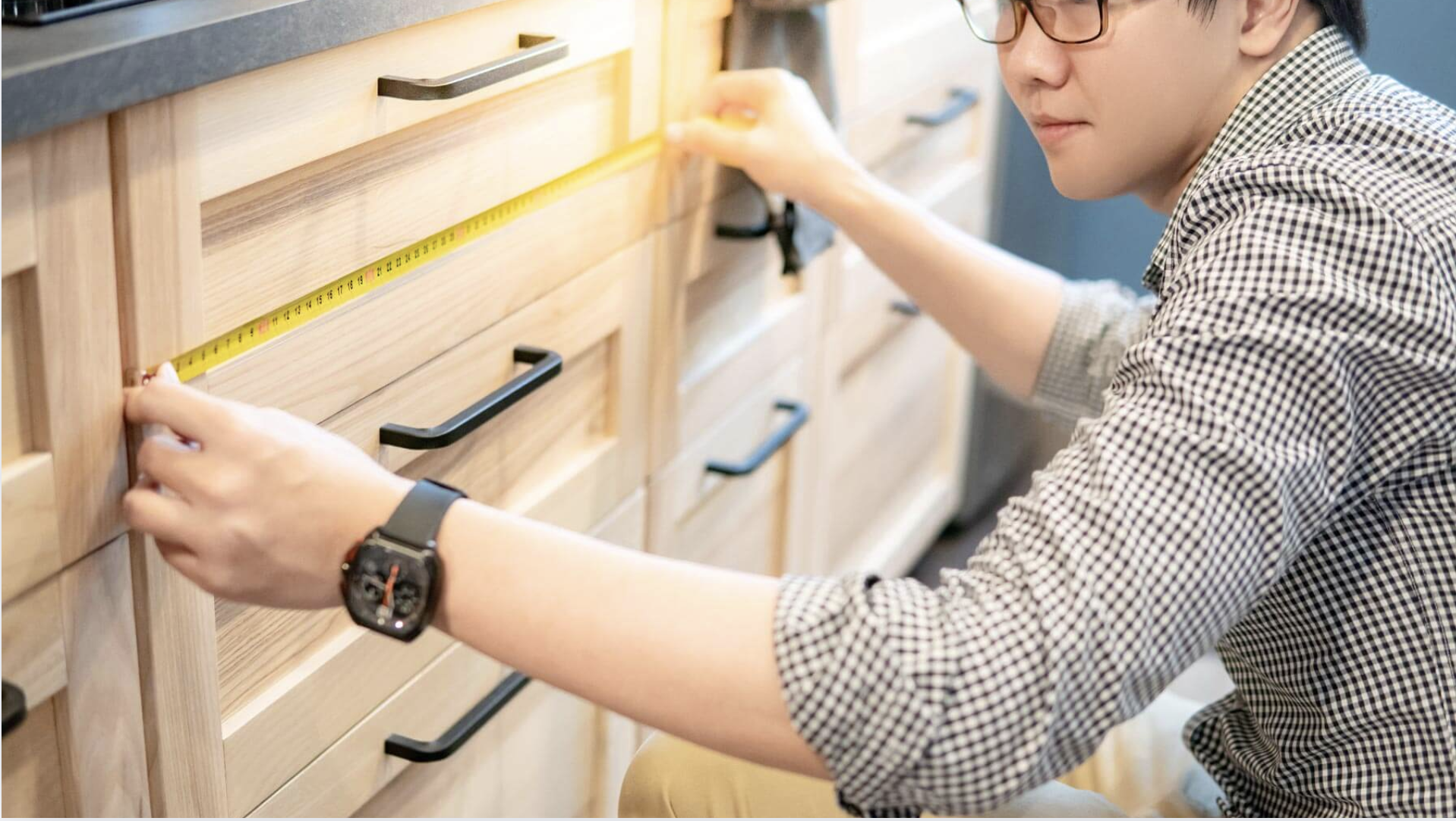
Credit: opplehouse.com
Recording Measurements Effectively
Accurate measurements are key to fitting cabinets perfectly. Recording them clearly helps avoid mistakes later. Use simple tools and methods to track each size.
Focus on writing down all details as you measure. This guide explains how to sketch layouts, label dimensions, and double-check numbers for best results.
Sketching Layouts
Draw a rough layout of the room or wall where the cabinets will go. Show doors, windows, and outlets. This helps you see where cabinets fit best.
- Use simple shapes to represent cabinets and walls.
- Mark key features like plumbing or electrical points.
- Keep the sketch to scale if possible for better accuracy.
- Note the direction the cabinets will face.
Labeling Dimensions
Write down each measurement clearly on your sketch. Label widths, heights, and depths of cabinets and spaces around them. Use consistent units like inches or centimeters.
| Dimension Type | Description | Example |
| Width | Distance from left to right | 24 inches |
| Height | Distance from bottom to top | 36 inches |
| Depth | Distance from front to back | 12 inches |
Double-checking Numbers
Always measure twice to avoid errors. Check your numbers carefully before ordering or building cabinets. Small mistakes can cause big problems.
- Re-measure all key dimensions in your sketch.
- Compare recorded numbers with actual measurements.
- Ask someone else to check your work if possible.
- Correct any differences before finalizing your plan.
Common Mistakes To Avoid
Measuring for cabinets requires care and accuracy. Small errors can cause big problems later.
Knowing common mistakes helps you avoid them. This guide covers key errors to watch out for.
Ignoring Wall Irregularities
Many walls are not perfectly straight or flat. Ignoring bumps and curves leads to wrong cabinet sizes.
Measure at several points along the wall. Use the smallest measurement for cabinet width.
- Check for bowed or slanted walls
- Measure from floor to ceiling in multiple spots
- Mark any uneven areas on your plan
- Consider using shims to adjust for irregularities
Overlooking Appliance Spaces
Appliances need space for installation and use. Forgetting this causes tight fits and poor function.
| Appliance | Recommended Space | Reason |
| Refrigerator | 2 inches on each side | Air circulation and door swing |
| Dishwasher | 1 inch clearance | Water and electrical hookups |
| Oven | 2 inches clearance | Heat and ventilation |
Measure appliance dimensions yourself, not just rely on specs. Account for hoses and plugs.
Misreading Measuring Tools
Using the wrong tool or reading it wrong causes errors. Choose the right tools and read carefully.
- Use a metal tape measure, not a fabric one
- Keep the tape tight and straight for accuracy
- Read the measurement at eye level
- Double-check all measurements before writing them down
- Use a level to confirm horizontal and vertical lines

Credit: www.yahoo.com
Adjusting Measurements For Custom Cabinets
Measuring accurately is key to fitting custom cabinets well. Small errors can cause big problems during installation. Adjusting measurements helps avoid issues and ensures the cabinets look good and work properly.
This guide covers important adjustments for door swings, handles, hinges, and material thickness. Following these tips helps you get precise measurements for your custom cabinets.
Allowing For Door Swings
Cabinet doors need space to open fully without hitting walls or other objects. Always add extra room to your measurements for door swings. This space depends on the door style and hinge type.
- Measure the door width and height carefully.
- Add at least 1.5 to 2 inches for the door to swing open.
- Check if nearby walls or appliances reduce the available space.
- Consider the direction the door will open (left or right).
Planning For Handles And Hinges
Handles and hinges add extra space outside the cabinet frame. Include these in your measurements to avoid tight fits. Different hardware styles require different clearances.
| Hardware | Typical Extra Space Needed | Notes |
|---|---|---|
| Standard Handles | 2 inches | Allow room for hand grip |
| Knobs | 1.5 inches | Less space needed than handles |
| Concealed Hinges | 0.5 inch | Hidden but needs clearance inside |
| Exposed Hinges | 1 inch | Check hinge size for clearance |
Considering Material Thickness
The thickness of cabinet materials affects overall size. Measure thickness accurately and add it to your total cabinet dimensions. This prevents gaps or overlaps during installation.
- Measure the thickness of doors, sides, and shelves.
- Account for added layers like veneers or paint.
- Use a caliper or ruler for precise thickness measurement.
- Adjust your cabinet width and depth based on thickness.
Using Technology For Accuracy
Measuring cabinets correctly is important for a good fit. Using technology helps get precise measurements. It reduces mistakes and saves time.
Technology tools make measuring easier. They give clear results and help plan your cabinet space well.
Digital Measuring Tools
Digital measuring tools use lasers to measure distances. They show exact numbers on a screen. This is faster than using a tape measure.
They can measure long distances and hard-to-reach places. Some tools save measurements for later use.
- Laser distance meters give precise readings
- They reduce human errors
- Easy to use with one hand
- Some models store and transfer data
Mobile Apps
Mobile apps help you measure using your phone’s camera. They use augmented reality to show distances. This makes measuring quick and visual.
Apps can save your measurements and notes. You can use them to share your plans with others easily.
- Use phone camera to measure spaces
- Save and organize measurements
- Share data with contractors or designers
- Some apps offer tutorials and guides
3d Modeling Software
3D modeling software lets you create a digital version of your space. You can add cabinets and see how they fit. This helps avoid mistakes before building.
The software shows exact cabinet sizes and space around them. You can adjust measurements and try different designs easily.
- Build a virtual room layout
- Place cabinets to check fit and style
- Adjust sizes before buying or building
- Visualize the final look clearly
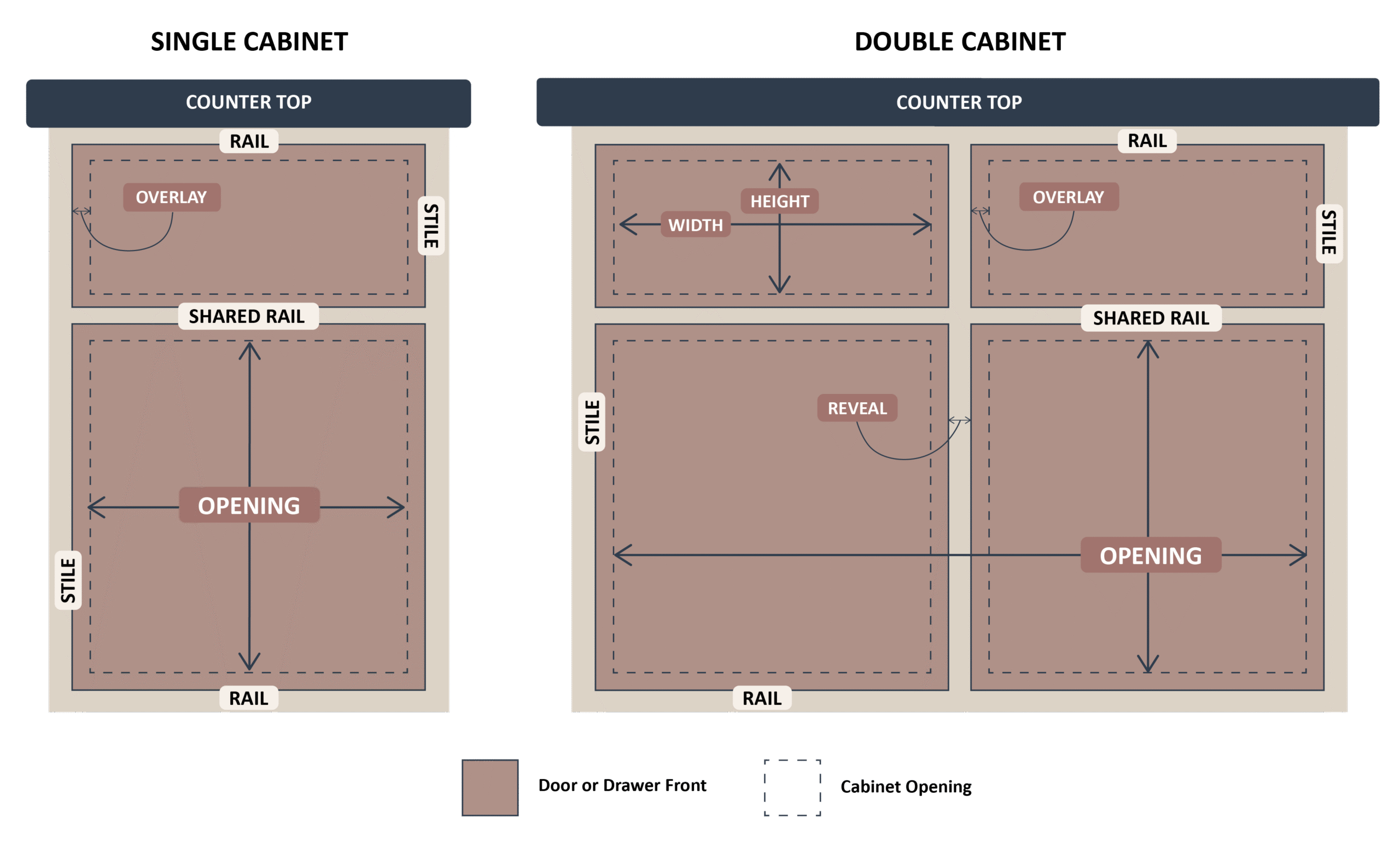
Credit: myfrontandcenter.com
Frequently Asked Questions
How Do I Measure Cabinets For A Perfect Fit?
Measure the cabinet width, height, and depth carefully. Use a tape measure and record dimensions at multiple points. Always measure twice to avoid errors. Include space for hinges and handles to ensure a perfect fit.
What Tools Are Needed To Measure Cabinets Accurately?
Use a tape measure, pencil, and notepad for clear notes. A level helps check cabinet alignment. A laser measure can improve precision. These tools ensure you get exact dimensions for your cabinets.
How To Measure For Corner Cabinets Correctly?
Measure both walls forming the corner precisely. Note the depth and width on each side. Check the angle between walls—it should be 90 degrees. Accurate corner measurements help in choosing suitable corner cabinet styles.
Should I Measure Cabinets Before Or After Wall Preparation?
Measure cabinets after wall preparation for accurate fitting. Walls may have uneven surfaces or molding affecting cabinet placement. Accurate wall conditions ensure cabinet measurements reflect the final installation space.
Conclusion
Measuring for cabinets can seem tricky, but it doesn’t have to be. Follow the steps to ensure accurate dimensions. Use a reliable tape measure for best results. Double-check your measurements to avoid costly mistakes. Take your time and be precise.
This ensures a perfect fit for your cabinets. Accurate measurements lead to a smooth installation process. A well-fitted cabinet enhances your kitchen or bathroom space. Remember, patience and precision are key. Practice makes perfect, so don’t rush. With these tips, you’re on your way to a successful cabinet project.
Happy measuring!