Are you struggling to get perfect square corners in your projects? Whether you’re working on woodworking, home improvement, or crafting, measuring square corners accurately is key to achieving professional results.
Imagine saving time, avoiding costly mistakes, and making your work look flawless every single time. In this guide, you’ll discover simple and effective methods to measure square corners with confidence. Keep reading, and you’ll learn easy tips that anyone can apply—no special tools or skills needed.
Your next project is about to get a whole lot easier.
Credit: projectcenter.thermatru.com
Tools For Measuring Square Corners
Measuring square corners is important in many projects. It helps ensure parts fit perfectly.
Using the right tools makes measuring easier and more accurate. This guide covers key tools.
Essential Measuring Instruments
A few tools are best for checking square corners. They help confirm angles are exactly 90 degrees.
- Carpenter’s square: A simple L-shaped tool for quick angle checks.
- Combination square: Has a ruler and adjustable head for various measurements.
- Speed square: A triangle tool used to mark and measure right angles fast.
- Framing square: Large metal square for framing and larger projects.
- Digital angle finder: Shows precise angle measurements on a small screen.
Choosing The Right Tools
Select tools based on your project size and accuracy needs. Small tasks may need simple squares.
For detailed work, digital tools offer better precision. Heavy projects require bigger squares.
- Use carpenter’s square for quick checks on small items.
- Choose framing square for large woodwork and framing.
- Pick combination square for varied measurements and marking.
- Use digital angle finder to get exact angle readings.
- Speed square works well for roofing and quick layouts.
Credit: www.jlconline.com
Preparing The Work Area
Measuring square corners needs a clean and organized space. Preparing your work area helps get accurate results.
Clear the surface and set clear points. This makes measuring easier and more precise.
Clearing And Marking The Surface
Remove any clutter from the surface where you will measure. Dust and dirt can cause mistakes.
Mark the edges clearly with a pencil or chalk. These marks show where to place your measuring tools.
- Clear tools and debris
- Wipe surface clean
- Mark edges lightly
- Use a ruler or straight edge for marks
Setting Up Reference Points
Pick points on the surface that will guide your measurements. These points help check if corners are square.
Use a tape measure or carpenter’s square to place reference marks. These marks serve as a guide for your tools.
- Choose two edges to measure from
- Mark equal distances from the corner
- Check marks with a square tool
- Adjust marks if needed before measuring
Simple Methods To Check Square Corners
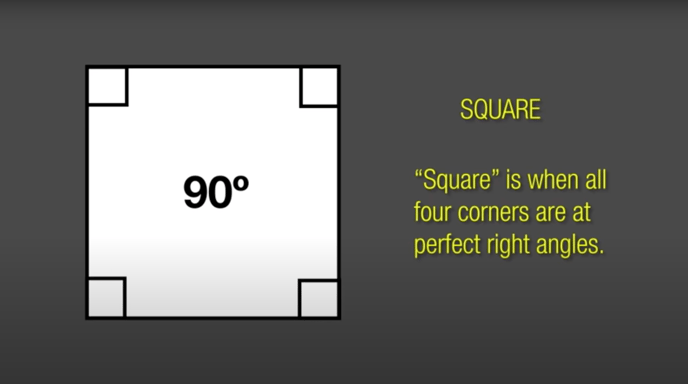
Square corners are important in many building and craft projects. They help ensure that walls, frames, and surfaces fit together well. This guide shows two easy ways to check if a corner is square.
Both methods use simple tools or measurements. You can do these checks quickly without special skills. Read on to learn how to measure square corners accurately.
Using A Carpenter’s Square
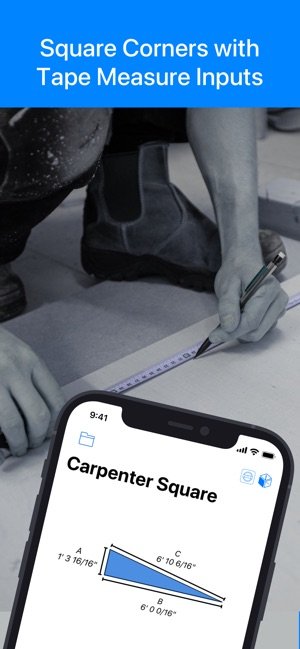
A carpenter’s square is a common tool for checking right angles. It has two arms that form a perfect 90-degree angle. You can use it to see if your corner is truly square.
- Place the inside corner of the carpenter’s square against the corner to check.
- Make sure both arms of the square touch the edges of the materials.
- Look along the arms to see if they line up perfectly with the edges.
- If there is a gap or the square does not fit flush, the corner is not square.
- Adjust your work until the square fits tightly without gaps.
Applying The 3-4-5 Triangle Technique
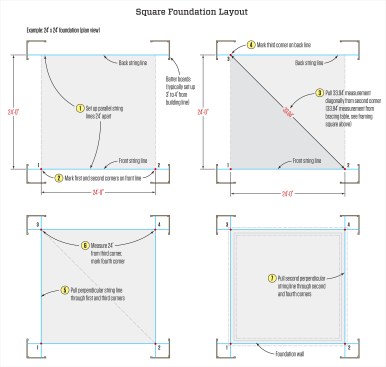
The 3-4-5 triangle technique uses the Pythagorean theorem. This method works well when you do not have a carpenter’s square. It helps you measure a right angle by checking three lengths.
| Side | Length (units) | Purpose |
|---|---|---|
| Short side 1 | 3 | Mark along one edge of the corner |
| Short side 2 | 4 | Mark along the other edge of the corner |
| Hypotenuse | 5 | Distance between the two marks |
Follow these steps to use the 3-4-5 method:
- From the corner, measure 3 units along one edge and mark the spot.
- Measure 4 units along the other edge and mark that spot.
- Measure the distance between the two marks.
- If the distance is exactly 5 units, the corner is square.
- If not, adjust the corner and repeat the measurements.

Credit: www.familyhandyman.com
Advanced Techniques For Precision
Measuring square corners accurately is important for many projects. Using advanced tools can improve your results. These tools help you get exact angles and distances.
This guide covers two key tools: laser measuring tools and digital angle finders. Both tools offer ways to measure square corners with high precision.
Laser Measuring Tools
Laser measuring tools use light to measure distances quickly and precisely. They are very useful for checking the squareness of corners in large spaces.
- Place the laser at one corner of the square area.
- Point the laser beam along one edge and note the distance.
- Move the laser to the adjacent edge and measure again.
- Use the Pythagorean theorem to confirm the corner is square.
- Repeat measurements to ensure consistency.
Some laser tools have built-in features to check right angles directly. This reduces calculation errors and saves time.
Digital Angle Finders
Digital angle finders measure the exact angle between two surfaces. They help verify that corners are exactly 90 degrees.
| Feature | Benefit |
|---|---|
| Digital Display | Shows angle readings clearly |
| Calibration Function | Ensures accurate measurements |
| Magnetic Base | Keeps tool steady on metal surfaces |
| Hold Function | Freezes angle reading for easy recording |
Using a digital angle finder with a laser tool gives double assurance. This method is best for projects needing very tight tolerances.
Common Mistakes And How To Avoid Them
Measuring square corners is a task that needs care and attention. Small mistakes can cause big problems in your project.
Knowing common mistakes helps you get better results. This guide shows what to watch out for and how to fix it.
Misreading Measurements
One common mistake is misreading the tape or ruler. This happens when you do not look closely at the marks.
Always check your measurement twice. Read numbers carefully and note the right units, like inches or centimeters.
- Use a clear tape measure with easy-to-read marks
- Hold the tape straight and tight against the surface
- Check the measurement from the right starting point
- Write down numbers to avoid forgetting
Ignoring Tool Calibration
Another mistake is ignoring if your tools are accurate. Tools can wear out or get damaged over time.
Check your tools regularly. Calibrate or replace them if they do not give correct measurements.
- Compare your tape measure with a known standard ruler
- Look for bent or stretched tape marks and avoid using them
- Use a carpenter’s square that is checked for true right angles
- Keep tools clean and store them properly to prevent damage
Tips For Consistent Accuracy
Measuring square corners is important for many building and craft projects. Getting accurate measurements helps pieces fit well together.
Using the right tools and checking your work can save time and prevent mistakes. Here are some tips to keep your measurements accurate.
Double-checking Measurements
Always measure twice before cutting or marking. This simple habit catches small errors early.
Use different tools to verify the same measurement if possible. This helps confirm accuracy and builds confidence in your work.
- Mark your first measurement lightly.
- Measure the same corner again from the same starting point.
- Compare measurements from opposite sides of the corner.
- Use a carpenter’s square to check for true 90-degree angles.
Maintaining Tools Properly
Clean and store your tools after each use. Dirt and rust can cause wrong measurements.
Check your tools regularly for damage or wear. Replace any that no longer give correct readings.
- Wipe measuring tapes and rulers with a dry cloth.
- Keep squares and levels in a protective case.
- Check calibration of tools like laser measures.
- Oil metal parts to prevent rust and stiffness.
Frequently Asked Questions
How Do You Check If A Corner Is Perfectly Square?
To check a corner’s squareness, use a carpenter’s square or try the 3-4-5 method. Both ensure a 90-degree angle accurately.
What Tools Are Best For Measuring Square Corners?
The best tools are a carpenter’s square, combination square, or speed square. They provide precise and quick measurements of square corners.
Why Is Measuring Square Corners Important In Construction?
Measuring square corners ensures structural accuracy, stability, and proper fitting of materials. It prevents alignment errors and costly rework.
Can I Measure Square Corners Without Professional Tools?
Yes, use the 3-4-5 triangle method with a tape measure. It’s a simple and effective way to check corner squareness.
Conclusion
Understanding how to measure square corners is crucial. It ensures precise construction and design. Always start by checking right angles with simple tools. A carpenter’s square or measuring tape works well. Consistent practice leads to better accuracy. Remember, patience is key.
Mistakes happen, but learning from them improves skills. A solid foundation begins with well-measured corners. This makes your projects stronger and more reliable. Keep measuring tools handy for every task. Over time, accuracy becomes second nature. Square corners enhance the quality of your work.
Happy measuring!