Are you ready to take your woodworking skills to the next level? If you’re working on rafters, mastering the speed square can make a huge difference.
This simple tool helps you measure and mark angles quickly and accurately, saving you time and frustration. Imagine cutting perfect rafters every time, without second-guessing your measurements. Keep reading, and you’ll discover step-by-step how to use a speed square like a pro—and make your next project smoother and more precise than ever before.
Credit: www.jlconline.com
Choosing The Right Speed Square
A speed square is a tool used to mark angles and guide cuts on rafters. Picking the right one helps you work faster and more accurately.
It is important to choose a speed square that fits your needs and lasts long. This guide focuses on materials, durability, size, and measurement units.
Materials And Durability
Speed squares come in different materials like aluminum, steel, and plastic. Aluminum is light and rust-resistant, making it easy to carry.
Steel is very strong but heavier and can rust without care. Plastic is cheap but not as durable for heavy use.
- Aluminum: Lightweight, rust-proof, good for most tasks
- Steel: Very strong, heavier, may rust
- Plastic: Affordable, less durable, best for light work
Size And Measurement Units
Speed squares come in various sizes, usually from 7 to 12 inches. Choose a size that fits your work style and project needs.
Most speed squares show measurements in inches. Some also include metric units. Pick one with measurement units you understand well.
- 7-inch squares are compact and easy to carry
- 12-inch squares provide longer straight edges for larger work
- Inches are common in the US; metric units help with precise projects
Credit: www.jlconline.com
Basic Speed Square Features
The speed square is a simple, useful tool for carpenters and builders. It helps measure and mark angles quickly and accurately.
Understanding the basic features of a speed square makes it easier to use for cutting rafters and other tasks.
Common Markings
The speed square has several markings that help with measurements and angles. These include degree markings, common and hip/val markings, and ruler edges.
- Degree markings:Numbers around the curved edge show degrees from 0 to 90.
- Common and hip/val markings:These help with rafter cuts for roofs.
- Ruler edges:Straight edges marked in inches or centimeters for measuring lengths.
Pivot Point And Lip
The pivot point is the corner where the speed square rotates. It lets you set angles easily. The lip is the flat edge that rests against the wood to keep the square steady.
| Part | Function |
| Pivot Point | Acts as the rotation center for marking angles. |
| Lip | Keeps the square firmly against the wood edge. |
Marking Rafter Cuts
A speed square is a useful tool for marking rafter cuts. It helps you draw accurate lines for cutting wood. This guide explains how to use it for rafters.
Knowing how to mark rafter cuts saves time and reduces mistakes. Follow the steps to measure and mark your rafters correctly.
Measuring Common Rafters
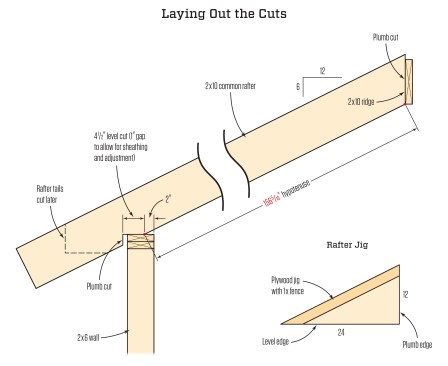
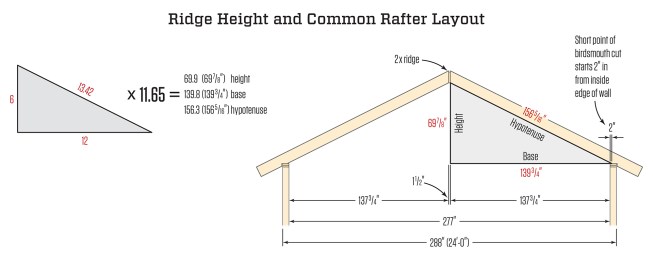
Common rafters run from the wall plate to the ridge board. Use the speed square to mark the birdsmouth and plumb cuts. These cuts let the rafter sit flat on the wall and ridge.
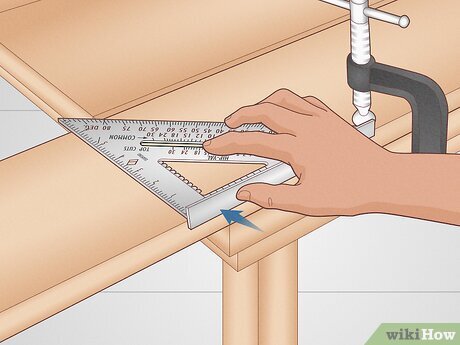
Place the speed square on the edge of the rafter. Set the pivot point at the rafter’s edge. Align the square to the pitch angle of the roof. Mark the plumb cut line along the square’s edge.
- Find the roof pitch on the speed square scale
- Align the pivot point with the rafter edge
- Draw the plumb cut line using the square’s edge
- Flip the square to mark the birdsmouth seat cut
Laying Out Hip And Valley Rafters
Hip and valley rafters run diagonally and have complex angles. Use the speed square to find the correct angles for these rafters. Mark the plumb and seat cuts carefully.
Hold the speed square on the rafter edge. Use the hip/valley scale on the square to set the angle. Mark the plumb cut on the end of the rafter. Then, mark the seat cut so the rafter fits against the wall plate.
- Use the hip/valley scale on the speed square
- Align pivot point with the rafter edge
- Mark plumb cut at the rafter end
- Mark seat cut for wall plate seating
Using The Speed Square For Angles
The speed square is a tool used by carpenters to measure and mark angles quickly. It helps cut rafters at the correct angle for a roof.
You can use the speed square to set bevel angles and transfer them directly to the wood. This makes your cuts more accurate and easier.
Setting The Bevel
To set the bevel angle, place the speed square on a flat surface. Hold it firmly and rotate the pivot until the desired angle lines up with the edge.
The bevel edge will show the angle you want to cut. Lock the pivot to keep the angle steady while marking the wood.
- Place the speed square flat on the surface
- Rotate the pivot to the needed angle
- Align the angle mark with the edge
- Lock the pivot to fix the angle
Transferring Angles To Wood
Put the speed square against the edge of the wood. Use the pencil to draw along the square’s edge at the set angle.
This mark shows where to cut. Repeat this for all rafters to keep your roof consistent and strong.
- Place the square against the wood edge
- Hold the square firmly to avoid movement
- Draw a line along the square’s angled edge
- Cut along the marked line
Speed Square Safety Tips
Using a speed square helps you make accurate cuts on rafters. Safety is important to avoid injuries and mistakes. Follow simple tips to handle your speed square carefully.
These safety tips cover how to hold and use the tool. They also help you avoid common measurement errors that can affect your work.
Proper Handling
Hold the speed square firmly to keep it from slipping. Always keep your fingers away from the cutting edge. Use the tool on a stable surface to prevent accidents.
- Wear gloves to protect your hands.
- Keep the square clean and free of debris.
- Store it safely when not in use.
- Check for cracks or damage before each use.
- Use the square only for its intended purpose.
Avoiding Measurement Errors
Measure twice before cutting to avoid mistakes. Make sure the speed square is flush against the material. Double-check angles and marks to ensure accuracy.
| Common Error | How to Avoid |
| Misaligned edge | Press square firmly against material edge |
| Wrong angle reading | Verify angle with a protractor or angle finder |
| Incorrect marking | Use a sharp pencil and mark clearly |
| Slipping tool | Hold square steady and use clamps if needed |
Advanced Rafter Layout Techniques
Using a speed square helps you measure and mark angles quickly. It is key for cutting rafters accurately. Advanced techniques improve your speed and precision.
These skills help with complex roof shapes. You can make compound cuts and use the speed square with other tools to get better results.
Compound Cuts
Compound cuts are angles that go in two directions at once. They are common in hip and valley rafters. The speed square can mark these angles.
Set the speed square on the rafter edge. Use the degree scale to find the roof pitch. Mark the cut line on the board. Then, tilt the saw blade to match the second angle.
- Mark the plumb cut angle with the speed square
- Adjust saw blade for bevel angle
- Cut along the marked lines carefully
- Check fit before final assembly
Using Speed Square With Other Tools
The speed square works well with tape measures and framing squares. Use a tape measure to get exact lengths. Then use the speed square for angle marks.
A framing square helps with larger layouts. It can double-check angles and measurements. Combine these tools to improve accuracy and speed.
- Measure length with tape measure
- Mark angles with speed square
- Use framing square for complex layouts
- Double-check all marks before cutting

Credit: www.wikihow.com
Frequently Asked Questions
What Is A Speed Square Used For In Roofing?
A speed square is a versatile tool used to mark angles, measure cuts, and guide saws for rafters. It simplifies layout tasks and ensures accuracy in roof framing.
How Do You Measure Rafter Angles With A Speed Square?
Place the pivot at the rafter’s edge, align the square’s blade along the rafter, and read the angle on the degree scale. This method ensures precise cuts for roof slopes.
Can A Speed Square Replace A Protractor For Rafters?
Yes, a speed square combines protractor functions with a ruler and guide, making it ideal for quick, accurate rafter angle measurements during roofing projects.
How Do You Mark Common Rafter Cuts Using A Speed Square?
Align the speed square on the rafter’s edge, set the desired angle on the degree scale, and draw a straight cut line along the square’s edge for accurate cuts.
Conclusion
Using a speed square makes cutting rafters easier and faster. It helps you measure angles and mark cuts clearly. Practice a few times to get comfortable with the tool. Accuracy saves wood and avoids mistakes. Keep your speed square handy for any roofing job.
This simple tool brings precision to your work every time. Try it, and see the difference in your projects.