Are you tired of making uneven cuts that ruin your woodworking projects? Learning how to use a combination square can change everything.
This simple tool helps you measure, mark, and cut wood with precision every time. Imagine the confidence you’ll feel when your cuts fit perfectly, saving you time and frustration. You’ll discover easy steps to master your combination square and take your woodworking skills to the next level.
Keep reading—your best cuts are just ahead.

Credit: www.wikihow.com
Choosing The Right Combination Square
A combination square is a useful tool for cutting wood accurately. It helps measure and mark wood for precise cuts. Picking the right one makes your work easier and more accurate.
Different combination squares have unique features. Knowing these features helps you select the best tool for your woodworking projects.
Types Of Combination Squares
There are several types of combination squares. Each type fits different needs and tasks in woodworking.
The most common type has a ruler and a movable head. This head can measure angles and depths. Some squares also include a level and scriber for marking.
- Standard combination square: Basic ruler with adjustable head
- Try square: Fixed 90-degree angle for quick checks
- Speed square: Triangular shape for fast marking and measuring
- Digital combination square: Shows measurements on a digital screen
Materials And Build Quality
Good materials make a combination square last longer and work better. Look for strong metals and sturdy construction.
Steel rulers resist bending and stay accurate. The head should be solid and move smoothly without wobbling. Avoid plastic parts that break easily.
- Stainless steel: Resists rust and stays straight
- Cast iron: Heavy and stable for precise measuring
- Aluminum: Lightweight but less durable
- Brass: Durable and corrosion-resistant, often used for heads

Credit: www.wikihow.com
Setting Up Your Combination Square
A combination square is a tool used to mark and measure wood. Setting it up correctly helps you make accurate cuts. This guide shows you how to adjust and calibrate the tool before cutting.
Taking time to set your combination square right saves time and prevents mistakes. Follow these steps to prepare your tool for cutting wood.
Adjusting The Blade
The blade is the part that slides along the ruler. To adjust it, loosen the locking screw and slide the blade to the needed length. Tighten the screw firmly to hold it in place.
Make sure the blade is straight and aligned with the ruler edge. This helps you draw straight lines and get precise measurements for cutting.
- Loosen the locking screw
- Slide the blade to the correct mark
- Check the blade is straight
- Tighten the screw securely
Calibrating For Accuracy
Calibration makes sure the tool measures correctly. Place the ruler against a flat surface and check if the blade forms a perfect 90-degree angle with the ruler.
If the angle is off, loosen the blade and adjust it slightly. Repeat the check until the blade and ruler meet at a right angle. This step ensures your cuts will be precise.
- Place ruler on a flat edge
- Check the blade angle with the ruler
- Loosen the blade if needed
- Adjust blade to 90 degrees
- Tighten the locking screw
Marking Wood For Precise Cuts
Using a combination square helps you mark wood accurately. Accurate marks lead to cleaner, better cuts.
This tool is useful for measuring and drawing lines that guide your saw or chisel.
Measuring And Scribing
First, set the combination square to the length you want to mark. Tighten the locking screw to hold the ruler in place.
Place the ruler on the wood’s edge and use a sharp pencil or marking knife to scribe a fine line along the ruler’s edge.
- Check the ruler for zero marks before measuring.
- Hold the square firmly to avoid slipping.
- Use a pencil for rough cuts, a knife for fine work.
- Double-check measurements before marking.
Using The Square’s Edge For Straight Lines
The metal edge of the combination square provides a straight guide for your pencil or knife.
| Tool Part | Use |
| Ruler | Measure distances from edge |
| Head (stock) | Align with wood edge for 90° lines |
| Scriber | Make precise marks on wood |
Place the head against the wood edge. Run your pencil along the ruler’s metal edge to draw a straight line.
Techniques For Accurate Wood Cutting
Using a combination square helps you make precise cuts in wood. It ensures the lines you follow are straight and measured well.
Good cutting starts with careful setup. This guide shows how to align the square and secure wood for clean results.
Aligning The Square With The Cut Line
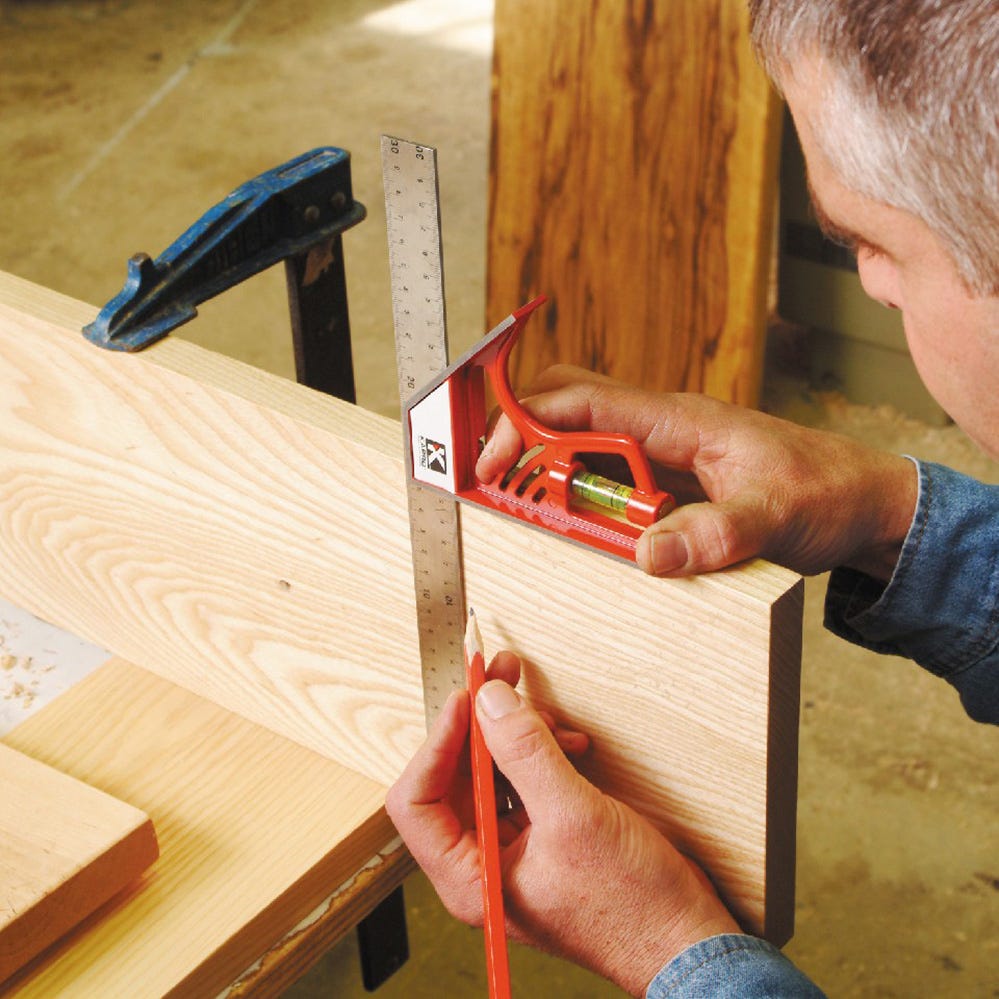
Place the combination square on the wood’s edge. Make sure the ruler part touches the wood surface flat. The head should rest firmly against the wood’s edge.
- Check the square’s blade for any damage before use.
- Line up the ruler with your marked cut line clearly.
- Hold the square steady to avoid shifting while marking.
- Use a sharp pencil or marking knife for clear lines.
Clamping And Stabilizing The Wood
Keep your wood stable to prevent slips during cutting. Use clamps to hold the wood firmly on your workbench.
| Clamp Type | Use | Tip |
| C-Clamp | Strong hold on flat surfaces | Protect wood with scrap pieces |
| Bar Clamp | Long pieces of wood | Adjust tension slowly |
| Spring Clamp | Quick holds for small parts | Use with care to avoid damage |
Common Mistakes To Avoid
Using a combination square helps you cut wood accurately. Avoiding mistakes keeps your cuts clean and precise.
Here are some common errors to watch out for when using a combination square.
Misreading Measurements
Many people misread the scale on a combination square. This leads to cuts that are too short or too long.
Always check the measurement twice before marking the wood. Use good lighting to see the numbers clearly.
- Look closely at the measurement marks.
- Confirm you read the right side of the ruler.
- Double-check your measurement before cutting.
Improper Square Placement
Placing the combination square incorrectly causes crooked or uneven cuts. The head must sit flat against the wood edge.
If the square is tilted or loose, your lines will not be straight. Hold it firmly and make sure it is flush with the wood.
- Press the square’s head firmly against the wood edge.
- Keep the ruler tight to the surface without gaps.
- Check alignment before drawing your cut line.
Maintaining Your Combination Square
Keeping your combination square in good shape helps you cut wood accurately. Proper care extends the tool’s life and ensures precise measurements every time.
Simple maintenance steps can prevent damage and save you money. Focus on cleaning, storing, and checking the tool regularly.
Cleaning And Storage Tips
After each use, wipe your combination square with a dry cloth. Remove any sawdust, dirt, or moisture to stop rust from forming.
- Use a soft brush to clean hard-to-reach areas.
- Apply a light coat of machine oil to metal parts to prevent rust.
- Store the tool in a dry place, away from humidity.
- Keep it in a protective case or toolbox to avoid damage.
Regular Calibration Checks
Calibration ensures your combination square gives correct readings. Check the accuracy often to avoid errors in your wood cutting projects.
| Check Type | How to Perform | Frequency |
| Blade Square Check | Align blade with a known square edge | Monthly |
| Protractor Accuracy | Compare angle readings with a protractor | Every 3 months |
| Locking Mechanism | Test if blade locks firmly without slipping | Before each use |
Credit: www.rockler.com
Frequently Asked Questions
What Is A Combination Square Used For In Woodworking?
A combination square measures and marks wood accurately. It helps check angles, depth, and straight lines for precise cuts and layout.
How Do You Set A Combination Square For Cutting?
Loosen the blade lock, slide the ruler to the desired measurement, then tighten it. This ensures accurate marking and cutting.
Can A Combination Square Measure Both 45 And 90 Degrees?
Yes, it has a 90-degree and 45-degree angle for versatile woodworking measurements and layout tasks.
How Do You Maintain A Combination Square For Long Use?
Keep it clean and dry, avoid dropping it, and periodically check the blade for straightness to ensure accuracy.
Conclusion
Mastering the combination square simplifies wood cutting. It ensures precise measurements every time. This tool helps create clean, accurate cuts. Its versatility is unmatched in woodworking. Remember to check the blade’s alignment. A misaligned blade leads to errors. Always keep the square clean and rust-free.
Practice often to improve skills. Soon, you’ll handle wood like a pro. Safety is important, so use protective gear. The right techniques and tools make a difference. Happy woodworking!