Are you ready to tackle your plumbing project but unsure how to cut copper pipe for fittings? Getting this step right is crucial for a perfect fit and leak-free connections.
Imagine how frustrating it would be to make mistakes that waste time and money. Don’t worry—this guide will walk you through simple, clear steps to help you cut copper pipes like a pro. By the end, you’ll have the confidence to handle your pipes smoothly and securely.
Keep reading, and let’s make your plumbing work easier than ever!
Credit: www.oatey.com
Tools Needed
Cutting copper pipe requires the right tools for a clean and accurate cut. Using proper tools makes fitting easier and ensures a tight seal.
This guide covers the types of pipe cutters and additional tools you need to prepare copper pipes for fittings.
Types Of Pipe Cutters
Pipe cutters come in several types. Each type suits different pipe sizes and cutting needs. Choosing the right cutter helps you cut copper pipes smoothly without damaging them.
- Tube Cutter:A handheld tool that clamps around the pipe and cuts by rotating a sharp wheel. Best for small to medium pipes.
- Hacksaw:A manual saw with a fine blade. Useful if you don’t have a tube cutter but requires careful cutting to keep edges smooth.
- Rotary Cutter:A heavy-duty cutter that uses a rotary blade. Suitable for thicker pipes and professional use.
- Pipe Shears:Scissor-like tools designed for thin copper pipes. They make quick, clean cuts but only work on smaller diameters.
Additional Tools For Preparation
| Tool | Purpose |
| Deburring Tool | Removes sharp edges and burrs from the cut pipe ends |
| Measuring Tape | Measures pipe length before cutting |
| Marker | Marks the cut line on the pipe for accuracy |
| Gloves | Protects hands while cutting and handling pipes |
| Sandpaper or Emery Cloth | Smooths pipe ends before fitting |
Preparing The Pipe
Cutting copper pipe for fittings starts with good preparation. You need to measure and mark the pipe accurately. Then, secure the pipe so it does not move during cutting.
Taking time in these steps makes the cut clean and safe. This helps the pipe fit well with the fittings.
Measuring And Marking
Measure the length of pipe you need using a tape measure. Mark the cutting point clearly with a marker or pencil. Make sure the mark is straight around the pipe.
- Use a tape measure for exact length
- Mark the pipe with a permanent marker
- Draw a line all around the pipe for a straight cut
- Double check your measurements before cutting
Securing The Pipe
Hold the pipe firmly to avoid slipping. Use a pipe vise or clamp to keep it steady. This helps you make a clean and safe cut.
| Tool | Purpose |
| Pipe vise | Holds pipe firmly in place |
| Clamp | Secures pipe to workbench |
| Work surface | Stable area for cutting |
Cutting Techniques
Cutting copper pipes correctly helps ensure a tight fit for plumbing. Using the right tools makes the job easier and safer.
This guide explains two common ways to cut copper pipes for fittings. You will learn how to use a pipe cutter and a hacksaw.
Using A Pipe Cutter
A pipe cutter gives a clean, straight cut on copper pipes. It works like a clamp with a sharp wheel that scores the pipe.
Place the pipe cutter around the pipe and tighten it gently. Rotate the cutter around the pipe while tightening until the pipe cuts through.
- Secure the pipe cutter on the pipe
- Turn the cutter around the pipe evenly
- Tighten the knob a little after each rotation
- Stop when the pipe separates cleanly
- Remove any burrs with a deburring tool
Using A Hacksaw
A hacksaw can cut copper pipes without special tools. It needs a steady hand to make a straight cut.
Clamp the pipe securely before cutting. Saw slowly back and forth along the marked line until the pipe is cut through.
- Mark the cutting point on the pipe
- Secure the pipe in a vise or clamp
- Use a fine-toothed hacksaw blade
- Saw slowly to avoid bending the pipe
- Remove rough edges with a file or deburring tool
Smoothing The Edges
Cutting copper pipe for fittings leaves rough edges. Smoothing these edges helps the pipe fit better. It also prevents damage to fittings and leaks.
Proper edge smoothing makes your plumbing work last longer. It also makes the pipe easier to handle safely.
Deburring The Cut
After cutting, the pipe ends have sharp burrs inside and outside. Burrs can stop the pipe from fitting well. They can also block water flow.
Use a deburring tool or a round file to remove these burrs. Hold the pipe firmly and run the tool around the edges. Make sure to smooth both inside and outside edges.
- Insert the deburring tool into the pipe end
- Rotate the tool to shave off burrs inside
- File the outside edge to make it smooth
- Check the edges with your fingers for rough spots
Cleaning The Pipe Ends
Cleaning the pipe ends removes dirt, oil, and metal shavings. Clean pipe ends help fittings seal tightly. Use a cloth or sandpaper to clean the surface.
For best results, use fine sandpaper or steel wool. Rub the pipe ends until they look shiny and smooth. Make sure the pipe is dry before fitting.
- Wipe off loose debris with a clean cloth
- Rub with fine sandpaper or steel wool
- Remove oils and dirt for a clean surface
- Dry the pipe ends thoroughly
Checking The Fit
Cutting copper pipe for fittings requires careful checking to ensure a proper fit. A good fit helps avoid leaks and makes installation easier.
After cutting the pipe, test fitting is important. It shows if the pipe and fitting match well or need adjustment.
Test Fitting The Pipe
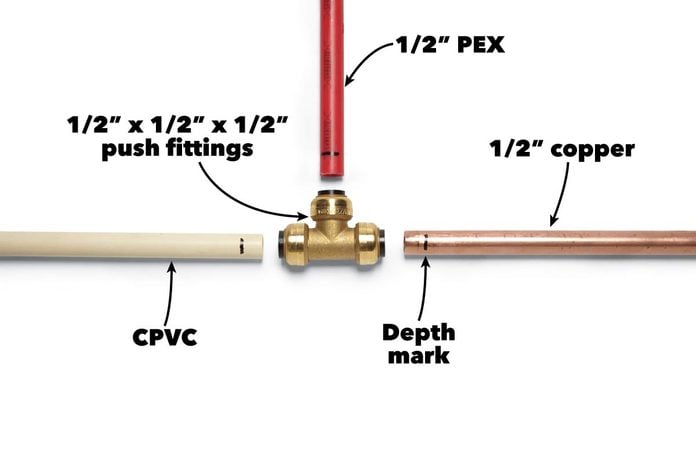
Insert the copper pipe into the fitting gently. The pipe should slide in smoothly but fit snugly. Avoid forcing it, which can damage the pipe or fitting.
- Check that the pipe goes fully into the fitting.
- Look for any gaps between the pipe and fitting.
- Make sure the pipe end is cut straight and clean.
- Rotate the pipe slightly to check smooth movement.
Adjusting For A Perfect Fit
If the pipe does not fit well, adjustments are needed. This keeps your plumbing leak-free and strong.
| Problem | Cause | Solution |
| Pipe too long | Cut not flush | Trim pipe end squarely |
| Pipe too tight | Debris inside fitting | Clean fitting and pipe end |
| Pipe too loose | Cut too short | Cut new pipe piece to correct length |

Credit: www.familyhandyman.com
Safety Tips
Cutting copper pipe requires care to avoid injuries. Safety is important before and during the work.
Use the right tools and follow safe methods. This guide covers protective gear and safe cutting practices.
Protective Gear
Wear protective gear to keep yourself safe from sharp edges and flying debris. Always use safety equipment.
- Safety goggles to protect your eyes
- Gloves to shield your hands from cuts
- Long sleeves to cover your arms
- Closed-toe shoes to protect your feet
- Ear protection if using power tools
Safe Cutting Practices
Follow these steps to cut copper pipe safely and cleanly. Avoid rushing to reduce accidents.
- Secure the pipe firmly with a pipe clamp or vise.
- Mark the cut line clearly with a marker.
- Use a proper pipe cutter or hacksaw designed for copper.
- Cut slowly and evenly to avoid jagged edges.
- Wear protective gear at all times during cutting.
- Deburr the pipe edges with a reamer or file after cutting.
- Keep your workspace clean and free of obstacles.
Credit: www.familyhandyman.com
Frequently Asked Questions
How Do I Measure Copper Pipe For Cutting?
Measure the pipe length using a tape measure. Mark the cut point clearly with a marker. Accurate measurement ensures proper fitting and prevents wastage of copper pipe.
What Tools Are Best For Cutting Copper Pipe?
Use a pipe cutter or a hacksaw for clean cuts. Pipe cutters provide a smooth, burr-free edge, ideal for fittings. Hacksaws require careful handling to avoid uneven cuts.
How To Ensure A Straight Cut On Copper Pipe?
Align the pipe cutter or saw perpendicular to the pipe. Rotate the cutter steadily or saw straight through. This prevents angled cuts and ensures a tight fit for fittings.
Can I Cut Copper Pipe Without Damaging It?
Yes, by using the right tools and steady pressure. Avoid excessive force to prevent deforming or crushing the pipe. Proper cutting maintains pipe integrity for effective plumbing.
Conclusion
Cutting copper pipes isn’t hard with the right tools. Practice makes perfect. Always measure twice, cut once. Use a pipe cutter for best results. Remember to deburr edges for a smooth fit. Safety first: wear gloves and goggles. Clean pipes help fittings connect easier.
Patience is key. Avoid rushing the process. By following these steps, you’ll achieve a precise cut. Good luck with your plumbing tasks!