Are you struggling to get perfect angles when cutting wood? Using a protractor can make all the difference in your woodworking projects.
With the right technique, you’ll measure and mark precise angles quickly and confidently. This guide will show you exactly how to use a protractor for cutting wood, so your cuts are clean, accurate, and professional-looking every time. Keep reading to unlock simple tips that will save you time, reduce mistakes, and help you create woodwork you’ll be proud of.
Choosing The Right Protractor
Using a protractor helps you measure angles accurately when cutting wood. Picking the right protractor is important for clean, precise cuts.
This guide covers different types of protractors and what features to look for. You will also learn about materials and durability to choose the best tool.
Types Of Protractors
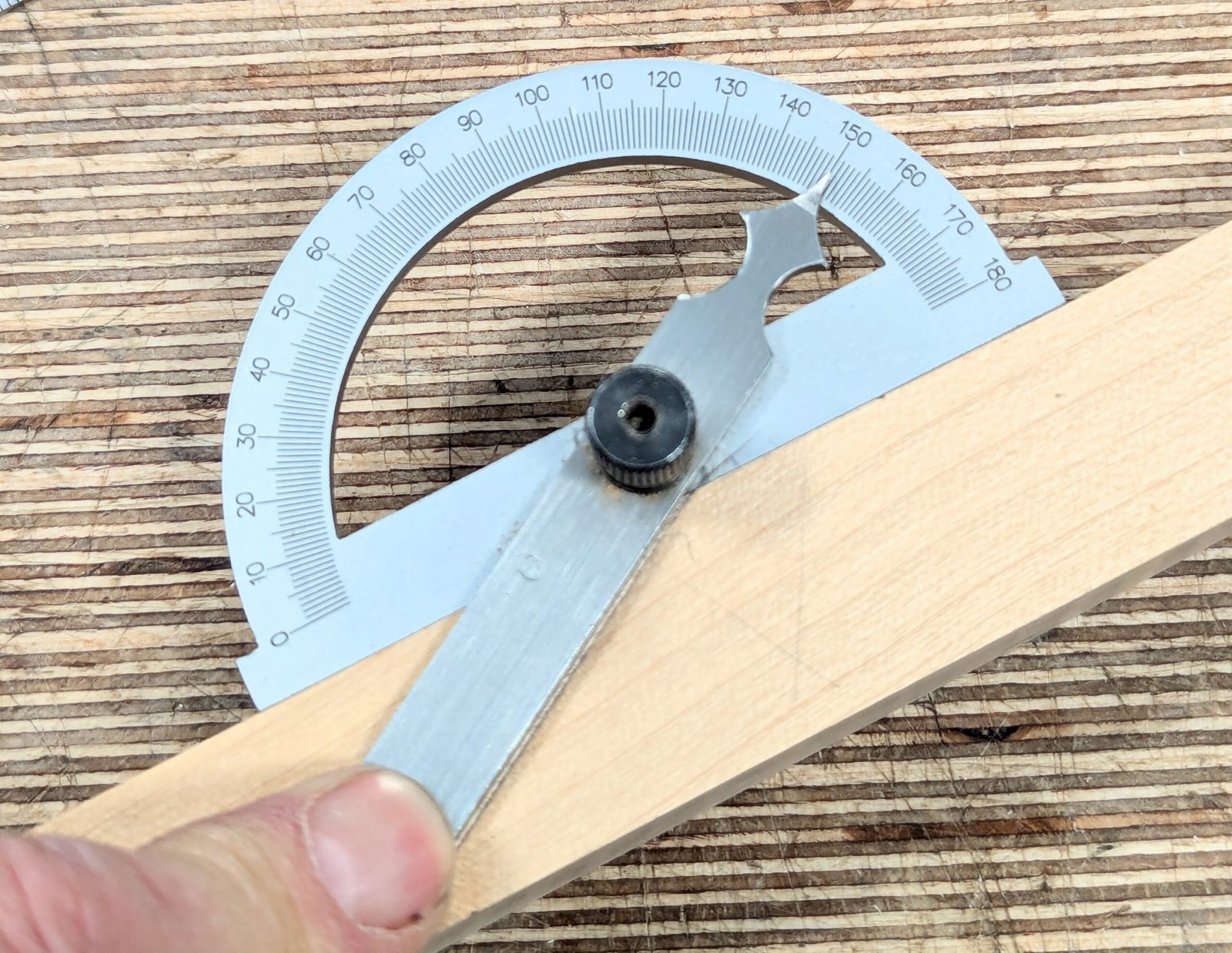
There are several types of protractors used for woodworking. Each type fits different tasks and skill levels.
- Standard Protractor:A simple semicircle shape, good for measuring basic angles.
- Bevel Protractor:Has a movable arm to measure and transfer angles easily.
- Digital Protractor:Shows angle measurements on a screen for quick reading.
- Combination Square with Protractor:Combines ruler and angle measurement in one tool.
Features To Look For
Choose a protractor with clear markings and easy adjustments. Good grip and locking ability help keep the angle steady.
| Feature | Why It Matters |
| Clear Markings | Helps read angles without mistakes |
| Locking Mechanism | Keeps angle fixed during cutting |
| Easy Adjustment | Speeds up angle setting |
| Compact Size | Makes tool easy to handle and store |
Materials And Durability
Look for protractors made from strong materials. Metal tools last longer but plastic ones are lighter.
- Metal protractors resist damage and hold accuracy over time.
- Plastic protractors are good for light work and easy handling.
- Check for rust-resistant coatings on metal tools.
- Strong hinges improve tool lifespan and performance.

Credit: www.wikihow.com
Preparing Your Workspace
Using a protractor to cut wood needs a clean and safe workspace. This helps you measure and cut accurately without distractions.
Organizing your area before starting saves time and reduces mistakes. It also keeps tools within reach for smooth work.
Setting Up A Stable Surface
Choose a flat and strong surface to work on. A stable base keeps wood steady for precise measuring and cutting.
Use clamps or weights to hold the wood in place. Avoid working on uneven or slippery tables to prevent accidents.
Organizing Tools And Materials
Keep your protractor, pencil, measuring tape, and saw close by. This saves time and avoids searching for tools.
Arrange wood pieces and materials neatly. Group similar items together to stay organized and work faster.
- Place the protractor on your dominant side
- Keep pencils and erasers nearby
- Store clamps and safety gear within reach
- Organize wood by size and type
Measuring Angles Accurately
Using a protractor helps you measure angles for cutting wood with precision. Accurate angle measurement ensures your cuts fit together well.
Follow simple steps to align the protractor, read the angle scale, and mark the cut line clearly on the wood.
Aligning The Protractor With Wood
Place the flat edge of the protractor along the edge of the wood. Make sure it sits flat without gaps or wobbling.
Line up the center hole of the protractor with the corner or point where you want to measure the angle.
- Keep the protractor steady to avoid shifting
- Use clamps if needed to hold it in place
- Check that the baseline of the protractor matches the wood edge
Reading The Angle Scale
Look at the curved edge of the protractor to find the angle scale. The numbers show degrees from 0° to 180°.
Read the number that lines up with the wood’s cutting line or mark. Use the inner or outer scale depending on your protractor design.
- Check if you need to read clockwise or counterclockwise
- Confirm the baseline is zeroed correctly
- Double-check the number to avoid mistakes
Marking The Cut Line
Use a sharp pencil to mark the angle line on the wood. Draw the line along the protractor edge or from the center point outward.
Make the mark clear and straight for easier cutting. Check the line again before cutting to ensure accuracy.
- Hold the pencil firmly for a clean line
- Use a ruler if needed to extend the line
- Label the angle if you are making multiple cuts
Making Precise Cuts
Using a protractor helps you make exact angles on wood. This guide shows you how to cut wood cleanly and accurately.
Careful preparation and the right tools improve your cutting results. Follow these tips to get smooth, precise edges.
Choosing The Right Saw
Select a saw that fits the type of cut and wood you have. Different saws work better for certain angles and materials.
- Use a miter saw for angled cuts and clean edges.
- A handsaw works well for small or detailed cuts.
- A circular saw is good for long, straight cuts.
- Choose a fine-tooth blade for smoother finishes.
Following The Marked Line
Mark your cutting line clearly with a pencil and a protractor. Check the angle twice before cutting to avoid mistakes.
| Tip | Reason |
|---|---|
| Use a sharp pencil | Creates clear, fine lines for accuracy |
| Clamp the wood | Keeps wood steady during cutting |
| Cut slowly along the line | Prevents slipping and uneven edges |
| Double-check measurements | Avoids cutting errors and waste |
Tips For Clean Edges
Clean edges make your project look professional. Use these tips to smooth and finish your wood cuts.
- Sand edges gently with fine-grit sandpaper.
- Cut with a steady hand and even pressure.
- Use masking tape on the cut line to reduce splintering.
- Keep saw blades sharp to avoid tearing the wood.
Common Mistakes To Avoid
Using a protractor to cut wood is a skill that needs care and attention. Many woodworkers make simple mistakes that can ruin a project.
Knowing what to avoid helps you make accurate cuts and saves time and materials.
Misreading The Protractor
One common mistake is reading the wrong side of the protractor. Protractors have two sets of numbers going in opposite directions.
Check carefully which scale matches your angle. Mistakes here cause wrong angle cuts and wasted wood.
- Always start from zero on the correct side
- Double-check the angle before marking
- Practice reading your protractor without rushing
Incorrect Positioning
Placing the protractor incorrectly on the wood leads to wrong angle marks. The center point must line up exactly with the wood edge.
If the protractor moves or is not flat, your angle will be off. This causes uneven cuts that do not fit well.
- Align the center hole with the wood’s edge
- Keep the protractor flat and stable
- Use clamps if needed to hold it in place
Rushing The Cut
Cutting wood too quickly after marking an angle can cause mistakes. Slow and steady cuts are safer and more accurate.
Rushing leads to slipping saws and jagged edges. Take your time to follow the marked lines carefully.
- Check your marks before cutting
- Cut slowly along the marked angle
- Stop if the saw slips and realign

Credit: www.wikihow.com
Maintaining Your Protractor
Keeping your protractor in good shape helps you cut wood accurately. Regular care prevents damage and ensures precise measurements.
This guide covers how to clean, store, and check your protractor for the best results.
Cleaning And Storage
Clean your protractor after each use. Dirt and sawdust can affect its accuracy. Use a soft cloth to wipe the surface gently.
- Remove dust with a dry brush or cloth
- Wipe with a damp cloth if needed
- Dry completely before storing
- Keep in a protective case or box
- Store in a cool, dry place away from sunlight
Calibration Checks
Regular calibration ensures your protractor measures angles correctly. Check it before important projects.
| Check Type | How to Perform | Frequency |
| Zero Alignment | Close protractor and check if zero lines match | Monthly |
| Angle Accuracy | Compare with a known angle or a digital protractor | Every 3 months |
| Marking Clarity | Ensure numbers and lines are clear and readable | Before each use |

Credit: www.wikihow.com
Frequently Asked Questions
How Do I Measure Angles With A Protractor For Wood Cutting?
Place the protractor’s center point at the wood’s edge. Align the baseline with the wood’s surface. Read the angle where the wood edge crosses the protractor scale for precise cutting.
What Type Of Protractor Is Best For Woodworking?
A clear, semicircular or adjustable bevel protractor works best. It offers accuracy and easy angle reading. Choose one with degree markings for precise wood cutting.
How To Mark Wood Accurately Using A Protractor?
After measuring, use a sharp pencil to mark the angle on the wood. Draw a straight line along the protractor’s edge to guide your cut.
Can I Use A Protractor For Cutting Angled Joints?
Yes, protractors help measure and mark angled joints accurately. This ensures tight fits and professional-looking wood joints in your projects.
Conclusion
Using a protractor for cutting wood makes tasks accurate and easy. Practice helps you understand angles better. Soon, you’ll cut with confidence. Mistakes happen, and that’s okay. They help you learn. Remember to measure twice and cut once. This saves time and wood.
Keep your tools sharp and clean. Safety is important. Wear safety gear and work in a well-lit area. With patience and practice, your wood projects will improve. Each cut becomes a step forward. Keep learning and experimenting. Your skills will grow over time.
Enjoy the process and celebrate your progress.