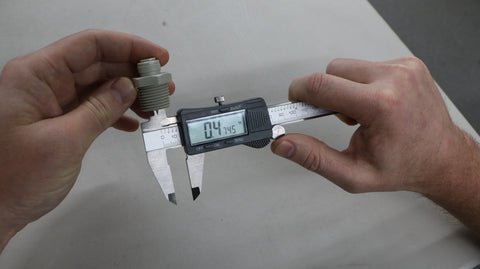
Are you trying to get an accurate measurement of a pipe’s diameter but don’t know where to start? Measuring pipe diameter with a caliper is easier than you think—and it can save you time and money on your projects.
Whether you’re working on plumbing, construction, or DIY repairs, knowing the exact size of your pipe is crucial. You’ll discover simple, step-by-step instructions to measure pipe diameter quickly and precisely. By the end, you’ll have the confidence to handle your tools like a pro and avoid costly mistakes.
Keep reading to unlock the secret to perfect pipe measurements every time!
Choosing The Right Caliper
Measuring pipe diameter accurately needs the right caliper. A good caliper helps you get precise results fast.
Choosing the right caliper depends on your needs and the pipe size. You must know the types and features to consider.
Types Of Calipers
There are several caliper types for measuring pipe diameter. Each type fits different tasks and budgets.
- Vernier Calipers:Manual and simple to use. They need careful reading for accuracy.
- Dial Calipers:Have a dial that shows measurements clearly. Easier to read than vernier.
- Digital Calipers:Show measurements on a screen. They are fast and reduce errors.
Pick a caliper type based on how often you measure and your budget. Digital calipers are good for quick work.
Features To Look For
Look for features that make measuring pipe diameter easier and more accurate. These features save time and reduce mistakes.
- Measurement Range:Choose a caliper that fits the pipe sizes you will measure.
- Accuracy:Higher accuracy means better results. Check the caliper’s precision specs.
- Material:Stainless steel calipers last longer and resist rust.
- Easy Reading:Digital or dial displays make reading simple.
- Locking Screw:Helps keep the jaws in place for steady measurement.
- Depth Gauge:Useful if you need to measure pipe depth or inner diameter.
Choose a caliper with the right features for your pipe measurement needs. This choice helps you work better and faster.
Preparing The Pipe
Measuring pipe diameter accurately requires a clean and steady pipe. Preparing the pipe properly helps get the best results with a caliper.
This guide covers two important steps before measuring: cleaning the surface and positioning the pipe.
Cleaning The Surface
Remove dirt, rust, and grease from the pipe surface. A clean surface allows the caliper jaws to touch the pipe properly.
- Use a clean cloth to wipe off loose dust and debris.
- If needed, apply a mild cleaner or rubbing alcohol to remove grease.
- Scrub gently with a wire brush to clear rust spots.
- Dry the pipe completely before measuring.
Positioning The Pipe
Place the pipe on a flat, stable surface to keep it steady during measurement. Proper positioning ensures an accurate reading.
| Tip | Reason |
|---|---|
| Lay the pipe horizontally | Prevents rolling and movement |
| Hold the pipe firmly | Stops shifting when using the caliper |
| Keep the pipe away from edges | Avoids accidental falls or damage |
Measuring Outer Diameter
Measuring the outer diameter of a pipe is important for many projects. A caliper is a tool that gives precise measurements.
This guide explains how to use a caliper to measure the outer diameter correctly and avoid mistakes.
Using The Caliper Jaws
Open the caliper jaws wide enough to fit around the pipe. Place the pipe between the jaws carefully.
Close the jaws gently until they touch the pipe. Do not squeeze too hard, or you may get a wrong reading.
- Make sure the jaws are perpendicular to the pipe surface
- Hold the caliper steady during measurement
- Read the measurement on the caliper scale or digital display
Avoiding Common Mistakes
Do not measure at an angle. This causes the size to look bigger than it is. Always keep the caliper straight.
Check the caliper zero setting before measuring. If it is off, reset it to zero to avoid errors.
- Do not press the jaws too hard on the pipe
- Measure at the widest part of the pipe
- Clean the pipe and caliper jaws before measuring

Credit: www.ebay.ca
Measuring Inner Diameter
Measuring the inner diameter of a pipe is important for fitting and flow calculations. A caliper helps you get an exact measurement inside the pipe.
This guide shows how to measure inner diameter with a caliper safely and accurately.
Using The Caliper Tips
Use the small tips of the caliper to measure inside the pipe. These tips fit inside the pipe and touch the inner walls.
Open the caliper until the tips gently press the pipe’s inner edges. Avoid forcing to prevent damage.
- Start with the caliper closed
- Insert the tips inside the pipe
- Slowly open the caliper until tips touch the inner walls
- Read the measurement on the scale
Ensuring Accurate Placement
Hold the caliper steady and straight inside the pipe. Make sure the tips sit flat against the inner surface.
Measure at several points to check for roundness. Take the average if the pipe is not perfectly round.
- Keep the caliper perpendicular to the pipe axis
- Avoid tilting or angling the tips
- Measure at multiple spots inside the pipe
- Record each measurement carefully
Measuring Wall Thickness
Measuring pipe wall thickness is important for safety and fit. A caliper helps you get accurate thickness readings.
This guide explains how to measure pipe wall thickness using a caliper.
Taking Multiple Measurements
Take several thickness readings around the pipe. This shows if the wall is even or has thin spots.
Use the caliper jaws to measure the pipe wall at different points. Make sure the caliper touches the pipe surface gently.
- Measure at least three points around the pipe circumference
- Measure at different pipe lengths if possible
- Record each measurement for comparison
Calculating Thickness
To find the wall thickness, measure the outside diameter and the inside diameter of the pipe.
Subtract the inside diameter from the outside diameter. Then divide by two to get the wall thickness.
| Measurement | Value (mm) |
|---|---|
| Outside Diameter (OD) | 50 |
| Inside Diameter (ID) | 44 |
| Wall Thickness | (OD – ID) ÷ 2 = (50 – 44) ÷ 2 = 3 mm |

Credit: www.dreamstime.com
Reading And Recording Measurements
Measuring pipe diameter with a caliper is a simple task. It gives you accurate sizes for your project.
Knowing how to read and record these measurements is important. It helps avoid errors and saves time.
Digital Vs. Vernier Calipers
Digital calipers show measurements on a screen. They are easy to read and quick to use.
Vernier calipers have a sliding scale. You read the measurement by matching lines on the scale.
- Digital calipers give direct readings in numbers.
- Vernier calipers require you to read two scales.
- Digital calipers are faster but need batteries.
- Vernier calipers do not need power and are durable.
Converting Units
Pipe diameter can be measured in inches or millimeters. Knowing how to convert units is helpful.
Calipers may show numbers in one unit. You might need to change these to match your project.
| Inches | Millimeters (mm) |
|---|---|
| 1 inch | 25.4 mm |
| 0.5 inch | 12.7 mm |
| 0.25 inch | 6.35 mm |
| 0.1 inch | 2.54 mm |
Tips For Accuracy
Measuring pipe diameter with a caliper needs care. Small mistakes can cause wrong readings.
Use these tips to get exact measurements every time you measure pipe diameter.
Caliper Calibration
Check your caliper before measuring. A wrong zero point gives wrong results.
Close the jaws gently and set the display to zero. Do this each time you use it.
- Clean the caliper jaws before calibration
- Zero the caliper with jaws fully closed
- Repeat calibration if temperature changes a lot
Consistent Pressure
Apply steady pressure when closing the caliper jaws on the pipe. Too much force can squash the pipe or bend the caliper.
Hold the caliper firmly, but avoid squeezing. This helps keep your measurement true to size.
- Use your thumb and index finger for steady grip
- Stop closing when jaws just touch the pipe surface
- Practice on a sample pipe to feel the right pressure
Common Challenges And Solutions
Measuring pipe diameter with a caliper can be tricky. Pipes are not always perfect circles. Small pipes also bring extra difficulty when using calipers.
This guide covers common problems and how to solve them. It helps you get accurate readings every time.
Dealing With Roundness Issues
Pipes often have slight bends or dents. This affects the roundness and makes measuring hard. Calipers can give wrong numbers if the pipe is not round.
- Measure at several points around the pipe.
- Take the largest and smallest readings.
- Calculate the average diameter from these readings.
- Use a flexible measuring tape if available for better shape check.
- Check for dents or damage before measuring.
These tips help you get a more reliable diameter even if the pipe is not perfectly round.
Handling Small Diameter Pipes
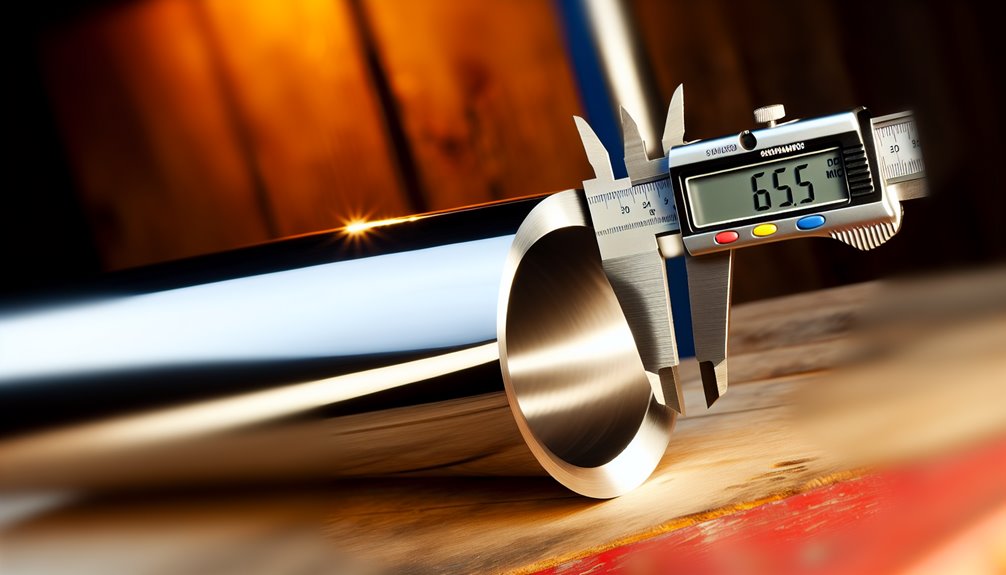
Small pipes are hard to measure because caliper jaws may not fit well. Tiny pipes also move easily, causing errors.
| Challenge | Solution |
| Caliper jaws too large | Use a small or digital caliper designed for small objects |
| Pipe moves while measuring | Hold pipe firmly or use a clamp to keep it steady |
| Difficulty reading caliper scale | Use calipers with digital displays for clarity |
| Uneven pressure on pipe | Apply gentle, even pressure to avoid deforming pipe |
Following these solutions improves accuracy when measuring small pipes.
Credit: vinssco.com
Frequently Asked Questions
How Do I Measure Pipe Diameter With A Caliper?
Open the caliper jaws and place them around the pipe’s outer edge. Close the jaws gently until they touch the pipe. Read the measurement on the caliper scale to find the pipe’s outer diameter accurately.
Can I Measure Internal Pipe Diameter Using A Caliper?
Yes, use the caliper’s internal jaws. Insert them inside the pipe and open them until they touch the inner walls. Then, read the measurement on the scale for the internal diameter.
What Type Of Caliper Is Best For Pipe Measurement?
A digital caliper is best for accurate pipe diameter measurement. It provides clear, easy-to-read measurements and reduces human error compared to manual calipers.
How To Ensure Accurate Pipe Diameter Measurement?
Make sure the caliper is properly zeroed before measuring. Hold the pipe steady and avoid applying too much pressure. Take multiple measurements to confirm accuracy.
Conclusion
Measuring pipe diameter with a caliper is simple and effective. This tool helps achieve accurate results. Just follow the steps outlined earlier. Practice makes perfect, so try it a few times. Precision in measurement leads to better project outcomes. Remember to handle the caliper gently.
Proper care ensures its long-lasting use. This method saves time and reduces errors. With practice, you’ll gain confidence in measuring. It’s a practical skill for many projects. Keep learning and refining your technique. Your projects will thank you for it.
Enjoy the process of becoming skilled at measuring!