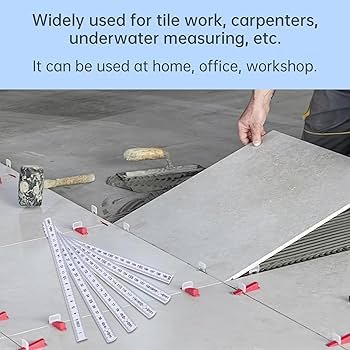
When you’re tackling flooring or tiling projects, precision is everything. Using the right tools can make a huge difference, and a folding ruler is one of the simplest yet most effective tools you can have.
But if you’re not sure how to use it correctly, you might end up with measurements that throw off your entire project. In this guide, you’ll discover easy steps to master your folding ruler, helping you get perfect cuts and flawless finishes every time.
Keep reading, and you’ll save time, reduce mistakes, and feel confident handling your flooring or tiling work like a pro.
Choosing The Right Folding Ruler
Using a folding ruler helps you measure floors and tiles accurately. Choosing the right ruler makes your work easier and more precise.
Consider the material, measurement units, and length before buying a folding ruler for flooring and tiling.
Material And Durability
Folding rulers come in different materials like wood, plastic, and metal. Wooden rulers feel sturdy but can break if dropped.
Metal rulers last longer and resist damage. Plastic rulers are light but may bend or crack. Choose a material that fits your work needs.
- Wood: Classic look, moderate durability
- Metal: Strong and long-lasting
- Plastic: Lightweight but less durable
Measurement Units
Check if the ruler shows metric units, imperial units, or both. Metric units use centimeters and millimeters. Imperial units use inches and feet.
| Unit Type | Used For | Example |
| Metric | Most flooring and tiling work worldwide | cm, mm |
| Imperial | Some countries like the USA | inches, feet |
| Dual Units | Flexibility in measuring | Both metric and imperial |
Length And Flexibility
Length affects how far you can measure without moving the ruler. Folding rulers vary from 2 to 6 feet or more.
Flexibility means how easily the ruler folds and unfolds. Smooth joints help you measure curves and corners better.
- Short rulers are easy to carry but need repositioning for large areas.
- Long rulers cover bigger spaces quickly.
- Check for tight folding joints to avoid measurement errors.

Credit: herometal.en.made-in-china.com
Preparing For Flooring And Tiling
Using a folding ruler correctly helps ensure precise measurements for flooring and tiling. Proper preparation is key to a smooth project. This guide covers important steps before you start.
Clear the workspace, inspect the surface, and gather your tools. These actions make your work easier and improve results.
Clearing The Workspace
Remove all furniture, rugs, and debris from the area. A clean space helps you measure and place tiles or flooring without obstacles.
- Move heavy objects to another room
- Sweep or vacuum the floor
- Ensure good lighting for better visibility
- Keep tools nearby but out of the workspace
Surface Inspection
Check the floor for cracks, bumps, or uneven spots. A smooth surface is important for laying tiles or flooring properly.
| Issue | Action Needed |
| Cracks | Fill with suitable filler |
| Bumps | Sand down or level |
| Uneven spots | Use leveling compound |
Gathering Necessary Tools
Collect all tools before you begin. A folding ruler is essential, but other items help with measuring and cutting.
- Folding ruler for accurate measurements
- Measuring tape for longer distances
- Utility knife or tile cutter
- Level to check flatness
- Chalk line for straight guides
Measuring Floors Accurately
Using a folding ruler helps you measure floors with precision. This is important for flooring and tiling projects.
Accurate measurements prevent mistakes and save materials. Learn how to use the folding ruler well.
Taking Straight Measurements
Extend the folding ruler fully to measure long distances. Keep it flat on the floor to avoid errors.
Start measuring from one edge of the floor. Read the number at the other edge carefully.
- Place the ruler firmly to stop slipping
- Check that it lies flat on the surface
- Use the ruler’s markings to read length
- Double-check measurements for accuracy
Handling Corners And Angles
Fold the ruler at the joints to fit corners. This helps measure edges that are not straight.
Align the ruler along one wall, then fold it to measure the next wall. Note the angles carefully.
- Use the folding joints to match corners
- Measure each wall segment separately
- Check if corners are 90 degrees or angled
- Write down each measurement clearly
Recording Measurements Effectively
Write measurements on paper or a device right away. This avoids forgetting or mixing numbers.
Label each measurement by its floor section or wall. Use simple notes for easy reference later.
- Note down length, width, and angles
- Use a sketch to mark measurements
- Check all notes for errors before starting work
- Keep the list handy during flooring or tiling

Credit: www.amazon.ca
Marking Tiles And Layouts
Using a folding ruler helps measure and mark tiles accurately. It is easy to carry and adjust for different lengths.
Accurate markings ensure your flooring or tiling looks neat and fits well in the space.
Using The Ruler For Tile Cuts
Extend the folding ruler along the tile edge to measure where to cut. Make sure the ruler is flat and straight.
Mark the cutting line clearly with a pencil or marker. Double-check the measurement before cutting the tile.
- Fully extend the ruler for long cuts
- Fold the ruler to measure inside corners
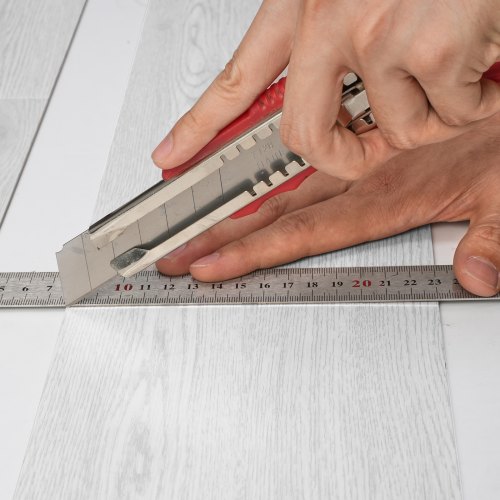
- Use the ruler’s straight edge to guide cutting tools
Creating Consistent Spacing
Use the folding ruler to measure equal gaps between tiles. This helps keep the spacing uniform across the floor or wall.
Mark the spacing on the tiles or surface before setting them in place. This avoids uneven gaps later.
- Measure the desired space on the ruler
- Mark the same distance between all tiles
- Check spacing regularly as you work
Aligning Tiles With Precision
Place the folding ruler along tile edges to keep them straight and aligned. Adjust tiles as needed to match the ruler’s line.
Use the ruler to check alignment in both directions. This ensures tiles form a neat grid without shifting out of place.
- Check alignment from left to right
- Verify alignment from top to bottom
- Adjust tiles before adhesive sets
Tips For Maintaining Your Folding Ruler
Using a folding ruler correctly helps in flooring and tiling projects. Keeping it in good shape ensures precise measurements every time.
Simple care and regular checks extend the life of your ruler. Learn some easy tips to maintain it well.
Cleaning And Storage
Clean your folding ruler after each use to remove dirt and dust. Use a soft cloth and mild soap if needed.
Store the ruler in a dry place. Keep it folded to avoid bending or warping.
- Wipe with a damp cloth, then dry it well
- Do not soak the ruler in water
- Keep away from extreme heat or cold
- Use a case or pouch for extra protection
Avoiding Common Damage
Handle your folding ruler with care to prevent breaks. Avoid dropping it or forcing it open.
Check the joints regularly to ensure they move smoothly. Tighten loose screws but do not over-tighten.
- Do not use the ruler as a lever or hammer
- Keep it away from sharp tools that can scratch it
- Open and close gently to avoid joint damage
- Inspect for cracks or splits before use
Calibrating For Accuracy
Check your folding ruler against a known accurate measuring tool. This helps keep your measurements correct.
Adjust the ruler if you find any errors. Some folding rulers allow you to realign the segments.
- Compare measurements on a flat surface
- Look for gaps or overlaps at joints
- Fix loose parts that affect length
- Replace the ruler if it cannot be calibrated
Troubleshooting Common Challenges
Using a folding ruler for flooring and tiling can be tricky. Some problems often come up while measuring.
Knowing how to fix these issues saves time and keeps your work accurate.
Dealing With Worn Measurements
Folding rulers get old and marks can fade or wear off. This makes it hard to read measurements clearly.
Check your ruler before starting. Use a pencil to add new marks over faded ones. If marks are missing, measure again with a tape measure.
- Inspect the ruler for worn or faded numbers
- Use a pencil to mark clear reference points
- Double-check with another measuring tool if unsure
Managing Difficult Angles
Floors and tiles often need angled cuts. Folding rulers can help but angles may be hard to measure precisely.
Use the ruler to measure each side carefully. Open the ruler to match the angle and read the measurement. For sharp angles, try breaking the angle into smaller parts.
- Place the folding ruler along one edge of the angle
- Open the ruler to fit the angle without bending
- Measure each side separately for complex angles
- Mark the measurements clearly on the tile or floor
Correcting Measurement Errors
Errors happen when measuring with a folding ruler. Small mistakes can cause big problems in flooring and tiling.
Always measure twice. If a number seems wrong, re-measure the area. Keep the ruler flat and steady to avoid bending.
- Measure the length twice to confirm accuracy
- Keep the ruler straight and tight against the surface
- Check your marks before cutting or placing tiles
Credit: www.vevor.com
Frequently Asked Questions
How Do I Measure Floors With A Folding Ruler?
To measure floors, fully extend the folding ruler along the surface. Note measurements at joints for accuracy. Repeat for width and length, ensuring precise floor dimensions for tiling or flooring projects.
Why Use A Folding Ruler For Tiling?
A folding ruler offers compactness and precise measurements in tight spaces. It helps mark exact tile sizes and layouts, ensuring a clean and even tile installation.
Can A Folding Ruler Measure Uneven Surfaces?
Yes, its folding joints adapt to corners and uneven surfaces. This flexibility makes it ideal for measuring irregular floor areas or wall sections before tiling.
How To Read Measurements On A Folding Ruler?
Align the zero mark at the starting point. Read the measurement where the ruler ends. Use the marked units carefully for accurate floor or tile sizing.
Conclusion
Using a folding ruler for flooring and tiling is simple. It helps measure accurately. Ensures precise cuts. Saves time and effort. Always keep it handy. Practice makes perfect. With each use, you gain confidence. Measure twice, cut once. This tool is reliable.
It’s an essential item for any tiling project. Proper use avoids mistakes. It’s a great way to ensure neat finishes. So, start practicing today. Transform your flooring tasks. Make them easier and more precise. Enjoy the satisfaction of a job well done.