Cutting drywall might seem simple, but if you don’t get it right, you’ll waste time, materials, and money. Imagine starting a project only to find your pieces don’t fit properly or the edges are rough and uneven.
You want your walls to look clean and professional, and that all starts with cutting drywall accurately. You’ll discover easy tips and tricks that make cutting drywall precise and stress-free—no guesswork, no frustration. Keep reading, and you’ll learn how to save time, avoid costly mistakes, and get results that impress every time.

Credit: www.familyhandyman.com
Tools Needed
Cutting drywall accurately needs the right tools. Using proper tools makes the job easier and cleaner.
Below are the essential tools for cutting drywall and for measuring and marking it correctly.
Essential Cutting Tools
Drywall cutting requires sharp and reliable tools. These tools help make straight and clean cuts.
- Utility knife with a sharp blade for scoring drywall
- Drywall saw for cutting curves and openings
- T-square or drywall square for guiding straight cuts
- Keyhole saw for cutting small holes or shapes
- Rasp or sanding block to smooth rough edges
Measuring And Marking Tools
Accurate measuring and marking ensure the drywall fits well. Use tools that give precise measurements.
- Tape measure to measure lengths and widths
- Pencil or chalk for making clear marks
- Straight edge or ruler to draw straight lines
- Level to check for horizontal or vertical alignment
Preparing The Drywall
Cutting drywall accurately starts with proper preparation. This step makes the process easier and safer.
Two main tasks help prepare drywall: measuring and marking lines, and securing the drywall sheet.
Measuring And Marking Lines
Measure the drywall carefully before cutting. Use a tape measure to get exact lengths and widths.
- Start measuring from the edge of the drywall sheet.
- Use a pencil to mark the cutting line lightly.
- Double-check measurements to avoid mistakes.
- Draw straight lines with a drywall square or straight edge.
- Mark the back side to keep the front clean.
Securing The Drywall Sheet
Hold the drywall sheet steady before cutting. This helps make straight and safe cuts.
| Method | Details |
|---|---|
| Flat Surface | Place drywall on a flat, stable surface to avoid bending. |
| Support | Use sawhorses or a workbench to support long sheets. |
| Clamps | Clamp the drywall to keep it from moving during cutting. |
| Helper | Ask someone to hold the sheet if clamps are not available. |
Cutting Techniques
Cutting drywall accurately is important for a clean and professional finish. Using the right technique helps avoid waste and saves time.
This guide covers different cutting methods for straight lines, curves, and openings around outlets or fixtures.
Straight Cuts
Straight cuts are the most common type of cut when working with drywall. Use a straightedge or T-square to guide your cut.
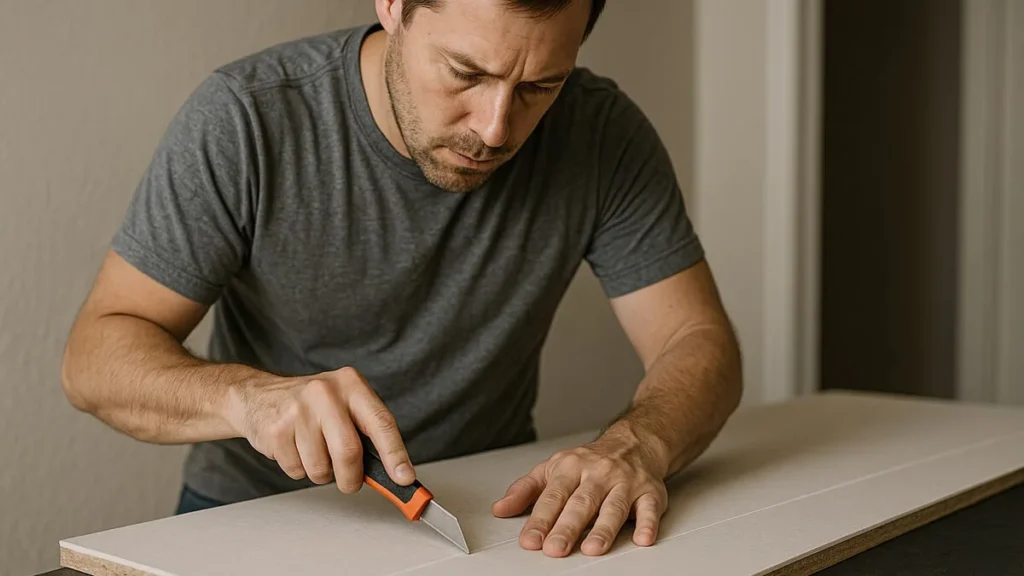
Score the drywall paper with a utility knife along the marked line. Then snap the drywall board along the score line.
- Measure and mark your cut line clearly
- Use a straightedge to guide the knife
- Score deeply but not all the way through
- Snap the board by pressing down firmly
- Cut the back paper to finish the edge
Curved And Custom Cuts
Curved cuts need more care because drywall is rigid. A keyhole saw or drywall jab saw works well for these shapes.
Draw the curve on the drywall before cutting. Cut slowly to follow the line and avoid breaking the drywall.
- Mark the curve clearly on the board
- Use a keyhole or jab saw for curved cuts
- Cut slowly to stay on the line
- Smooth edges with sandpaper if needed
Cutting Around Outlets And Fixtures
Cutting drywall around outlets and fixtures requires precise measuring. Mark the positions carefully before cutting.
Use a drywall saw or utility knife to cut openings. Check the fit by holding the drywall near the outlet before installation.
- Measure outlet or fixture size and location
- Mark the cutout on drywall accurately
- Cut inside the marked lines for a tight fit
- Test fit the drywall piece before securing

Credit: www.youtube.com
Safety Tips
Cutting drywall is a common task in construction and home projects. It is important to stay safe while cutting drywall to avoid injuries.
Using the right safety methods helps protect you from dust, sharp tools, and heavy materials.
Protective Gear
Wear protective gear to keep yourself safe from dust and cuts. Drywall dust can irritate your eyes and lungs.
Using the right gear makes your work safer and more comfortable.
- Wear safety goggles to protect your eyes from dust and debris.
- Use a dust mask or respirator to avoid breathing drywall dust.
- Put on gloves to protect your hands from sharp edges.
- Wear long sleeves and pants to protect your skin.
- Use ear protection if using loud cutting tools.
Safe Handling Practices
Handle drywall carefully to avoid dropping it or hurting yourself. Drywall sheets can be heavy and awkward.
Follow these safe practices to reduce accidents and work better.
- Lift drywall sheets with help or use a drywall lift tool.
- Keep your work area clean and free of obstacles.
- Use a sharp utility knife to make clean cuts and avoid slipping.
- Cut on a stable surface to prevent the drywall from moving.
- Store drywall flat to prevent bending or cracking.
- Dispose of scraps and dust properly to keep the area safe.
Finishing The Edges
Cutting drywall is only part of the job. Finishing the edges makes the piece fit well and look smooth. Sharp or rough edges can cause problems later.
Taking time to finish edges properly helps the drywall fit better on the wall. It also makes taping and mudding easier and neater.
Smoothing Cut Edges
After cutting, edges may be rough or jagged. Use a sanding block or drywall rasp to smooth these edges. This makes the drywall easier to handle and install.
Be careful not to over-sand. Sand just enough to remove rough spots and create a clean edge. Smooth edges help the tape stick better and prevent cracking.
- Use a sanding block for flat edges
- Try a drywall rasp for curved or irregular cuts
- Remove dust with a dry cloth after sanding
- Wear a mask to avoid inhaling dust
Preparing For Installation
Check the drywall edges before fitting them on the wall. Make sure the edges are smooth and the cut is straight. This helps the drywall sit flush with the framing.
Dry-fit the drywall piece by placing it against the wall frame. Look for gaps or uneven edges. Adjust the edges if needed to ensure a tight fit.
- Remove any loose paper or gypsum from edges
- Ensure edges are clean and dry
- Mark studs on drywall to guide screw placement
- Handle drywall carefully to avoid new damage

Credit: www.youtube.com
Common Mistakes To Avoid
Cutting drywall accurately is important for a clean and strong finish. Many people make simple mistakes that cause problems later.
Learning what to avoid can save time and materials. This guide explains common errors and how to prevent them.
Inaccurate Measurements
Measuring drywall incorrectly leads to gaps or pieces that don’t fit well. A small error can cause big issues during installation.
Always measure twice to be sure. Use a reliable tape measure and mark the drywall clearly before cutting.
- Do not guess measurements; use a tape measure every time.
- Mark lines with a pencil, not a pen or marker.
- Check corners and angles carefully.
- Measure from fixed points to avoid mistakes.
Improper Tool Use
Using the wrong tools or using them wrong can cause rough cuts and broken drywall. This wastes materials and time.
Use a sharp utility knife for cutting drywall. Make slow and steady cuts along your marked lines.
- Do not use dull blades; replace them often.
- Use a straight edge or drywall T-square to guide your cuts.
- A drywall saw can help for curved or detailed cuts.
- Avoid forcing tools, which can crack the drywall.
Frequently Asked Questions
How Do I Measure Drywall Before Cutting?
Measure twice to ensure accuracy. Use a tape measure to mark precise lines. Mark both edges of drywall for a straight cut. Accurate measuring prevents waste and fitting issues.
What Tools Are Best For Cutting Drywall?
A utility knife, drywall saw, or rotary tool works best. Use a sharp blade for clean cuts. Always score drywall before snapping to avoid rough edges.
How Can I Make Straight Cuts In Drywall?
Score the drywall along the marked line with a utility knife. Snap the drywall along the score line. Smooth edges with a sanding block for a neat finish.
How Do I Cut Drywall Around Outlets?
Measure the outlet size accurately. Mark the drywall and cut using a keyhole saw or utility knife. Cut slowly to avoid damaging the drywall or outlet.
Conclusion
Cutting drywall accurately requires practice and patience. Start with the right tools. Measure twice before cutting. Use a sharp utility knife. Always ensure safety by wearing goggles and gloves. Keep your workspace organized for efficiency. Remember, clean cuts make installation easier.
Mistakes happen, but learning from them is key. Take your time and focus on precision. With practice, your skills will improve. Soon, you’ll handle drywall like a pro. Enjoy the process and the satisfaction of a job well done. Happy cutting!