Are you looking to achieve that flawless finish on your woodworking projects? Mastering the art of sanding edges with a belt sander can take your craftsmanship to the next level.
Imagine running your fingers along perfectly smooth edges, free from splinters and imperfections. Sounds satisfying, right? But here’s the catch: without the right techniques, a belt sander can quickly turn your project into a messy, uneven disaster. You might be wondering how to harness the power of this tool effectively.
Don’t worry, we’ve got you covered. In this guide, we’ll reveal essential tips that will make using your belt sander a breeze. Whether you’re a DIY enthusiast or a seasoned woodworker, these insights will ensure your projects shine with precision. Ready to transform your sanding experience? Let’s dive in!

Credit: www.amazon.com
Choosing The Right Belt Sander
A belt sander helps you smooth wood edges quickly and evenly. Picking the right one makes your work easier and safer. Consider the type, grit, and safety before buying.
Each belt sander suits different projects. Knowing their features helps you choose the best tool for your needs.
Types Of Belt Sanders
There are several belt sanders to choose from. Each type fits certain tasks and skill levels.
- Handheld Belt Sanders:Portable and good for small to medium jobs.
- Stationary Belt Sanders:Mounted on a table, best for precise sanding and heavy use.
- Detail Belt Sanders:Smaller belts for tight corners and edges.
- Drum Sanders:Large machines for sanding wide surfaces, often in workshops.
Selecting The Appropriate Grit
The sanding belt grit affects how smooth or rough the finish will be. Choose the grit based on your project stage.
| Grit Size | Use | Effect |
| 40-60 | Heavy sanding and shaping | Removes material fast but leaves rough surface |
| 80-120 | General sanding and smoothing | Good balance of material removal and smooth finish |
| 150-220 | Fine sanding before finishing | Creates smooth surface for painting or staining |
Safety Features To Look For
Safety features protect you during work. Look for these key features in a belt sander.
- Automatic belt tracking to keep the belt aligned
- Safety switch to prevent accidental starts
- Dust collection port to reduce debris and keep air clean
- Ergonomic handles for better grip and control
- Thermal protection to avoid motor overheating
Credit: www.familyhandyman.com
Preparing The Work Area
Preparing your work area is key to sanding edges safely and smoothly. A clean and organized space helps you work faster and avoid accidents.
Focus on setting up the workpiece securely, clearing the workspace, and ensuring proper lighting before you start sanding.
Securing The Workpiece
Make sure your workpiece stays still while sanding. Use clamps or a vise to hold it firmly on your workbench. This prevents slips and keeps your hands safe.
- Use clamps to hold the wood tightly.
- Check that the piece does not move before sanding.
- Place the clamps so they do not block the sanding path.
- For small pieces, use a jig or a non-slip mat.
Clearing The Workspace
Remove all unnecessary tools and materials from your sanding area. A clutter-free space reduces the risk of accidents and helps you focus on the edges.
| Item to Remove | Reason |
| Loose tools | Prevent tripping and distractions |
| Wood scraps | Avoid sanding interference |
| Flammable materials | Reduce fire risk |
| Dust buildup | Improve air quality and visibility |
Setting Up Proper Lighting
Good lighting helps you see the edges clearly. Use bright, focused lights that do not cast shadows on your workpiece.
To set up proper lighting:
- Use adjustable lamps to shine light directly on sanding areas.
- Position lights to minimize glare and shadows.
- Consider natural light during the day for better visibility.
- Keep the workspace well-lit to spot rough edges easily.
Handling The Belt Sander
Using a belt sander safely and effectively needs good handling skills. Holding the tool right helps you get smooth edges without mistakes.
This guide covers grip, posture, speed, pressure, and common errors to avoid while sanding edges.
Correct Grip And Posture
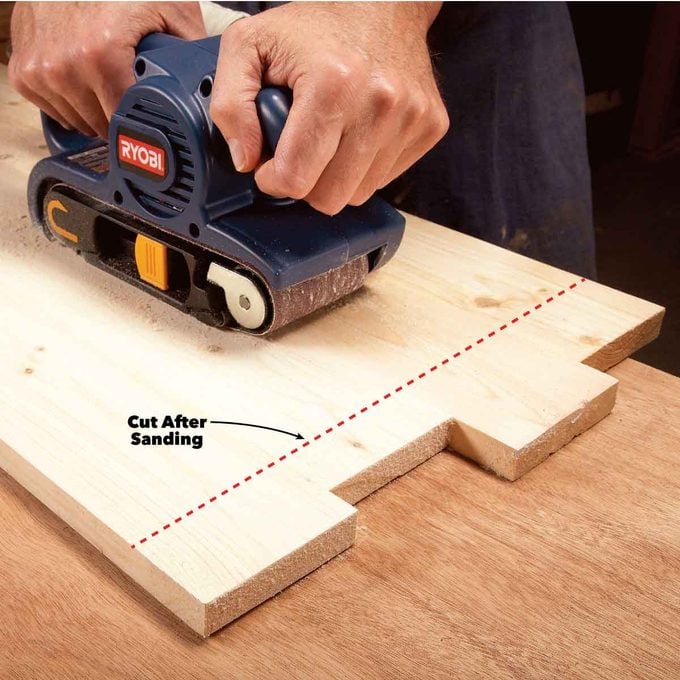
Hold the belt sander firmly with both hands. One hand should be on the front handle and the other on the rear. Keep your back straight and feet shoulder-width apart.
- Keep a steady grip to control the sander well.
- Stand in a balanced position to avoid slipping.
- Do not lean too much on the tool; let it do the work.
Controlling Speed And Pressure
Use a moderate speed setting to avoid burning the wood. Apply light, even pressure so the sander moves smoothly along the edge.
| Speed Level | Recommended Use |
| Low | Fine sanding and finishing |
| Medium | General sanding of edges |
| High | Quick removal of rough spots |
Avoiding Common Mistakes
Many users press too hard or hold the sander at the wrong angle. Both cause uneven edges or damage the wood surface.
- Pressing down too hard, which creates grooves.
- Holding the sander tilted, causing uneven sanding.
- Keeping the sander in one spot for too long, burning the wood.
- Not moving the sander steadily along the edge.
Techniques For Sanding Edges
Sanding edges with a belt sander can be tricky. Using the right techniques helps get smooth and clean results.
Learn how to keep the sander steady and control the shape of edges for better finishes.
Maintaining Consistent Angle
Hold the belt sander at the same angle while sanding edges. This keeps the edge even and smooth.
Try to keep your hand steady and move the sander slowly along the edge. Avoid pressing too hard.
- Keep the sander flat on the surface.
- Use a light, steady pressure.
- Move the sander in the direction of the edge.
Using Guide Tools
Guide tools help control the sander’s path. They keep your sanding straight and at the right angle.
You can use a fence or a straight edge clamp to guide the sander along the edge.
- Attach a straight edge to the workpiece.
- Run the sander along the guide.
- Check the angle often for accuracy.
Achieving Smooth Curves And Corners
Sanding curves and corners needs gentle movements. Use the edge of the belt to follow the shape.
Move the sander slowly and change direction as needed to keep the curve smooth.
- Use light pressure to avoid gouging.
- Sand in small sections on tight curves.
- Check your work often for smoothness.
Finishing Touches
Using a belt sander for sanding edges can give your project a smooth finish. Paying attention to the final steps improves the look and feel.
Finishing touches help remove rough spots and prepare the surface for paint or stain.
Inspecting For Evenness
Check the edges carefully after sanding. Look for uneven spots or high areas. Use good lighting to see shadows that show bumps.
Run your hand along the edge to feel for rough patches. Fix any uneven areas by sanding lightly again.
Switching To Finer Grits
Start with a coarse grit belt to remove big imperfections. Then switch to finer grits to smooth the surface.
- Use 80 grit for heavy sanding
- Move to 120 grit for smoothing
- Finish with 180 or 220 grit for fine polishing
Changing to finer grits reduces scratches and gives a clean edge.
Cleaning And Maintenance Tips
| Cleaning Step | How to Do It |
| Remove Dust | Use a brush or compressed air on the belt and sander |
| Check Belt | Inspect for tears or wear; replace if needed |
| Lubricate Parts | Apply light oil to moving parts every few uses |
| Store Properly | Keep in a dry place to avoid rust |
Credit: www.homebuilding.co.uk
Frequently Asked Questions
What Grit Belt Is Best For Sanding Edges?
Use a medium grit belt (80-120) for initial edge sanding. Finer grits (150-220) smooth the edges afterward. This sequence ensures smooth, clean edges without damage or excessive material removal.
How Do I Prevent Edge Burn With A Belt Sander?
Avoid pressing too hard and keep the sander moving steadily. Use lighter pressure near edges to prevent overheating and burning the wood surface.
Can A Belt Sander Be Used On Curved Edges?
Yes, but use a narrow belt and gentle pressure. Carefully follow the curve to avoid gouging or uneven sanding on edges.
How To Maintain Control When Sanding Edges With A Belt Sander?
Hold the sander firmly with both hands. Keep it flat against the edge and move it slowly for precise sanding without mistakes.
Conclusion
Using a belt sander for edges takes practice and care. Always keep the sander moving to avoid deep marks. Start with coarse grit, then switch to fine grit for smoothness. Wear safety gear to protect your eyes and hands. Take breaks to check your progress and adjust as needed.
With patience, your edges will look clean and professional. Try these tips on your next sanding project for better results. Simple steps can make a big difference in your work. Keep sanding smart and stay safe.