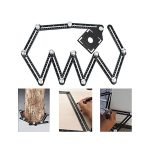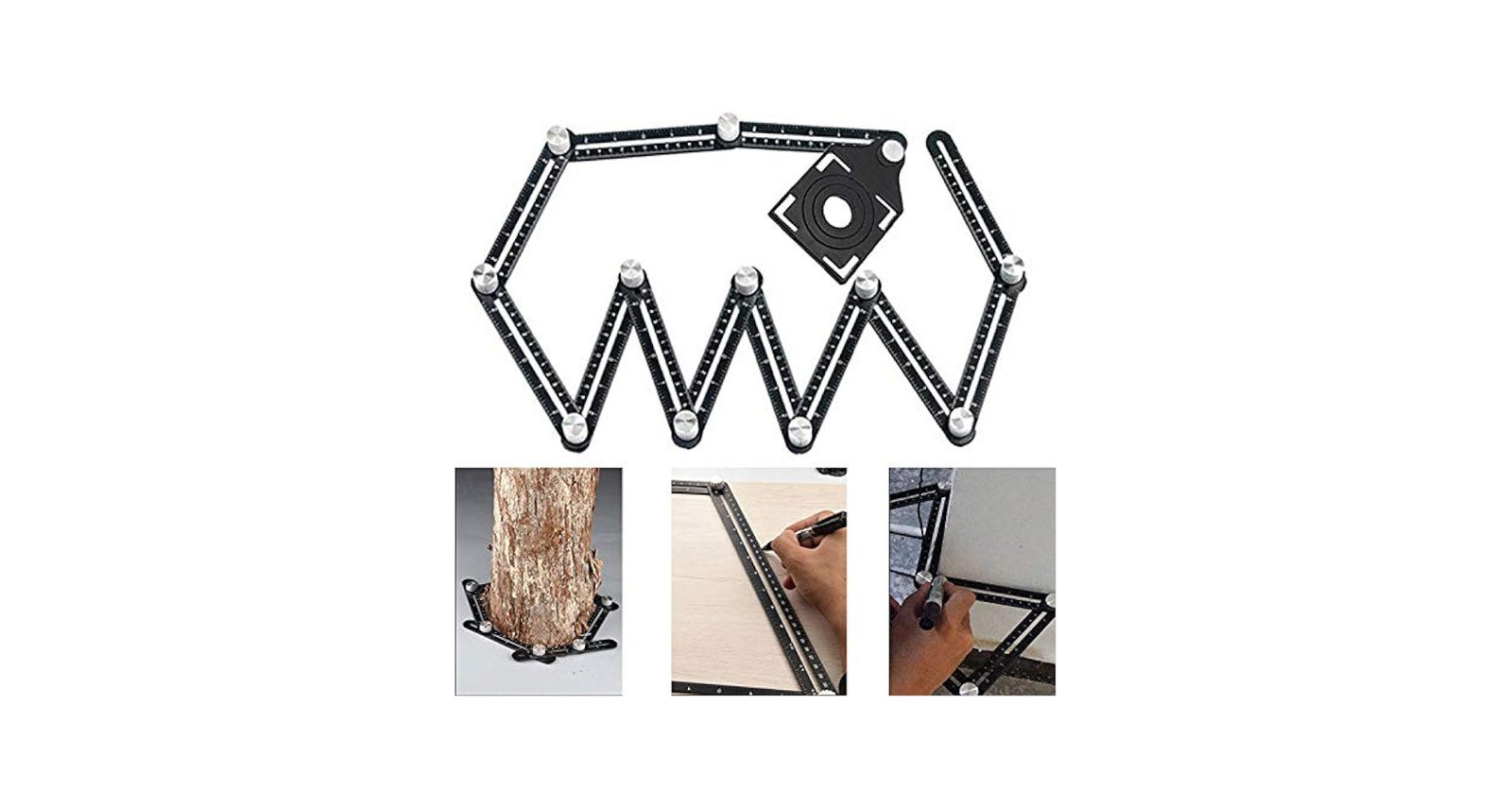
Are you planning a tiling or flooring project and want to ensure precision in every step? A folding ruler might just be the tool you need to achieve flawless results.
This simple yet effective tool can transform your approach, making measurements and alignments not only accurate but also effortless. Imagine cutting tiles or laying floorboards with the confidence that every piece fits perfectly. In this guide, you’ll discover how to harness the full potential of a folding ruler to elevate your tiling and flooring skills.
Read on to unlock the secrets of achieving a professional finish in your home projects.

Credit: us.amazon.com
Choosing The Right Folding Ruler
A folding ruler helps you measure spaces easily for tiling and flooring. Picking the right one makes your work more accurate and simple.
Look at the material, size, and how well it measures to find the best folding ruler for your needs.
Materials And Durability
Folding rulers come in different materials like wood, plastic, and metal. Each material affects how long the ruler lasts.
Wood rulers are classic but can wear out if wet. Plastic rulers are light but may break easily. Metal rulers are strong and last long.
- Wood: traditional, can warp or crack
- Plastic: lightweight, less durable
- Metal: very strong, resists damage
Measurement Accuracy
Check that the ruler has clear, easy-to-read markings. Accurate measurements help avoid mistakes in tiling and flooring.
Look for rulers with fine lines and numbers. Some have both metric and imperial units for more options.
- Clear markings reduce reading errors
- Dual units offer flexibility
- Check for tight folding joints to keep length stable
Length And Size Options
Folding rulers come in different lengths. Choose one that fits the size of your project and storage needs.
Longer rulers cover bigger areas but can be bulky. Smaller ones are easy to carry but may need more folds.
- 1 meter or 3 feet for small jobs
- 2 meters or 6 feet for medium jobs
- 3 meters or 10 feet for large jobs
Preparing For Tiling And Flooring
Using a folding ruler helps you measure surfaces accurately for tiling and flooring. Proper preparation makes your work easier and cleaner.
Before starting, check the area and gather all tools. Marking clear points guides your tiling or flooring layout well.
Surface Assessment
Check the floor or wall surface before you start tiling or flooring. Look for cracks, bumps, or uneven spots that need fixing.
Use your folding ruler to measure the length and width of the surface. This helps you know how much material you need.
- Look for damage or holes
- Measure the full surface area
- Note any slopes or uneven areas
Gathering Tools And Materials
Collect all tools and materials before you begin. Having everything ready saves time and keeps work smooth.
Your folding ruler will be one of your main tools for measuring. Also gather adhesive, tiles or flooring, spacers, and cleaning supplies.
- Folding ruler for accurate measurements
- Tiling or flooring materials
- Adhesive or mortar
- Tile spacers
- Cleaning cloths and buckets
Marking Reference Points
Use your folding ruler to mark key points on the surface. These points guide the placement of tiles or flooring panels.
Mark straight lines at regular intervals. This helps keep your work even and aligned throughout the project.
- Measure and mark the center of the surface
- Draw straight lines for tile alignment
- Mark edges and corners clearly
Measuring With A Folding Ruler
Using a folding ruler helps you measure spaces for tiling and flooring accurately. It is a handy tool that folds into a compact size for easy handling.
Knowing how to extend, lock, and use the ruler correctly improves your measurement results. This guide explains the steps clearly.
Extending And Locking The Ruler
Start by unfolding the sections of the ruler one by one. Pull each segment gently until it clicks or feels secure.
Lock the ruler in place to keep it straight. This prevents it from folding back while measuring.
- Unfold the first segment fully.
- Continue unfolding until you reach the needed length.
- Listen for a click to know it is locked.
- Check the ruler is straight and firm.
Taking Precise Measurements
Place the ruler flat against the surface you want to measure. Make sure it starts exactly at the edge or point you are measuring from.
Read the measurement at the other end carefully. Use the clear markings on the ruler to get an exact number.
- Hold the ruler steady for accuracy.
- Measure twice to confirm the number.
- Note down the measurement immediately.
Measuring Irregular Spaces
For spaces with corners or angles, use the folding ruler to measure each section separately. Fold the ruler to fit into tight spots.
Add the measurements of each part together to find the total length or width.
- Fold the ruler to match the shape of the space.
- Measure each part carefully.
- Write down each number clearly.
- Sum all parts for the full measurement.
Marking And Cutting Tiles
Using a folding ruler helps you measure and cut tiles accurately. Proper marking and cutting ensure your flooring looks neat and fits well.
This guide explains how to transfer measurements and cut tiles using a folding ruler.
Transferring Measurements
Start by measuring the area where the tile will go. Use the folding ruler to get exact lengths and widths.
Fold the ruler to match the size you need. Mark the tile’s edge with a pencil using the ruler’s measurement.
- Extend the ruler to the correct length
- Place the ruler on the tile edge
- Mark the tile at the measurement point
- Repeat if you need multiple marks
Using The Ruler For Straight Cuts
Place the folding ruler along the line you marked on the tile. This helps you cut straight and clean edges.
Hold the ruler firmly to keep it from moving. Use a tile cutter or saw along the edge of the ruler for a straight cut.
- Align the ruler with the marked line
- Hold it steady to guide your tool
- Cut slowly along the ruler edge
- Check the cut for accuracy
Tips For Curved Or Custom Cuts
For curved shapes, use the folding ruler to measure key points along the curve. Mark these points on the tile carefully.
Connect the marks smoothly with a pencil or flexible straightedge. Cut slowly and adjust as needed to follow the curve.
- Measure multiple points along the curve
- Mark each point on the tile
- Draw a smooth line connecting marks
- Use a suitable cutting tool for curves
Aligning Tiles And Flooring Materials
Using a folding ruler helps you keep tiles and flooring materials straight and even. It is a handy tool for measuring and marking surfaces accurately. This guide shows how to align tiles and flooring with a folding ruler.
Proper alignment makes your tiling look professional and lasts longer. Follow these tips to create straight lines, maintain spacing, and check for level surfaces.
Creating Straight Lines
To create straight lines, fully extend your folding ruler along the edge where you want to place the tiles. Use the ruler to mark straight guide lines with a pencil. Check that the ruler is flat and not bent before marking.
- Place the folding ruler along the starting edge.
- Make small pencil marks at regular intervals.
- Connect the marks to form a straight line.
- Use the line as a guide to lay your tiles.
Maintaining Consistent Spacing
Consistent spacing between tiles is important for a neat look. Use the folding ruler to measure the gaps between tiles. You can also use tile spacers for even spacing.
| Spacing Type | Recommended Gap Size |
| Wall Tiles | 2-3 mm |
| Floor Tiles | 3-5 mm |
| Outdoor Tiles | 5-10 mm |
Checking For Level And Alignment
Use the folding ruler alongside a level tool to check tile alignment. Place the ruler on top of the tiles to see if the surface is even. Adjust tiles as needed to keep everything flat and aligned.
- Lay the folding ruler flat across several tiles.
- Put a spirit level on top of the ruler.
- Look for bubbles in the level to find uneven spots.
- Shift tiles until the surface is even.
Maintaining Your Folding Ruler
A folding ruler helps you measure accurately for tiling and flooring. Keeping it in good shape makes your work easier. Regular care stops damage and keeps it reliable.
Learn how to clean, store, and check your folding ruler. These habits help it last longer and measure right every time.
Cleaning And Storage
Clean your folding ruler after each use. Remove dirt and dust with a soft cloth. Avoid water or harsh chemicals that can damage it.
Store the ruler in a dry place. Fold it carefully to avoid bending or breaking the joints. Use a case or pouch if possible.
- Wipe with a dry or slightly damp cloth
- Keep away from moisture and direct sunlight
- Fold gently without forcing the hinges
- Use a protective case for long storage
Preventing Damage
Handle your folding ruler with care. Avoid dropping it or placing heavy objects on top. Rough use can cause cracks or loosen joints.
Check the hinges regularly. Tighten screws or bolts if they become loose. Replace broken parts to keep the ruler functional.
- Do not use the ruler as a lever or pry tool
- Keep it away from sharp tools and edges
- Inspect joints for signs of wear or damage
- Fix or replace damaged parts quickly
Calibration Checks
Check your folding ruler’s accuracy before important projects. Compare measurements with a tape measure or straight ruler.
If the folding ruler shows errors, adjust or mark the correct points. Regular calibration keeps your measurements precise.
- Measure a known length and compare results
- Look for gaps or misalignments in joints
- Mark or note any measurement differences
- Recalibrate or replace if errors persist
Common Mistakes To Avoid
Using a folding ruler for tiling and flooring can be very helpful. It helps you measure spaces accurately. Still, many people make mistakes that cause problems.
This guide points out common errors to avoid. Fixing these will improve your work and save time.
Misreading Measurements
One common mistake is misreading the ruler. Folding rulers have many hinges and marks. If you do not read them carefully, your measurements will be wrong.
- Check the unit system: inches or centimeters.
- Make sure you read from the correct end of the ruler.
- Look at the mark clearly, avoid guessing halfway points.
- Keep the ruler flat and steady while measuring.
- Double-check measurements before cutting tiles or flooring.
Overextending The Ruler
Overextending a folding ruler means pulling it too far beyond its length. This can bend or break the ruler and ruin your measurements.
| Problem | Effect | Solution |
| Ruler overextended | Ruler bends or breaks | Use a longer tape measure for big spaces |
| Hinges loosen | Inaccurate measurements | Handle the ruler gently and fold carefully |
| Ruler slips | Wrong measurement points | Hold the ruler firmly and steady |
Ignoring Surface Irregularities
Floors and walls may not be perfectly flat or straight. Ignoring these surface irregularities causes wrong tile cuts and gaps.
Follow these tips to avoid this mistake:
- Use the ruler to check for bumps or dips.
- Mark high and low points clearly before cutting.
- Adjust tile sizes to fit uneven areas.
- Consider using a level tool with your ruler.
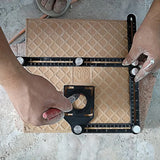
Credit: www.primrox.co.uk
/product/13/7106814/2.jpg?1940)
Credit: www.jumia.com.ng
Frequently Asked Questions
How Do You Measure Tiles With A Folding Ruler?
To measure tiles, extend the folding ruler to the tile’s length. Align it carefully and note the measurement. Use it to cut or place tiles accurately for a perfect fit.
Why Use A Folding Ruler For Flooring Projects?
A folding ruler is compact and precise. It helps measure long and short distances easily. Its rigid design ensures accurate, consistent measurements during flooring installation.
How To Fold And Store A Folding Ruler Properly?
Fold the ruler along its joints gently without forcing. Store it in a dry, safe place to avoid damage. Proper storage prolongs its lifespan and maintains accuracy.
Can A Folding Ruler Replace A Tape Measure For Tiling?
Yes, a folding ruler can replace a tape measure for precise tile measurements. It offers rigid stability and is easier to handle in tight spaces.
Conclusion
Using a folding ruler makes tiling and flooring easier and more accurate. It helps measure small and large spaces quickly. Folding rulers are simple to carry and store. Always keep the ruler clean and check its joints for smooth folding.
Practice measuring different surfaces to gain confidence. With patience and care, your flooring project will look neat and professional. A good ruler saves time and avoids mistakes. Try using one on your next project and see the difference.