Are you tired of DIY projects not turning out as expected because of inaccurate measurements? You’re not alone.
Many people struggle with getting precise measurements, which can lead to wasted materials and frustration. The secret tool in your toolbox that can solve this problem is the tape measure. But are you using it correctly? This guide is here to help you unlock the full potential of your tape measure, ensuring every measurement you take is spot-on.
Dive in to discover simple tips and tricks that can save you time, money, and a whole lot of hassle. With this guide, you’ll master the art of measuring accurately, transforming your projects from average to exceptional. Don’t let another DIY disaster happen—read on to become the measurement expert you never knew you could be!
Choosing The Right Tape Measure
Using a tape measure correctly starts with picking the right one. The right tape measure makes measuring easier and more accurate.
Different tape measures serve different jobs. Knowing what to look for helps you choose the best tape measure for your needs.
Types Of Tape Measures
Tape measures come in many types. Some are simple, and others have special features for specific tasks.
Common types include retractable, fiberglass, and cloth tape measures. Each type fits certain jobs better.
- Retractable tape measures are easy to carry and use for most projects.
- Fiberglass tapes are flexible and good for curved surfaces.
- Cloth tapes work well for measuring body or fabric.
Length And Width Considerations
Choose a tape measure length that matches your tasks. Longer tapes help with big projects, shorter ones are good for small jobs.
Width affects tape stiffness. Wider tapes are stiffer and easier to hold straight for longer measures.
- For home use, a 16 to 25-foot tape is enough.
- Smaller tapes (6 to 12 feet) suit crafts and small repairs.
- Wide tapes stay straight better during long measurements.
Material And Durability
Tape measure material affects how long it lasts and how well it works. Strong materials resist damage and wear.
Look for tapes with coated blades. This coating stops rust and fading of numbers.
- Steel tapes are strong and hold their shape well.
- Fiberglass tapes resist stretching and weather damage.
- Plastic or cloth tapes bend easily but may wear faster.
- Check for a sturdy case to protect the tape inside.
Basic Tape Measure Components
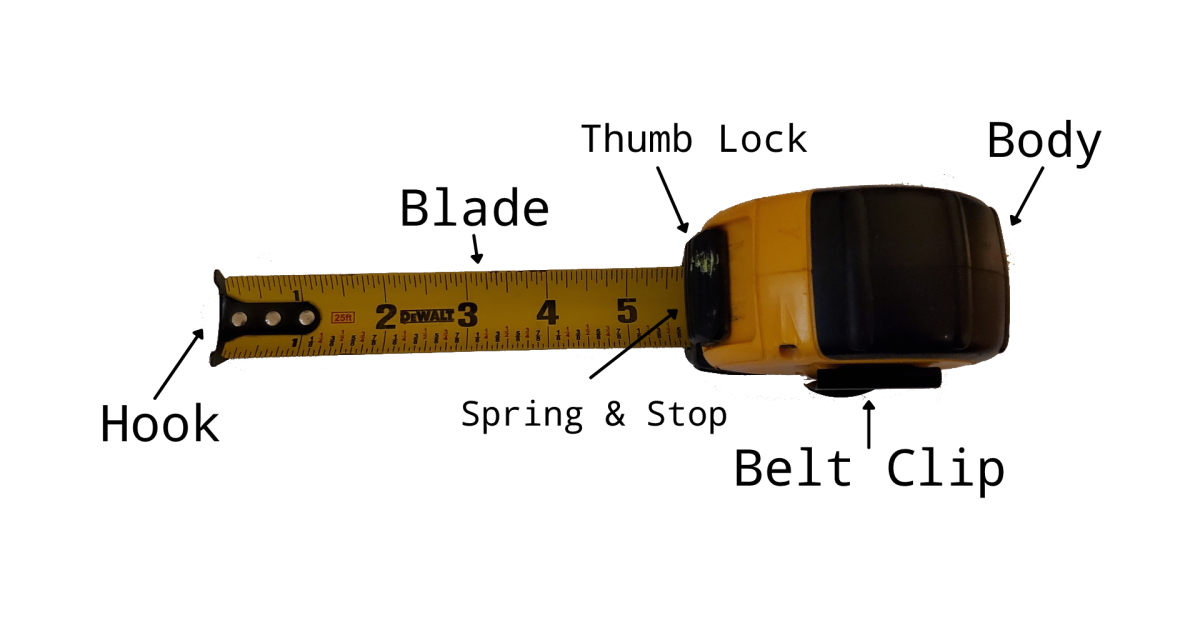
A tape measure has several parts that help you measure things accurately. Knowing these parts makes it easier to use the tape measure correctly.
Each component has a special role in measuring. Understanding them will improve your measuring skills.
Blade And Markings
The blade is the long, flat metal strip that pulls out from the tape measure. It shows measurement marks along its length.
The markings include numbers and lines that show inches, feet, or centimeters. Some blades have both metric and imperial units.
- Blade is flexible but strong
- Markings are printed or etched for durability
- Clear markings help read measurements quickly
- Some blades have extra markings for specific trades
Hook And End Piece
The hook is the small metal piece at the blade’s end. It helps you hold the tape measure in place on the edge of objects.
The end piece moves slightly. This movement helps you measure both inside and outside edges accurately.
- Hook grabs edges firmly
- Slide in the hook allows for inside/outside measurements
- End piece protects the blade’s tip
Locking Mechanism
The locking mechanism holds the blade in place after you pull it out. It stops the blade from sliding back inside.
It is usually a button or switch on the tape measure body. Locking helps you take steady and exact measurements.
- Prevents blade from retracting
- Allows hands-free measuring
- Makes marking and cutting easier
Correct Measuring Techniques
Using a tape measure correctly helps get exact measurements. This guide shows how to measure well and avoid mistakes.
Good measuring skills save time and improve your work. Follow simple tips to use your tape measure accurately.
Measuring Straight Surfaces
Place the tape measure flat along the surface you want to measure. Make sure the tape is tight and straight.
Read the measurement at the point where the surface ends. Keep your eye level with the tape for accuracy.
- Start measuring from the tape’s zero mark
- Keep the tape flat and not twisted
- Pull the tape tight but do not stretch it
- Note the number at the end point of the surface
Measuring Curved Or Irregular Objects
Wrap the tape measure gently around the object. Follow the shape without bending the tape too much.
If the object is large, measure in parts and add the lengths. This method gives a better total measurement.
- Start at one end of the curve
- Hold the tape firmly but not tight
- Follow the curve smoothly
- Write down each segment if measuring in parts
- Add all segments for the total length
Using The Hook Properly
The hook at the tape measure’s start helps hold it in place. Use it to catch edges or surfaces accurately.
The hook moves slightly to allow inside and outside measurements. Use this feature to get the correct reading.
- Hook the tape on an edge or nail for outside measurement
- Push the hook against a surface for inside measurement
- Allow the hook to move to adjust for the tape thickness
- Check the hook is secure before measuring
Credit: medium.com
Common Measuring Mistakes
Using a tape measure seems simple, but many people make errors. These mistakes cause wrong measurements and wasted materials.
Knowing common mistakes helps you measure more accurately. Avoid these errors to get better results in your projects.
Ignoring Hook Play
The hook on a tape measure is loose on purpose. It moves slightly to allow inside and outside measurements.
If you ignore this “hook play,” your measurement will be off by the hook’s thickness. Always account for this movement.
- For outside measurements, the hook rests against the object.
- For inside measurements, pull the hook flush against the tape.
- Check that the hook moves freely but is not too loose.
Misreading Markings
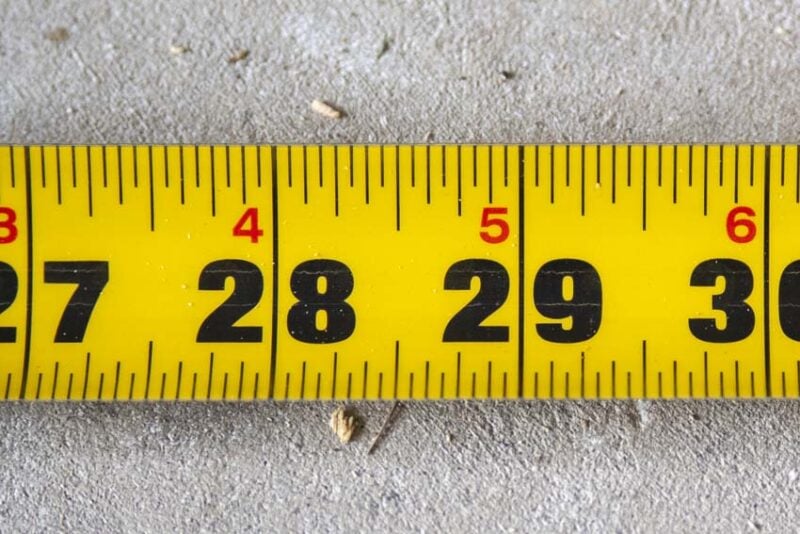
Tape measures have many small marks for inches and fractions. It is easy to confuse these marks and read the wrong number.
Take time to see which lines mean whole inches and which show fractions like 1/8 or 1/16 inch. Be sure you read the right mark.
- Look closely at the numbers next to the marks.
- Use a magnifying glass if needed for small marks.
- Remember that longer lines mean bigger increments.
Not Securing The Tape
Letting the tape slip while measuring causes errors. The tape may bend or move, making your reading wrong.
Always hold the tape firmly or lock it in place. Keep the tape straight and tight for the best accuracy.
- Use the tape lock if your tool has one.
- Hold the tape at both ends to avoid slack.
- Keep the tape flat against the surface measured.
Advanced Tips And Tricks
Using a tape measure is simple, but some tasks need extra care. These tips help you get accurate results every time.
Learn how to measure depth, mark points correctly, and handle long distances with confidence.
Using The Tape For Depth And Inside Measurements
To measure depth or inside spaces, hook the tape’s end on the edge. Pull the tape straight down or across the inside surface. Keep the tape tight to avoid slack and errors.
- Use the tape’s hook to catch edges firmly.
- Keep the tape straight and tight for exact length.
- Read the measurement at eye level to avoid mistakes.
- Use a helper or a straight edge for deep or narrow spots.
Marking Measurements Accurately
Marking the right spot is key for precise cuts or builds. Use a fine pencil or a sharp marker. Make small, clear marks to avoid confusion.
| Marking Tool | Best Use |
| Sharp Pencil | Wood and drywall |
| Permanent Marker | Metal and plastic |
| Chalk | Rough surfaces or outdoor use |
| Scratch Awl | Metal surfaces for precise marks |
Always double-check your marks before cutting or drilling.
Measuring Large Distances
Large distances need steady hands and some tricks. Use a helper to hold one end. Keep the tape flat on the ground or surface. Avoid sagging and bends for best results.
- Start by locking the tape at the zero mark.
- Walk to the end point slowly, keeping tape tight.
- Read the measurement at the end point carefully.
- Repeat if needed to confirm accuracy.

Credit: learn.reeb.com
Maintenance And Storage
Keeping your tape measure clean and safe helps it last longer. Proper care also keeps measurements accurate.
This guide covers cleaning, avoiding damage, and storing your tape measure correctly.
Cleaning The Tape Measure
Wipe the tape clean after use to remove dirt and dust. Use a soft cloth for the blade and case.
If sticky residue is present, use mild soap and water. Dry the tape fully before rolling it back.
- Clean blade gently to avoid scratching
- Do not soak the tape in water
- Keep the case free of dust and grime
- Dry the tape to prevent rust
Avoiding Damage
Handle the tape measure carefully to avoid dents and bends. Do not pull the tape too fast or hard.
Keep the tape away from sharp objects and extreme heat. These can harm the blade and affect accuracy.
| Action | Effect on Tape Measure |
| Pull tape slowly | Prevents blade bending |
| Avoid dropping | Protects case and mechanism |
| Keep away from heat | Prevents warping and damage |
| Store without tension | Maintains spring and accuracy |
Proper Storage Practices
Store your tape measure in a dry place to avoid rust and corrosion. Keep it in a pouch or toolbox.
- Keep tape retracted fully before storing
- Avoid storing where it can fall or get crushed
- Use a case or pouch to protect from dust and moisture
- Check tape regularly for signs of wear or damage
Credit: www.protoolreviews.com
Frequently Asked Questions
How Do I Read A Tape Measure Correctly?
To read a tape measure correctly, start at the zero mark. Note the full inches first, then the fractions. Use the smaller lines for fractions like 1/2 or 1/4 inch. Always keep the tape straight and level for accurate results.
What Are Common Tape Measure Mistakes To Avoid?
Avoid bending the tape, as it can cause inaccurate readings. Don’t start measuring from the hook edge if it’s loose. Avoid reading from an angle. Also, ensure the tape is taut and not slack during measurement.
How To Measure Inside Dimensions With A Tape Measure?
Use the tape’s end hook to catch one side of the inside space. Extend the tape to the opposite side. Keep the tape straight and flush against surfaces. Read the measurement where the tape meets the edge.
Why Is The Tape Measure Hook Important?
The hook compensates for its own thickness when measuring. It moves slightly to ensure inside and outside measurements are accurate. This small movement allows the tape to measure both internal and external dimensions reliably.
Conclusion
Using a tape measure correctly helps you get precise results every time. Take your time and keep the tape straight. Read the numbers carefully and double-check your measurements. Practice often to build confidence and avoid mistakes. Accurate measuring saves materials and money.
It also makes your projects look better. Keep your tape measure in good shape for long use. Small habits make a big difference. Start measuring with care today, and see the improvement in your work.