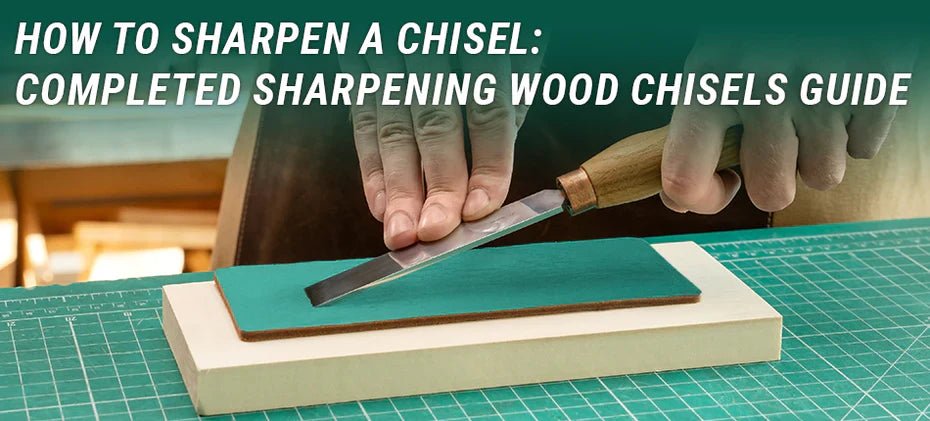
Are your woodworking projects not turning out as crisp and precise as you’d hoped? The culprit might be dull chisels.
Sharp chisels are essential for clean, accurate cuts and an enjoyable woodworking experience. But don’t worry, you don’t need to be a seasoned expert to achieve razor-sharp edges. In this guide, we’ll reveal the simple steps to sharpen your chisels effectively.
Imagine the satisfaction of slicing through wood like butter, transforming your projects from ordinary to extraordinary. Ready to elevate your woodworking game? Let’s dive into the art of sharpening chisels and discover how you can make every cut count.
Choosing The Right Chisels
Choosing the right chisels is important for good woodworking. The right tool helps you work faster and safer.
There are many types of chisels. You should pick one that fits your project and skill level.
Types Of Woodworking Chisels
Woodworking chisels come in different shapes and sizes. Each type has a special use in carving or cutting wood.
- Bench Chisels: Used for general wood cutting and paring.
- Paring Chisels: Thin and long, good for delicate trimming.
- Mortise Chisels: Thick and strong, used to cut mortises.
- Firmer Chisels: Have a thick blade for heavy work.
- Skew Chisels: Angled edge for fine detail and trimming.
Material And Quality Considerations
Good chisels are made from strong steel. The blade must hold a sharp edge for a long time.
| Material | Quality | Use |
| High Carbon Steel | Sharp and holds edge well | Best for fine woodworking |
| Chrome Vanadium Steel | Strong and resists rust | Good for general use |
| Stainless Steel | Resists rust but dulls faster | Low maintenance work |
Essential Sharpening Tools
Sharpening chisels is key for good woodworking. Using the right tools helps keep the blades sharp and safe.
These tools help you shape and polish the chisel edge. They make sharpening easier and more precise.
Sharpening Stones And Grit Levels
Sharpening stones come in different grit sizes. Each grit helps remove metal or polish the edge.
Start with a coarse grit to fix dull edges. Use medium grit to smooth the blade. Finish with fine grit to polish.
- Coarse grit (around 1000) removes chips and reshapes edges
- Medium grit (3000 to 5000) refines the edge
- Fine grit (8000 and above) polishes the blade for sharpness
Honing Guides And Jigs
Honing guides help keep the chisel at the right angle. This makes sharpening more accurate.
Jigs hold the chisel steady. They prevent mistakes and make the process faster for beginners.
- Simple honing guides use clamps or rollers
- Adjustable jigs fit different chisel sizes
- Some jigs allow angle changes for various sharpening needs
Lubricants And Accessories
Lubricants help stones work better by reducing friction. They also carry away metal particles.
Use water, oil, or special sharpening fluids. Choose what fits your stone type and preference.
- Water is common for water stones and easy to clean
- Oil works with oil stones and prevents clogging
- Sharpening strops polish edges after stones
- Cleaning cloths keep tools and stones free of debris
Preparing The Chisel For Sharpening
Preparing your chisel before sharpening is important to get a clean and sharp edge. This process includes cleaning, checking for damage, and setting the correct bevel angle.
Taking time to prepare the chisel helps the sharpening go smoothly and improves the tool’s performance.
Cleaning And Inspection
Start by removing dirt, resin, and rust from the chisel blade. Use a cloth and some mineral spirits or a gentle cleaner. This step makes it easier to see any damage on the blade.
- Wipe the blade thoroughly to remove all debris.
- Check the cutting edge for chips or dents.
- Look for any rust spots or corrosion.
- Examine the handle for cracks or loose parts.
If you find rust, gently remove it with fine steel wool. Do not use harsh abrasives that could damage the blade.
Setting The Bevel Angle
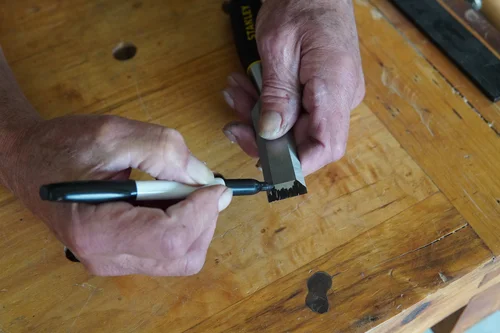
The bevel angle is the angle formed between the flat back of the chisel and the sharpened edge. Setting this angle correctly helps the chisel cut well and last longer.
| Type of Chisel | Common Bevel Angle | Use |
|---|---|---|
| Bench Chisels | 25 to 30 degrees | General woodworking |
| Paring Chisels | 20 to 25 degrees | Fine trimming and paring |
| Mortise Chisels | 30 to 35 degrees | Heavy chopping and mortising |
Use a honing guide to keep the chisel at the correct angle while sharpening. This tool helps keep the blade steady and ensures an even edge.
Credit: www.anneofalltrades.com
Step-by-step Sharpening Process
Sharpening chisels keeps them sharp and safe to use. A sharp chisel cuts wood smoothly and easily. Follow the steps below to sharpen your chisels correctly.
This guide covers coarse grinding, honing, and polishing. Each step improves the edge for better woodworking results.
Coarse Grinding For Edge Repair
Coarse grinding removes nicks and dull edges. Use a bench grinder or sharpening stone with coarse grit. Keep the chisel at the correct angle to avoid damage.
- Secure the chisel firmly in your hand or clamp.
- Hold the chisel bevel flat against the coarse grinding surface.
- Move the chisel back and forth evenly.
- Check the edge often for smoothness.
- Stop when all chips and dull spots are gone.
Progressive Honing Techniques
Honing refines the edge after coarse grinding. Use finer grit stones or sandpapers in stages. This step sharpens the chisel and removes scratches.
- Start with medium grit (around 1000).
- Move to fine grit (3000 or more).
- Maintain the bevel angle throughout.
- Use water or oil as lubricant if needed.
- Repeat until the edge feels sharp and smooth.
Creating A Polished Edge
A polished edge cuts cleanly and lasts longer. Use a leather strop with polishing compound to finish the chisel’s edge.
| Polishing Steps | Description |
| Prepare the Strop | Apply fine polishing compound on leather surface. |
| Strop the Bevel | Draw the bevel edge backward on the strop. |
| Check the Edge | Feel the edge for smoothness and sharpness. |
| Repeat | Strop until the edge shines and cuts well. |
Maintaining The Bevel And Back
Keeping your chisels sharp is key for good woodworking. The bevel and back need regular care. This helps the chisel cut clean and last longer.
Focusing on the bevel and back surfaces ensures sharpness. These parts must be flat and smooth. This makes your chisels easier to use and more accurate.
Flattening The Back Surface
The back of the chisel must be flat for a sharp edge. Use a flat sharpening stone or sandpaper on a flat surface. Rub the back gently until it is smooth and even.
Check the back often with a light. A flat back stops the chisel from cutting unevenly. It also helps the bevel form a good sharp edge.
- Use a flat stone or glass plate with sandpaper
- Rub the chisel back in circles or straight strokes
- Keep checking for flatness with a light source
- Stop when the back is smooth and free of bumps
Consistent Bevel Maintenance
The bevel angle must stay the same for good cuts. Use a guide or angle jig to keep the bevel steady. Sharpen the bevel regularly to remove dull spots.
Start with a coarse stone to fix chips or rough edges. Then move to finer stones to polish the bevel. Keep the bevel smooth to make wood cuts clean and easy.
- Hold the chisel at a steady angle on the sharpening stone
- Sharpen with smooth, even strokes along the bevel
- Use finer stones to polish after coarse sharpening
- Check the bevel edge for a sharp, consistent finish
Testing Sharpness And Edge Performance
Sharpening chisels is only part of the process. Testing the sharpness and edge helps ensure the tool works well.
Good tests show if the chisel cuts cleanly and holds its edge during use.
Paper And Wood Testing
Testing a chisel on paper and wood shows how sharp the edge really is. Paper tests check fine cutting ability.
Wood tests reveal how the chisel performs under real working conditions, cutting fibers cleanly without tearing.
- Try slicing through thin paper with light pressure
- Use the chisel to make smooth cuts on softwood
- Check for any snagging or rough edges in the cut
Signs Of A Perfect Edge
A perfect edge cuts smoothly with little effort. It feels sharp to the touch but not dangerous to handle.
Look for clean, straight cuts on paper and wood. The edge should stay sharp after several cuts.
- The chisel slices paper cleanly without tearing
- Wood shavings come off in thin, even strips
- Edge shows no chips or dents after use
- Sharp edge reflects light evenly with no rough spots
Common Mistakes To Avoid
Sharpening chisels is important for good woodworking results. Many people make simple mistakes that hurt the blade.
Knowing what to avoid helps keep your chisels sharp and long-lasting. Here are common errors to watch out for.
Overheating The Edge
One big mistake is letting the chisel get too hot while sharpening. Heat can ruin the metal’s hardness.
Grinding too fast or pressing too hard causes overheating. This makes the edge soft and weak.
- Use light pressure on the grinder or stone
- Move the chisel steadily to avoid staying in one spot
- Cool the blade often with water or oil
Ignoring Bevel Angles
The bevel angle is the slant on the chisel edge. Ignoring it changes the cut quality and blade life.
Each chisel has a recommended bevel angle. Sharpening at the wrong angle can make the edge dull faster or chip.
- Check the original bevel angle before sharpening
- Use guides or jigs to keep the angle steady
- Match the angle to your woodworking needs
Using Incorrect Grit Progression
Sharpening goes through grits from coarse to fine. Skipping or mixing grits can leave a rough edge.
Starting too fine or jumping grits wastes effort. It also makes the edge less sharp and smooth.
- Begin with a coarse grit to shape the edge
- Follow with medium grit to remove scratches
- Finish with fine grit for a polished edge
Credit: www.youtube.com
Tips For Long-lasting Sharpness
Keeping chisels sharp helps you work better and safer. Sharp tools cut wood cleanly and need less force.
To keep your chisels sharp for a long time, you must store and handle them right. Also, regular honing keeps the edge fine.
Proper Storage And Handling
Storing chisels properly prevents damage to the cutting edge. Careful handling avoids dropping or hitting hard surfaces.
- Use a wooden block or rack to hold chisels safely.
- Keep chisels in a dry place to avoid rust.
- Cover the blade with a protective cap or leather sheath.
- Do not toss chisels in a toolbox with other tools.
- Handle chisels by the handle, not the blade.
Regular Honing Practices
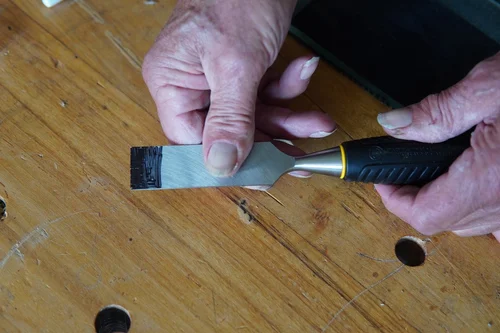
Honing chisels often keeps their edges sharp between full sharpenings. Use a fine honing stone or leather strop.
| Honing Frequency | Method | Effect |
| After every use | Light stropping on leather | Removes small burrs, keeps edge smooth |
| Weekly | Use fine grit honing stone | Realigns the edge, restores sharpness |
| Monthly | Check for chips or dullness | Decide if full sharpening is needed |
Credit: www.anneofalltrades.com
Frequently Asked Questions
How Often Should I Sharpen Woodworking Chisels?
Sharpen chisels whenever they feel dull or don’t cut cleanly. Frequent use may require sharpening every few weeks. Regular maintenance ensures precise cuts and prolongs tool life. Always check blade sharpness before starting a project for best results.
What Tools Do I Need To Sharpen Chisels?
You need sharpening stones, honing guides, and oil or water for lubrication. A bench grinder can speed the process but may overheat the blade. Using a strop after sharpening improves the edge’s polish and sharpness.
Can I Sharpen Chisels Without A Sharpening Jig?
Yes, you can sharpen chisels freehand, but it requires skill. A jig helps maintain consistent angles and easier sharpening. Beginners benefit from jigs to achieve professional, even edges on their chisels.
What Is The Best Angle For Sharpening Chisels?
Sharpen chisels between 25 and 30 degrees for general woodworking. Softer woods may allow a lower angle for sharper edges. Maintaining a consistent angle prevents uneven edges and improves cutting efficiency.
Conclusion
Sharpening chisels keeps your woodworking tools effective and safe. Regular sharpening saves time and effort during projects. Use the right stones and techniques for best results. Keep a steady hand and check the blade often. Sharp chisels cut cleaner and make your work easier.
Practice sharpening to improve your skill and confidence. Your woodworking will improve with sharper, well-maintained tools. Stay patient and careful for the best sharp edges. Keep your chisels sharp, and enjoy smoother woodworking every time.