Are your power tools scattered all over your workspace, making it hard to find what you need when you need it? Imagine a simple system that not only keeps your tools organized but also protects them and saves you valuable time.
This guide to storing power tools on racks will show you exactly how to create that system. You’ll learn easy, practical tips to turn clutter into order, so your tools are always within reach and ready to go. Keep reading to discover how a few smart changes can transform your workspace—and your projects.

Credit: www.amazon.com
Benefits Of Rack Storage
Storing power tools on racks keeps your workspace organized. It helps you find tools quickly and saves space.
Using racks also protects tools and makes your workshop safer. Let’s look at the main benefits of rack storage.
Saving Workshop Space
Racks use vertical space on walls. This frees up floor space for other tasks or equipment.
Keeping tools off benches and floors prevents clutter. It creates a clean and open workshop area.
- Maximizes unused wall space
- Reduces floor clutter
- Allows room for bigger projects
Enhancing Tool Accessibility
Racks keep tools visible and easy to reach. You spend less time searching for the right tool.
Organizing tools by type or size on racks helps you work faster and stay focused.
- Easy to see all tools at once
- Quick access improves work speed
- Organized racks reduce tool loss
Improving Safety
Storing power tools on racks keeps sharp or heavy items off the ground. This lowers trip and injury risks.
Racks also prevent tools from falling, which protects both the tools and people nearby.
- Reduces floor hazards
- Keeps heavy tools secure
- Protects tools from damage
Choosing The Right Rack
Storing power tools properly keeps your workspace tidy and tools safe. Picking the right rack helps you organize and protect your tools well.
This guide explains how to choose the best rack for your power tools. It covers types of racks, materials, and weight limits.
Types Of Racks For Power Tools
There are several rack types made for power tools. Each type fits different storage needs and spaces.
- Wall-mounted racks save floor space and keep tools visible.
- Freestanding racks are easy to move and hold many tools.
- Modular racks let you add or remove parts as needed.
- Drawer racks provide secure, dust-free storage.
Material And Durability
Rack materials affect how long the rack lasts and how well it holds tools. Choose strong materials for heavy tools.
| Material | Durability | Best Use |
| Steel | High | Heavy tools, long-term use |
| Plastic | Medium | Lightweight tools, moisture areas |
| Wood | Medium | Light to medium tools, indoor use |
| Aluminum | High | Rust-prone areas, lightweight tools |
Weight Capacity Considerations
Check the weight limit before buying a rack. Overloading racks can cause damage or accidents.
- Know the total weight of your tools.
- Choose racks with a higher weight capacity than your total tool weight.
- Distribute weight evenly to keep racks stable.
- Look for racks with reinforced shelves for heavy items.
Organizing Power Tools
Keeping power tools neat helps you find them fast. Good storage also protects tools from damage. Using racks is a smart way to keep your workspace tidy.
Organizing tools on racks saves space and keeps your tools ready to use. Sort tools carefully to make the best use of your rack system.
Sorting By Size And Frequency Of Use
Sort power tools by size so large ones don’t block smaller tools. Place tools you use often in easy reach. Less used tools can go higher or lower on the rack.
- Put large and heavy tools at the bottom for safety.
- Keep medium-sized tools at eye level for quick access.
- Store small or rarely used tools on top shelves.
Using Labels And Tags
Labels help you find tools without searching. Use clear tags on each tool or its spot on the rack. This keeps your system organized and easy to use.
| Label Type | Best Use |
| Printed tags | Clear names for each tool spot |
| Color codes | Group tools by type or use |
| QR codes | Link to manuals or videos |
Grouping Similar Tools
Group tools that do the same job or belong to the same category. This makes it simple to find what you need for a task.
- Keep all drills together on one rack section.
- Store sanding tools in another area.
- Put cutting tools near each other for fast access.
Installation Tips
Storing power tools on racks keeps your workspace neat and safe. Proper installation helps protect your tools and makes them easy to access.
Use these tips to install your power tool racks securely and efficiently.
Selecting The Ideal Location
Choose a spot with enough space to move around. Avoid places near water or heat sources. The area should be dry and well-lit.
Keep racks near your workbench for easy tool access. Make sure the wall or surface can hold the rack’s weight.
- Pick a dry, cool area
- Ensure enough space to reach tools
- Check wall strength before mounting
- Choose a well-lit location
Mounting Techniques
Use strong anchors and screws to attach the rack to the wall. Find wall studs for the best support. Use a stud finder if needed.
Level the rack before fixing it. This keeps tools stable and prevents them from slipping or falling.
- Locate wall studs for mounting
- Use heavy-duty screws or anchors
- Check the rack is level
- Tighten all fasteners securely
Safety Precautions During Setup
Wear safety glasses and gloves while installing. Keep the area clear of obstacles to avoid trips and falls.
Do not overload the rack beyond its weight limit. Test the rack’s strength before placing all your tools on it.
- Wear protective gear during installation
- Keep work area clean and free of clutter
- Check rack weight limits
- Test rack stability before use
Maintenance And Safety
Proper maintenance and safety keep power tool racks strong and secure.
Following simple steps helps avoid accidents and extends rack life.
Regular Inspection Of Racks
Check racks often for any damage or loose parts. Look for cracks, rust, or bent areas. Make sure bolts and screws are tight.
- Inspect shelves and supports
- Test rack stability by gently shaking
- Look for signs of wear or corrosion
- Tighten all fasteners
- Replace damaged parts immediately
Securing Tools To Prevent Falls
Tools must be fixed firmly to stop slipping or falling. Use straps, hooks, or holders designed for power tools.
| Method | Details |
| Straps | Use adjustable straps to hold tools tightly |
| Hooks | Hang tools by handles or designed slots |
| Tool Holders | Use molded holders that fit tool shapes |
| Magnetic Bars | Secure metal tools safely in place |
Cleaning And Upkeep
Keep racks clean to avoid dirt and dust buildup. Clean racks regularly with a dry or slightly damp cloth.
- Remove dust and debris weekly
- Wipe down with mild cleaner if needed
- Dry racks completely to stop rust
- Apply rust protection on metal racks
- Store racks in dry places

Credit: www.ramblingrenovators.ca
Space Maximizing Ideas
Storing power tools properly helps save space and keeps your workspace tidy. Using racks is a smart way to organize tools. This guide shows easy ideas to maximize storage space.
Good storage solutions make your tools easy to find and protect them from damage. Using racks lets you use vertical and overhead space well.
Vertical Storage Solutions
Vertical storage uses height instead of floor space. It keeps tools off the ground and easy to reach. You can use tall racks or stands to hold your power tools safely.
Vertical racks make small areas feel larger. They also keep cords and parts organized. This method works well for drills, saws, and grinders.
Utilizing Wall And Ceiling Space
Walls and ceilings offer a lot of unused space. Mount racks on walls to store tools at eye level. Ceiling racks can hold bulky tools or cases.
Use hooks, shelves, or pegboards on walls. Ceiling-mounted racks keep heavy tools off the floor and clear up room. This keeps your workspace open and safe.
- Use strong hooks for hanging drills and saws
- Install shelves for toolboxes and accessories
- Mount ceiling racks for large items or cases
- Keep frequently used tools within easy reach
Multi-tier Rack Systems
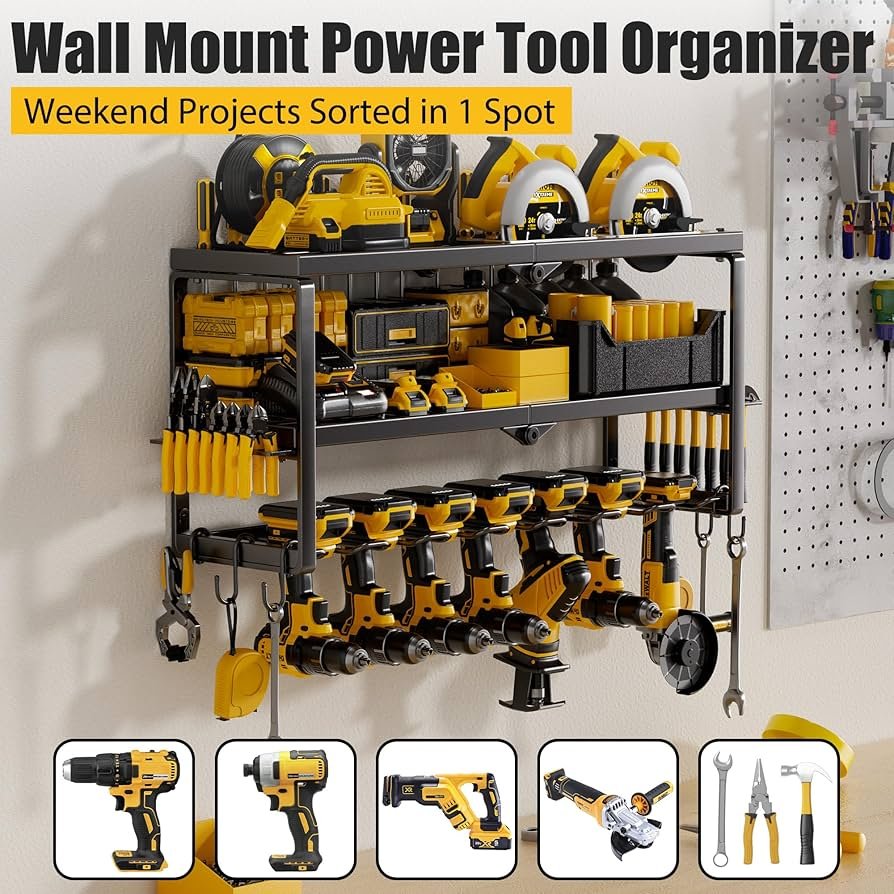
Multi-tier racks have several levels to store many tools in one place. This design saves floor space and groups similar tools together.
You can use adjustable shelves to fit different tool sizes. Label each tier to find tools quickly. This system works well in busy workshops.
- Top tier for light or small tools
- Middle tiers for frequently used power tools
- Bottom tier for heavy or large items
- Adjust shelf height to fit your needs

Credit: www.amazon.com
Frequently Asked Questions
How Do You Store Power Tools On Racks?
Storing power tools on racks maximizes space and keeps tools organized. Choose sturdy racks that can handle the weight. Use hooks or adjustable shelves for different tool sizes. This method prevents damage and makes tools easily accessible.
Why Is Rack Storage Beneficial For Power Tools?
Rack storage is beneficial because it optimizes space and enhances organization. It prevents tool damage and reduces clutter. Racks keep tools visible and accessible, saving time during projects. Properly stored tools also have a longer lifespan, making your investment worthwhile.
What Materials Are Best For Power Tool Racks?
Metal and heavy-duty plastic are ideal for power tool racks. Metal racks are durable and strong, supporting heavy tools. Plastic racks offer flexibility and are lightweight. Both materials resist wear and moisture, ensuring long-lasting storage solutions for your power tools.
Can Wall-mounted Racks Save Space?
Yes, wall-mounted racks significantly save floor space. They utilize vertical space effectively, keeping tools off the ground. This arrangement is perfect for small workshops or garages. Wall-mounted racks also provide easy access and visibility, enhancing your tool organization.
Conclusion
Storing power tools on racks keeps your workspace neat and safe. It saves time by making tools easy to find. Racks protect tools from damage and dust. Choose racks that fit your space and tool sizes. Organize tools by type or use for quick access.
Regularly check racks to keep them sturdy and clean. This simple step improves your work routine and tool life. A tidy space makes projects more enjoyable and efficient.