Are your clamps scattered all over your workspace, making it hard to find the right one when you need it? Organizing clamps by size can save you time, reduce frustration, and keep your projects running smoothly.
Imagine reaching for exactly the clamp you need, instantly, without digging through a messy pile. You’ll discover simple, effective ways to sort and store your clamps so your workshop stays neat and your work stays on track. Keep reading to transform your clutter into a system that works for you.

Credit: 100things2do.ca
Benefits Of Organizing Clamps
Organizing clamps by size helps keep your workspace neat and efficient. It makes finding the right clamp quick and easy.
Having clamps sorted saves time and reduces frustration during projects. It also protects your tools from damage.
Improves Work Efficiency
Organizing clamps by size lets you grab the right tool fast. You spend less time searching and more time working.
This system keeps your workflow smooth. You avoid interruptions that happen when clamps are mixed up.
Protects Clamps From Damage
Keeping clamps sorted prevents them from banging into each other. This reduces scratches and breaks.
- Stops clamps from falling or getting tangled
- Keeps clamp pads clean and intact
- Extends the life of your clamps
Saves Space In Your Workshop
Organizing clamps by size helps you use space well. You can store more clamps in less room.
Neatly arranged clamps fit better on racks or shelves. This clears up your workbench for other tasks.
Makes Inventory Management Easy
When clamps are grouped by size, you can quickly see what you have. It is easier to spot missing or broken clamps.
This helps you keep track of your tools and plan for replacements in time.
Sorting Clamps By Size
Organizing clamps by size helps keep your workspace tidy. It also makes finding the right clamp easier and faster.
Sorting clamps properly prevents damage and saves time during your projects. Let’s explore how to measure and group them.
Measuring Your Clamps
Measure the length of each clamp from the tip of one jaw to the tip of the other. Use a tape measure or ruler for accuracy.
- Lay the clamp flat on a table.
- Extend the clamp fully.
- Measure the distance between the jaws.
- Write down the size on a label or tag.
Grouping Similar Sizes
After measuring, group clamps with similar sizes together. This helps you grab the right clamp without sorting each time.
| Clamp Size (inches) | Suggested Storage Method | Example Clamp Types |
|---|---|---|
| 0–6 | Small bins or drawer organizers | Spring clamps, small bar clamps |
| 6–12 | Wall-mounted racks or shelves | Quick-grip clamps, medium bar clamps |
| 12+ | Large hooks or floor stands | C-clamps, large F-clamps |
Choosing Storage Solutions
Organizing clamps by size makes your workspace neat and efficient. Picking the right storage helps you find clamps fast.
Different storage types fit different spaces and clamp collections. Let’s look at some common solutions.
Wall-mounted Racks
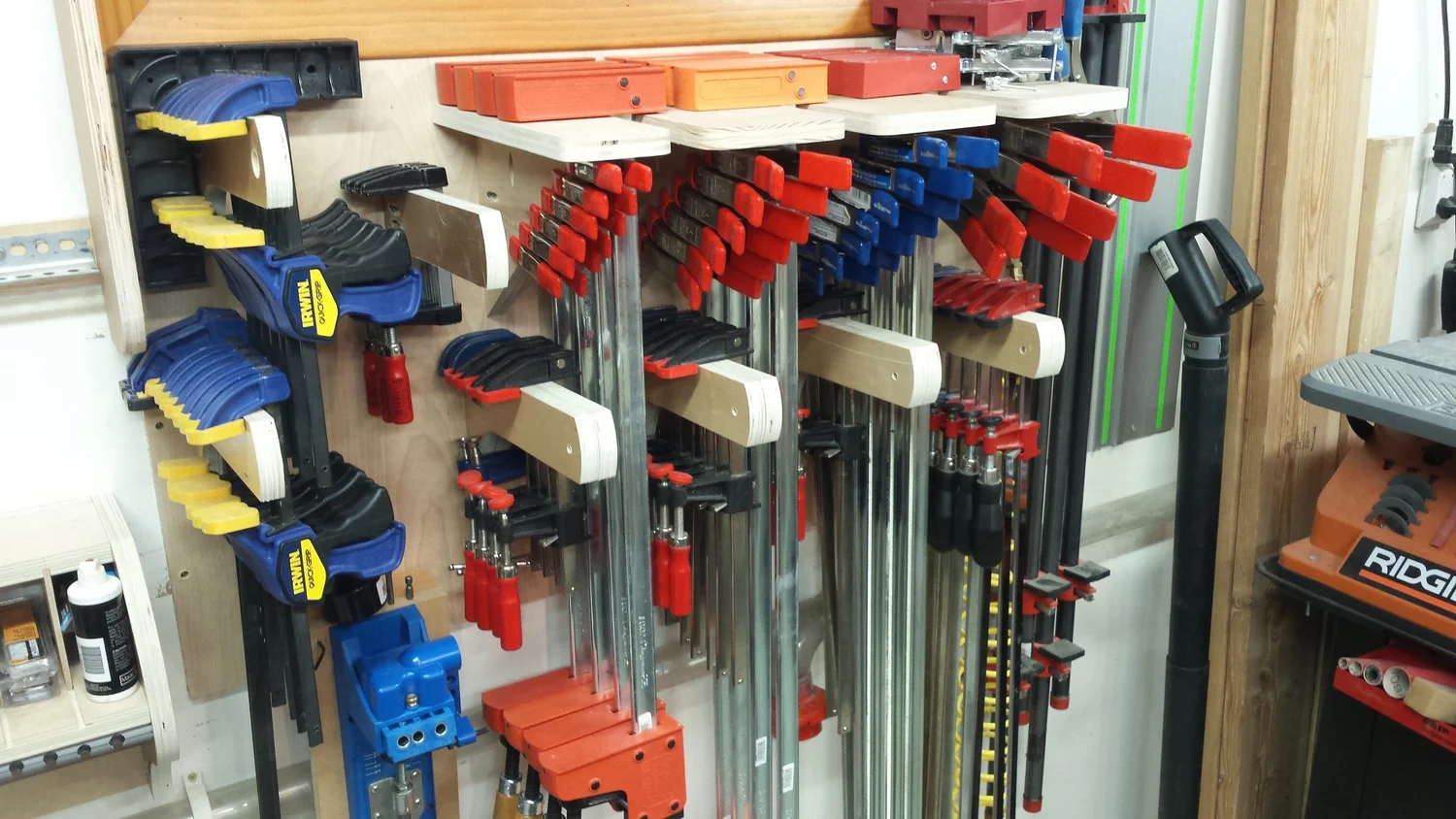
Wall-mounted racks save floor space and keep clamps visible. They hold clamps of various sizes on hooks or bars.
You can arrange clamps from smallest to largest for quick access. These racks are easy to install and adjust.
- Use sturdy hooks or bars to support clamp weight
- Label sections by clamp size for easy sorting
- Place racks at eye level to see all clamps
Drawer Dividers
Drawer dividers keep clamps separated by size inside drawers. They stop clamps from mixing and getting tangled.
Use adjustable dividers to fit different clamp sizes. This method protects clamps and saves wall space.
- Measure drawer size before buying dividers
- Group clamps by size in each section
- Keep heavy clamps in lower drawers for safety
Portable Cases
Portable cases let you carry clamps to job sites easily. They often have compartments for different clamp sizes.
Choose cases with foam inserts or adjustable dividers. This protects clamps during transport and keeps them organized.
- Pick cases with sturdy handles for easy carrying
- Use foam inserts to prevent clamp damage
- Label compartments to find clamps quickly

Credit: www.rockler.com
Labeling For Quick Access
Organizing clamps by size makes your work easier. Labeling helps you find the right clamp fast.
Clear labels save time and keep your workspace tidy. Use labels to sort clamps and speed up your projects.
Label Types
Choose labels that are easy to read and last long. Use labels that stand out on your clamp storage.
- Printed labels with size numbers
- Color-coded stickers for quick size ID
- Write-on tags with permanent markers
- Chalkboard labels for reusable options
Pick label types based on your workspace and how often you change clamps.
Placement Tips
Place labels where you can see them easily. Avoid spots that get covered or worn out quickly.
- Attach labels on the clamp handles
- Use labels on storage bins or shelves
- Place labels at eye level for quick viewing
- Keep labels consistent in size and font
Good placement reduces search time and keeps your clamps organized.
Maintaining Clamp Organization
Keeping clamps organized by size helps you find the right one fast. It also protects your clamps and keeps your workspace tidy.
Regular care and checks stop damage and make sure your clamps last a long time. Good habits keep your tools ready to use.
Regular Inspection
Look over your clamps often to find any wear or damage. Check the moving parts and the jaws for cracks or dirt.
Fix small problems early to avoid bigger repairs. Replace clamps that cannot hold properly or are broken.
- Check for rust on metal parts
- Test the clamp’s grip strength
- Look for bent or broken pieces
- Make sure the handles turn smoothly
Cleaning And Care
Clean your clamps after use to remove dirt and glue. Wipe them with a dry cloth or use mild soap if needed.
Keep clamps dry and store them in a dry place to stop rust. Oil the moving parts lightly to keep them working well.
- Use a soft cloth to wipe clamps
- Apply light oil to threads and joints
- Store clamps in a dry, cool area
- Avoid harsh chemicals that damage metal or plastic

Credit: 100things2do.ca
Creative Hacks For Small Spaces
Organizing clamps by size saves time and space in small work areas. Using smart storage ideas keeps your tools neat and easy to find.
These creative hacks help you store clamps efficiently without crowding your workspace. Try these tips to make the most of limited space.
Vertical Storage Ideas
Using vertical space is key in small rooms. Hang clamps on walls to free up drawer and shelf space. Group clamps by size for quick access.
- Install pegboards with hooks to hang clamps vertically.
- Use magnetic strips to hold metal clamps on the wall.
- Attach clamps to a wooden board mounted on the wall.
- Stack clamps on vertical rods or dowels fixed to a wall.
Multi-purpose Holders
Multi-purpose holders keep clamps organized and save space. Use holders that can fit different clamp sizes and types.
| Holder Type | Best For | Space Saving Tip |
| Wall-mounted rack | All clamp sizes | Mount near workbench |
| Adjustable clamp caddy | Various clamp widths | Use portable caddies |
| Stackable bins | Small clamps | Label by size for easy sorting |
| Repurposed kitchen rack | Light clamps | Hang on pegboard or wall |
Frequently Asked Questions
How Do You Categorize Clamps By Size?
To categorize clamps by size, measure their jaw opening and length. Group clamps into small, medium, and large categories. Use labeled containers or shelves for easy identification. This helps in quick access and efficient workspace organization. Regularly update your system to accommodate new clamps.
Why Is Organizing Clamps Important?
Organizing clamps enhances efficiency and productivity. It saves time searching for the right clamp size. A tidy workspace reduces clutter and minimizes the risk of accidents. Proper organization prolongs clamp life by preventing damage. It also ensures that clamps are easily accessible for any project.
What Tools Help In Organizing Clamps?
Pegboards, wall racks, and labeled bins are excellent tools for organizing clamps. Pegboards allow for flexible arrangement and easy access. Wall racks save space and keep clamps visible. Labeled bins help in categorizing clamps by size. These tools create a systematic and efficient storage solution.
How Often Should You Reorganize Clamps?
Reorganize clamps every few months or when your collection grows. Regularly updating your system ensures it remains efficient and clutter-free. Evaluate your storage space and adjust as necessary. This practice helps in maintaining order and optimizing your workspace for different projects.
Conclusion
Organizing clamps by size saves time and keeps your workspace tidy. It helps you find the right clamp quickly. Use shelves, bins, or hooks to sort clamps from small to large. Label each section clearly for easy access. Keep your clamps in one place to avoid losing them.
A simple system makes your projects smoother and faster. Start organizing today for a neater, more efficient workshop.