
Are you ready to transform your woodworking projects with smooth, flawless edges? If you’ve ever struggled with uneven or rough edges, you’re in the right place.
Mastering the use of a belt sander for sanding edges can be a game-changer in your DIY toolkit. Imagine the satisfaction of running your hand over a perfectly sanded edge, knowing you achieved that with your own skills. You’ll discover simple, step-by-step instructions to operate a belt sander like a pro.
Whether you’re a beginner or just looking to refine your technique, you’ll find practical tips to help you achieve exceptional results. Dive in and unlock the secrets to sanding perfection!

Credit: www.youtube.com
Choosing The Right Belt Sander
Selecting the right belt sander is key for sanding edges well. Different projects need different tools.
This guide covers types of belt sanders, choosing the correct grit, and safety features to consider.
Types Of Belt Sanders
Belt sanders vary by size and power. Choose one that fits your project and workspace.
- Handheld Belt Sanders:Portable and good for small to medium jobs.
- Stationary Belt Sanders:Fixed to a bench, ideal for large or detailed work.
- Detail Belt Sanders:Smaller belts for tight spaces and fine edges.
Selecting The Correct Grit
The grit number tells you how coarse or fine the sanding belt is. Lower numbers are coarse; higher are fine.
| Grit Number | Use |
| 40-60 | Heavy material removal and rough sanding |
| 80-120 | General purpose sanding and smoothing edges |
| 150-220 | Fine sanding before finishing |
Safety Features To Look For
Safety makes your work easier and protects you from injury. Check these features before buying.
- Automatic belt tracking to keep the belt aligned
- Dust collection port to reduce airborne particles
- Ergonomic handles for better grip and control
- Power switch safety lock to prevent accidental starts
Preparing The Work Area
Before using a belt sander for sanding edges, prepare your workspace carefully. A clean and safe area helps you work better and avoid accidents.
Organizing the work area makes sanding smoother and keeps distractions away. Follow key steps to set up your space.
Clearing And Securing The Workspace
Remove any clutter or tools that are not needed from the workspace. This gives you enough room to handle the belt sander safely.
Make sure the workpiece is firmly held in place. Use clamps or a vise to stop movement during sanding.
- Clear all unnecessary items from the table
- Secure the wood piece with clamps or a vise
- Keep the power cord away from the sanding path
- Check for loose nails or screws in the workpiece
Proper Lighting And Ventilation
Good lighting helps you see the edges clearly while sanding. Make sure your workspace has bright, even light.
Ventilation is important to remove dust and fumes. Work near an open window or use a fan to keep air flowing.
- Use a bright overhead light or a desk lamp
- Open windows or doors for fresh air
- Use a dust mask or vacuum system to control dust
- Avoid working in enclosed, stuffy spaces
Safety Gear Essentials
Wear the right safety gear to protect yourself from dust and injury. Safety gear keeps you safe during sanding work.
Use eye protection, ear plugs, and gloves. These reduce risks from flying debris, noise, and vibration.
- Safety goggles or glasses to protect eyes
- Dust mask or respirator to avoid inhaling dust
- Ear plugs or earmuffs to protect hearing
- Work gloves for hand protection and better grip
Setting Up The Belt Sander
Setting up your belt sander correctly helps you sand edges smoothly. This guide covers the key steps to get started.
We will look at installing the sanding belt, adjusting tension and tracking, and setting power and speed.
Installing The Sanding Belt
First, unplug the sander for safety. Open the belt cover by releasing the latch or screws. Remove the old belt if there is one.
Check the new sanding belt size matches your sander. Slide the new belt over the rollers. Make sure the arrows on the belt point in the correct rotation direction.
Close the belt cover securely. Ensure the belt sits flat and tight on the rollers before moving on.
Adjusting Belt Tension And Tracking
Proper tension keeps the belt tight, while tracking keeps it centered on the rollers. Both are important to avoid belt slips or damage.
- Locate the tension adjustment knob or lever on your sander.
- Turn it to increase or decrease belt tension until the belt feels firm but not too tight.
- Use the tracking knob to center the belt on the rollers by turning it slightly.
- Run the sander briefly to check if the belt stays centered and tight.
- Make small adjustments until the belt tracks smoothly without drifting off.
Power And Speed Settings
| Power Setting | Use Case | Recommended Speed |
|---|---|---|
| Low | Delicate materials or fine sanding | 800 – 1000 feet/min |
| Medium | General sanding of edges | 1000 – 1200 feet/min |
| High | Heavy sanding or rough surfaces | 1200 – 1500 feet/min |
Set the power switch and speed dial based on your sanding needs. Start slow and increase speed if needed.

Credit: www.amazon.com
Techniques For Sanding Edges
Sanding edges with a belt sander requires good technique. Proper handling improves your work quality and safety.
This guide explains key ways to hold, press, and move the sander for smooth edges.
Holding The Sander Correctly
Hold the belt sander firmly with both hands. Use one hand on the main handle and the other on the front grip.
Keep your arms relaxed but steady. This helps control the sander and reduces mistakes.
- Use a firm grip on both handles
- Keep your wrists straight
- Stand with feet shoulder-width apart for balance
Maintaining Consistent Pressure
Apply even pressure while sanding edges. Too much pressure can damage the wood or sander.
Let the sander do the work. Pressing lightly prevents uneven sanding and extends belt life.
- Push down gently and steadily
- Avoid forcing the sander into the wood
- Keep the belt moving smoothly over the edge
Sanding Angles And Movements
Use the right angle to follow the edge shape. Hold the sander at about 10 to 15 degrees from the surface.
Move the sander in slow, even strokes along the edge. Avoid staying in one spot too long to prevent grooves.
- Keep the sander angled slightly to the edge
- Slide the sander along the length of the edge
- Use smooth, consistent movements
Common Challenges And Solutions
Operating a belt sander for sanding edges can be tricky. You may face problems like uneven surfaces or belt slipping. Knowing how to fix these issues will improve your work.
This guide covers common challenges and offers simple solutions. It helps you avoid damage and get smooth results.
Avoiding Gouges And Uneven Surfaces
Gouges happen when you press too hard or keep the sander in one spot. Uneven surfaces appear if you move the sander too fast or unevenly.
- Keep the sander moving steadily along the edge.
- Do not press down hard; let the belt do the work.
- Use light, even pressure for consistent sanding.
- Check your work often to avoid deep marks.
Preventing Belt Slippage
Belt slippage can cause uneven sanding and waste time. It happens if the belt is loose or dirty.
| Cause | Solution |
| Loose belt | Tighten the belt using the adjustment knob. |
| Dirty belt or rollers | Clean the belt and rollers before use. |
| Worn belt | Replace the belt with a new one. |
| Incorrect belt size | Use the correct belt size for your sander. |
Dealing With Heat Buildup
Heat buildup can damage your workpiece and belt. It happens if you sand too long in one spot or use too much pressure.
- Move the sander continuously to avoid staying in one place.
- Use light pressure to reduce friction.
- Take breaks to let the belt and workpiece cool down.
- Check the belt for wear; replace if it overheats often.
Maintenance Tips For Longevity
Keeping your belt sander in good shape helps it last longer. Regular care prevents damage and ensures smooth sanding.
This guide covers simple tips for cleaning, replacing belts, and storing your tool properly.
Cleaning The Belt Sander
Dust and debris can block the belt sander’s parts. Clean it after each use to keep it running well.
- Unplug the tool before cleaning.
- Use a brush to remove dust from the belt and rollers.
- Wipe the exterior with a dry cloth.
- Check the vents and clear any buildup.
- Do not use water or liquids on the tool.
Replacing Worn Belts
Worn belts reduce sanding quality and can damage the sander. Replace belts as soon as they look worn or torn.
| Signs of a Worn Belt | Action |
| Frayed edges | Replace immediately |
| Uneven wear | Check and replace |
| Slipping belt | Adjust or replace |
| Torn or ripped belt | Replace immediately |
Follow the manufacturer’s instructions to remove and install new belts safely.
Storing The Tool Properly
Proper storage protects the sander from dust, moisture, and damage.
- Unplug and clean the sander before storage.
- Store it in a dry, cool place.
- Keep it away from heavy objects that may cause damage.
- Cover the sander with a cloth or case to avoid dust buildup.
- Check the belt tension before using after storage.
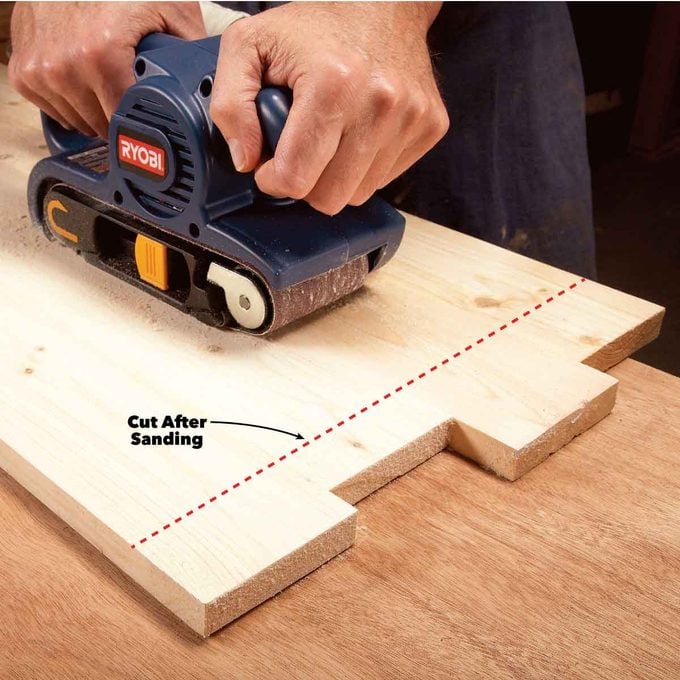
Credit: www.familyhandyman.com
Frequently Asked Questions
What Safety Tips Should I Follow When Using A Belt Sander?
Always wear safety goggles and a dust mask. Keep fingers away from the belt. Secure the workpiece firmly to avoid slips. Work in a well-ventilated area to reduce dust exposure.
How Do I Choose The Right Belt Grit For Edges?
Select coarse grit (40-60) for rough shaping. Use medium grit (80-120) for smoothing edges. Choose fine grit (150+) for final finishing. Match grit to your project’s sanding stage.
Can I Sand Curved Edges With A Belt Sander?
Yes, but use a narrower belt for better control. Move the sander slowly and follow the curve gently. Avoid applying too much pressure to prevent uneven sanding.
How Do I Avoid Gouging Edges With A Belt Sander?
Keep the sander moving steadily and avoid staying in one spot. Use light pressure and let the belt do the work. Practice on scrap wood to improve your control.
Conclusion
Operating a belt sander for sanding edges becomes easier with practice. Always keep a steady hand and control the speed. Move the sander smoothly along the edges to avoid damage. Wear safety gear to protect your eyes and hands. Clean the sander after use to keep it working well.
With care and attention, your edges will look smooth and even. Try these tips on your next project for better results. Sanding edges can be simple and safe. Just take your time and work carefully.