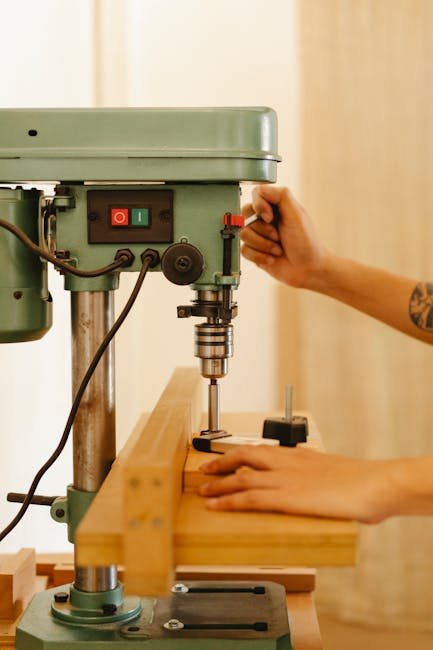
Imagine creating perfectly precise holes every single time you tackle a project. Whether you’re a seasoned woodworker or a DIY enthusiast, mastering the use of a drill press can elevate your craftsmanship to new heights.
But let’s be honest, achieving that level of precision can seem a bit daunting. You might wonder if it’s worth the effort or if you’ll even get it right. Here’s the secret: with the right guidance, using a drill press is easier than you think.
You’ll discover simple steps and insider tips that will transform your drilling experience. So, ready to unlock the secrets to flawless holes and take control of your projects like never before? Dive in and let’s make precision your new superpower!
Choosing The Right Drill Press
A drill press helps you make precise holes in wood, metal, and other materials. Picking the right drill press is important for accuracy and ease of use.
This guide covers different types of drill presses, key features to look for, and how to choose the right drill bit.
Types Of Drill Presses
There are several types of drill presses. Each type fits different tasks and skill levels.
- Bench Drill Press:Small and fits on a workbench. Good for light jobs.
- Floor Drill Press:Larger and stands on the floor. Used for heavy-duty work.
- Radial Drill Press:Has an arm that moves. Ideal for big workpieces.
- Magnetic Drill Press:Portable and sticks to metal surfaces. Great for field work.
Key Features To Consider
Look for features that improve safety, control, and accuracy in your drill press.
| Feature | Why It Matters |
|---|---|
| Adjustable Speed | Lets you match speed to material type |
| Depth Stop | Controls hole depth for consistency |
| Laser Guide | Helps line up the drill bit exactly |
| Stable Base | Prevents wobbling during drilling |
| Easy-to-Use Controls | Makes operation simple and safe |
Selecting The Correct Drill Bit
The drill bit type affects hole quality and tool life. Choose the right bit for your material and hole size.
- Twist Bits:Best for wood, plastic, and light metal.
- Spade Bits:Good for large, rough holes in wood.
- Forstner Bits:Make flat-bottomed holes in wood.
- Masonry Bits:Designed for brick and concrete.
- Brad Point Bits:Offer precise wood drilling with less splintering.

Credit: x.com
Setting Up Your Drill Press
Setting up your drill press correctly helps you make precise holes. It keeps your work safe and accurate.
Follow these steps to prepare your drill press before you start drilling.
Securing The Workpiece
Keep your workpiece steady to avoid mistakes. Use clamps or a vise to hold it firmly on the table.
Make sure the workpiece does not move during drilling. This helps you drill straight and accurate holes.
- Use clamps to hold small pieces
- Use a vise for larger or heavy items
- Check that the workpiece is flat on the table
- Avoid holding the piece by hand
Adjusting The Table And Depth
Set the table height so the drill bit lines up with your mark. Adjust the angle if needed for angled holes.
Use the depth stop to control how deep the drill bit goes. This prevents drilling too far.
- Loosen the table lock to move it up or down
- Use the tilt feature for angled drilling
- Set the depth stop to your desired hole depth
- Test the depth on scrap material first
Calibrating Speed Settings
Choose the right speed for the material and drill bit size. Too fast or slow can damage the bit or workpiece.
Refer to the drill press manual for recommended speeds. Adjust the belt or dial to set the speed.
- Use slower speeds for metal and hard materials
- Use faster speeds for soft wood and plastic
- Match speed to drill bit diameter
- Check the speed before starting the drill press
Techniques For Precision Drilling
Using a drill press helps make holes that are straight and exact. To get the best results, you need some good techniques.
These tips will help you drill precise holes every time. Focus on marking, punching, and controlling the drill.
Marking Accurate Drill Points
Start by clearly marking where the hole will go. Use a pencil or fine marker to make a small dot.
Check the mark twice to ensure it is in the right place before you drill.
Using A Center Punch
A center punch makes a small dent on the mark. This dent stops the drill bit from slipping.
Use a hammer to tap the center punch gently on the spot you marked.
- Hold the center punch straight
- Tap lightly to make a small dent
- Check the dent before drilling
Controlling Feed And Pressure
Feed means how fast you push the drill into the material. Pressure means how hard you press down.
Use steady, even pressure. Too much force can break the bit or ruin the hole.
- Start with light pressure to guide the bit
- Increase pressure slowly as the hole deepens
- Keep the drill speed steady
- Stop if the drill bit heats up or binds
Safety Tips For Drill Press Use
Using a drill press can help you make exact holes. It is important to follow safety rules to prevent accidents.
Safety gear, awareness, and a clean workspace all help keep you safe while using the drill press.
Wearing Proper Safety Gear
Always wear safety gear to protect your eyes and hands. Use goggles to stop flying debris from hitting your eyes.
Wear gloves that fit well but do not get caught in the drill. Use ear protection if the drill press is loud.
- Safety goggles or glasses
- Close-fitting gloves
- Ear protection like earplugs or earmuffs
- Remove loose clothing and jewelry
- Tie back long hair
Avoiding Common Hazards
Check the drill press before use. Make sure all parts are tight and the drill bit is sharp and secure.
Keep your hands away from the spinning bit. Never force the drill; let it work at its own speed.
- Inspect machine for loose parts
- Use the right drill bit for the job
- Keep hands clear of the drill bit
- Do not wear gloves that can catch in the drill
- Turn off and unplug before changing bits
Maintaining A Clean Workspace
Keep the area around the drill press free of clutter. A clean space reduces the chance of tripping or slipping.
Remove wood chips and dust regularly. This helps the drill run smoothly and stops fires from starting.
- Clear tools and materials away from the drill
- Sweep away dust and wood chips often
- Keep floors dry and clean
- Store drill bits and accessories safely
Troubleshooting Common Issues
Using a drill press can help you make precise holes. Sometimes problems happen that affect the quality of your work. Fixing these issues will improve your results and save time.
This guide covers common problems like drill bit slippage, workpiece movement, and inaccurate holes. Each section explains causes and solutions to keep your drill press working well.
Dealing With Drill Bit Slippage
Drill bit slippage happens when the bit spins inside the chuck without drilling properly. This causes rough holes and can damage the bit or workpiece.
- Check if the chuck is tight enough. Use the chuck key to secure the bit firmly.
- Clean the chuck and bit shank from dirt or oil before use.
- Use the correct drill bit size for your chuck to prevent loose fitting.
- Replace worn or damaged drill bits that may slip easily.
- Apply moderate pressure when drilling. Too much force can cause slippage.
Preventing Workpiece Movement
When the workpiece moves, holes will be off target. Secure the material properly to get clean, accurate holes.
| Method | How it Helps |
|---|---|
| Use clamps or a vise | Keeps the workpiece from shifting during drilling |
| Place a sacrificial board under the workpiece | Prevents damage to the drill press table and adds stability |
| Check that the work surface is clean | Removes debris that could cause slipping |
| Apply even pressure on the workpiece | Prevents rocking or lifting |
Fixing Inaccurate Holes
Inaccurate holes can result from misalignment or wrong speed. Fix these to ensure your holes are straight and sized right.
- Align the drill bit carefully with the mark before turning on the drill press.
- Check the drill press table is square to the bit and adjust if needed.
- Use the right drill speed for the material you are drilling.
- Drill pilot holes for large diameters to guide the final bit.
- Replace dull drill bits to avoid wandering and rough holes.

Credit: www.amazon.ca
Advanced Tips For Expert Results
Using a drill press correctly helps you make precise holes every time. Small changes can improve your work greatly.
This guide shares advanced tips for using attachments, drilling various materials, and keeping your drill press in top shape.
Using Drill Press Attachments
Attachments can boost your drill press’s ability. They help with depth, angle, and repeated holes.
- Use a depth stop to control hole depth exactly.
- Angle jigs help drill holes at precise angles.
- Use a fence for straight, repeatable hole spacing.
- Clamps keep your workpiece steady and safe.
- Try a circle cutting jig for perfect round cuts.
Drilling Different Materials
Different materials need different speeds and drill bits. Adjust settings for best results.
| Material | Speed (RPM) | Drill Bit Type |
| Wood | 1500-3000 | Spade or brad point bit |
| Metal | 500-1200 | High-speed steel bit |
| Plastic | 1000-2000 | Standard twist bit |
| Masonry | 300-600 | Masonry bit with hammer |
Maintaining Your Drill Press
Regular care keeps your drill press accurate and safe. Clean and check parts often.
- Clean the table and base from dust and debris.
- Lubricate moving parts monthly to avoid rust.
- Check belts for wear and proper tension.
- Tighten loose screws and bolts regularly.
- Test the chuck to ensure it holds bits firmly.
:max_bytes(150000):strip_icc()/JS_1864-2008bd548fb548db8f5729d54b71976b.jpg)
Credit: www.woodmagazine.com
Frequently Asked Questions
What Safety Gear Is Essential When Using A Drill Press?
Always wear safety glasses and hearing protection. Use gloves only if safe. Avoid loose clothing to prevent accidents. Keep the workspace clean and well-lit for safe operation.
How Do I Align The Drill Bit For Accurate Holes?
Use the drill press table and fence for alignment. Adjust the bit to the center of your mark. Lower the bit slowly to check positioning before drilling. Proper setup ensures precise hole placement.
What Speed Setting Is Best For Drilling Different Materials?
Use slower speeds for metals and harder materials. Faster speeds work well for wood and soft plastics. Adjust speed according to material hardness to avoid bit damage and ensure clean holes.
How Can I Prevent Wood From Splintering When Drilling?
Place a scrap wood piece under the workpiece. Use a sharp drill bit designed for wood. Drill slowly and apply steady pressure. This method reduces tear-out and produces cleaner holes.
Conclusion
Using a drill press helps you make exact, clean holes every time. Keep your workpiece steady and measure twice before drilling. Choose the right drill bit for the material you use. Always wear safety gear to protect yourself. Practice often to gain confidence and improve skill.
Precise holes make your projects look professional and last longer. With patience and care, drilling becomes easier and more accurate. Try these tips to get the best results from your drill press.