Are your hand drills scattered everywhere, making it hard to find the right one when you need it most? Imagine opening your tool chest and instantly spotting the exact drill you want, saving you time and frustration.
Organizing your hand drills the right way can transform your workspace and boost your productivity. You’ll discover simple, effective steps to keep your drills neat, accessible, and safe. Keep reading, and you’ll never waste another minute hunting for your tools again.
Choosing The Right Tool Chest
Organizing hand drills helps keep your workspace clean and tools easy to find. Picking the right tool chest is important for good organization.
A good tool chest protects your drills and saves space. Think about size, material, and how easy it is to move.
Size And Compartments
Choose a tool chest that fits your hand drills comfortably. It should have enough compartments to separate different drill types and accessories.
Compartments help keep drills organized and prevent damage. Look for adjustable dividers to change the space as needed.
- Large enough for all drills and bits
- Separate spaces for batteries and chargers
- Adjustable compartments for flexibility
Material And Durability
Pick a tool chest made from strong materials like metal or heavy-duty plastic. This keeps your drills safe from damage.
Durable materials resist rust and wear. This helps the chest last longer even in tough workshop conditions.
- Steel offers strong protection
- Plastic is lightweight and resists rust
- Look for scratch-resistant finishes
Mobility Features
Consider how you will move the tool chest around. Wheels and handles make it easy to carry or roll to your work area.
Good mobility saves time and effort. Check the quality of wheels and handle comfort before buying.
- Locking wheels keep chest stable
- Ergonomic handles reduce strain
- Compact design fits through doorways

Credit: www.amazon.in
Sorting Hand Drills By Type
Organizing hand drills helps you find the right tool fast. Grouping them by type keeps your tool chest neat.
Sorting drills by their features makes storage easier and protects your tools from damage.
Corded Vs Cordless
Corded drills need a power outlet and give constant power. Cordless drills run on batteries and are more flexible.
- Store corded drills near outlets or in lower drawers to avoid tangled cords.
- Keep cordless drills in a charging station or a separate shelf.
- Label each drill type to avoid confusion.
Drill Sizes
Drills come in many sizes, from small to large. Sorting by size helps you pick the right tool for the job.
| Size | Common Use | Storage Tip |
| Small | Light tasks, tight spaces | Use small bins or compartments |
| Medium | General drilling | Store on shelves or racks |
| Large | Heavy-duty jobs | Place in bottom drawers or large slots |
Specialty Drills
Specialty drills serve unique purposes. Keep them apart to avoid mixing with regular drills.
- Right-angle drills for tight corners
- Hammer drills for masonry work
- Impact drivers for screws and bolts
Maximizing Space With Custom Inserts
Organizing hand drills in a tool chest saves time and keeps your workspace tidy. Custom inserts help fit tools snugly and use every inch of space.
Choosing the right inserts can protect your drills and make them easy to find. Use materials and designs that fit your tool types.
Foam Cutouts
Foam cutouts hold each hand drill firmly in place. They prevent the tools from moving or scratching each other.
- Measure each drill carefully before cutting
- Use dense foam for better protection
- Label each cutout to identify tools quickly
- Choose foam color to match your tool chest style
Adjustable Dividers
Adjustable dividers let you change the layout inside the tool chest. They work well if you add or remove drills often.
| Feature | Benefit |
| Sliding mechanism | Easy to move and resize compartments |
| Sturdy material | Keeps drills stable during transport |
| Simple installation | Fits most tool chests without tools |
Magnetic Strips
Magnetic strips hold metal hand drills on vertical or horizontal surfaces. They save drawer space and keep drills visible.
Tips for using magnetic strips:
- Mount strips inside the lid or on side walls
- Check the strength to hold heavy drills
- Keep strips clean to maintain grip
- Use rubber backing to protect tool finish
Utilizing Vertical And Side Storage
Organizing hand drills in a tool chest saves space and keeps tools easy to find. Using vertical and side storage helps keep drills neat.
These storage options make good use of empty areas inside the chest. You can store drills safely and access them quickly.
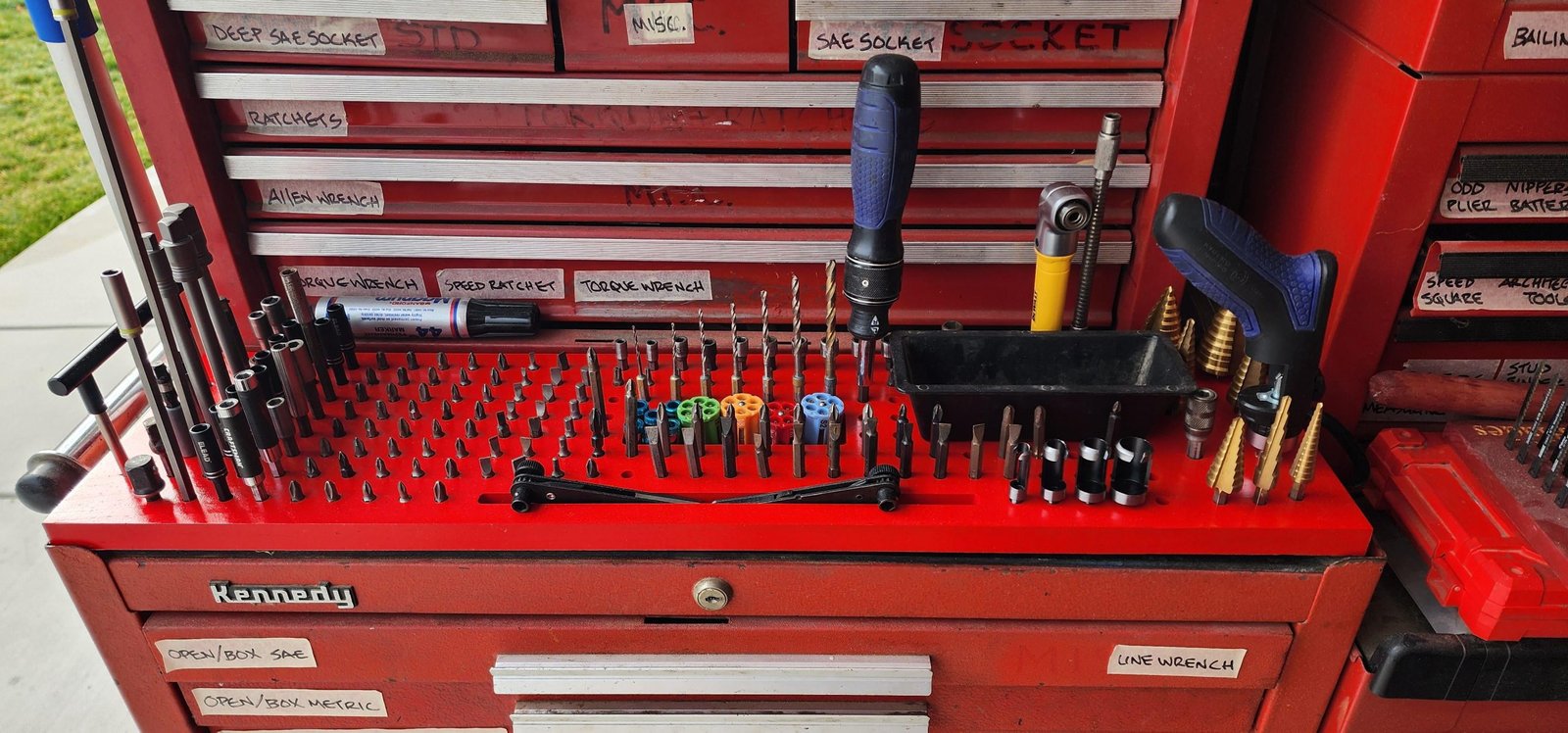
Pegboards Inside Tool Chest
Pegboards fit well inside a tool chest to hold hand drills vertically. You can hang drills by their handles or bodies.
Use pegboards with various hole sizes to fit different drill shapes. This keeps drills off the bottom and easy to spot.
- Attach pegboard to the inside wall of the chest
- Use peg hooks to hang drills by their handles
- Add small baskets for drill bits and accessories
- Label each peg for quick identification
Side Pockets And Holders
Side pockets inside the tool chest are perfect for storing drills upright. They prevent drills from rolling around.
Use soft or hard pockets depending on drill weight. Holders keep drills separate and safe from damage.
- Install fabric or plastic pockets on side panels
- Use holders with elastic bands for a secure fit
- Group drills by size or type in different pockets
- Check pockets regularly for wear and replace if needed
Hooks And Clips
Hooks and clips inside the tool chest help keep hand drills off the bottom. They use vertical space efficiently.
Choose sturdy hooks or clips that can hold the drill weight. Place them along the sides or back of the chest.
- Use metal or heavy-duty plastic hooks
- Clip drills by handles or cords
- Arrange hooks at different heights for easy access
- Keep hooks spaced to avoid drill contact
Organizing Drill Accessories
Keeping your drill accessories in order saves time and space. A neat tool chest helps you find items quickly.
Organize your drill bits, batteries, and cases to protect them and keep your workspace clean.
Bits And Attachments
Sort drill bits by size and type. Store them in small containers or bit holders inside the chest.
Keep attachments like sanding pads and driver heads together to avoid losing them.
- Use labeled containers for each bit size
- Place frequently used bits at the front
- Group similar attachments in one area
- Keep sharp bits covered for safety
Battery And Chargers
Store batteries in a cool, dry place inside the chest. Avoid stacking them to prevent damage.
Keep chargers together on one shelf or section. This makes charging easier and keeps cords neat.
- Use a small bin or box for batteries
- Label batteries with charge status
- Wrap charger cords to avoid tangles
- Separate batteries by type or brand
Carrying Cases
Store drill carrying cases flat or upright to save space. Keep them clean and free from dust.
Use cases to hold smaller accessories or tools. This keeps everything organized and easy to transport.
- Stack cases by size for easy access
- Label cases with contents
- Place cases in a dedicated chest drawer
- Check cases regularly for damage

Credit: www.reddit.com
Labeling And Inventory Management
Keeping hand drills organized in a tool chest saves time and space. Labeling and inventory management help you find tools quickly.
Proper labels and a clear inventory list keep your tool chest neat and make it easy to track your drills.
Label Types And Placement
Use durable labels that stick well and resist wear. Choose clear labels with large fonts for easy reading.
Place labels where you can see them without moving tools. Label each drawer or section and each drill spot.
- Use waterproof or laminated labels for durability
- Label drawer fronts and inside compartments
- Include drill size or type on each label
- Place labels at eye level if possible
Inventory Checklist
Create a simple list of all your hand drills with details. Include size, brand, and condition.
Update the checklist when you add or remove drills. Keep a printed copy inside the tool chest for quick reference.
| Drill Name | Size | Brand | Condition |
|---|---|---|---|
| Compact Drill | 3/8 inch | Brand A | Good |
| Heavy Duty Drill | 1/2 inch | Brand B | Needs Repair |
| Electric Drill | 3/8 inch | Brand C | New |
Digital Tracking Options
Use apps or spreadsheets to track your drills digitally. This helps update your inventory from anywhere.
Digital tools can alert you if a drill is missing or needs maintenance. Sync your data for team use.
- Use simple spreadsheet apps like Excel or Google Sheets
- Try inventory apps designed for tools
- Scan QR codes on labels for quick updates
- Set reminders for tool checks and repairs
Maintaining Drill Organization
Keeping hand drills organized in a tool chest saves time and space. It also protects your tools from damage.
Good organization helps you find the right drill quickly. It makes your workspace safer and cleaner.
Regular Cleaning Routine
Clean your drills and tool chest often to prevent dust buildup. Dust and dirt can harm drill parts.
Wipe each drill with a dry cloth before putting it back. Remove any rust or debris you see.
- Take out drills before cleaning the chest
- Use a soft brush to clean tight spots
- Check drill bits for dirt or damage
- Store drills dry to avoid rust
Periodic Reassessment
Check your drill organization every few months. Your needs may change, so adjust the setup if needed.
Look for drills you no longer use. Remove or relocate them to free space for new tools.
- Count drills and check storage spots
- Test each drill for proper function
- Rearrange drills for easier access
- Label storage areas if needed
Tips For Consistency
Keep your drill organization consistent by following simple habits. This makes it easy to maintain order.
Always return drills to their assigned spots after use. Teach everyone who uses the tools to do the same.
- Use foam inserts or dividers to separate drills
- Mark each slot with the drill size or type
- Check the chest weekly for misplaced drills
- Store accessories like bits nearby
Credit: www.youtube.com
Frequently Asked Questions
How Do I Store Hand Drills Safely In A Tool Chest?
Store hand drills by securing them in dedicated compartments or foam inserts. This prevents movement and protects the drills from damage during transport or storage.
What Is The Best Way To Organize Drill Accessories?
Use small, labeled containers or drawer organizers for drill bits and accessories. Keep them near the drills for easy access and better workflow.
Can I Use Foam Inserts To Organize Hand Drills?
Yes, foam inserts provide custom-fit protection for hand drills. They keep tools secure, prevent scratches, and make organization visually clear.
How Often Should I Clean My Tool Chest With Hand Drills?
Clean your tool chest monthly to remove dust and debris. This helps maintain tool condition and ensures a tidy workspace.
Conclusion
Organizing hand drills boosts efficiency and saves time. A tidy tool chest helps find what you need quickly. Arrange drills by size or type for easy access. Use dividers or trays to separate them neatly. Label each section for even faster retrieval.
Regularly check and maintain order to keep tools in good condition. A well-organized tool chest makes your work smoother. Plus, it extends the life of your tools. Start organizing today for a clutter-free workspace and improved productivity. Enjoy the simplicity of a neat and efficient tool chest.