
Are you tired of those uneven cuts ruining your woodworking projects? Maintaining your table saw properly could be the game-changer you’ve been searching for.
Imagine the satisfaction of achieving perfect, consistent cuts every single time. By taking a few simple steps to care for your table saw, you can enhance its performance and extend its lifespan. In this guide, we’ll uncover the secrets to table saw maintenance that will keep your cuts precise and your projects flawless.
Ready to transform your woodworking experience? Let’s dive in and discover how you can achieve the accuracy and reliability you’ve always wanted.
Choosing The Right Blade
Using the right blade on your table saw helps you make clean, precise cuts. A good blade keeps your work safe and your cuts consistent.
This guide explains types of blades, materials and coatings, and when to replace your blade.
Types Of Blades
There are many blade types for different cuts. You must pick the blade that fits your project.
- Rip Blades: Made for cutting along the wood grain. They have fewer teeth and cut fast.
- Crosscut Blades: Designed to cut across the grain. They have more teeth for smooth cuts.
- Combination Blades: Good for both ripping and crosscutting. They offer a balance of speed and finish.
- Plywood Blades: Thin kerf blades with many teeth. They reduce splintering on plywood.
- Specialty Blades: Used for cutting metal, laminate, or plastics. Choose these for non-wood materials.
Blade Material And Coating
Blade material affects sharpness and durability. Coatings help reduce heat and rust.
| Material | Benefits | Drawbacks |
| High-Speed Steel (HSS) | Sharp and inexpensive | Dulls quickly |
| Carbide-Tipped | Stays sharp longer and cuts harder materials | More expensive |
| Ceramic-Coated | Reduces heat and friction | Can be brittle |
| Titanium-Coated | Resists rust and heat | Costs more |
When To Replace Your Blade
Blade condition affects cut quality and safety. Replace the blade if you see these signs.
- Burn marks on wood surfaces
- Dull teeth that need frequent sharpening
- Chipping or missing teeth
- Increased effort to push wood through
- Unusual noise or vibration during cutting

Credit: www.amazon.com
Cleaning The Table Saw
Keeping your table saw clean helps it cut wood smoothly and safely. Dirt and dust can build up and cause problems.
Regular cleaning keeps the saw working well and makes your cuts more accurate. Let’s look at how to clean it right.
Removing Sawdust And Debris
Sawdust and wood chips collect on the table, motor, and inside the saw. This can block parts and slow down the saw.
Use a brush or air blower to clear away sawdust after every use. This stops buildup and keeps the saw clean.
- Turn off and unplug the saw before cleaning.
- Brush sawdust off the table surface and around the blade.
- Use compressed air to blow dust from inside the motor and vents.
- Check the dust collection system and empty it if full.
Cleaning The Blade And Arbor
Dirt and resin can stick to the blade and arbor, making cuts rough. Clean them regularly for smooth cutting.
Remove the blade carefully and clean it with a blade cleaner or mild detergent. Wipe the arbor to remove grime.
- Wear gloves to protect your hands.
- Remove the blade following the saw’s instructions.
- Soak the blade in a cleaner or warm soapy water.
- Use a soft brush to remove buildup on the blade teeth.
- Dry the blade completely before reinstalling.
- Wipe the arbor area with a clean cloth.
Lubricating Moving Parts
Lubrication helps the saw’s moving parts work smoothly and last longer. Without it, parts can wear out fast.
Apply lubricant to parts like the gears, trunnions, and elevation mechanisms. Use the right oil or grease for your saw.
- Check your saw’s manual for recommended lubricants.
- Clean parts before applying lubricant to remove old grease.
- Use light machine oil or grease on moving joints.
- Avoid over-lubricating to stop dust from sticking.
- Wipe off excess lubricant after application.
Aligning The Blade And Fence
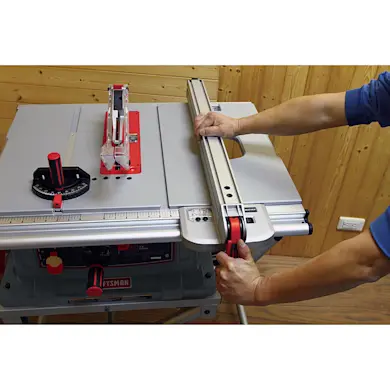
Keeping your table saw’s blade and fence aligned is key for straight cuts. Misalignment can cause poor cuts and safety issues.
This guide covers how to check the blade alignment, adjust the fence, and measure accurately for consistent cuts.
Checking Blade Alignment
Start by checking if the blade is parallel to the miter slot. Use a combination square or dial indicator for this.
Place the square against the miter slot and touch the blade teeth. Rotate the blade and check multiple points for accuracy.
- Turn off and unplug the saw before checking.
- Set the blade to full height for better measurement.
- Check the blade at front and back near the miter slot.
- Look for any gap between the blade and square.
Adjusting The Fence Parallel
The fence must be parallel to the blade for straight cuts. A misaligned fence can cause binding or kickback.
Loosen the fence locking knobs and adjust the fence until it runs parallel with the blade. Use a tape measure or ruler for checking.
- Measure the distance from the fence to the blade at front and back.
- Tighten the fence lock once distances are equal.
- Double-check measurements after locking the fence.
Ensuring Accurate Measurements
Use accurate tools like a combination square or dial indicator for all measurements. Inaccurate tools give bad results.
Regularly check your tools for wear and calibration to keep measurements precise. Measure twice before cutting.
- Use reliable measuring tools for checking alignment.
- Calibrate tools regularly to maintain accuracy.
- Measure twice to avoid mistakes.
Credit: www.searspartsdirect.com
Maintaining The Motor And Drive System
The motor and drive system of a table saw must stay in good condition. This helps the saw make clean and steady cuts. Regular checks and care keep the parts working well.
Focus on the belts, pulleys, and motor to avoid problems. Proper care lowers the chance of breakdowns and keeps your saw safe to use.
Inspecting Belts And Pulleys
Check belts and pulleys often to find wear or damage. Look for cracks, fraying, or loose belts. Make sure pulleys turn smoothly without wobbling.
- Look for cracks or splits in belts
- Check belt tension; not too tight or loose
- Inspect pulleys for dents or damage
- Make sure pulleys spin without noise
- Replace worn belts immediately
Motor Maintenance Tips
Keep the motor clean and dry. Dust and dirt can block cooling vents. Oil moving parts as the manual says. Tighten screws and bolts regularly.
| Task | Frequency | Details |
| Clean cooling vents | Monthly | Use compressed air or soft brush |
| Lubricate motor parts | Every 6 months | Use manufacturer-approved oil |
| Tighten bolts and screws | Every 3 months | Check motor mount and housing |
| Inspect electrical wires | Monthly | Look for frays or loose connections |
Preventing Overheating
Overheating harms the motor and cuts its life. Keep the saw in a cool place. Avoid running it for too long without breaks. Clear sawdust from vents often.
- Work in a well-ventilated area
- Turn off the saw to cool after long use
- Remove sawdust from vents and motor housing
- Check motor temperature by touch carefully
- Use a fan if the workspace is hot
Safety Checks And Calibration
Maintaining a table saw is key for safe and accurate cuts. Regular safety checks and calibration keep your saw working well.
Pay close attention to the saw’s safety features and measuring tools. This ensures every cut is straight and safe to make.
Testing Safety Features
Check the blade guard, riving knife, and anti-kickback pawls before use. These parts protect you from injury during cutting.
- Make sure the blade guard moves freely and covers the blade.
- Inspect the riving knife for damage and correct alignment.
- Test the anti-kickback pawls to ensure they grip the wood properly.
- Verify the emergency stop button works immediately.
Calibrating The Miter Gauge
The miter gauge guides angled cuts. If it is off, your cuts will not fit together correctly.
| Check | How to Test | Adjustment Tips |
| Alignment | Place a square on the blade and miter gauge fence | Adjust screws to align fence with blade |
| Tightness | Move gauge side to side to test play | Tighten locking lever for firm hold |
| Angle Accuracy | Use a protractor to verify angle settings | Calibrate scale marks if needed |
Verifying Cut Accuracy
Accurate cuts depend on proper blade height and fence alignment. Check these often for consistent results.
- Set the blade height to just above the wood thickness.
- Align the fence parallel to the blade using a measuring tape.
- Make a test cut on scrap wood.
- Measure the cut piece with a square or ruler.
- Adjust the fence or blade if the cut is off by more than 1/16 inch.

Credit: www.youtube.com
Storage And Usage Tips
Keeping your table saw in good shape helps it cut straight every time.
Simple storage and use habits make your saw last longer and work better.
Proper Storage Conditions
Store the table saw in a dry place to stop rust and damage.
- Cover the saw with a dust cover or cloth
- Keep it away from moisture and humidity
- Place it on a stable and flat surface
- Disconnect power when not in use
Best Practices During Use
Use the saw carefully to keep cuts even and safe.
| Tip | Reason |
| Check blade alignment before cutting | Ensures straight cuts |
| Use push sticks | Keeps hands safe |
| Wear safety goggles | Protects eyes |
| Keep the work area clean | Prevents slips and mistakes |
Avoiding Common Mistakes
Some errors can damage your saw or cause bad cuts.
- Do not force the wood through the blade
- Never cut wood with nails or screws inside
- Avoid cutting warped or wet wood
- Do not ignore unusual noises or vibrations
- Keep blades sharp and clean
Frequently Asked Questions
How Often Should I Clean My Table Saw?
Clean your table saw after each use to remove sawdust and debris. Regular cleaning prevents buildup that affects cutting accuracy and blade performance.
What Is The Best Way To Align The Table Saw Blade?
Use a combination square or dial indicator to align the blade parallel to the miter slot. Proper alignment ensures straight, precise cuts.
How Do I Lubricate A Table Saw Effectively?
Apply a dry lubricant or paste wax to the table surface and moving parts. Avoid oil-based lubricants to prevent sawdust buildup and maintain smooth operation.
When Should I Replace The Table Saw Blade?
Replace the blade when it becomes dull, chipped, or causes burning on cuts. A sharp blade ensures clean, consistent cuts and reduces motor strain.
Conclusion
Maintaining your table saw keeps cuts clean and precise. Regular cleaning removes dust and debris that slow it down. Sharpen or replace the blade to ensure smooth cutting. Check the alignment often to avoid uneven cuts. Lubricate moving parts to keep the saw running well.
Safety checks help prevent accidents during work. Small efforts lead to better results every time. Keep your saw in good shape for long-lasting use. Consistent care saves money and improves your projects. Simple steps make your work easier and more enjoyable.