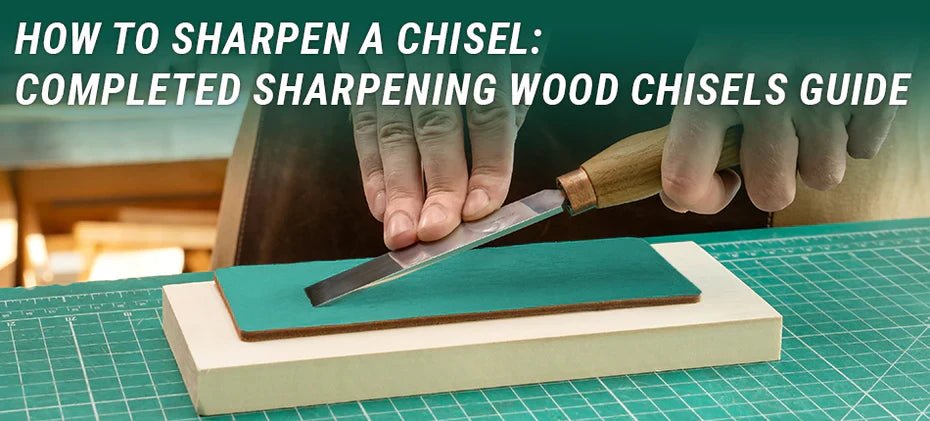
Are your woodworking projects not turning out as smooth as you’d like? The culprit might be dull chisel blades.
You know how frustrating it can be to work with tools that just don’t cut it—literally. But don’t worry, because we’re here to help you transform those blunt blades into precise, sharp instruments that glide through wood like butter. Imagine the satisfaction of crafting with tools that enhance your skill rather than hold you back.
We’ll reveal the essential tips for sharpening chisel blades that every woodworker should know. Stick around, and you’ll discover how to maintain your tools so they perform at their best, making your projects not just easier, but more enjoyable. Ready to take your woodworking to the next level? Let’s get started!
Choosing The Right Sharpening Tools
Sharpening chisel blades needs the right tools for good results. The tools affect the sharpness and the blade’s life.
Select tools that fit your skill level and the blade type. This guide covers common choices to help you decide.
Types Of Sharpening Stones
Sharpening stones come in many kinds. They differ by material and grit size. Each type works best for certain sharpening needs.
- Oil Stones:Use oil as a lubricant. They last long and give a smooth finish.
- Water Stones:Use water to keep them wet. They sharpen fast but wear down quicker.
- Diamond Stones:Have a metal plate coated with diamonds. They cut quickly and stay flat.
Using Honing Guides
Honing guides hold the chisel at a steady angle. This helps keep the blade even and sharp.
| Type | Benefit | Best For |
| Manual Guides | Easy to use and adjust | Beginners and occasional users |
| Clamp Guides | Hold blade firmly | Precise angle control |
| Magnetic Guides | Quick attachment | Fast sharpening sessions |
Alternative Sharpening Methods
You can use other tools besides stones. These methods suit different needs and budgets.
- Sharpening Systems:Kits with guided angles and abrasive plates.
- Leather Strops:Used after stones to polish the edge.
- Electric Sharpeners:Fast but can remove too much metal if not careful.
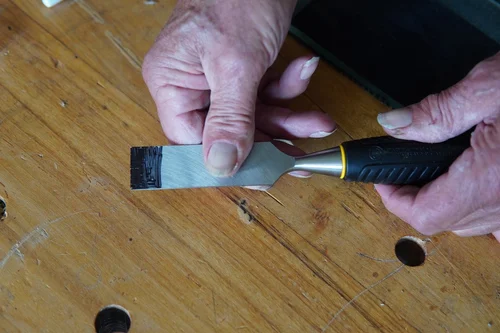
Credit: www.anneofalltrades.com
Preparing Your Chisel For Sharpening
Sharpening a chisel blade needs careful preparation. Proper preparation helps you get a sharp edge safely and easily.
This guide covers three important steps before sharpening: cleaning, inspecting, and setting the right angle.
Cleaning The Blade
Remove dirt, rust, and old oil from the blade. A clean blade sharpens better and lasts longer.
Use a soft cloth and some mild soap or a rust remover if needed. Dry the blade completely after cleaning.
- Wipe off dust and debris
- Use rust remover for rusty spots
- Dry the blade fully before sharpening
Inspecting For Damage
Check the blade for chips, cracks, or deep dents. Damaged blades need repair before sharpening.
Use a magnifying glass if needed. Small chips can be filed down, but large cracks may need professional fixing.
- Look closely at the cutting edge
- Find chips or cracks
- Decide if repair or replacement is needed
Setting The Correct Angle
Sharpening at the right angle keeps the blade sharp and safe. Most chisels work well at 25 to 30 degrees.
Check your chisel’s original bevel angle. Use a guide or angle finder to keep the angle steady while sharpening.
- Find original bevel angle
- Use a sharpening guide or jig
- Keep angle steady during sharpening
Step-by-step Sharpening Process
Sharpening chisel blades helps keep them sharp and safe. A sharp blade works better and cuts smoothly.
Follow these steps to sharpen your chisels. Use the right tools and take your time for best results.
Coarse Grit Sharpening
Start sharpening with a coarse grit stone. This removes nicks and shapes the blade edge.
Keep the blade flat and move it evenly across the stone. Use water or oil if needed to reduce friction.
- Hold the blade at about 25 degrees angle
- Push the blade forward along the stone
- Repeat until the edge looks even and smooth
Fine Grit Polishing
Use a fine grit stone to polish the blade after coarse sharpening. This makes the edge sharper and smoother.
Keep the same angle and stroke technique. Polish both sides evenly for a balanced edge.
- Use water or oil to keep the stone wet
- Move the blade slowly for better control
- Check the edge for a consistent shine
Honing The Edge
Honing sharpens the edge with a leather strop or fine abrasive. It removes tiny burrs and perfects the blade.
Pull the blade away from the edge on the strop. Repeat on both sides for a razor-sharp finish.
- Keep the blade flat against the strop
- Use light pressure for best results
- Hone regularly to maintain sharpness

Credit: woodworkersinstitute.com
Maintaining Blade Sharpness
Keeping your chisel blades sharp is important for safe and clean cuts. Sharp blades work better and last longer.
Regular care helps avoid damage and keeps your tools ready for use anytime.
Regular Honing Tips
Honing your chisel blades often keeps the edge smooth and sharp. Use a fine sharpening stone or honing guide for best results.
Light honing after each use prevents the blade from getting dull quickly.
- Use a water or oil stone depending on your blade type
- Keep a consistent angle while honing
- Hone both sides evenly to maintain blade balance
- Clean the blade after honing to remove metal particles
Proper Storage Practices
Store chisels in a dry place to avoid rust and damage. Use blade guards or covers to protect the edges.
Keep chisels separated from other tools to prevent accidental nicks and dulling.
- Use a wooden rack or tool roll for safe storage
- Apply a light coat of oil on the blades before storing
- Keep chisels away from moisture and dust
Avoiding Common Mistakes
Do not use chisels with dull or damaged blades. This can cause injury or poor work results.
Avoid using the chisel as a pry bar or hammer. Use the right tool for each job.
- Do not sharpen at too steep or too shallow an angle
- Avoid skipping regular honing sessions
- Never store chisels without blade protection
- Do not apply too much pressure when sharpening
Advanced Techniques For Precision
Sharpening chisel blades with precision improves your woodworking results. Using advanced methods helps you achieve cleaner cuts and longer-lasting sharpness.
These techniques go beyond basic sharpening. They focus on fine-tuning the blade edge for accuracy and durability.
Using A Stropping Method
Stropping polishes the edge and removes tiny burrs. Use a leather strap with polishing compound for best results. Stropping keeps the blade sharp between major sharpening sessions.
- Apply a thin layer of stropping compound to leather.
- Pull the chisel blade backward along the leather surface.
- Keep the blade angle steady during stropping.
- Repeat for 20 to 30 strokes for a smooth edge.
Micro-bevel Creation
Adding a micro-bevel strengthens the cutting edge. This small angle change improves edge durability and reduces chipping. It also makes sharpening quicker next time.
| Micro-Bevel Angle | Purpose | Effect |
| 5° to 10° | Edge Strengthening | Reduces chipping |
| Higher Angle | Durability | Lasts longer |
| Lower Angle | Sharpness | Easier cuts but less durable |
Use a fine stone or diamond plate to create the micro-bevel. Hold the chisel at the new angle and make light passes.
Testing Sharpness Effectively
Testing sharpness ensures your chisel cuts cleanly and safely. Use simple methods to check the edge before work.
- Slice a piece of paper; a sharp chisel cuts smoothly.
- Feel the edge gently with your finger (careful not to cut yourself).
- Try shaving thin wood curls; sharp edges produce fine shavings.
- Use a magnifying glass to inspect for chips or dull spots.

Credit: woodworkersinstitute.com
Frequently Asked Questions
How Do I Sharpen Chisel Blades Effectively?
Use a sharpening stone with consistent pressure. Start with coarse grit, then fine grit. Maintain a 25-30 degree angle for best results. Finish by honing the edge for smoothness.
What Tools Are Best For Sharpening Chisel Blades?
Sharpening stones, honing guides, and leather strops are ideal. Water stones and oil stones work well for different blades. Choose tools that match your skill level and blade type.
How Often Should Chisel Blades Be Sharpened?
Sharpen blades when they feel dull or cut poorly. Frequent use may require sharpening every few weeks. Regular honing can extend the sharpness between sharpenings.
Can I Sharpen Chisel Blades At Home Safely?
Yes, with proper tools and technique, sharpening at home is safe. Always secure the blade and work slowly to avoid injury. Use protective gloves and maintain focus during sharpening.
Conclusion
Sharpening chisel blades keeps your tools working well and safe. Regular care makes cutting easier and cleaner. Use the right stones and techniques to avoid damage. Take your time and check the blade often. A sharp chisel saves effort and improves your work.
Keep practicing these tips for better results. Your tools will last longer and perform best. Simple steps lead to great outcomes. Keep your chisels sharp and ready for any task.