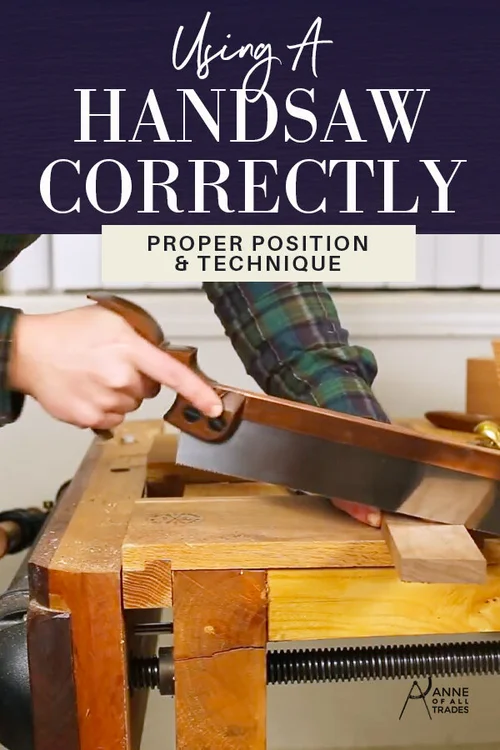
When you pick up a hand saw, you want every cut to be smooth, precise, and effortless. But are you using the best techniques to get there?
Whether you’re a beginner or have some experience, mastering the right hand saw skills can save you time, reduce frustration, and make your projects look professional. You’ll discover simple yet powerful tips that will change the way you work with hand saws forever.
Ready to sharpen your technique and see better results? Keep reading—your next perfect cut is just ahead.

Credit: www.anneofalltrades.com
Choosing The Right Hand Saw
Choosing the right hand saw is important for good results and safety. There are many types of hand saws for different tasks.
This guide will help you pick the best hand saw by looking at types, material, and blade design.
Types Of Hand Saws
Each hand saw type works best for certain jobs. Knowing the types helps you choose the right one.
- Crosscut saws cut across wood grain
- Rip saws cut along wood grain
- Back saws have a reinforced spine for fine cuts
- Bow saws cut branches and logs
- Keyhole saws cut small curves and holes
Selecting Based On Material
Different materials need different saws. Choose a saw that matches the material you will cut.
| Material | Recommended Saw | Reason |
| Softwood | Rip saw | Fast cutting along grain |
| Hardwood | Crosscut saw | Clean cutting across grain |
| Metal | Hacksaw | Fine teeth for metal cutting |
| Plastic | Fine-toothed saw | Prevents cracking |
Blade Tooth Configuration
Blade teeth shape and size affect cutting speed and smoothness. Choose the right tooth pattern.
Common tooth patterns:
- Rip Teeth:Shaped like chisels, good for fast cuts with grain.
- Crosscut Teeth:Pointed edges for clean cuts across grain.
- Combination Teeth:Mix of rip and crosscut for versatile use.
- Fine Teeth:Small teeth for smooth finishes and delicate cuts.

Credit: www.anneofalltrades.com
Preparing For Accurate Cuts
Using a hand saw well needs good preparation. Accurate cuts depend on careful steps before sawing.
Taking time to mark, hold, and position your work helps you cut with precision and safety.
Marking And Measuring Techniques
Clear marks guide your saw and keep cuts straight. Use a ruler or tape for exact measuring.
Mark the cut line with a pencil or chalk. Check measurements twice before cutting.
- Use a square tool for right angles
- Draw thin, visible lines
- Mark both sides of the wood
- Measure from fixed points
Securing The Workpiece
Hold your wood firmly to stop it from moving. This keeps your cut clean and safe.
Use clamps or a vise to fix the workpiece on a stable surface. Avoid holding it by hand while sawing.
- Place clamps near the cutting line
- Check that the wood does not shift
- Use a bench or strong table
- Protect the wood with soft pads under clamps
Proper Body Positioning
Stand in a balanced position to control the saw well. Your body should support smooth motion.
Keep your feet apart for good balance. Align your eyes with the cut line to see clearly.
- Stand with one foot slightly forward
- Hold the saw handle firmly but relaxed
- Keep your back straight to avoid strain
- Use your whole arm, not just the wrist
Mastering Sawing Techniques
Using a hand saw well takes practice and focus. Good techniques help you cut wood safely and cleanly.
This guide shows key ways to improve your sawing skills. Learn how to start, keep a straight line, and control speed and pressure.
Starting The Cut
Begin your cut by marking the line clearly on the wood. Hold the saw handle firmly with your dominant hand.
Start with short, light strokes to create a groove. This groove guides the saw and prevents it from slipping.
Maintaining A Straight Line
Keep your eyes on the mark as you saw. Use your whole arm, not just your wrist, to move the saw smoothly.
- Position your body square to the wood
- Use slow, steady strokes
- Check your progress often
- Adjust your angle to stay aligned
- Stop and reset if the saw wanders off
Controlling Saw Speed And Pressure
| Action | Effect |
|---|---|
| Light pressure | Prevents the saw from binding in wood |
| Heavy pressure | Can cause rough cuts and blade damage |
| Slow speed | Gives control and accuracy |
| Fast speed | May lead to mistakes and splintering |
Balance speed and pressure for smooth cuts. Let the saw do the work. Move it forward gently and pull back quickly.
Credit: www.familyhandyman.com
Advanced Cutting Methods
Hand saws are useful tools for many cutting tasks. Using the right technique helps improve accuracy and safety.
This guide covers advanced cutting methods to help you get better results with your hand saw.
Crosscut Vs Rip Cut Strategies
Crosscut and rip cut are two main ways to cut wood with a hand saw. Each needs a different approach.
Crosscut is cutting across the grain. Rip cut is cutting along the grain. Your saw and angle change for each.
- Use a saw with smaller teeth for crosscuts to avoid splintering.
- Keep the saw at a higher angle (about 60 degrees) for crosscutting.
- For rip cuts, use a saw with larger teeth to remove wood quickly.
- Hold the saw at a lower angle (about 45 degrees) when ripping.
- Start cuts slowly to create a clear path before sawing faster.
Cutting Curves And Angles
Cutting curves and angles needs steady control and sharp saw teeth. Take your time to follow the shape.
Use a smaller saw or a coping saw for curves. Mark your lines clearly before cutting angled edges.
- Draw the curve or angle on the wood with a pencil.
- Cut slowly and turn the wood as needed to follow curves.
- For angles, keep the saw steady and cut along the marked line.
- Use light, smooth strokes to avoid breaking the wood.
Using Guides And Jigs
Guides and jigs help keep your cuts straight and accurate. They reduce mistakes and save time.
Clamp a straight edge or use a cutting guide to control the saw. Jigs hold wood at fixed angles for repeated cuts.
- Clamp a ruler or board as a guide for straight cuts.
- Use miter boxes for precise angled cuts.
- Build simple jigs to hold small pieces safely.
- Check the guide is secure before cutting.
Maintaining Your Hand Saw
Taking care of your hand saw keeps it sharp and safe to use. Regular maintenance helps the saw last longer and work better.
Simple habits like cleaning and storing your saw properly make a big difference. Follow these tips to keep your saw in top shape.
Sharpening Blades
Sharpen your hand saw blade to keep cuts smooth and accurate. Use a file designed for saw teeth and follow the original angle of the teeth.
- Secure the saw in a vise to keep it steady.
- File each tooth the same way to keep the pattern even.
- Check the blade often to avoid over-sharpening.
Cleaning And Lubrication
Remove dirt and resin from your hand saw after each use. Clean blades cut better and last longer.
| Cleaning Step | Recommended Method |
| Remove sawdust | Brush with a stiff brush |
| Remove resin | Wipe with cloth and mineral spirits |
| Lubricate blade | Apply light machine oil |
Storage Tips
Store your hand saw in a dry place to stop rust. Keep it away from moisture and dirt.
- Hang the saw by its handle or blade.
- Use a blade cover or sheath for protection.
- Keep the saw separate from heavy tools to avoid damage.
Troubleshooting Common Issues
Hand saws are simple tools but can face problems during use. Knowing how to fix these issues saves time and effort.
This guide covers common problems and easy ways to solve them for smoother cuts and better results.
Avoiding Binding And Sticking
Binding happens when the saw blade gets stuck inside the wood. It slows your work and can damage the blade.
To avoid this, keep the kerf clear and use the right sawing technique.
- Do not push too hard; let the saw cut naturally.
- Keep the wood supported to prevent pinching.
- Use a saw with the correct tooth pattern for the wood type.
- Apply wax or soap to the blade to reduce friction.
- Check blade tension and tighten if loose.
Fixing Rough Or Uneven Cuts
Rough cuts look jagged and may not fit well with other pieces. Uneven cuts are off-angle or crooked.
These problems often come from dull blades or poor technique. Sharpen the blade and use smooth, steady strokes.
| Cause | Fix |
|---|---|
| Dull blade | Sharpen or replace the blade |
| Improper angle | Hold saw steady and align with cut line |
| Fast, jerky strokes | Slow down and use smooth strokes |
| Wrong saw type | Use a saw suited for the material |
Addressing Blade Damage
Blade damage includes bent, chipped, or rusted teeth. Damaged blades cut poorly and risk breaking.
Follow this checklist to care for your saw blade:
- Inspect blade before use for chips or bends.
- Clean blade after every use to remove sap and dirt.
- Store saws in dry places to prevent rust.
- Use a file to carefully fix minor chips.
- Replace blades that are badly damaged or bent.
Frequently Asked Questions
What Is The Best Technique For Using Hand Saws?
The best technique involves steady, even strokes and maintaining a firm grip. Keep the saw at a consistent angle, usually 45 degrees, to ensure clean cuts. Always start slowly to create a groove before increasing speed for accuracy and control.
How Do I Choose The Right Hand Saw Type?
Select a hand saw based on the material and cut type. Crosscut saws are ideal for cutting across the grain, while rip saws work best along the grain. Consider blade length and tooth count for precision and efficiency.
How Can I Improve Cutting Accuracy With A Hand Saw?
To improve accuracy, mark your cut line clearly and use a guide. Keep the saw aligned with the line and use controlled, smooth strokes. Avoid forcing the saw, as this causes deviation and uneven cuts.
What Safety Tips Should I Follow When Using Hand Saws?
Always wear safety goggles to protect your eyes from debris. Keep your hands away from the blade path and use clamps to secure the workpiece. Maintain a clean workspace to prevent slips and ensure better control.
Conclusion
Hand saws are essential tools for many tasks. Choosing the right technique makes work easier. Practice improves skill and efficiency. Always keep the blade sharp for best results. Safety is crucial; use gloves and goggles. Different saws suit different materials.
Consider the wood type before cutting. Proper storage prevents damage and rust. Regular maintenance extends the saw’s lifespan. With the right approach, tasks become smooth and satisfying. Explore, learn, and enjoy your woodworking journey.