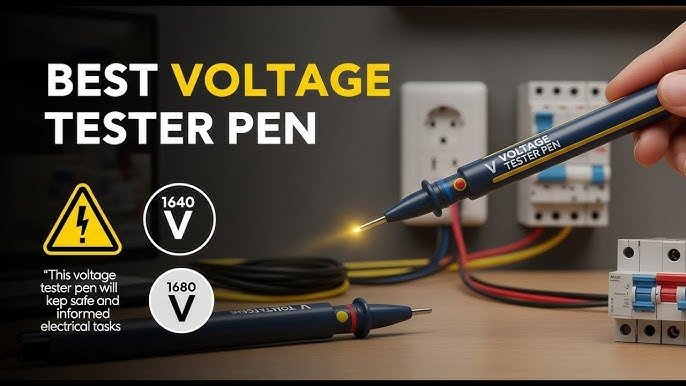
Are you tired of guessing whether your home’s electrical outlets and wires are safe to touch? Using the right voltage tester can save you from shocks, costly repairs, and even dangerous accidents.
But with so many options out there, how do you pick the best one for your needs? You’ll discover the top voltage testers designed specifically for home use—tools that are easy to handle, reliable, and affordable. Keep reading, and you’ll feel confident tackling your electrical tasks safely and quickly.

Credit: www.amazon.com.be
Why Voltage Testers Matter
Voltage testers help you check if electrical wires have power. They keep you safe by showing live current.
Using a voltage tester is simple and can prevent electrical accidents at home.
Safety Benefits
Voltage testers protect you from electric shocks. They confirm if wires are live before you touch them.
- Detect live wires to avoid shocks
- Verify power is off before repairs
- Prevent damage to electrical tools
- Help find faulty wiring safely
Common Home Applications
Voltage testers are useful in many home tasks. They help you work safely and fix electrical problems.
| Task | How Voltage Tester Helps |
| Changing light bulbs | Check power is off |
| Installing outlets | Identify live wires |
| Fixing switches | Confirm no current before repair |
| Checking circuit breakers | Test if breaker is working |
Types Of Voltage Testers
Voltage testers help you check electrical currents safely at home. They come in different types for various tasks.
Choosing the right tester depends on what you need to check and how you want to use it.
Non-contact Testers
Non-contact testers detect voltage without touching wires. They sense electric fields near live wires.
These testers are safe and easy to use. You just hold them close to a wire or outlet.
- Safe for quick voltage checks
- Ideal for finding live wires
- Use batteries to power the device
- Light or sound alerts show voltage presence
Contact Testers
Contact testers need to touch the wire or terminal to check voltage. They give more precise readings.
These testers are simple and often use two probes. You must be careful to avoid shocks.
- Require direct contact with electrical parts
- Show voltage by lights or display
- Good for testing outlets and switches
- Usually less expensive than multimeters
Multimeters
Multimeters measure voltage, current, and resistance. They are versatile tools for many home jobs.
You can use multimeters to test batteries, wires, and electrical devices. They show exact voltage values.
- Measure AC and DC voltage
- Include probes for contact testing
- Can check electrical current and resistance
- More complex but very useful
Key Features To Consider
Choosing the right voltage tester for home use means looking at several key features. These features help ensure safety and accuracy when checking electrical circuits.
Understanding these features will help you pick a tester that meets your needs and lasts a long time.
Accuracy And Sensitivity
Accuracy shows how close the tester’s reading is to the actual voltage. High sensitivity means it can detect low voltages safely and quickly.
Look for testers with clear voltage range indicators and low error margins. This helps avoid false readings and improves safety.
Display And Readability
A good display makes reading results easier and faster. Large numbers and backlighting help in dim or dark spaces.
- Digital displays show exact voltage values
- LED indicators provide quick visual cues
- Backlit screens improve visibility in poor light
- Clear symbols reduce reading errors
Durability And Build Quality
Voltage testers should be strong enough for home environments. Look for sturdy materials and shock-resistant designs.
| Feature | Benefit |
| Shock-resistant casing | Protects device from drops |
| Water-resistant design | Works safely in damp areas |
| Compact size | Easy to carry and store |
| Non-slip grip | Prevents accidents during use |
Battery Life
Long battery life means less worry about power running out during tests. Some testers show battery status to avoid surprises.
Choose testers with standard batteries for easy replacement. Low battery alerts help maintain accurate readings.
Additional Functions
Extra features can add value and safety. Common functions include:
- Non-contact voltage detection for safety
- Continuity test to check if a circuit is complete
- Auto shut-off to save battery
- Sound alerts for quick feedback

Credit: thegirlwhodoeseverything.net
Top Voltage Testers For Home Use
Voltage testers help you check electrical circuits safely. They find live wires and detect voltage.
Choosing the right tester depends on your needs and budget. This guide covers top options for home use.
Budget-friendly Options
These testers are affordable and good for simple tasks. They work well for basic voltage checks around the house.
Most budget testers are easy to use and do not require batteries. They show if a wire is live or not.
- Non-contact voltage testers for quick checks
- Simple neon testers for outlets and switches
- Basic LED testers for home wiring
Mid-range Picks
Mid-range testers offer more features and better accuracy. They work for various home electrical tasks.
These models often include digital displays and can measure voltage ranges. Some detect AC and DC voltage.
- Digital multimeters with voltage testing
- Testers with backlight displays for dark areas
- Models that test continuity and resistance
Premium Models
Premium testers have advanced features and high accuracy. They suit serious DIYers and professionals.
These testers often include auto-ranging, data hold, and multiple measurement functions. They have robust build quality.
- Auto-ranging digital multimeters with voltage, current, and resistance
- Testers with Bluetooth for data logging
- Models with large screens and clear readings
How To Use A Voltage Tester Safely
Using a voltage tester helps check if wires or devices have electricity. It is important to be careful while testing to avoid shocks.
This guide shows how to use a voltage tester safely at home. Follow these steps to protect yourself and others.
Basic Safety Precautions
Before using a voltage tester, always prepare to stay safe. Make sure your hands are dry and you wear rubber-soled shoes.
Never touch metal parts of the tester while testing. Check the tester for damage and replace it if broken.
- Turn off power if possible before testing
- Use insulated tools and gloves
- Keep your body away from grounded surfaces
- Work in a dry area to avoid electric shock
- Read the voltage tester manual carefully
Step-by-step Testing Process
First, set your voltage tester to the correct setting for the voltage you expect to find. Check that the tester works by testing a known live source.
Next, place the tester’s probes on the wires or terminals you want to check. Hold the probes by their insulated handles only.
- Set tester to the right voltage range
- Test the tester on a live source
- Touch the black probe to the ground or neutral
- Touch the red probe to the wire or terminal
- Read the tester display or indicator light
- Remove probes carefully after testing
Troubleshooting Common Issues
Using a voltage tester at home can help you find electrical problems quickly. Some issues may cause wrong readings or device errors. Knowing how to fix these issues makes your tool more reliable.
This guide covers common problems like false readings, battery troubles, and calibration tips. Follow these points to keep your voltage tester working well.
False Readings
False readings happen when the tester shows voltage even if none is present. This can confuse you during troubleshooting.
- Check if the probes are clean and undamaged.
- Avoid testing near strong electromagnetic fields.
- Make sure the tester is set to the correct mode for AC or DC voltage.
- Use the tester on a known live source to verify it works correctly.
Battery Problems
Low or dead batteries cause the tester to give weak or no readings. Replace batteries regularly to avoid this.
| Symptom | Possible Cause | Solution |
| No power | Dead battery | Replace battery |
| Weak reading | Low battery charge | Recharge or replace battery |
| Display flickers | Loose battery connection | Check and tighten battery contacts |
Device Calibration
Calibration keeps the tester accurate. Over time, the device may drift and show wrong values.
Follow these points for calibration:
- Use a known voltage source or a calibration tool.
- Adjust the tester settings as per the user manual.
- Repeat calibration yearly or after heavy use.
- Keep the tester clean and store it in a dry place.
Maintenance Tips For Longevity
Taking care of your voltage tester helps it last longer. Proper maintenance keeps it safe and reliable.
Follow simple steps to protect your tester from damage and wear over time.
Storage Practices
Store your voltage tester in a dry, cool place to avoid damage. Keep it away from direct sunlight and moisture.
Use a protective case or pouch to prevent dust and scratches. Avoid placing heavy items on top of it.
- Keep in original case when not in use
- Avoid damp or humid environments
- Store away from extreme heat or cold
- Place in a safe spot to prevent falls
Cleaning Guidelines
Clean your voltage tester regularly to remove dirt and grime. Use a soft, dry cloth for cleaning the surface.
Do not use water, solvents, or harsh chemicals. Make sure the tester is turned off and disconnected from power before cleaning.
- Wipe with a soft microfiber cloth
- Use isopropyl alcohol for tough spots sparingly
- Never immerse the tester in liquid
- Check for any debris in the probes and clean gently
Regular Checks
Inspect your voltage tester regularly for damage or wear. Check the probes, wires, and body for cracks or breaks.
Test the battery level and replace batteries as needed. Make sure the tester works correctly before each use.
- Look for damaged or bent probes
- Check battery life and replace if low
- Test the device on a known voltage source
- Ensure all buttons and displays work properly
Credit: www.amazon.ca
Frequently Asked Questions
What Is The Best Voltage Tester For Home Use?
The best voltage tester for home use is reliable, easy to use, and accurate. Look for features like non-contact detection and clear display. Popular brands include Klein Tools and Fluke. Choose one that suits your budget and safety needs.
How Do I Use A Voltage Tester Safely At Home?
Always wear insulated gloves and avoid wet conditions. Test the tester on a known live source first. Follow the manufacturer’s instructions carefully. Never touch exposed wires directly. Safety is crucial to prevent electric shock or injury.
Can A Voltage Tester Detect Both Ac And Dc Voltage?
Yes, many voltage testers detect both AC and DC voltage. Check the product specifications to ensure it supports the voltage type you need. This versatility makes the tester useful for various home electrical tasks.
How Accurate Are Inexpensive Voltage Testers For Home Use?
Inexpensive voltage testers provide basic accuracy suitable for home use. They are good for quick checks but may lack precision for advanced tasks. For critical jobs, consider investing in a higher-end tester with better accuracy.
Conclusion
Choosing the right voltage tester matters for home safety. It ensures you handle electrical tasks confidently. Easy to use and reliable. Look for clear instructions and safety features. Consider your budget, but don’t compromise on quality. A good tester saves time and prevents accidents.
Read reviews and compare options. Always prioritize safety. With the right tool, even complex tasks become manageable. Explore various models and find what suits your needs best. Your home’s electrical safety depends on it.