When you’re working with wood, keeping it steady is key to getting the job done right. If your wood slips or moves, your cuts won’t be clean, your joints won’t be tight, and your project can quickly become frustrating.
You want to clamp your wood securely, but how do you know which method works best for your project? You’ll discover simple, effective ways to hold your wood firmly in place every time. By the end, you’ll feel confident that your wood won’t budge—letting you focus on creating something great.
Ready to learn the best clamping tricks? Let’s dive in.

Credit: www.familyhandyman.com
Choosing The Right Clamp
Using the right clamp is important to hold wood pieces firmly. It keeps your work safe and accurate. This guide helps you pick the best clamp for your wood projects.
Different clamps serve different tasks. Knowing the types, sizes, and materials will make clamping easier and more effective.
Types Of Wood Clamps
There are several clamps designed for woodworking. Each type fits a specific job and wood shape.
- Bar Clamps:Great for wide boards and large projects.
- C-Clamps:Ideal for small pieces and tight spaces.
- Spring Clamps:Quick to use for light holding.
- Pipe Clamps:Adjustable length for long wood pieces.
- Corner Clamps:Hold wood at right angles for frames.
Clamp Sizes And Capacities
Choose clamps by the size of your wood and the pressure needed. Larger clamps cover more space but may be heavy.
| Clamp Type | Capacity | Best For |
| Bar Clamp | 6 to 48 inches | Wide boards, panels |
| C-Clamp | 1 to 6 inches | Small parts, tight spots |
| Spring Clamp | 2 to 4 inches | Light holding, quick use |
| Pipe Clamp | Custom length | Long wood pieces |
| Corner Clamp | Varies by model | Right-angle joints |
Materials And Durability
Clamps come in different materials. Choose one that lasts and fits your budget.
- Steel:Very strong and durable. Good for heavy work.
- Aluminum:Lighter than steel. Resists rust well.
- Plastic:Light and cheap. Best for light jobs only.
- Wood:Traditional and gentle on wood surfaces.
Preparing Wood For Clamping
Clamping wood securely is important for strong joints and smooth finishes. Preparing the wood well helps clamps hold it tightly.
Cleaning the surface, aligning the pieces, and protecting the wood all play a key role in good clamping results.
Surface Cleaning And Alignment
Clean wood surfaces remove dirt and dust that can stop clamps from gripping well. Use a dry cloth or brush before clamping.
Align the wood pieces carefully. Make sure edges and corners match up to avoid gaps or uneven joints.
- Wipe surfaces with a dry cloth
- Brush off sawdust and debris
- Check edges for straightness
- Fit pieces tightly together
Using Cauls For Even Pressure
Cauls are wooden strips used to spread clamp pressure evenly. They stop dents and help clamps hold better.
Place cauls across the wood at clamping points. Tighten clamps on cauls instead of directly on wood.
- Cut straight, smooth cauls
- Use soft pads between cauls and wood
- Apply even pressure along the wood
- Check cauls are parallel to the wood surface
Protecting Wood From Clamp Marks
Clamp marks can damage wood surfaces. Use protective layers to avoid dents and scratches.
Soft materials like scrap wood, cardboard, or cloth help protect the wood while clamping.
- Place scrap wood between clamp and wood
- Use thin cardboard or cloth pads
- Check pads before tightening clamps
- Replace pads if worn or compressed
Effective Clamping Techniques
Clamping wood securely is essential for strong joints and safe work. Using the right techniques helps hold wood pieces firmly in place.
This guide covers how to position clamps, apply pressure correctly, and use multiple clamps for best results.
Positioning Clamps For Maximum Hold
Place clamps so they hold the wood evenly. Position them near joints and edges for strong grip.
- Align clamps parallel to the joint
- Use clamp pads to protect the wood
- Space clamps evenly across the surface
- Check clamp angles to prevent slipping
Applying The Right Amount Of Pressure
Too little pressure lets wood move. Too much can damage it. Apply firm, even pressure for best hold.
| Pressure Level | Effect |
| Low | Wood may shift or gap |
| Medium | Secure hold without damage |
| High | Can dent or squeeze wood |
Using Multiple Clamps Strategically
More clamps spread pressure and keep wood steady. Use several clamps for long or wide pieces.
Tips for using multiple clamps:
- Alternate clamp sides to balance force
- Check that clamps do not push pieces out of alignment
- Do not overtighten any single clamp
- Use cauls or blocks to distribute pressure evenly
Specialized Clamping Methods
Clamping wood securely is important for strong joints and safe work. Some wood shapes and angles need special clamp techniques.
This guide shows different clamping methods for corners, edges, odd shapes, and using straps or bands.
Corner And Edge Clamping
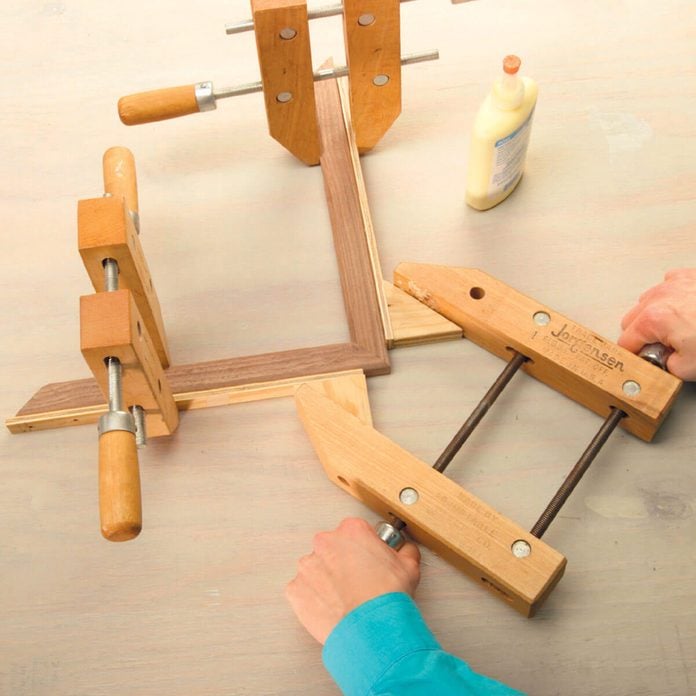
Clamping corners or edges needs clamps that hold tight without damaging the wood. Use corner clamps or right-angle clamps for this.
These clamps keep two pieces at 90 degrees. They help when making frames or boxes. You can also add pads to protect wood from marks.
- Use corner clamps to hold two pieces at right angles
- Add soft pads to protect the wood surface
- Check the fit before tightening the clamp fully
Clamping Irregular Shapes
Irregular wood shapes need flexible clamping. You can use wooden blocks or scrap pieces as supports to hold the shape steady.
Foam or rubber pads also help to grip curved or uneven surfaces. This stops the clamp from slipping or crushing the wood.
- Use wooden blocks to fill gaps and support shapes
- Add foam pads to improve grip on curves
- Tighten clamps slowly to avoid damage
Using Strap And Band Clamps
Strap and band clamps wrap around wood pieces. They work well for round or multiple pieces that need even pressure.
These clamps adjust to fit different sizes. They apply pressure evenly without bending or breaking the wood.
- Wrap the strap clamp around the wood firmly
- Tighten the band slowly to apply even pressure
- Use padding under the strap to protect the wood
Maintenance And Safety Tips
Using clamps safely keeps your work steady and prevents accidents. Regular maintenance helps clamps last longer and work better.
Follow these tips to keep your clamps in good shape and avoid injuries while clamping wood securely.
Inspecting Clamps Before Use
Check clamps for damage before every use. Look for cracks, bent parts, and worn threads. Make sure moving parts slide smoothly without sticking.
- Examine the clamp frame for cracks or bends.
- Check the screw and handle for smooth operation.
- Look for rust or dirt that may block movement.
- Ensure the clamping pads are intact and clean.
Avoiding Over-tightening
Do not force clamps too tight. Over-tightening can damage your wood and the clamp itself. Use just enough pressure to hold the pieces firmly.
| Effect | Cause | Prevention |
| Wood dents or cracks | Too much clamp pressure | Apply moderate tightening force |
| Damaged clamp threads | Excessive turning force | Turn handle gently and stop if tight |
| Workpiece slips | Not tight enough | Adjust clamp until secure, not overly tight |
Storing Clamps Properly
Store clamps in a dry place to stop rust. Keep them organized to avoid bending or damage. Hang large clamps on hooks or place small ones in a box.
- Clean clamps before storing.
- Apply light oil to metal parts to prevent rust.
- Hang clamps by their frames, not by handles.
- Keep clamps away from moisture and dust.
Credit: www.familyhandyman.com

Credit: www.familyhandyman.com
Frequently Asked Questions
What Are The Most Reliable Clamps For Woodworking?
Bar clamps and pipe clamps are highly reliable for woodworking. They offer strong, even pressure and adjust to various sizes. Quick-release clamps are also useful for fast, secure holds in smaller projects.
How To Prevent Wood Damage When Clamping?
Use protective pads or scrap wood between clamps and the wood surface. This prevents dents and marks. Avoid over-tightening clamps to maintain wood integrity without slipping.
Can I Clamp Wood Without Specialized Clamps?
Yes, you can use heavy objects or rope for temporary clamping. However, specialized clamps provide better stability and pressure control, ensuring precise and secure wood joints.
How Tight Should Wood Clamps Be Applied?
Clamps should be tight enough to hold wood firmly without causing damage. Apply steady pressure and check for any wood deformation or squeeze-out from glue joints.
Conclusion
Clamping wood securely ensures your projects stay intact. Always use the right tools. Consider the type of wood and project size. Use clamps that fit your needs and provide a firm grip. Check the pressure regularly to avoid damage. Practice patience when setting up clamps.
Take your time for precise work. Experiment with different clamping techniques to find what works best. Safety should always come first. Proper clamping can make your woodworking projects successful and rewarding. Keep learning and refining your skills for better results.
Happy woodworking!