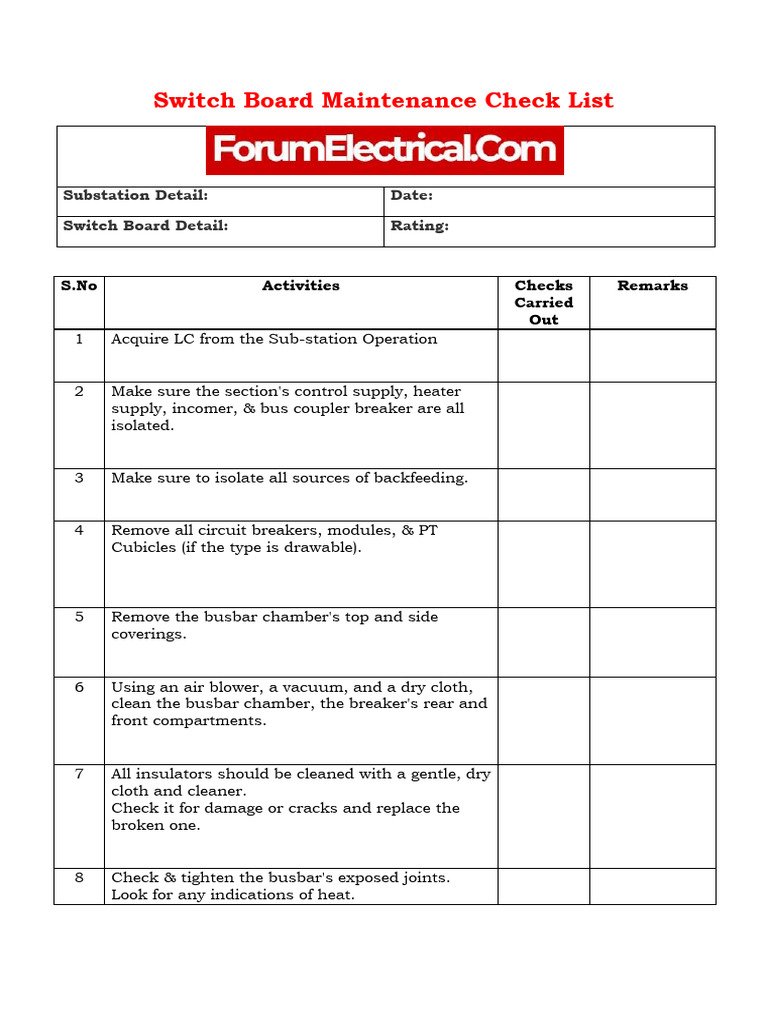
Is your electrical panel ready to keep your home or business safe and running smoothly? Ignoring its upkeep can lead to unexpected outages, costly repairs, or even dangerous hazards.
But don’t worry—keeping your electrical panel in top shape is easier than you think. You’ll find a simple, step-by-step maintenance checklist designed just for you. Follow it to protect your property, save money, and gain peace of mind. Keep reading to discover exactly what you need to do to make sure your electrical system stays reliable and safe.

Credit: www.jotform.com
Safety Precautions Before Maintenance
Electrical panel maintenance is important for safety and performance. Taking safety precautions protects workers from harm.
Always follow clear steps before starting any maintenance work on electrical panels.
Power Shutdown Procedures
Turn off power to the electrical panel before starting maintenance. This stops electricity flow and reduces shock risk.
Check that power is off by using a voltage tester or meter before touching any wires or components.
- Locate the main power switch or circuit breaker.
- Switch off the power supply to the panel.
- Use a voltage tester to confirm no current is present.
- Inform others that maintenance is in progress.
Use Of Personal Protective Equipment
Wear personal protective equipment (PPE) to reduce injury risk. PPE protects against electric shock and burns.
Common PPE includes insulated gloves, safety glasses, and flame-resistant clothing.
- Insulated rubber gloves to avoid electric shocks.
- Safety glasses to protect eyes from sparks or debris.
- Flame-resistant clothing to reduce burn injuries.
- Hard hats to protect the head from falling objects.
Lockout And Tagout Methods
Lockout and tagout (LOTO) stops power from being turned on during maintenance. It keeps workers safe.
Use locks and tags on switches or breakers to show that work is happening.
- Turn off power and isolate the panel.
- Attach a lock to the power switch or breaker.
- Place a tag explaining why the power is off.
- Only remove lock and tag after work is complete.
Visual Inspection Of Electrical Panels
Visual inspection is a key part of electrical panel maintenance. It helps find issues early before they cause problems.
Checking panels carefully keeps the electrical system safe and working well. Look closely at all parts.
Checking For Physical Damage
Look for cracks, dents, or broken parts on the panel surface. Damage can affect panel safety and function.
Check hinges, doors, and screws to make sure everything is tight and not loose or missing.
- Cracked or bent panel cover
- Loose or missing screws
- Damaged door hinges
- Broken or worn seals
Signs Of Corrosion And Moisture
Corrosion can cause metal parts to rust and fail. Moisture inside the panel can lead to short circuits.
Look for rust spots, water stains, or damp areas around and inside the panel enclosure.
- Rust or discoloration on metal surfaces
- Water droplets or dampness inside panel
- Corroded screws or terminals
- Musty or wet smell near the panel
Panel Labeling And Accessibility
Labels help identify circuits and components inside the panel. Clear labels save time during repairs.
Make sure the panel is easy to reach and not blocked by objects or debris for quick access in emergencies.
- Clear and readable labels on breakers and switches
- Updated labels that match the current wiring
- Unobstructed space around the panel
- Proper lighting near the panel area
Testing And Tightening Connections
Electrical panels need regular checks to keep them safe and working well. Testing and tightening connections help stop problems like overheating and power loss.
Loose connections can cause sparks and damage. This guide shows how to find loose connections, use the right torque, and pick proper tools.
Identifying Loose Connections
Look for signs like burnt marks, noise, or heat near the connections. A loose wire may move when touched or feel cold.
Check all screws and terminals for tightness. Regular inspections catch loose parts before they cause trouble.
- Look for discoloration or burnt areas
- Listen for buzzing or crackling sounds
- Feel for warm spots on the panel
- Check if wires wiggle or move
- Inspect screws for looseness
Proper Torque Specifications
Tighten connections using the correct torque. Too tight can damage parts. Too loose can cause failure.
Follow the manufacturer’s torque specs for each connection. Use a torque wrench to apply the right amount of force.
| Connection Type | Torque Range (Nm) |
|---|---|
| Small Wire Terminals | 1.5 – 2.5 |
| Medium Wire Terminals | 3.0 – 4.5 |
| Large Wire Terminals | 5.0 – 7.0 |
| Bus Bars | 7.5 – 10.0 |
Tools For Connection Testing
Use the right tools to find loose or bad connections. This helps keep the panel safe and reliable.
- Torque wrench for proper tightening
- Multimeter to check electrical continuity
- Infrared thermometer to spot hot spots
- Visual inspection tools like magnifiers
- Contact cleaner to remove dirt and corrosion
Component Functionality Checks
Electrical panels need regular checks to work safely and well. Checking each part helps find problems early.
These checks keep the electrical system stable and prevent damage or accidents.
Circuit Breaker Performance
Circuit breakers stop too much current from flowing. They protect wires and devices from damage.
Test breakers by switching them on and off. Check if they trip correctly during overloads.
- Look for signs of wear or burning
- Check if breakers reset after tripping
- Use a test button if available
Fuses And Relays Inspection
Fuses protect circuits by breaking the connection if current is too high. Relays control power flow.
Inspect fuses for any damage or blown parts. Check relays for proper operation and no sticking.
- Replace blown fuses immediately
- Listen for clicking sound in relays
- Check relay contacts for corrosion
Testing Control Devices
Control devices like switches and timers manage electrical circuits. They need to work without faults.
Test control devices by operating them several times. Look for delays or failures in response.
- Ensure switches move smoothly
- Check timers for correct timing
- Replace faulty control devices promptly
Cleaning And Dust Removal
Electrical panels need regular cleaning to work well. Dust and dirt can cause problems and make parts fail.
Cleaning helps keep the panel safe and extends its life. Use proper methods to avoid damage.
Safe Cleaning Methods
Turn off the power before cleaning the panel. Wear gloves and safety glasses. Use soft brushes or dry cloths to clean.
Avoid using water or liquids inside the panel. Use only tools made for electrical equipment cleaning.
Removing Dust And Debris
- Use a vacuum cleaner with a soft brush attachment.
- Gently brush off dust from wires and terminals.
- Blow compressed air carefully to clear tight spaces.
- Check for loose dirt and remove it by hand or cloth.
Preventing Contamination
| Action | Purpose |
| Keep panel covers closed | Stop dust from entering |
| Store cleaning tools properly | Avoid bringing dirt inside |
| Use anti-static cloths | Reduce dust attraction |
| Clean work area regularly | Prevent dirt buildup near panel |

Credit: www.scribd.com
Thermal Imaging And Load Analysis
Electrical panel maintenance is important for safe and efficient power use. Thermal imaging and load analysis help find problems early.
These techniques detect heat issues and check how electrical loads are shared. This keeps systems running well and avoids failures.
Detecting Hot Spots
Hot spots in electrical panels show where parts get too hot. These spots can cause damage or fires if not fixed.
Thermal imaging cameras help find hot spots quickly without touching the panel. This keeps workers safe and saves time.
- Look for color changes in thermal images
- Check connections and breakers for heat
- Fix or replace parts that run hot
Assessing Load Balancing
Load balancing means spreading electricity use evenly across circuits. It prevents overloads and extends panel life.
Analyzing loads shows if any circuit uses too much power. Balancing loads reduces heat and lowers risk of failure.
- Measure current on each circuit
- Compare loads to panel ratings
- Adjust loads to keep them even
Using Infrared Cameras
Infrared cameras detect heat by showing temperature differences. They help spot problems inside electrical panels.
These cameras are safe and fast tools for routine checks. They can find loose wires, bad connections, and overloads.
- Carry camera close to panel surface
- Scan all components for hot spots
- Record images for later analysis
Documentation And Reporting
Keeping clear records is key in electrical panel maintenance. Good documentation helps track work done and ensures safety.
Reports provide details about the panel’s condition. They guide future maintenance and repairs.
Recording Maintenance Activities
Write down every task performed during maintenance. Include dates, time spent, and parts checked or replaced.
- Date of service
- Technician name
- Tasks completed
- Tools and materials used
- Test results
Noting Anomalies And Repairs
Record any faults or unusual findings found during inspection. Describe the issue clearly and note any repairs done.
| Anomaly | Description | Action Taken |
| Loose wiring | Found wires not properly connected | Tightened connections |
| Corrosion | Rust on panel terminals | Cleaned and applied protective coating |
| Tripped breaker | Breaker trips frequently | Replaced faulty breaker |
Scheduling Future Inspections
Plan the next inspection date based on panel condition and usage. Set reminders to keep maintenance on track.
- Inspect panels every 6 to 12 months
- Increase frequency if issues are found
- Record next inspection date in logbook
- Notify responsible personnel ahead of time
Credit: www.etsy.com
Frequently Asked Questions
What Is Included In An Electrical Panel Maintenance Checklist?
An electrical panel maintenance checklist covers inspection, cleaning, tightening connections, checking breakers, and testing safety devices. It ensures the panel functions safely and efficiently. Regular maintenance prevents faults and reduces fire risks. Following the checklist helps extend the panel’s lifespan and improves electrical system reliability.
How Often Should Electrical Panel Maintenance Be Done?
Electrical panel maintenance should be done at least once a year. High-demand or older systems may require more frequent checks. Regular inspections help detect wear, corrosion, or loose connections early. Timely maintenance avoids costly repairs and electrical hazards. Always follow manufacturer guidelines and local electrical codes.
Why Is Tightening Connections Important In Panel Maintenance?
Tightening connections prevents overheating and electrical arcing. Loose connections cause power loss and increase fire risk. Regular checks ensure all terminals are secure and functional. Properly tightened connections improve electrical efficiency and system safety. This step is vital for reliable panel performance.
Can I Perform Electrical Panel Maintenance Myself?
Basic visual inspections can be done by homeowners, but detailed maintenance requires a licensed electrician. Electrical panels contain high voltage and can be dangerous. Professionals have the tools and knowledge to safely inspect and repair. Hiring experts ensures compliance with safety standards and local codes.
Conclusion
Regular electrical panel maintenance keeps your home safe and efficient. Check for loose wires, signs of wear, and dust buildup often. Clean panels carefully and tighten connections as needed. Simple steps prevent costly repairs and power failures. Stay consistent with this checklist to protect your electrical system.
Safety and reliability start with good habits. Don’t wait for problems—act early and keep your panel in top shape. Small efforts now save time and money later.
