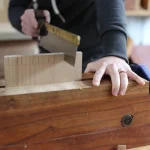
If you want to create strong, beautiful woodworking projects, mastering dovetail joints is a must. Cutting dovetail joints by hand might seem tricky at first, but with the right steps and a bit of practice, you’ll be able to make precise, lasting connections.
In this guide, you’ll discover simple techniques that anyone can follow, even if you’re new to woodworking. Stick with me, and by the end, you’ll have the confidence and skills to craft perfect dovetail joints that will impress everyone who sees your work.
Ready to sharpen your tools and your skills? Let’s get started!
Tools Required
Cutting dovetail joints by hand needs the right tools. These tools help you make precise and strong joints. Below is a guide to the tools you will need.
Using quality tools makes the process easier and the results better. Let’s explore the essential hand tools, saw choices, and marking tools you will use.
Essential Hand Tools
You need a few basic hand tools to cut dovetail joints well. Sharpness and control are key to good results.
- Marking Gauge – to mark precise lines for cutting
- Chisels – for cleaning and shaping the joints
- Mallet – to tap the chisels safely
- Sanding Block – to smooth the cut surfaces
- Clamps – to hold wood pieces firmly while working
Choosing The Right Saw
The saw you pick affects your control and the joint’s finish. Dovetail saws have fine teeth for smooth cuts.
| Saw Type | Use | Teeth per Inch (TPI) |
| Dovetail Saw | Cutting precise tails and pins | 15-20 |
| Backsaw | General fine cutting with straight edges | 14-16 |
| Japanese Pull Saw | Thin kerf and clean cuts | 20-25 |
Marking And Measuring Tools
Accurate marking and measuring ensure tight-fitting joints. Use tools that help keep your lines sharp and clear.
- Combination Square – for marking 90 and 45-degree lines
- Marking Knife – to score wood fibers cleanly
- Steel Ruler – for quick and precise measurements
- Pencil – for initial layout marks

Credit: m.youtube.com
Types Of Dovetail Joints
Dovetail joints are strong and popular in woodworking. They join two pieces of wood at right angles.
There are different types of dovetail joints. Each type has a unique look and use.
Through Dovetails
Through dovetails are the most common type. The tails and pins show on both sides of the joint.
This joint is very strong and easy to cut by hand. It is often used for boxes and drawers.
Half-blind Dovetails
Half-blind dovetails hide the joint on one side. The tails fit inside the pins, which are visible only on one face.
This type is common for drawer fronts. It looks neat because the joint is hidden from the front.
Secret Mitered Dovetails
Secret mitered dovetails hide the joint completely. They are cut behind a mitered corner.
This joint looks like a simple miter but is stronger. It is used for fine furniture and boxes.
Preparing The Wood
Cutting dovetail joints by hand requires careful preparation of the wood. Proper preparation ensures clean and strong joints.
This guide covers how to select wood, mark the layout, and set the baseline for dovetail joints.
Selecting Suitable Wood
Choose wood that is straight and free of knots. Avoid wood with cracks or warping.
Hardwoods like maple, cherry, or oak work well for dovetail joints. Softwoods can be used but may not hold as strong.
- Look for straight grain to reduce splitting
- Pick wood with consistent thickness
- Avoid wood with visible defects
Marking The Layout
Mark the pins and tails clearly on the wood surface. Use a sharp pencil or marking knife for accuracy.
Double-check measurements before cutting to prevent mistakes. Mark both pieces of wood carefully.
- Draw the outline of each pin and tail
- Mark the waste areas outside the joint lines
- Label the pieces to keep track of their position
Setting The Baseline
The baseline shows how deep to cut the joint. It helps keep all cuts level and even.
Use a marking gauge to score the baseline across the wood. Set the gauge to the thickness of the wood.
- Set gauge to match board thickness
- Score a clear line on all faces
- Keep the line visible during cutting
Cutting The Tails
Cutting the tails is a key part of making dovetail joints by hand. The tails are the angled shapes that fit into the pins on the other piece of wood.
Careful cutting ensures the joint fits tightly and looks clean. This guide covers marking, sawing, and cleaning the tails.
Marking The Tails
Start by marking the tails on the end of your wood piece. Use a marking gauge to set the depth of the cut.
Draw the angled tail shapes with a pencil and a dovetail marker or bevel gauge. Make sure lines are clear and sharp.
- Use a marking gauge to mark baseline depth
- Draw tail angles with a bevel gauge or dovetail marker
- Mark both sides of the wood for accuracy
- Double-check measurements before cutting
Sawing Techniques
Use a fine-toothed dovetail saw to cut along the marked lines. Cut carefully on the waste side of the line.
Keep the saw blade vertical and use smooth, slow strokes. Start with shallow cuts before cutting all the way through.
- Hold the saw straight and steady
- Cut just outside the pencil lines
- Make shallow passes to avoid splintering
- Check progress often to stay on line
Cleaning The Cuts
Remove waste wood between tails using a sharp chisel. Work carefully to avoid damaging the marked lines.
Clean the edges by paring with the chisel to get smooth and square surfaces. Test fit the tails with the pins.
- Chisel waste wood slowly and carefully
- Keep the chisel sharp for smooth cuts
- Work along the baseline to avoid overcutting
- Test fit tails and make small adjustments
Cutting The Pins
Cutting pins is a key part of making dovetail joints by hand. Pins fit into the tails to join two wood pieces tightly.
This process needs careful measuring and cutting to make strong joints that look good.
Transferring The Tails
Start by placing the tail board on the pin board. Align the edges carefully to ensure a proper fit.
Use a sharp marking knife to trace the shape of the tails onto the pin board. This shows where to cut the pins.
Sawing The Pins
Use a fine saw to cut just outside the marked lines on the pin board. Cut slowly and follow the lines closely.
Keep the saw vertical and steady. This helps create clean, straight cuts for a tight fit.
Chiseling For Fit
After sawing, use a sharp chisel to remove waste wood between the pins. Work carefully to avoid cutting the marked lines.
Test the fit by joining the pin board to the tail board. Make small adjustments with the chisel for a snug fit.
Assembling The Joint
After cutting your dovetail joints by hand, the next step is to assemble them. This step shows if your cuts fit well and if the joint will hold firmly.
Careful assembly helps you see any issues before gluing. It makes sure your project looks strong and clean.
Dry Fitting
Dry fitting means putting the joint together without glue. This helps check if the pins and tails fit tightly.
Try sliding the pieces together gently. The joint should fit snugly without forcing it.
- Make sure all parts align properly
- Look for gaps between the wood pieces
- Note if any part is too loose or too tight
Adjusting For Tightness
If the joint is too tight, use a chisel to remove small amounts of wood. Work slowly and test the fit often.
If the joint is loose, check your cuts. Sometimes sanding the pins or tails slightly helps improve the fit.
- Trim high spots on pins or tails
- Sand rough edges for smoother fit
- Keep testing fit after each adjustment
Gluing And Clamping
Apply wood glue evenly inside the joint. Use enough glue to cover all surfaces but avoid excess.
Clamp the joint tightly to keep it from moving while drying. Use soft pads to protect the wood from clamp marks.
- Spread glue on pins and tails
- Assemble the joint carefully
- Use clamps to hold pieces firmly
- Wipe off any glue that squeezes out
- Let the glue dry for recommended time
Tips For Precision
Cutting dovetail joints by hand needs care and focus. Small mistakes can ruin the fit.
Use these tips to get clean and tight dovetail joints every time.
Maintaining Tool Sharpness
Sharp tools make clean cuts and reduce effort. Dull tools tear wood fibers and cause mistakes.
Keep your saws and chisels sharp by regularly honing and sharpening them before use.
- Use fine sharpening stones for chisels
- Check saw teeth for sharpness and evenness
- Clean tools after each use to prevent rust
- Store tools in a dry place
Controlling Saw Angle
Hold your saw at the right angle for accurate cuts. Too steep or flat angles cause uneven joints.
Practice sawing with steady, slow strokes while keeping your saw aligned with the marked lines.
- Start saw cuts at the edge with a vertical angle
- Keep the saw blade straight and steady
- Use light pressure to avoid bending the blade
- Check your angle often during cutting
Avoiding Common Mistakes
Many beginners cut too deep or miss the lines. This causes loose or tight fitting joints.
Take your time and check your work often to avoid these common errors.
- Mark all lines clearly with a sharp pencil or knife
- Cut just outside the lines for a clean fit
- Use a mallet to tap chisels gently
- Test fit pieces before final sanding

Credit: www.reddit.com
Finishing Touches
After cutting dovetail joints by hand, the final steps make the joint look clean and last longer. These touches improve both appearance and strength.
Focus on smoothing, protecting, and checking your work before using the joint in your project.
Sanding The Joint
Sanding removes rough spots and sharp edges from your dovetail joint. Use fine-grit sandpaper to avoid damaging the wood.
Sand carefully along the wood grain to keep the joint tight and smooth. Avoid sanding too much to prevent loosening the joint.
- Start with 220-grit sandpaper for smoothness
- Use a sanding block for even pressure
- Lightly sand corners and edges
- Remove all dust with a brush or cloth
Applying Finish
Apply a finish to protect the wood and enhance the joint’s look. Choose a finish that suits your project’s style and use.
Use a brush or cloth to apply finish evenly. Let it dry fully before touching or assembling the joint further.
- Use oil, varnish, or wax for protection
- Apply thin coats to avoid drips
- Sand lightly between coats if needed
- Allow proper drying time for each layer
Final Inspection
Check your dovetail joint carefully before using it. Look for gaps, loose pins, or rough spots that need fixing.
Test the joint by gently pressing it. It should feel firm and well-fitted without any movement.
- Check for tightness and alignment
- Look for any glue squeeze-out or gaps
- Ensure the finish is smooth and even
- Make small fixes if necessary

Credit: www.highlandwoodshopcorvallis.com
Frequently Asked Questions
What Tools Are Needed For Cutting Dovetail Joints By Hand?
You need a dovetail saw, chisels, marking gauge, pencil, and a mallet. These tools ensure precise and clean cuts for strong joints.
How Do I Mark Dovetail Joints Accurately?
Use a marking gauge to set depth, then mark tails and pins with a pencil. Accurate marking ensures tight-fitting joints and better assembly.
What Is The Best Wood For Hand-cut Dovetail Joints?
Hardwoods like maple, oak, and cherry are ideal. They hold detail well and provide durable, strong joints for furniture and cabinetry.
How Can I Avoid Common Mistakes When Cutting Dovetails?
Take your time, mark carefully, and cut slowly. Use sharp tools and test fit frequently to ensure precision and avoid gaps.
Conclusion
Mastering dovetail joints takes patience and practice. Start with simple tools. Focus on accuracy and steady hands. Each cut brings improvement. Mistakes teach better than success. Don’t rush the process. Enjoy the craft. Feel the satisfaction of a job well done.
Your skills will grow with each project. Soon, you’ll create beautiful, strong joints. Proudly display your hand-cut dovetails. They tell a story of dedication and skill. Keep practicing and learning. Your craftsmanship will shine brightly.