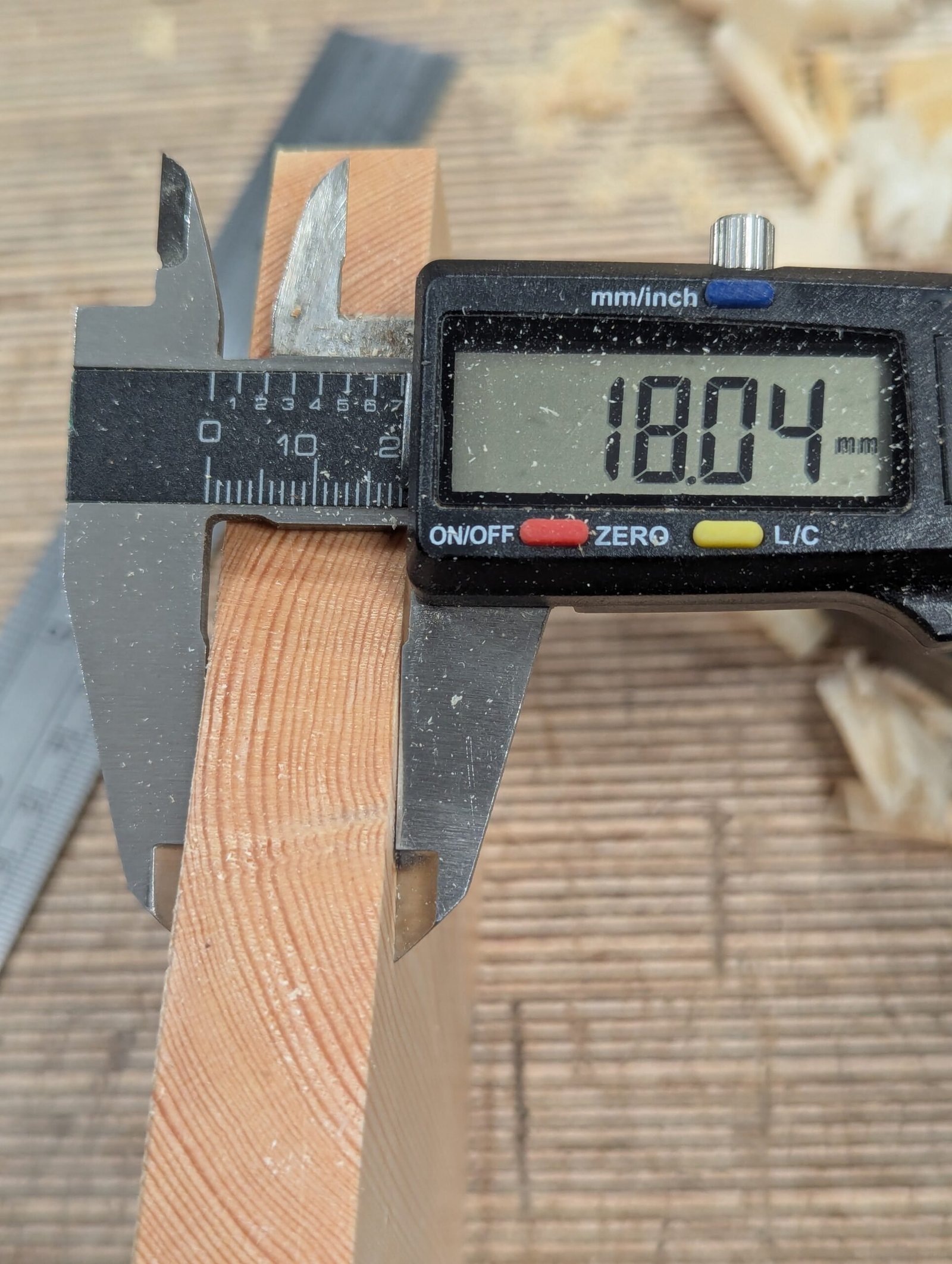
Are you struggling to get precise measurements of your wood pieces? Knowing the exact thickness of wood can make a huge difference in your projects, whether you’re building furniture, crafting, or doing repairs.
Using calipers is one of the best ways to measure wood thickness accurately, but if you’re not sure how to use them correctly, you might end up with mistakes that cost time and materials. This guide will show you step-by-step how to measure wood thickness with calipers, so you can work smarter and get perfect results every time.
Keep reading—you’re about to unlock a simple skill that will boost your woodworking confidence instantly.
Credit: www.dictum.com
Choosing The Right Caliper
Measuring wood thickness needs the right tool. Calipers help get exact measurements fast.
Picking the right caliper makes your work easier and more accurate. Learn about the types and features.
Digital Vs. Dial Vs. Vernier Calipers
Digital calipers show measurements on a screen. They are easy to read and quick to use.
Dial calipers have a dial with a needle. They give clear readings but need care to read correctly.
Vernier calipers use a sliding scale. They need practice but do not require batteries.
- Digital: fast, easy, battery-powered
- Dial: clear dial, no batteries, delicate
- Vernier: manual, no batteries, skill needed
Caliper Accuracy And Resolution
Accuracy is how close the reading is to the true size. Resolution is the smallest measure the caliper shows.
Good calipers have high accuracy and fine resolution. This helps measure thin wood pieces correctly.
- Accuracy usually ranges from 0.001 to 0.02 inches
- Resolution can be 0.0005 inches or 0.01 millimeters
- Choose based on how precise your work needs to be
Materials And Build Quality
Calipers must be strong and resistant to wear. Metal bodies last longer and stay precise.
Plastic calipers are light and cheap but not very durable. Look for stainless steel for lasting use.
- Stainless steel offers durability and rust resistance
- Carbon fiber models are light and strong but cost more
- Plastic calipers suit light tasks but wear out fast

Credit: www.youtube.com
Preparing Wood For Measurement
Measuring wood thickness with calipers needs careful preparation. Proper setup helps get accurate results.
Before measuring, make sure the wood is ready. This means checking its surface and edges.
Selecting A Flat Surface
Choose a flat area on the wood to measure. A flat surface gives a true thickness reading.
Avoid curved or uneven spots. These can make the measurement wrong.
- Look for smooth, level parts of the wood edge
- Ignore areas with bumps or dips
- Use a ruler or straightedge to check flatness if needed
Cleaning The Wood Edge
Clean the wood edge before measuring. Dust, dirt, or glue can change the thickness.
Use a soft brush or cloth to remove debris. Make sure the edge is dry and clear.
- Remove sawdust with a brush or cloth
- Wipe off any sticky residue
- Check for small splinters and remove them carefully
Avoiding Warped Or Damaged Areas
Do not measure where the wood is warped or damaged. These parts do not show true thickness.
Find straight and solid sections. Warps or cracks can make your reading wrong.
- Look for bends or twists in the wood
- Avoid edges with cracks or chips
- Pick firm, stable spots for best results
Measuring Techniques
Measuring wood thickness with calipers helps get accurate results. Using the right technique ensures precise readings every time.
Calipers are simple tools, but proper handling is key. Follow these tips to measure wood thickness correctly.
Proper Caliper Positioning
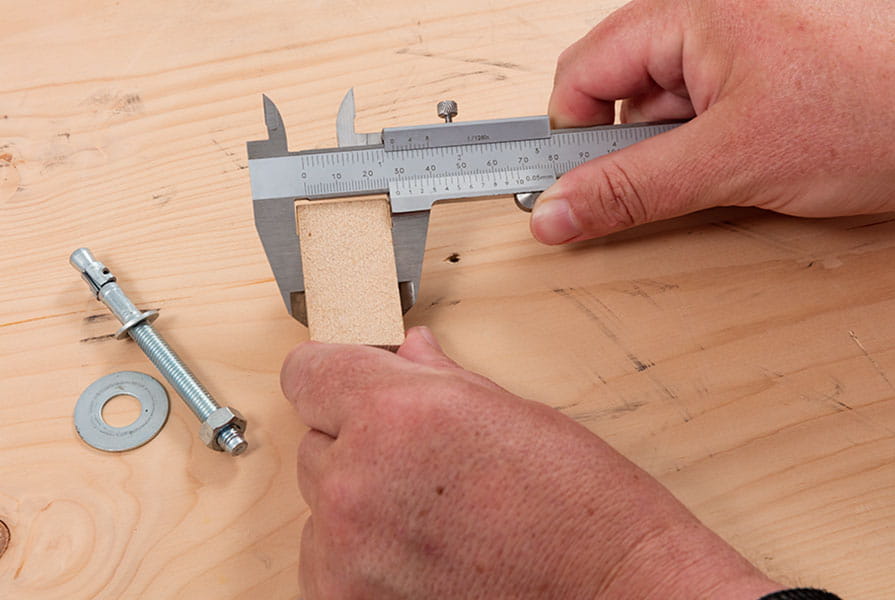
Place the caliper jaws flat against the wood surface. Make sure the caliper is straight and not tilted.
Hold the wood steady and close the caliper slowly. Avoid pressing too hard to prevent wood compression.
- Align jaws square to wood edges
- Keep caliper parallel to surface
- Use gentle pressure for accuracy
Measuring At Multiple Points
Wood thickness can vary across a board. Measure at several spots to find the true thickness.
Take readings near edges and in the center. This helps catch any warping or uneven areas.
- Measure at both ends of the wood
- Check the center point as well
- Compare all readings for consistency
Reading The Measurement Correctly
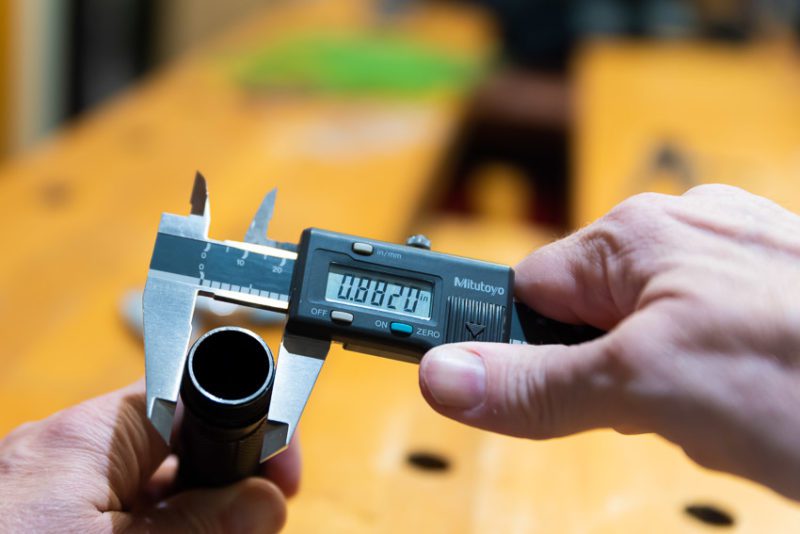
Look at the caliper scale or digital display carefully. Read the number where the jaws meet the scale.
For dial or vernier calipers, note the main scale and the small scale values. Add them for the total thickness.
- Read digital calipers directly
- For dial calipers, read the pointer position
- For vernier calipers, add main and vernier scale values
Credit: www.protoolreviews.com
Tips For Accurate Results
Measuring wood thickness with calipers needs care and focus. Small mistakes can cause wrong readings.
Use these tips to get the best and most exact measurements every time.
Calibrating Your Caliper
Always check your caliper before measuring. Calibration makes sure your tool reads zero correctly.
Close the jaws gently and see if the display or scale shows zero. Adjust it if needed.
- Clean the jaws before calibrating
- Close the caliper fully but without force
- Use the zero button on digital calipers
- For dial calipers, rotate the dial to zero
Minimizing Parallax Errors
Parallax error happens if you do not look straight at the scale. This can change what you see.
Look directly over the caliper’s scale to avoid wrong readings. Keep your eyes level with the scale.
- Keep your head straight in front of the scale
- Use digital calipers to reduce reading mistakes
- Avoid bright lights that cause shadows on the scale
Consistent Pressure Application
Apply the same gentle pressure each time you measure. Too much force can compress wood and give wrong results.
Hold the caliper steady and do not squeeze hard. Let the jaws touch the wood lightly but firmly.
- Use your thumb to close the jaws slowly
- Practice to get a feel for the right pressure
- Use a caliper with a ratchet stop for steady force
Common Mistakes To Avoid
Measuring wood thickness with calipers seems simple. Yet, many make mistakes that affect accuracy.
Knowing what to avoid helps you get precise results every time you measure.
Measuring On Uneven Surfaces
Wood surfaces often have bumps or curves. Measuring on these spots gives wrong thickness readings.
Always find a flat, smooth area to place the calipers. This ensures the jaws sit evenly on the wood.
- Check the wood surface before measuring
- Avoid knots or rough patches
- Use sandpaper if needed to flatten small spots
Ignoring Tool Calibration
Calipers need regular calibration to give correct measurements. Ignoring this leads to errors.
Calibrate your calipers by closing the jaws and setting them to zero before measuring wood thickness.
- Check zero setting each time you use the tool
- Clean the jaws to remove dust or debris
- Use a calibration block for better accuracy
Rushing The Measurement Process
Hurrying causes mistakes like poor jaw placement and wrong readings. Take your time for best results.
Hold the calipers steady and read the scale carefully to avoid errors in thickness measurement.
- Place calipers gently on the wood
- Wait a moment to stabilize the jaws
- Double-check the reading before recording
Advanced Measurement Methods
Measuring wood thickness requires accuracy. Basic calipers are useful, but advanced methods give better results. These methods help with detailed projects and quality control.
Using special tools and recording measurements carefully improves your work. Learn how to use depth gauges, combine tools, and track your data for precise results.
Using Depth Gauges For Thickness
Depth gauges measure the thickness of wood in hard-to-reach areas. They help when calipers cannot fit between tight spaces. You can also check grooves and recesses.
Use the depth rod on the gauge to touch the bottom of the wood part. Read the measurement on the scale or digital display. This method is precise for uneven surfaces.
Combining Calipers With Other Tools
Calipers work well with other tools like micrometers and thickness gauges. This combination improves accuracy and verifies measurements. Each tool suits different thickness sizes and shapes.
Use calipers for quick checks and micrometers for very thin wood pieces. Thickness gauges help with large flat surfaces. Using tools together ensures reliable data.
- Calipers: Good for general measurements
- Micrometers: Precise for small thickness
- Thickness gauges: Best for flat, wide wood
Recording And Tracking Measurements
Keep a record of all wood thickness measurements. Write down values to avoid mistakes. Use a notebook or digital app to track your data over time.
Organize measurements by wood type, date, and project. This helps compare thicknesses and find patterns. Clear records improve your woodworking quality control.
- Note the tool used for each measurement
- Include date and location of measurement
- Track changes or trends in wood thickness
Frequently Asked Questions
How Do Calipers Measure Wood Thickness Accurately?
Calipers use two jaws to grip the wood surface. They measure the distance between the jaws precisely. This ensures an exact thickness reading. Digital calipers show the measurement on a screen. Manual ones require reading the scale carefully.
What Type Of Caliper Is Best For Wood Measurement?
Digital calipers are best for wood thickness. They provide quick, clear, and accurate readings. Vernier calipers work well but need skill to read. Dial calipers offer a good balance of ease and precision. Choose based on your comfort and accuracy needs.
Can Calipers Measure Uneven Wood Surfaces?
Yes, calipers can measure uneven surfaces. Use the caliper jaws to find the thickest point. Gently close the jaws to avoid compressing the wood. For best results, take multiple measurements and average them.
Why Is Measuring Wood Thickness Important?
Measuring wood thickness ensures proper fit and function. It helps in quality control during woodworking projects. Accurate thickness avoids gaps or overlaps in joints. It also ensures consistency across multiple pieces.
Conclusion
Measuring wood thickness with calipers is simple and precise. Calipers offer accuracy for your woodworking projects. Practice using them to gain confidence. Remember to handle calipers gently to avoid damage. Regularly check for calibration to ensure reliability. Using calipers saves time and improves results.
Always measure twice to confirm accuracy. Keep your calipers clean and well-maintained. With these steps, you achieve precise wood measurements. Enjoy crafting with precision and ease!