Ever found yourself staring at a piece of wood, wondering how to make that perfect angled cut? You’re not alone.
Operating a jigsaw for angled cuts can seem tricky at first, but it doesn’t have to be. With the right guidance, you can transform those intimidating angles into smooth, precise cuts that will elevate your DIY projects to a new level.
Imagine the satisfaction of crafting a piece that’s not just good, but exceptional. In this guide, you’ll learn the simple yet effective steps to mastering angled cuts with a jigsaw. Get ready to unlock your potential and discover how easy it can be to achieve professional results. Don’t just cut wood—craft with confidence!

Credit: www.gz-supplies.com
Choosing The Right Jigsaw
A jigsaw is a useful tool for making angled cuts on wood and other materials. Picking the right jigsaw helps you cut smoothly and safely.
There are many types of jigsaws, blades, and features. Knowing about them helps you choose the best tool for your work.
Types Of Jigsaws
Jigsaws come in corded and cordless types. Corded jigsaws offer constant power. Cordless jigsaws give you freedom to move.
There are also compact and full-size jigsaws. Compact ones are lighter and easier to hold. Full-size jigsaws are stronger for heavy jobs.
Blade Selection For Angled Cuts
Choosing the right blade is important for clean angled cuts. Blades vary in length, teeth per inch, and shape.
Use fine-toothed blades for smooth cuts. Coarse blades work faster but can be rough. Some blades are made for specific materials.
- Fine tooth blades for wood and thin materials
- Coarse tooth blades for fast cuts in thick wood
- Special blades for metal or plastic
- Blades designed for bevel or angled cuts
Power And Features To Consider
Power affects how easily the jigsaw cuts thick materials. More power means better performance on tough jobs.
Look for features that help with angled cuts. Adjustable shoe plates let you set the cutting angle. Variable speed controls improve control.
- Adjustable shoe for precise angled cuts
- Variable speed for different materials
- Orbital action for faster cutting
- Comfortable grip to reduce hand fatigue
Preparing For Angled Cuts
Making angled cuts with a jigsaw needs careful preparation. You must set up the tool and material correctly.
Proper setup helps you cut safely and get clean, accurate results every time.
Marking The Cut Line
First, mark where you want to cut on the workpiece. Use a pencil or marker that shows clearly.
Draw a straight line or angled line matching your cut angle. Use a ruler or protractor for accuracy.
- Use a pencil for easy corrections
- Measure twice to avoid mistakes
- Mark both sides of thick material
Setting The Angle On The Base Plate
The jigsaw base plate can tilt to match your cut angle. Loosen the screws to adjust it.
Use the angle guide on the base plate to set the exact tilt. Tighten screws firmly once set.
- Check the angle with a protractor or angle finder
- Ensure the base plate is stable after adjusting
- Set angles usually between 0° and 45°
Securing The Workpiece
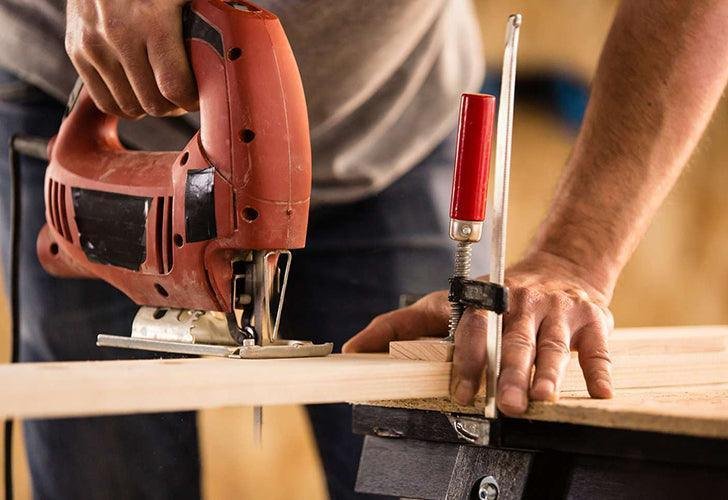
Clamp the workpiece tightly to your workbench. This keeps it from moving during cutting.
Use clamps that hold the material firmly but do not damage it. Proper securing improves cut precision.
- Place clamps away from the cut line
- Use soft pads to protect the workpiece surface
- Test stability by trying to move the material by hand
Techniques For Accurate Cuts
Using a jigsaw for angled cuts needs careful control. Accurate cuts help your projects look clean and professional.
Follow these techniques to improve your cutting skills and make precise angled cuts with your jigsaw.
Starting The Cut Smoothly
Begin your cut by placing the jigsaw blade on the wood edge. Make sure the blade is lined up with your cut mark.
Start the saw slowly to avoid splintering or slipping. A smooth start keeps the cut clean and guides the blade well.
Maintaining A Steady Hand
Hold the jigsaw firmly but not too tight. Keep your hand steady and guide the saw along the line.
Use both hands if possible: one on the handle and one to support the front. This helps control the saw better.
- Keep your wrist straight
- Move the saw slowly along the line
- Do not force the blade to turn
Controlling Speed And Pressure
Adjust your cutting speed to match the wood and blade type. Fast cuts can cause mistakes and rough edges.
Apply even pressure without pushing too hard. Let the blade do the work to keep the cut straight and smooth.
- Start slow, then find a steady pace
- Do not force the blade through the wood
- Reduce speed near corners for accuracy

Credit: www.youtube.com
Common Mistakes To Avoid
Using a jigsaw for angled cuts can be tricky if you are not careful. Many beginners make simple mistakes that affect the cut quality.
Knowing what to avoid helps you make clean and precise angled cuts every time. Here are some common errors to watch out for.
Incorrect Angle Settings
Setting the wrong angle on your jigsaw base plate leads to uneven cuts. The blade will not follow the desired line properly.
Always double-check the angle setting before cutting. Use a protractor or angle guide to get the exact tilt needed.
- Make sure the base plate is tight and does not move
- Adjust the angle slowly and lock it firmly
- Test the angle on scrap wood before the final cut
Using The Wrong Blade
Choosing a blade not suited for angled cuts causes rough edges and splintering. Blade type affects the smoothness of your cut.
Use blades designed for fine or angled cuts. Blades with fewer teeth per inch cut faster but less cleanly.
- For wood, use a fine-toothed blade for angled cuts
- Use a blade suitable for the material thickness
- Replace dull blades to keep the cut clean
Forcing The Jigsaw Through Material
Pushing the jigsaw too hard slows the blade and causes rough cuts. The blade may bend or break under pressure.
Let the jigsaw do the work. Guide it gently and keep a steady speed for best results.
- Do not rush the cut; move at a steady pace
- Hold the jigsaw firmly but do not force it
- Allow the blade to cool down during long cuts
Advanced Tips For Clean Edges
Cutting angled edges with a jigsaw can be tricky. Clean, precise cuts need good technique and tools.
This guide shares tips to improve your angled cuts for sharper and smoother edges.
Using Guide Fences
Guide fences help keep the jigsaw steady and straight during angled cuts. They attach to the base of your jigsaw.
Using a fence keeps your cut line consistent and reduces wobbling, which leads to cleaner edges.
- Attach the fence parallel to the blade for straight guidance
- Clamp the workpiece securely to prevent movement
- Adjust the fence distance to match your cut angle
Making Multiple Passes
Cutting through thick material in one pass can cause rough edges. Multiple passes help avoid this.
Start with a shallow cut and increase depth gradually. This reduces blade stress and gives cleaner cuts.
- Set the blade depth shallow for the first pass
- Make slow, steady cuts following your guide marks
- Increase blade depth for each pass until the cut is complete
Finishing With Sanding
Even with careful cutting, edges may need smoothing. Sanding removes small rough spots and sharp corners.
Use fine-grit sandpaper to gently smooth the angled edge for a clean, professional look.
- Start with 120-grit sandpaper to even out roughness
- Follow with 220-grit for a smooth finish
- Sanding blocks help maintain the angle while sanding

Credit: onevantool.com
Safety Measures While Operating
Using a jigsaw for angled cuts can be tricky and dangerous. Following safety rules keeps you safe and your work precise.
Always prepare before starting. Safety helps avoid accidents and damage to materials.
Protective Gear Essentials
Wear the right gear to protect yourself from dust and flying debris. Safety glasses guard your eyes from chips.
Use ear protection to reduce noise damage. Gloves protect hands but avoid loose ones that can catch on the blade.
- Safety glasses or goggles
- Hearing protection like earplugs or earmuffs
- Snug-fitting work gloves
- Dust mask for fine particles
Safe Handling Practices
Hold the jigsaw firmly with both hands. Keep your fingers away from the blade path.
Make sure the workpiece is clamped down. This prevents movement that can cause slips or bad cuts.
- Check the blade is sharp and properly installed
- Start the saw before touching the material
- Cut slowly to maintain control
- Unplug the tool when changing blades
Preventing Kickbacks
Kickbacks happen when the blade catches and throws the saw back. This can hurt you or damage the wood.
Keep the base plate flat on the material. Avoid forcing the saw through the cut; let the blade do the work.
- Use the right blade for the material
- Keep the blade straight and steady
- Do not twist or bend the saw during cutting
- Maintain a clear cutting path
Frequently Asked Questions
How Do I Adjust A Jigsaw For Angled Cuts?
To adjust a jigsaw for angled cuts, tilt the base plate to the desired angle. Secure it firmly before cutting. Most jigsaws have angle markings for precision. This setup ensures clean, accurate angled cuts.
What Blade Type Is Best For Angled Cuts?
Use a fine-toothed, narrow blade for angled cuts. It offers better control and smoother edges. Choose blades designed for the material you’re cutting, like wood or metal, to improve cut quality and blade longevity.
Can I Cut Angles Without A Guide On A Jigsaw?
Cutting angles without a guide is possible but less accurate. Using a straight edge or angle guide improves precision. It prevents blade drift and ensures consistent, clean angled cuts.
How Do I Maintain Safety While Making Angled Cuts?
Wear safety goggles and keep hands clear of the blade. Secure the workpiece firmly to avoid movement. Use slow, steady pressure to maintain control during angled cuts.
Conclusion
Operating a jigsaw for angled cuts takes patience and practice. Always measure twice and mark your cutting line clearly. Keep a steady hand and move the saw slowly for best results. Use the right blade for the material you cut.
Safety matters—wear goggles and keep your fingers away from the blade. With time, your angled cuts will look cleaner and more precise. Enjoy your woodworking projects and create beautiful shapes with confidence.