Are you struggling to get perfect angles in your woodworking projects? Choosing the right woodworking square can make all the difference between a sloppy cut and a masterpiece.
But with so many options out there, how do you find the one that fits your needs? This guide will help you understand the key features to look for, so you can pick a square that makes your work easier, faster, and more precise.
Keep reading to discover the secrets that woodworking pros use to achieve flawless results every time.
Types Of Woodworking Squares
Woodworking squares help you measure and mark right angles. They are essential tools for accurate cuts and joints.
There are different types of squares. Each type serves a special purpose in woodworking projects.
Try Squares
Try squares are simple tools with a wooden or metal blade fixed at 90 degrees to a handle. They check right angles on wood edges.
They are best for quick angle checks and marking straight lines. Try squares are easy to use and lightweight.
Combination Squares
Combination squares have a ruler with a movable head. The head can measure 90 and 45 degrees and check depth or height.
This tool is versatile. You can use it for marking, measuring, and checking angles in many ways.
- Measures 90 and 45 degrees
- Checks depth with a built-in scriber
- Used for marking and measuring
Speed Squares
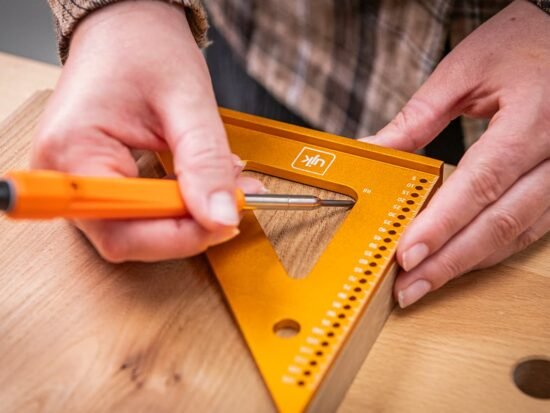
Speed squares are triangular tools that combine a ruler and square. They help make quick marks and guide saw cuts.
They are strong and easy to hold. Many woodworkers use speed squares for framing and roofing jobs.
- Measures 90 and 45 degrees
- Has a lip to hold on wood edges
- Great for fast marking and cutting
Bevel Squares
Bevel squares have an adjustable blade that lets you measure and mark angles other than 90 degrees. They are also called sliding T-bevels.
These tools help transfer angles from one piece to another. They are useful for angled cuts and joints.

Credit: www.amazon.com
Key Features To Consider
Choosing the right woodworking square helps you make accurate cuts. It is important to know what features to look for before buying one.
This guide covers the key features you should consider to pick the best woodworking square for your projects.
Material And Durability
Woodworking squares come in different materials like steel, aluminum, and plastic. The material affects how long the square lasts and how well it handles wear.
Steel squares are strong and last long but may be heavy. Aluminum is lighter and resists rust. Plastic squares are light but less durable.
- Steel: very durable, heavier, resists bending
- Aluminum: rust-resistant, light, less strong than steel
- Plastic: affordable, light, can break easily
Measurement Accuracy
Accurate measurements are key to good woodworking. Check if the square has clear, easy-to-read markings. Some have laser-etched or engraved scales that last longer.
Look for squares that maintain accuracy over time. A square that bends or warps will give wrong measurements.
- Clear and precise markings
- Permanent scale engraving
- Resists bending or warping
Size And Weight
The size of the square depends on the type of projects you do. Larger squares help with big cuts, while smaller ones are good for fine work.
Weight affects how easy the square is to handle. Heavy squares feel solid but may tire your hand. Light squares are easier to use for long periods.
- Large size for big projects
- Small size for detail work
- Balanced weight for comfort and control
Handle Comfort
Comfortable handles make your work easier. Look for squares with smooth edges and grips that fit your hand well. Some have wooden or rubber handles.
A good handle reduces hand fatigue and helps hold the square steady while measuring or marking.
- Smooth edges to avoid cuts
- Ergonomic shape for a good grip
- Material that feels comfortable in your hand
Choosing The Right Square For Your Project
Woodworking squares help you measure and mark perfect angles. Using the right square makes your work easier and more accurate. Different projects need different types of squares.
This guide covers four key areas to help you pick the best square. You will learn about squares for basic carpentry, fine joinery, framing and roofing, and metalworking.
Basic Carpentry
For basic carpentry, the try square is the most common tool. It has a wooden or metal handle with a metal blade. It helps check right angles and mark lines on wood.
The speed square is also useful. It is triangular and made of metal. It works well for quick angle checks and marking saw cuts.
Fine Joinery
Fine joinery needs more precise squares. The combination square is a good choice. It has a ruler and a movable head. It can measure 90 and 45 degrees and check depth.
- Combination square for multiple uses
- Precision squares for exact angles
- Marking gauges to score wood gently
Framing And Roofing
Framing and roofing use larger, tougher squares. The framing square is big and heavy. It helps measure long pieces and lay out rafters.
| Square Type | Use | Material |
| Framing Square | Mark rafters, long boards | Steel |
| Speed Square | Quick angle checks, cuts | Aluminum |
| Carpenter’s Square | Check right angles on frames | Steel |
Metalworking Applications
Metalworking uses squares that resist wear. The engineer’s square is small and very accurate. It checks precise 90-degree angles on metal parts.
Key points for metalworking squares:
- Use hardened steel for durability
- Keep edges sharp for accuracy
- Check calibration often

Credit: www.levoitehome.com
Tips For Maintaining Your Squares
Woodworking squares help you measure and mark angles precisely. Keeping them in good shape ensures accurate work. Small care steps can make your squares last longer.
Regular maintenance prevents damage and keeps your tools reliable. Follow simple tips to clean, store, and check your squares well.
Cleaning And Storage
Clean your squares after each use to remove dust and dirt. Use a soft cloth or brush to wipe off debris. Avoid using harsh chemicals that might harm the material.
Store your squares in a dry place away from heavy tools. Keep them in a toolbox or hang them on a pegboard to prevent bending or scratches.
- Wipe with a dry or slightly damp cloth
- Use gentle soap if needed, then dry thoroughly
- Keep in a protective case or dedicated drawer
- Avoid stacking heavy items on top
Calibration Checks
Check your squares regularly to ensure they are still accurate. Test them by placing the square against a straight edge or another known square.
If the square does not match perfectly, it may need adjustment or replacement. Accurate squares make your cuts and joints fit better.
- Place the square on a flat surface
- Draw a line along the edge
- Flip the square and draw another line
- Check if the two lines align perfectly
- Realign or replace if lines do not match
Avoiding Rust And Damage
Metal squares can rust if exposed to moisture. Keep them dry and use light oil to protect the surface. Rust reduces accuracy and tool life.
Handle your squares gently to avoid dropping or bending. Damage can affect their shape and make measurements wrong.
- Dry squares immediately if they get wet
- Apply a thin layer of machine oil or rust inhibitor
- Store in a dry environment with low humidity
- Do not drop or apply heavy force
Common Mistakes To Avoid
Choosing the right woodworking square is key for precise work. Avoiding common mistakes helps you get accurate results.
Some errors can lead to wasted materials and poor craftsmanship. Learn what to watch out for when selecting and using squares.
Using The Wrong Square
There are many types of woodworking squares. Using the wrong one can cause mistakes in your measurements.
Each square has a special use. For example, try squares check right angles, while combination squares measure depth and angles.
- Do not use a try square for measuring angles other than 90°
- A combination square is better for marking and measuring various angles
- Use a speed square for quick layout work on framing
Ignoring Calibration
Squares can lose accuracy over time. Ignoring calibration leads to wrong cuts and poor fits.
Regularly check your square against a known accurate surface. Adjust or replace it if it is off.
- Test the square by drawing a line, flipping the square, and drawing again
- If lines do not match, your square needs calibration
- Use a reliable flat surface or a certified square to compare
Poor Handling Practices
Careless handling can damage your square. Dropping or bending it changes its shape and accuracy.
Store your squares carefully and clean them after use. Avoid exposing them to moisture to prevent rust.
- Do not drop your squares on hard surfaces
- Keep them dry and clean after each use
- Store in a protective case or toolbox

Credit: www.woodpeck.com
Frequently Asked Questions
What Types Of Woodworking Squares Are Essential?
Essential types include try squares, combination squares, and speed squares. Each serves unique measuring and marking functions in woodworking projects.
How To Choose The Best Woodworking Square Material?
Choose materials like stainless steel or aluminum for durability and accuracy. Avoid plastic for precision tasks due to flexibility and wear issues.
Why Is Accuracy Important In Woodworking Squares?
Accuracy ensures precise cuts and joinery, preventing material waste. It improves overall project quality and fit, saving time and resources.
How To Maintain And Store Woodworking Squares?
Clean squares after use and store them in a dry, safe place. Regular calibration checks help maintain measurement accuracy over time.
Conclusion
Choosing the right woodworking square is essential. It ensures precision and quality. Consider size, material, and type before buying. Each factor impacts your work’s outcome. Accurate tools save time and reduce errors. Research thoroughly. Compare options to fit your needs.
A well-chosen square boosts your woodworking skills. Invest in a reliable square for better results. Happy woodworking!