
Are your hand plane blades not cutting as smoothly as they used to? A sharp blade makes all the difference in achieving clean, precise cuts and enjoying your woodworking projects.
But sharpening blades can seem tricky if you don’t know where to start. This guide will walk you through simple, effective steps to sharpen your hand plane blades like a pro. By the end, you’ll have the skills to keep your tools in top shape and your work flawless.
Ready to transform your woodworking experience? Let’s dive in.
Choosing The Right Sharpening Tools
Sharpening hand plane blades needs the right tools for best results. Picking good tools saves time and effort.
Each tool type fits different sharpening styles and skill levels. Learn about stones, guides, and other methods.
Types Of Sharpening Stones
Sharpening stones come in many varieties. Each has a unique grit and material for blade care.
- Coarse stones remove lots of metal fast.
- Medium stones smooth out rough edges.
- Fine stones create a sharp, polished edge.
- Water stones need soaking before use.
- Oil stones use oil to lubricate during sharpening.
- Synthetic stones offer consistent grit and durability.
Using Honing Guides
Honing guides hold the blade steady at a set angle. This helps keep the edge even and sharp.
| Guide Type | Benefit | Drawback |
| Manual guides | Simple and affordable | Needs practice to use well |
| Magnetic guides | Hold blade firmly | Can be bulky |
| Adjustable angle guides | Set exact sharpening angles | More costly |
Alternative Sharpening Methods
Other tools can sharpen blades without stones. These methods suit different needs and budgets.
- Diamond plates sharpen quickly and last long.
- Leather strops polish edges for a fine finish.
- Electric sharpeners speed up the process but need care.
- Sandpaper on flat surface works for small touch-ups.
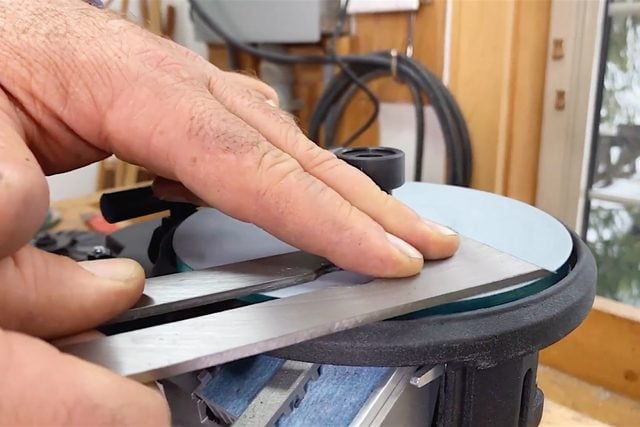
Credit: www.familyhandyman.com
Preparing The Blade For Sharpening
Sharpening a hand plane blade starts with good preparation. This step helps the blade get sharper faster.
Taking time to clean and set the blade correctly will improve your results and tool life.
Cleaning And Inspecting The Blade
Clean dirt and rust off the blade before sharpening. Use a cloth and some oil or rust remover.
Look closely for nicks, chips, or cracks on the blade edge. These can affect sharpening and cutting.
- Wipe blade with a clean cloth
- Use fine steel wool or rust remover if needed
- Check the cutting edge for damage
- Decide if any repair is needed before sharpening
Setting The Correct Bevel Angle
The bevel angle controls how sharp and strong the blade edge will be. Setting it right is important.
Most hand plane blades have a bevel angle between 25 and 30 degrees. Use a guide or angle gauge to check.
- Find the existing bevel angle with a bevel gauge
- Match your sharpening stones to this angle
- Keep the angle steady while sharpening
- A smaller angle sharpens faster but dulls sooner
- A larger angle lasts longer but needs more effort to sharpen
Sharpening Techniques For Hand Plane Blades
Keeping hand plane blades sharp is essential for smooth woodworking. Sharp blades cut better and make your work easier.
This guide explains key sharpening techniques to keep your blades in top shape. Follow simple steps for best results.
Establishing A Sharp Bevel
The bevel is the angled edge that does the cutting. A sharp bevel is the first step in sharpening a blade.
Use a coarse sharpening stone or sandpaper to create a new bevel angle. Hold the blade steady and move it evenly.
- Choose the right angle, usually 25 to 30 degrees
- Keep consistent pressure and motion
- Sharpen until the bevel is smooth and uniform
Honing The Secondary Bevel
The secondary bevel is a smaller angle on the edge that sharpens the blade further. It improves cutting sharpness.
Use a finer stone or honing guide to create a thin secondary bevel. This step refines the edge for better performance.
- Set the honing angle about 5 degrees higher than the main bevel
- Make small, smooth strokes on a fine-grit stone
- Check the edge often to avoid over-sharpening
Removing Burrs Effectively
Burrs are tiny metal strips that form on the blade edge after sharpening. Removing them makes the blade cleaner.
Use a leather strop or very fine stone to gently remove burrs. Stropping aligns the edge and improves sharpness.
- Apply light pressure and use long strokes
- Strop both sides of the blade evenly
- Check the edge by feeling for smoothness
Maintaining Blade Sharpness
Keeping your hand plane blades sharp is key for smooth woodworking. Dull blades make work hard and rough.
Regular care helps your blades last longer and cut better. This guide covers simple ways to maintain sharpness.
Regular Honing Practices
Honing your blade regularly keeps the edge fine between sharpening sessions. Use a fine-grit honing stone or a leather strop.
- Clean the blade before honing to remove debris.
- Hold the blade flat and slide it evenly across the honing surface.
- Use light, consistent pressure to keep the edge even.
- Strop the blade to polish and align the edge for smoother cuts.
Storage Tips To Prevent Rust
Rust dulls blades fast and damages metal. Proper storage stops rust from forming on your blades.
| Storage Method | Benefit |
| Dry cloth wrap | Keeps moisture away |
| Apply light oil coating | Protects metal surface |
| Store in a dry box | Reduces humidity exposure |
| Use silica gel packs | Absorbs excess moisture |
When To Resharpen
Resharpen your blade when honing no longer restores the edge. Look for signs like tearing wood or rough cuts.
- Check the blade edge for chips or dents.
- Test the blade on scrap wood for smoothness.
- Feel resistance or roughness during planing.
- Sharpen using a grinding wheel or sharpening stones as needed.
Troubleshooting Common Sharpening Issues
Sharpening hand plane blades can be tricky. Problems often come up even with careful work.
Knowing how to fix common issues helps keep your blades sharp and smooth.
Dealing With Nicks And Chips
Nicks and chips make the blade edge uneven and rough. They can damage your woodwork.
Use a coarse sharpening stone or diamond plate to remove the damaged metal first. Work slowly and check often.
- Start with coarse grit to grind out nicks
- Move to finer stones to smooth the edge
- Keep the blade angle consistent while sharpening
Fixing Uneven Edges
Uneven edges cause poor cuts and tear out wood fibers. This happens if one side is sharper than the other.
Lay the blade flat on the stone. Check the whole edge for flatness. Sharpen both sides evenly to fix this.
- Use a sharpening guide to keep angles steady
- Lightly sharpen one side, then the other
- Check edge with a magnifying glass or light
Avoiding Over-sharpening
Over-sharpening wastes blade metal and shortens blade life. It also changes the blade angle too much.
Stop sharpening once the blade is sharp. Test the edge on scrap wood to see if it cuts well.
- Sharpen only when the blade feels dull
- Keep track of sharpening time and strokes
- Use finer stones for touch-ups instead of coarse ones

Credit: www.ebay.com
Enhancing Cutting Performance
Sharpening hand plane blades is key to getting clean, smooth cuts. A sharp blade cuts wood fibers easily.
Proper adjustment and alignment of the blade improve the tool’s cutting ability and ease of use.
Adjusting The Plane For Smooth Cuts
Set the blade depth carefully. Too deep causes rough cuts, too shallow makes light shavings.
- Loosen the lever cap to move the blade.
- Adjust the depth using the depth adjustment knob.
- Tighten the lever cap once the blade is set.
- Test on scrap wood and adjust as needed.
Blade Alignment Tips
Correct blade alignment prevents chatter marks and uneven cuts. Check that the blade is parallel to the sole.
| Check Point | What to Do |
| Blade edge position | Ensure blade is flush with the mouth opening |
| Blade tilt | Keep blade flat and parallel to the sole |
| Lever cap tightness | Secure but not too tight to allow fine adjustments |

Credit: www.reddit.com
Frequently Asked Questions
How Often Should I Sharpen Hand Plane Blades?
You should sharpen your hand plane blades every few hours of use. Regular sharpening ensures optimal performance and a smooth finish. Dull blades can damage the wood surface and make planing harder. Monitor the blade’s performance and sharpen as needed for the best results.
What Tools Do I Need To Sharpen Blades?
To sharpen hand plane blades, you’ll need sharpening stones, a honing guide, and lubricant. Sharpening stones come in different grits for various stages. A honing guide helps maintain the correct angle. Lubricant, like water or oil, prevents friction and overheating during sharpening.
How Do I Know My Blade Is Sharp?
A sharp blade slices paper effortlessly and leaves smooth, clean wood shavings. Test the blade by cutting thin strips of paper. If it struggles, it needs more sharpening. Sharp blades also produce consistent shavings without tearing or chipping the wood surface.
Can I Use A Sharpening Jig?
Yes, a sharpening jig ensures consistent angles and precision. It helps beginners achieve professional results. Using a jig simplifies the sharpening process, maintaining the correct bevel angle. This tool is especially useful for maintaining uniformity across multiple blades.
Conclusion
Sharpening hand plane blades takes patience and practice. A sharp blade cuts wood smoothly and easily. Regular sharpening keeps your tools working well. Start with coarse stones, then move to finer ones. Keep the blade angle steady for best results.
Test the blade often to check sharpness. Clean and store blades properly to avoid rust. With time, sharpening becomes a simple routine. Your woodworking projects will look cleaner and better. Keep your blades sharp and enjoy better work every day.
