Are you tired of uneven cuts and wasted materials? Mastering the use of a combination square can change the way you work, making your cutting lines precise and your projects flawless.
Whether you’re a beginner or looking to improve your skills, this guide will show you exactly how to use a combination square to draw perfect cutting lines every time. Keep reading, and you’ll discover simple tips that save you time, reduce mistakes, and boost your confidence with every cut.
Your next project is about to get a whole lot easier.
Choosing The Right Combination Square
A combination square is a handy tool for cutting lines with accuracy. Picking the right one makes your work easier and more precise.
Consider the type, material, and size before buying a combination square. Each factor affects how well it fits your needs.
Types Of Combination Squares
There are different types of combination squares. They vary by the markings and features they offer.
- Standard combination squares with ruler and 90°/45° angles
- Digital combination squares for easy reading
- Engineer’s squares for metalwork precision
- Carpenter’s squares designed for woodworking
Material And Build Quality
The material impacts the tool’s durability and accuracy. Choose a solid build to last long and stay reliable.
| Material | Advantages | Disadvantages |
| Steel | Strong, precise, long-lasting | Can rust if not cared for |
| Aluminum | Lightweight, rust-resistant | Less durable, may bend |
| Plastic | Very light, cheap | Not very accurate or durable |
Size Considerations
Size affects how easy the tool is to use and carry. It also changes the range of measurements you can make.
- Smaller squares are good for tight spaces and small projects
- Larger squares provide longer rulers for bigger cuts
- Choose a size that matches your common work needs

Credit: www.wikihow.com
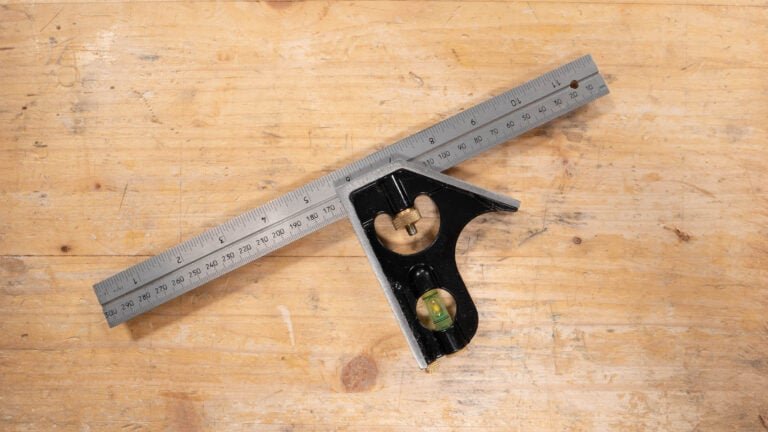
Basic Parts Of A Combination Square
A combination square is a tool used in woodworking and metalworking. It helps you measure and mark straight lines accurately.
Knowing the parts of a combination square is important to use it well. Each part has a special job.
Blade And Stock
The blade is the long, flat metal ruler part. It has measurement marks on it to help you measure distances.
The stock is the thick part attached to the blade. It holds the blade at a right angle, so you can draw straight lines.
- The blade slides through the stock and locks in place.
- The stock often has a flat side to rest on edges.
- Both parts work together for precise marking.
Bubble Level
The bubble level is a small tube filled with liquid and an air bubble. It shows if a surface is level or plumb.
This part helps you check if your lines are perfectly horizontal or vertical. It adds more uses to the tool.
- The bubble moves in the tube to show balance.
- It helps keep lines straight on uneven surfaces.
- It is built into the stock for easy use.
Scriber
The scriber is a small, sharp metal point stored in the stock. You use it to mark lines on wood or metal.
It helps make precise marks without needing a pencil. The scriber is easy to pull out and use.
- The scriber fits inside the stock for storage.
- It marks hard surfaces clearly.
- It is useful for fine, accurate lines.
Setting Up The Combination Square
A combination square helps you draw straight and accurate cutting lines. Setting it up correctly is important for good results.
This guide shows you how to adjust the blade, lock the measurement, and calibrate the tool for accuracy.
Adjusting The Blade
The blade is the metal ruler part of the combination square. You can slide it to the right length for your project.
Hold the handle and move the blade until the desired measurement shows. Make sure the blade is straight and flat.
Locking The Measurement
Once the blade is in place, lock it so it does not move. This keeps your measurement accurate while you work.
Use the locking screw or knob on the handle. Turn it clockwise to tighten and secure the blade firmly.
- Slide blade to correct length
- Hold blade steady
- Turn locking screw clockwise
- Check blade does not move
Calibrating For Accuracy
Calibration makes sure the combination square gives correct measurements. You do this by checking it against a known straight edge.
Place the square against a ruler or straight board. Check if the blade lines up exactly at zero or your set point.
- Place square on flat surface
- Check blade alignment with ruler
- Adjust blade or handle if needed
- Repeat until measurements match

Credit: www.wikihow.com
Marking Straight Lines
Using a combination square helps you draw straight lines on wood or metal. It ensures accuracy before cutting.
You can mark lines quickly and clearly. This guide shows how to use the tool for best results.
Aligning With The Workpiece
Place the combination square on the edge of your workpiece. Make sure the stock is flush against the side.
Check that the blade is straight and not bent. A bent blade can cause uneven lines.
Using The Stock As A Guide
The stock acts as a fence to keep the blade steady. Hold the stock tightly against the workpiece edge.
- Grip the stock firmly with one hand
- Slide the blade to the desired measurement
- Lock the blade in place with the locking screw
- Keep the stock flat on the workpiece while marking
Drawing Precise Lines
Use a sharp pencil or marking knife along the blade’s edge. Apply light pressure for a fine line.
| Tip | Reason |
|---|---|
| Use a fine pencil | Gives a clear, thin line for accurate cutting |
| Keep the square steady | Prevents line from moving or shifting |
| Mark multiple lines if needed | Helps check measurement before cutting |
Marking 45 And 90 Degree Angles
A combination square helps you mark precise 45 and 90 degree angles on wood or metal. Accurate marking is key for clean cuts and proper assembly.
This guide explains how to position the square and keep your lines consistent every time you work.
Positioning For 90 Degrees
To mark a 90 degree angle, place the ruler of the combination square against the edge of your workpiece. Adjust the head to sit flush against the edge, forming a perfect right angle.
- Hold the square firmly to avoid slipping.
- Run a sharp pencil or marking knife along the ruler edge.
- Double-check the angle by measuring both edges if needed.
Positioning For 45 Degrees
Set the combination square’s head to the 45 degree notch. Align the ruler against the workpiece edge so the head rests flat.
Draw your line along the ruler edge. This line will be at a precise 45 degree angle for miter cuts and joinery.
| Step | Action | Tip |
|---|---|---|
| 1 | Adjust the square head to 45 degrees | Check the notch is fully seated |
| 2 | Place ruler flush to workpiece edge | Keep the square steady |
| 3 | Mark the line carefully | Use a sharp pencil for accuracy |
Ensuring Consistency
Consistent marks save time and improve the quality of your project. Use these tips to keep your angles exact every time.
- Check the square’s calibration before use.
- Apply even pressure while marking.
- Use the same side of the ruler for all marks.
- Keep your pencil sharp for thin, precise lines.
- Practice on scrap material to confirm accuracy.

Credit: www.wikihow.com
Tips For Cutting Along Marked Lines
Using a combination square helps you mark straight lines on wood. Cutting exactly on these lines is important for good results.
Small mistakes in cutting can change the size or shape of your project. Follow these tips to cut cleanly along your marked lines.
Choosing The Right Saw
Select a saw that fits your cut type and material. Different saws help you follow lines better.
Use a fine-toothed saw for clean, precise cuts. A coarse saw blade cuts faster but may chip the wood.
- Backsaw: good for straight, fine cuts
- Handsaw: versatile but needs steady control
- Jigsaw: useful for curves but tricky on straight lines
- Circular saw: fast for long straight cuts
Maintaining Line Visibility
Keep your marked lines clear during cutting. Faded lines can cause mistakes and uneven cuts.
Use a sharp pencil or marking knife to draw lines. Avoid smudging or wiping off the marks before cutting.
- Mark lines with a pencil or chalk
- Use a marking knife for thin, sharp lines
- Draw lines after sanding the wood surface
- Keep hands clean to avoid smudging
Controlling The Cut
Hold the saw steady and use slow, even strokes. Rushing can cause the saw to slip off the line.
Position your body for comfort and control. Keep your eye on the marked line, not the saw blade.
- Start the cut with a few light strokes
- Keep the saw blade aligned with the line
- Use both hands to guide the saw
- Stop and check your progress often
Common Mistakes To Avoid
Using a combination square helps you make straight, accurate cutting lines. Avoiding common mistakes improves your work quality.
These errors can cause wrong cuts, wasted materials, and frustration. Learn what to watch out for when using your tool.
Incorrect Measurement Locking
Failing to lock the measurement firmly causes the ruler to slip. This slip changes your marking and leads to inaccurate cuts.
Always tighten the locking screw fully after setting the measurement. Check the ruler does not move before marking.
- Set measurement carefully
- Tighten locking screw firmly
- Test if ruler stays in place
- Adjust if you feel any movement
Misalignment Of The Square
Placing the square unevenly on the workpiece causes angled lines. This mistake can ruin the straightness of your cuts.
Make sure the base of the square sits flat and flush against the edge. Check alignment before drawing your cutting line.
- Place square firmly on the edge
- Check that the ruler is perpendicular
- Look for gaps or tilting
- Adjust until fully aligned
Overlooking Calibration
Using a combination square without checking its accuracy causes wrong measurements. Calibration ensures reliable results.
Regularly check your square against a known straight edge or ruler. Fix or replace it if it shows errors.
- Test square on a flat edge
- Compare ruler marks with a tape measure
- Look for any gaps or misreadings
- Adjust or replace if needed
Maintenance And Storage
Keeping your combination square in good shape helps it last longer. Proper care makes sure your cuts stay accurate.
Follow simple steps for cleaning, protecting, and storing your tool. These habits prevent damage and rust.
Cleaning The Square
Clean your combination square after each use. Dirt and dust can cause wear and affect accuracy.
- Wipe the blade and body with a dry cloth.
- Use a soft brush to remove stuck debris.
- For stubborn dirt, dampen the cloth slightly with water.
- Dry the tool completely to prevent rust.
Protecting The Blade
The blade is the most sensitive part of the square. Protect it from damage and rust to keep it sharp.
| Tip | Reason |
| Apply light oil to the blade | Prevents rust and corrosion |
| Avoid dropping or banging the blade | Prevents bending or dents |
| Keep the blade dry | Stops moisture damage |
Proper Storage Practices
Store the combination square in a safe, dry place. Good storage prevents damage and rust build-up.
- Keep the square in its case if it has one.
- Place it in a toolbox or drawer away from moisture.
- Do not store with heavy objects on top.
- Check the tool regularly for signs of rust or damage.
Frequently Asked Questions
What Is A Combination Square Used For In Cutting Lines?
A combination square helps mark precise cutting lines. It ensures accurate 90° and 45° angles. This tool improves measurement reliability and cutting accuracy in woodworking and metalworking projects.
How Do You Set A Combination Square For Cutting?
Loosen the blade lock and slide the ruler. Align the ruler to the desired measurement or angle. Tighten the lock to secure the setting before marking your cutting lines.
Can A Combination Square Measure Angles Besides 90 Degrees?
Yes, it measures 45 and 90-degree angles. Some models include protractor heads for other angles. It’s versatile for marking straight and angled cutting lines.
How Do I Maintain My Combination Square For Accuracy?
Keep it clean and free of rust or debris. Store it in a protective case. Periodically check calibration and adjust if necessary to ensure precise measurements.
Conclusion
Mastering a combination square makes cutting lines precise and easy. This tool helps create straight, accurate lines for any project. Practice regularly to gain confidence and improve skills. Remember, precision is key in woodworking and metalworking. A combination square offers versatility for many tasks.
It’s not just for professionals; anyone can use it. Keep your tools clean and well-maintained for best results. Use this guide as a reference whenever needed. Enjoy the process and see your projects improve. Happy crafting!