Are you sure you’re using the right tools to stay safe while working with electricity? An insulated screwdriver isn’t just another tool—it’s your shield against electric shocks.
If you want to protect yourself and get the job done right, understanding how to use this tool correctly is a must. In this guide, you’ll discover simple tips and expert advice that make using an insulated screwdriver easy and safe.
Keep reading to learn how to work smarter and protect yourself every time you pick up this essential tool.
Why Choose Insulated Screwdrivers
Insulated screwdrivers help protect you from electrical shocks. They keep you safe when working on live circuits.
These tools have special coatings that stop electricity from passing through. This makes them essential for electrical work.
Benefits For Electrical Work
Using insulated screwdrivers lowers the risk of injury. They prevent short circuits and electrical accidents.
- Protects users from electric shocks
- Prevents damage to electrical components
- Ensures safe handling of live wires
- Helps meet safety standards and regulations
- Increases confidence when working on electrical systems
Types Of Insulation Materials
Different materials are used to insulate screwdrivers. Each material offers various levels of protection and comfort.
| Material | Properties | Common Use |
| Rubber | Flexible, good grip, moderate insulation | General electrical work |
| Plastic | Durable, lightweight, high insulation | Household wiring |
| Vinyl | Soft, comfortable, chemical resistant | Industrial settings |
| Thermoplastic | Heat resistant, strong insulation | High voltage applications |

Credit: mafpro.in
Key Features Of Insulated Screwdrivers
Insulated screwdrivers protect users from electric shocks. They have special parts that stop electricity from passing through.
These tools are important for working safely on electrical equipment. Their design keeps users safe and helps get the job done well.
Handle Design And Grip
The handle of an insulated screwdriver is made from non-conductive materials. This stops electricity from reaching your hand.
Handles often have a rubber or plastic coating. This makes the grip strong and comfortable to hold during work.
- Non-slip surface for better control
- Ergonomic shape to reduce hand fatigue
- Bright colors for easy visibility
- Thick insulation to block electricity
Blade And Tip Construction
The blade is made from strong metal to handle tough jobs. It is coated with an insulating material to prevent electric flow.
The tip fits screws tightly to avoid slipping. It often has a magnetic feature to hold screws in place.
- Metal blade with high durability
- Insulating layer covering the blade
- Precision tip for secure screw grip
- Magnetic tip to hold screws easily
Selecting The Right Insulated Screwdriver
Using an insulated screwdriver helps protect you from electrical shocks. It is important to pick the right one for your work.
Choosing the correct insulated screwdriver depends on the task and safety standards. This guide explains what to look for.
Matching Screwdriver To Task
Pick a screwdriver that fits the screw size and type. Using the wrong size can damage the screw or tool.
Check the handle and blade length. Longer blades reach deep screws, while shorter blades work in tight spaces.
- Use flathead screwdrivers for slotted screws
- Use Phillips screwdrivers for cross-shaped screws
- Choose blade length based on screw depth
- Pick handle size for a comfortable grip
Checking Certification And Ratings
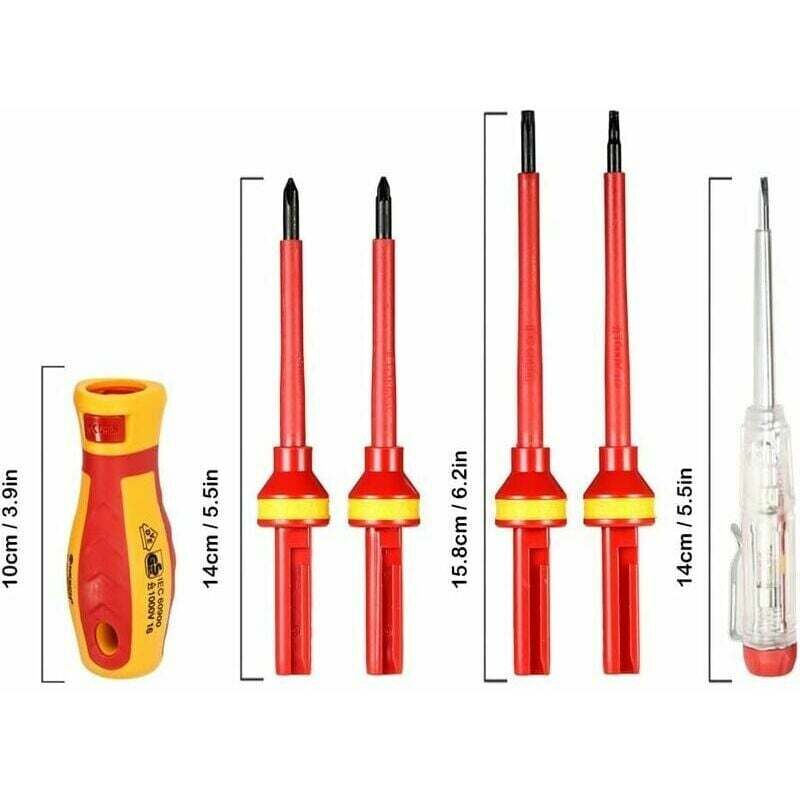
Look for certification marks that show the screwdriver is tested for electrical work. These marks prove safety.
Check the voltage rating on the tool. It should match or exceed the electrical system you are working on.
- Certification examples: VDE, IEC, ASTM
- Voltage ratings often range from 1000V to 1500V
- Make sure insulation covers the full handle and blade base
- Inspect tools regularly for damage to insulation
Credit: www.manomano.co.uk
Proper Use Techniques
Using an insulated screwdriver safely needs good technique. It helps protect you from electric shocks. This guide explains how to handle and position the tool correctly.
Knowing what mistakes to avoid can keep your work safe and efficient. Follow these tips to use your insulated screwdriver properly every time.
Correct Handling And Positioning
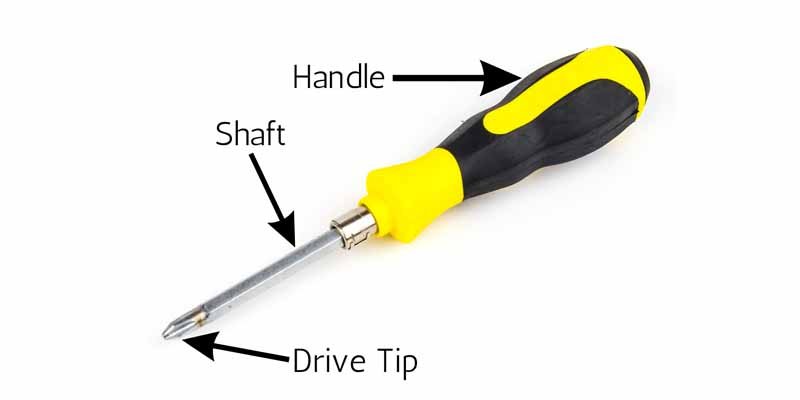
Hold the insulated screwdriver by its handle only. Keep your hand away from the metal shaft to avoid electric shock. Position the screwdriver tip firmly on the screw head to prevent slipping.
- Use a comfortable grip to control the screwdriver better.
- Keep your wrist straight to reduce strain and improve force.
- Apply steady pressure while turning the screwdriver.
- Work in a well-lit area to see screws clearly.
- Make sure the insulated part covers all metal you might touch.
Avoiding Common Mistakes
Many accidents happen because users overlook simple rules. Avoid these mistakes to protect yourself and your tools.
| Mistake | Why It Is Dangerous | How to Fix It |
| Holding the metal shaft | Can cause electric shock | Hold only the insulated handle |
| Using a damaged screwdriver | Insulation may fail | Check tool condition before use |
| Applying too much force | Can slip and injure you | Use steady, moderate pressure |
| Wrong screwdriver size | Damages screw and tool | Use the correct tip size for screws |
| Working on live wires without testing | Risk of electric shock | Always test circuit before use |
Essential Safety Precautions
Using an insulated screwdriver helps protect you from electric shocks. It is important to follow safety rules every time you use this tool.
Taking the right precautions keeps you safe and prevents accidents when working with electricity.
Inspecting Tools Before Use
Check your insulated screwdriver carefully before starting work. Look for any damage or wear on the handle and shaft.
Do not use the tool if the insulation is cracked, worn, or missing. Damaged tools can cause electric shock.
- Look for cracks or breaks in the insulation
- Ensure the metal part is clean and free of rust
- Check the handle for secure grip and no looseness
- Replace any tool that shows signs of damage
Working In Safe Environments
Always work in a dry, well-lit area to avoid accidents. Keep your workspace free of clutter and hazards.
Wear personal protective equipment such as gloves and safety glasses. Stay alert and avoid distractions when working with electricity.
- Use insulated mats or stands to avoid grounding yourself
- Keep your hands dry and free from grease or oil
- Never touch live wires without proper protection
- Turn off power sources before starting work whenever possible
Credit: abascotools.com
Maintenance And Storage Tips
Using an insulated screwdriver safely means taking care of it. Proper maintenance and storage keep it working well. This guide helps you maintain and store your tool correctly.
Regular checks and cleanings protect the insulation. Storing your screwdriver right stops damage and keeps it ready to use.
Cleaning And Inspection Routines
Clean your insulated screwdriver after each use. Dirt and grease can harm the insulation and metal parts. Use a soft cloth with mild soap and water. Avoid harsh chemicals that can weaken the insulation.
Inspect the tool carefully before each job. Look for cracks or cuts in the handle and insulation. Check the metal tip for wear or rust. Replace the screwdriver if you find any damage. This keeps you safe from electric shocks.
- Wipe off dirt and grease with a soft cloth
- Use mild soap and water for cleaning
- Do not use strong chemicals
- Check for cracks or cuts in insulation
- Inspect the metal tip for damage or rust
- Replace the tool if damaged
Storing To Preserve Insulation
Store your insulated screwdriver in a dry, cool place. Avoid direct sunlight and heat, which can damage the insulation. Keep it away from sharp tools that could cut the handle.
Use a tool box or a dedicated holder to protect the screwdriver. Do not leave it loose in a drawer or on the floor. Proper storage helps the tool last longer and stay safe.
- Keep the tool in a cool, dry place
- Avoid direct sunlight and high heat
- Store away from sharp or heavy objects
- Use a tool box or holder for protection
- Do not leave the tool loose or on the floor
Frequently Asked Questions
What Is An Insulated Screwdriver Used For?
An insulated screwdriver protects against electric shocks. It’s designed for working on live electrical circuits. The insulation prevents current from passing through the handle to your hand.
How To Identify A Quality Insulated Screwdriver?
Look for a screwdriver with a certified 1000V insulation rating. The handle should be made of non-conductive materials like rubber or plastic. A quality tool often features a bright color for easy visibility.
Can Insulated Screwdrivers Be Used On All Electrical Devices?
Insulated screwdrivers are ideal for low to medium voltage electrical work. They are not suitable for high voltage systems without additional protective gear. Always check voltage ratings before use.
How To Maintain An Insulated Screwdriver Safely?
Keep the screwdriver clean and dry to maintain insulation. Avoid dropping or damaging the handle, as cracks reduce protection. Regularly inspect for wear and replace if insulation is compromised.
Conclusion
Understanding how to use an insulated screwdriver is crucial. It ensures safety during electrical work. Always check the tool’s insulation before use. This prevents accidents and protects from electric shock. Remember to store your screwdriver properly. Keep it clean for long-lasting performance.
Choose the right screwdriver for every task. This guarantees efficiency and safety. Practice makes perfect, so use it regularly. Take care of your tools. They will take care of you. Thanks for reading our guide on insulated screwdrivers. Stay safe and confident in your projects.