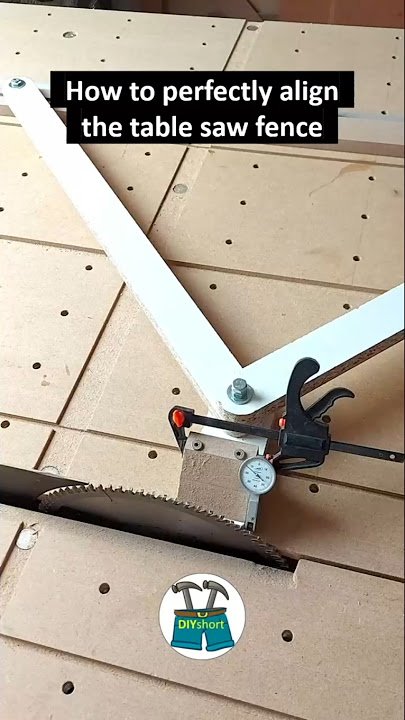
If you want clean, precise cuts every time you use your table saw, aligning the fence correctly is a must. When your fence is out of alignment, your cuts can be uneven, unsafe, or frustratingly inaccurate.
But don’t worry—this isn’t a complicated task. You’ll learn simple, step-by-step instructions to get your table saw fence perfectly aligned. By the end, you’ll have the confidence and skill to make every cut smooth and exact. Ready to improve your woodworking and avoid costly mistakes?
Let’s dive in!
Why Fence Alignment Matters
Aligning the fence on your table saw is important for good results. A fence that is off can cause problems with your cuts. This guide explains why fence alignment is necessary.
Knowing how fence alignment affects your work helps you use your saw safely and accurately. Let’s look at two main reasons fence alignment matters.
Impact On Cut Accuracy
If the fence is not aligned, the blade may not cut straight. This can make your wood pieces uneven or the wrong size. Even small errors can affect your project.
- Misaligned fences cause angled cuts instead of straight cuts.
- Wood can bind or pinch against the blade, causing damage.
- Repeated errors lead to wasted materials and time.
Safety Considerations
A fence that is not aligned properly can create dangerous situations. The wood may kick back or slip, risking injury to the operator.
| Risk | Cause | Effect |
| Kickback | Wood pinches blade due to fence angle | Wood thrown back at operator |
| Binding | Fence pushes wood off track | Loss of control during cut |
| Blade Damage | Wood hits blade unevenly | Blade dulls or breaks |

Credit: medium.com
Tools Needed For Alignment
Aligning a table saw fence is important for accurate cuts. Using the right tools makes this job easier and safer.
Tools help measure and adjust the fence position. Knowing which tools to use saves time and improves results.
Measuring Tools
Measuring tools check if the fence is parallel to the blade. They help find any gaps or misalignment.
Common measuring tools include rulers, squares, and dial indicators. These tools give precise readings for fence position.
- Combination square: Measures fence to blade distance accurately
- Steel ruler or tape measure: Checks fence placement along the table
- Dial indicator: Measures small gaps and parallelism with high precision
- Feeler gauges: Detects tiny spaces between fence and blade
Adjustment Tools
Adjustment tools help move or tighten the fence parts. They ensure the fence stays in the right place during use.
Common adjustment tools include wrenches, hex keys, and screwdrivers. These tools fit different fasteners on the fence.
- Allen wrenches (hex keys): Adjust screws on many fences
- Open-end or box wrenches: Tighten bolts holding the fence
- Screwdrivers: Adjust screws for fine tuning fence position
- Rubber mallet: Gently taps fence without damage
Preparing Your Table Saw
Aligning your table saw fence starts with good preparation. Getting the saw ready helps make accurate cuts. This guide covers two key preparation tasks.
Cleaning the table surface and checking the blade condition are important before alignment. These steps improve safety and precision.
Clean The Table Surface
A clean table surface helps the fence slide smoothly. Dust and debris can cause the fence to stick or shift. Wipe the surface before you start.
Use a soft cloth and a mild cleaner. Avoid harsh chemicals that can damage the table. Remove all sawdust and resin buildup.
- Unplug the saw before cleaning
- Use a soft brush for tight spots
- Apply paste wax for smoothness
- Remove all sticky residue
Check Blade Condition
The blade must be sharp and free of damage. A dull or bent blade affects cut accuracy. It also creates extra drag on the fence.
Inspect the blade teeth for chips or missing parts. Clean pitch and resin off the blade to keep it running well. Replace the blade if needed.
- Turn off and unplug the saw
- Remove the blade guard
- Check each tooth carefully
- Clean blade with a blade cleaner
- Replace if teeth are damaged or dull
Checking Fence Parallelism
Aligning the table saw fence ensures accurate cuts. The fence must be parallel to the blade for safety and precision.
Checking fence parallelism is a simple process. It involves measuring the distance from the blade to the fence at different points.
Measuring Distance From Blade
Start by unplugging the saw for safety. Use a ruler or a tape measure to check the distance from the blade to the fence.
Measure at the front and back of the blade. The distance should be the same at both points to ensure parallelism.
- Place the blade in the down position.
- Measure from the blade’s closest tooth to the fence at the front.
- Measure from the blade’s closest tooth to the fence at the back.
- Compare both distances for accuracy.
Identifying Fence Misalignment
If the front and back measurements are different, the fence is not parallel. This causes inaccurate cuts and safety risks.
Look for gaps between the fence and the measuring tool. A gap shows the fence needs adjustment to align properly.
- Unequal measurements mean misalignment.
- Gaps between fence and ruler confirm the problem.
- Misaligned fences cause angled or rough cuts.
- Adjust the fence to make distances equal.
Adjusting The Fence
Aligning the table saw fence is important for accurate cuts. A misaligned fence can cause uneven or unsafe cuts.
This guide explains how to adjust the fence to make it parallel to the saw blade. Follow the steps carefully for best results.
Loosening Fence Lock
Start by loosening the fence lock. This allows you to move the fence along the table easily.
Use the fence lock lever or knob to release the fence. Do not remove any parts, just loosen them enough to slide the fence.
Aligning Fence Parallel To Blade
Slide the fence close to the blade without touching it. Use a ruler or a combination square for accuracy.
Measure the distance from the fence to the blade at the front and back. Adjust the fence until both distances are equal.
- Place ruler at the front of the blade and fence
- Note the distance
- Place ruler at the back of the blade and fence
- Compare both distances
- Adjust fence to make distances equal
Tightening Fence Lock
Once the fence is parallel to the blade, tighten the fence lock securely. This keeps the fence from moving during use.
Check the alignment again after locking. If needed, loosen and adjust once more for perfect alignment.
Testing Your Alignment
After adjusting your table saw fence, you must test its alignment. This step ensures your cuts are straight and safe.
Testing helps find any small errors before you start serious work. Use simple tools and methods to check accuracy.
Making Test Cuts
Make a few cuts on scrap wood to check the fence alignment. Use the same settings you will use for your project.
Cut pieces about 12 inches long. These pieces will show if the fence is parallel to the blade.
- Set the fence to a known measurement
- Cut two pieces of the same size
- Check if the cuts are smooth and even
Verifying Cut Accuracy
Measure the test cuts with a ruler or tape measure. Check if the pieces are the exact size you set on the fence.
Look for any gaps or uneven edges. These signs mean the fence needs more adjustment.
- Use a square to check if cuts are straight
- Compare cut pieces for size consistency
- Adjust fence and retest if cuts are off
Maintaining Fence Alignment
Keeping your table saw fence aligned is key for safe and accurate cuts. Regular care helps avoid mistakes and keeps your saw working well.
Check the fence often to spot problems early. This saves time and ensures your work looks good every time.
Regular Inspections
Look over the fence before each use. Check if it moves smoothly and locks tightly in place. Make sure it stays parallel to the blade.
Use a square or ruler to measure the distance from the fence to the blade at both front and back. The distances should match.
- Inspect the fence rail for dirt or damage
- Clean the fence and rails regularly
- Lubricate moving parts lightly if needed
- Tighten any loose bolts or screws
Common Issues And Fixes
The fence may drift or not lock properly. This can cause inaccurate cuts or unsafe conditions. Fix these problems right away.
Check for bent rails or warped fence parts. Replace damaged pieces to keep alignment correct. Adjust the locking mechanism if it feels loose.
- If the fence is not parallel, loosen bolts and realign it
- Tighten the locking lever to keep the fence from moving
- Replace worn or bent rails to restore smooth movement
- Use shims if needed to correct small alignment errors
Credit: medium.com

Credit: www.youtube.com
Frequently Asked Questions
How Do I Check If My Table Saw Fence Is Aligned?
To check alignment, lock the fence and measure the distance from the blade to the fence at the front and back. Both measurements should be equal. Use a reliable ruler or tape for accuracy. Proper alignment ensures straight, safe cuts.
Why Is Fence Alignment Important For Table Saws?
Fence alignment ensures precise, straight cuts and improves safety. Misalignment can cause binding, kickback, and uneven cuts. Properly aligned fences help maintain control and produce professional-quality workpieces.
What Tools Are Needed To Align A Table Saw Fence?
You need a ruler or tape measure, combination square, and possibly a straight edge. These tools help measure and adjust the fence accurately for parallel alignment with the blade.
How Often Should I Align My Table Saw Fence?
Align your table saw fence before starting any major project. Regular checks every few uses ensure consistent accuracy and safety. Frequent alignment prevents errors and prolongs saw life.
Conclusion
Aligning a table saw fence improves cutting accuracy. It’s a crucial skill for woodworking. Start with checking your fence. Make sure it’s parallel to the blade. Use a measuring tape for precision. Adjust the fence until it’s straight. Secure it tightly to avoid movement.
Regular maintenance is essential. It keeps your cuts precise. Practice these steps often. They will become second nature. A well-aligned fence ensures cleaner cuts. It also enhances safety in your workspace. Always prioritize safety and accuracy. Your projects will benefit greatly.
Happy woodworking!