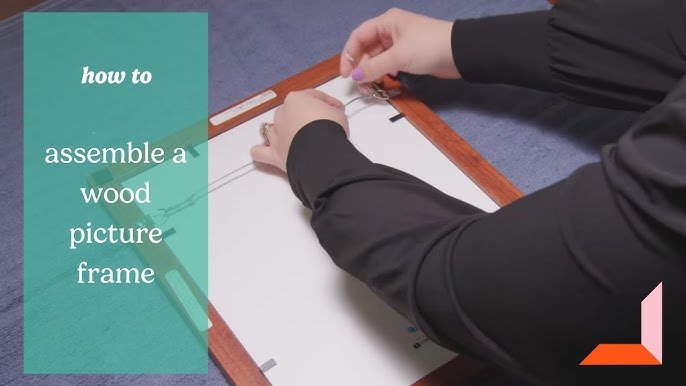
Are you ready to build something solid and lasting with your own hands? Learning how to assemble a wooden frame is easier than you think, and it’s a skill that can open the door to countless DIY projects.
Whether you want to create a picture frame, a door frame, or even a piece of furniture, this step-by-step guide will give you clear instructions you can follow right now. Imagine the satisfaction of seeing your finished frame standing strong, knowing you built it yourself.
Keep reading, and you’ll discover simple tips and tricks that make the process smooth and enjoyable. Your perfect wooden frame is just a few steps away!
Choosing The Right Wood
Picking the right wood is key to building a strong wooden frame. The wood must be sturdy and easy to work with.
Good wood helps your frame last longer and look better. Learn about wood types and quality before you start.
Types Of Wood For Frames
Some woods are better for frames than others. Choose wood that is strong and light for easy handling.
- Pine: Soft, easy to cut, and affordable
- Oak: Hard, durable, and has a nice grain
- Maple: Strong and smooth, good for fine work
- Cedar: Light and resistant to rot
- Poplar: Soft hardwood, easy to paint
Wood Quality And Preparation
Check wood for cracks, knots, and warping before use. Good quality wood makes assembly easier.
Prepare wood by sanding rough edges and cutting pieces to size. This helps parts fit together well.
- Look for straight boards without splits
- Remove any bark and rough spots
- Use a sanding block to smooth surfaces
- Cut wood carefully to exact measurements

Credit: www.cbc.ca
Gathering Essential Tools
Assembling a wooden frame needs the right tools. Good tools make the work easier and safer.
Before you start, gather all the tools you will use. This helps you work without stopping.
Basic Tools Needed
Basic tools are the must-haves for building a wooden frame. They help you measure, cut, and join wood.
- Tape measure: for accurate length and width checks
- Hand saw or circular saw: to cut wood pieces
- Hammer: to drive nails into the wood
- Wood glue: to bond wood parts together
- Square: to check right angles and corners
- Clamps: to hold wood pieces steady while gluing
- Nails or screws: to fasten the wood securely
Optional Tools For Precision
Optional tools help you work with better accuracy. They are useful for detailed or large projects.
- Power drill: to make holes and drive screws faster
- Speed square: to mark angles quickly and clearly
- Miter saw: to make angled or precise cuts
- Chisels: to carve or shape wood edges
- Level: to check if the frame is perfectly straight
- Sanding block or power sander: to smooth rough wood surfaces
Measuring And Cutting Wood
Measuring and cutting wood are key steps in building a wooden frame. Accurate work ensures the frame fits well.
Use the right tools and take your time. This helps avoid mistakes and saves wood.
Accurate Measurements
Measure twice before cutting wood. Use a tape measure and mark the wood clearly.
- Start by measuring the length needed for each side of the frame.
- Mark the cut line with a pencil or chalk.
- Check all measurements against your plan.
- Use a square tool to keep lines straight and corners accurate.
Safe Cutting Techniques
Cut wood carefully to keep yourself safe. Use the right saw and safety gear.
| Safety Tip | Details |
| Wear Safety Glasses | Protect your eyes from sawdust and wood chips |
| Use a Stable Surface | Cut on a flat, secure workbench to avoid slips |
| Keep Hands Clear | Hold wood away from the cutting line to prevent injury |
| Use Proper Saw | Choose a saw suitable for the wood type and thickness |
| Cut Slowly | Make steady, controlled cuts to avoid mistakes |

Credit: www.youtube.com
Joining The Frame Pieces
Joining the pieces of a wooden frame is key to making it strong and stable. You can use different methods to connect the wood parts.
Choosing the right joint and fastening method helps the frame hold together well over time.
Types Of Joints
There are several joints you can use to connect wooden frame pieces. Each joint offers different strength and ease of assembly.
- Butt Joint:Simple end-to-end connection, easy to make but less strong.
- Miter Joint:Angled cuts that fit together, often used for frame corners.
- Dado Joint:A slot cut into one piece that fits another piece inside for better strength.
- Dovetail Joint:Interlocking angled cuts that make a very strong connection.
- Lap Joint:Two pieces overlap each other and are fastened for extra support.
Using Glue And Nails
Glue and nails are common ways to join frame pieces. Glue adds strong bonding, and nails hold pieces while glue dries.
| Material | Purpose | Tips |
| Wood Glue | Bonds wood surfaces together | Apply evenly and clamp for best hold |
| Finishing Nails | Hold pieces while glue dries | Use small nails to avoid splitting wood |
| Brad Nails | Good for thin or delicate wood | Use with a nail gun for quick work |
Securing The Frame
Securing a wooden frame is important to keep it strong and square. Proper steps help the frame hold together without gaps or movement.
Two key areas to focus on are clamping the frame tightly and allowing the glue to dry fully. These ensure the frame stays solid over time.
Clamping Tips
Use clamps to hold the frame pieces firmly while the glue sets. This prevents the joints from shifting or separating.
- Choose clamps that fit the size of your frame.
- Place clamps evenly around the frame to apply balanced pressure.
- Do not overtighten clamps to avoid squeezing out too much glue.
- Check the corners to keep them square using a carpenter’s square.
- Use scrap wood between clamps and frame to protect the wood surface.
Allowing Proper Drying Time
Drying time is critical for a strong bond. Rushing this step can weaken the frame and cause joints to fail.
| Glue Type | Recommended Drying Time | Notes |
|---|---|---|
| Wood Glue (PVA) | 30 minutes clamp time 24 hours full cure | Keep clamps on at least 30 minutes. |
| Polyurethane Glue | 1 hour clamp time 24 hours full cure | Requires moisture to cure well. |
| Epoxy | 5-10 minutes clamp time 24 hours full cure | Works well for gaps and heavy joints. |
Sanding And Finishing Touches
Sanding and finishing give your wooden frame a smooth and polished look. These steps make the frame safe and nice to touch.
Taking time to sand and finish well helps the wood last longer and look better.
Smoothening Edges
Use sandpaper to smooth all the edges of the wooden frame. This removes rough spots and splinters.
Start with coarse sandpaper and then use finer grit for a soft finish. Sand in the direction of the wood grain.
- Begin with 80-grit sandpaper to remove rough parts
- Use 120-grit sandpaper to smooth the surface
- Finish with 220-grit sandpaper for a soft feel
- Wipe dust off with a dry cloth after sanding
Applying Paint Or Stain
Choose paint or stain to protect and decorate your frame. Paint covers the wood; stain shows the grain.
Use a brush or cloth to apply. Let each coat dry before adding another. Follow the product instructions.
- Apply a thin, even coat for best results
- Use multiple coats for stronger protection
- Sand lightly between coats for smoothness
- Allow full drying time before use
Common Mistakes To Avoid
Assembling a wooden frame needs care and attention. Avoiding common errors helps you build a strong frame.
Knowing what not to do saves time and materials. Here are key mistakes to watch out for.
Incorrect Measurements
Wrong measurements cause frames to be uneven or not fit well. Always measure twice before cutting wood.
Using The Wrong Tools
Using improper tools can damage the wood or cause injury. Use tools made for woodworking and keep them sharp.
Poor Joint Alignment
Misaligned joints weaken the frame and look bad. Check that all corners meet squarely before nailing or gluing.
Skipping The Dry Fit
Not doing a dry fit means surprises during assembly. Put pieces together first to see if everything fits right.
Using Wrong Fasteners
Choosing nails or screws that are too short or too long damages the frame. Select fasteners based on wood thickness.
- Pick fasteners 1.5 times thicker than the wood
- Avoid nails that split the wood
- Use screws for stronger joints
Ignoring Wood Grain Direction
Cutting or joining wood against the grain weakens the frame. Align pieces so the grain runs in the same direction.
Skipping Sanding
Not sanding rough edges leaves splinters and uneven surfaces. Sand all parts before final assembly.
| Mistake | Effect | How to Avoid |
| Wrong Measurements | Uneven frame | Measure twice, cut once |
| Poor Joint Alignment | Weak joints | Use a square tool |
| Wrong Fasteners | Split wood or weak hold | Choose proper nails or screws |
| Ignoring Grain Direction | Weak frame | Align grain before cutting |

Credit: www.youtube.com
Frequently Asked Questions
What Tools Are Needed To Assemble A Wooden Frame?
You need a saw, measuring tape, wood glue, clamps, screws, and a screwdriver. These tools ensure precise cuts and secure joints for a sturdy frame.
How Do I Measure Wood Accurately For Frame Assembly?
Use a measuring tape and mark measurements clearly with a pencil. Double-check dimensions before cutting to avoid errors and ensure a perfect fit.
What Type Of Wood Is Best For Frame Construction?
Pine and oak are popular choices due to durability and ease of handling. Choose wood that fits your project’s strength and aesthetic needs.
How Do I Join The Corners Of A Wooden Frame Securely?
Use wood glue and reinforce with screws or nails at each corner. Clamps help hold pieces tight while the glue dries for a strong bond.
Conclusion
Building a wooden frame is simple with the right steps. Measure carefully, and cut your wood pieces precisely. Use quality tools for drilling and assembling. Ensure corners are square and aligned. Tighten screws properly for durability. Sand edges for a smooth finish.
Consider applying varnish or paint for protection. Taking time with each step ensures a sturdy frame. Practice makes perfect, so don’t rush. Enjoy the satisfaction of creating something with your hands. A well-built frame adds beauty and function to any space.
Happy building!
