Connecting wires with wire nuts might seem tricky at first, but once you know the right steps, it becomes quick and safe. Whether you’re fixing a light fixture or setting up a new outlet, mastering this simple skill can save you time and avoid costly mistakes.
In this guide, you’ll learn exactly how to join wires securely, so your electrical work stays strong and reliable. Keep reading, and you’ll gain the confidence to handle your wiring projects like a pro.

Credit: bushmansafaris.com
Choosing The Right Wire Nuts
Wire nuts connect electrical wires safely. Picking the right wire nut is important for a secure connection.
Using the wrong wire nut can cause loose connections or damage. Learn about types, sizes, and materials.
Types Of Wire Nuts
Wire nuts come in different types. Each type fits specific wire kinds and uses.
- Standard wire nuts: Common for most household wires.
- Winged wire nuts: Have handles for easier twisting.
- Push-in wire nuts: Allow quick push-in connections.
- Waterproof wire nuts: Used in wet or outdoor areas.
Size And Capacity
Wire nuts come in many sizes. Pick one that fits the wires’ size and number.
Too small wire nuts can break wires. Too large ones may not hold wires tightly.
| Wire Nut Size | Wire Gauge Range | Number of Wires |
|---|---|---|
| Small | 22-16 AWG | 2-3 wires |
| Medium | 16-14 AWG | 2-4 wires |
| Large | 14-10 AWG | 3-5 wires |
| Extra Large | 10-6 AWG | 2-3 wires |
Material Considerations
Wire nuts have plastic shells and metal inserts. The metal part holds wires tightly.
Choose materials that resist heat and corrosion. This keeps connections safe and long-lasting.
- Plastic shell: Insulates and protects wires.
- Metal insert: Usually steel or copper for strong grip.
- Waterproof coatings: Protect against moisture damage.
Preparing The Wires
Connecting wires with wire nuts starts with good preparation. Proper wire prep ensures a safe and strong connection.
Take your time with each step. It helps avoid loose or faulty connections that may cause problems later.
Stripping The Insulation
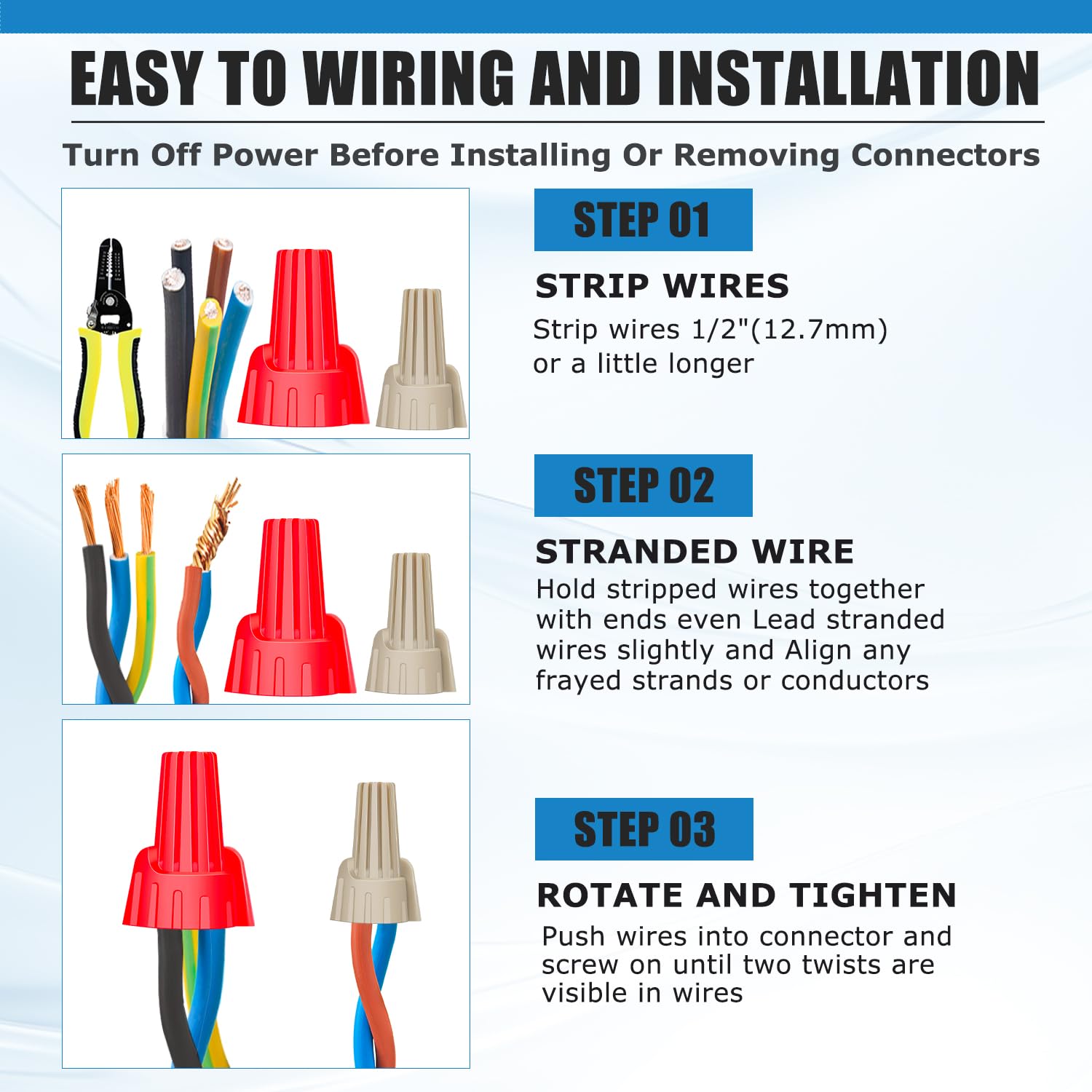
Remove the outer plastic coating from the wire ends. This exposes the metal inside for connecting.
Use a wire stripper tool. Strip about half an inch of insulation from each wire end.
- Hold the wire firmly
- Place the wire in the correct gauge slot
- Squeeze and pull off insulation carefully
Checking Wire Length
Make sure each stripped wire end is the right length. Too short or too long wires cause poor connections.
The exposed wire should be about half an inch. This fits well inside the wire nut for a tight hold.
- Too short: wire nut won’t grip well
- Too long: wires may touch other wires
- Correct length ensures safe, strong connection
Aligning Wire Ends
Line up all the stripped wire ends evenly. This makes twisting them together easier and more secure.
Hold wires side by side with exposed parts matching. Keep the insulation close to the wire nut.
- Even wire ends twist better
- Prevents loose connections
- Helps wire nut grip all wires firmly
Connecting The Wires
Connecting wires safely is important for any electrical project. Wire nuts are simple tools that help join wires together. This guide explains how to connect wires using wire nuts.
Follow these steps to make sure your wire connections are secure and safe. Proper technique reduces the risk of loose wires and electrical hazards.
Twisting Wires Together
Start by aligning the wire ends evenly. Hold the wires side by side and twist them clockwise. Twisting creates a strong bond between the wires before adding the wire nut.
- Strip about 3/4 inch of insulation from each wire.
- Hold wires together so their ends match evenly.
- Use pliers or your fingers to twist wires clockwise.
- Keep twisting until wires are tightly wound together.
Securing With Wire Nuts
After twisting the wires, place the wire nut over the exposed ends. Push the nut firmly while turning it clockwise. This locks the wires inside and stops them from coming loose.
- Choose a wire nut size that fits the wire bundle.
- Place the nut over the twisted wires.
- Turn the nut clockwise until it feels tight.
- Make sure no bare wire shows outside the nut.
Ensuring A Tight Connection
Check the connection by gently pulling each wire. The wires should not move or slip out. If they do, remove the nut and repeat the process.
| Check | Action | Result |
| Wire pull test | Pull each wire gently | Wires stay secure, no movement |
| Visual inspection | Look for exposed wire | No bare wires outside nut |
| Wire nut tightness | Turn nut clockwise firmly | Nut does not spin freely |
Credit: www.amazon.sg
Testing The Connection
After connecting wires with wire nuts, it is important to test the connection. Testing ensures the wires are properly joined and safe to use.
This guide covers simple ways to check your wire nut connections for security and reliability.
Visual Inspection
Look closely at the wire nut connection to check for any visible problems. The wire nut should cover all exposed wire ends.
- Make sure no bare wire is visible outside the wire nut.
- The wire nut should be tight and not loose on the wires.
- Check that wires are twisted together inside the wire nut.
- Look for any signs of corrosion or damage on wires.
Using A Continuity Tester
A continuity tester checks if electricity flows through the wires inside the wire nut. This confirms a good connection.
| Step | Action |
|---|---|
| 1 | Turn off power to the circuit. |
| 2 | Attach probes of the tester to each wire end inside the wire nut. |
| 3 | If the tester lights up or beeps, wires are connected. |
| 4 | If no signal, check the connection again. |
Checking For Loose Wires
Loose wires can cause poor connections or sparks. Check for loose wires by gently tugging on each wire.
- Turn off the power before touching wires.
- Hold the wire nut firmly.
- Pull each wire gently to see if it moves.
- If a wire slips out, remove wire nut and reconnect tightly.
Safety Tips For Wiring
Working with electrical wires needs care and attention. Following safety steps helps avoid accidents. This guide covers key safety tips for using wire nuts.
Using wire nuts correctly protects you and your home. Always follow safety rules before you start any wiring project.
Turning Off Power
Always switch off the power before handling wires. This stops electric shocks and injuries. Use a voltage tester to check if wires are live.
- Locate the circuit breaker for the area you work in.
- Turn off the breaker completely.
- Use a voltage tester on wires to confirm power is off.
- Do not touch wires until you are sure power is off.
Wearing Protective Gear
Wear the right gear to protect yourself while wiring. Gloves and goggles keep you safe from sparks and sharp wire ends.
- Use insulated gloves to avoid electric shocks.
- Wear safety goggles to protect your eyes.
- Use long sleeves to shield your arms.
- Wear sturdy shoes to prevent slips or falls.
Following Electrical Codes
Electrical codes set rules for safe wiring work. Follow these codes to avoid hazards and pass inspections.
| Code | Purpose |
| Wire Gauge | Use correct wire size for the circuit load. |
| Wire Nuts | Choose wire nuts sized for the wire types and numbers. |
| Connections | Make tight, secure connections to prevent shorts. |
| Grounding | Ensure proper grounding for safety and code compliance. |

Credit: www.youtube.com
Common Mistakes To Avoid
Connecting wires with wire nuts seems easy. Still, many people make errors that cause problems later.
Avoid these common mistakes to ensure a safe and strong connection.
Overloading Wire Nuts
Putting too many wires into one wire nut can cause a bad connection. The wire nut may not hold all wires tightly.
Overloading can lead to loose wires, sparks, or even fires. Use the right size wire nut for the number of wires.
- Check the wire nut label for maximum wire count.
- Use bigger wire nuts for more wires.
- Separate wires if too many for one nut.
Improper Wire Stripping
Stripping too little wire prevents a good connection. Stripping too much exposes wire that can cause shorts.
Always strip just enough insulation to fit inside the wire nut. The wires should twist tightly together under the nut.
- Strip about 3/4 inch of insulation.
- Do not nick or damage the wire strands.
- Twist wires before applying the wire nut.
Ignoring Wire Compatibility
Using wire nuts on wires with different materials or sizes may cause poor contact. Some wires need special connectors.
Match wires by type and size. Use wire nuts rated for the wire gauge and material you are connecting.
- Do not mix copper and aluminum wires without special connectors.
- Check wire nut labels for compatible wire sizes.
- Use separate connectors for different wire types.
Maintaining Wire Nut Connections
Wire nuts keep electrical wires connected safely. Proper care of these connections helps avoid problems. Regular checks and maintenance keep wires secure and working well.
Learn how to inspect wire nut connections, replace damaged nuts, and handle corrosion issues to maintain safe wiring.
Regular Inspections
Check wire nut connections often to find loose or damaged wires early. Look for signs like cracks, discoloration, or heat marks on the wire nuts.
- Turn off power before inspecting.
- Gently wiggle wires to test tightness.
- Look for any exposed wire outside the nut.
- Ensure wire nuts fit snugly over wires.
- Replace any wire nut that looks worn or cracked.
Replacing Damaged Wire Nuts
Remove old wire nuts that are cracked or loose. Strip wire ends if needed, then twist wires together tightly before attaching a new wire nut. This keeps a strong connection.
Use wire nuts that match wire size and type. Do not reuse wire nuts that have lost their grip or are damaged.
Handling Corrosion Issues
Corrosion can cause poor electrical contact and overheating. Clean corroded wires before reconnecting with a new wire nut.
| Corrosion Signs | Cleaning Method | Preventive Tips |
| Green or white powder on wires | Use a wire brush or sandpaper | Keep connections dry and sealed |
| Rust or discoloration | Wipe with a cloth and mild cleaner | Apply anti-corrosion spray |
| Loose wire nuts due to corrosion | Replace wire nuts after cleaning wires | Inspect connections regularly |
Frequently Asked Questions
What Are Wire Nuts Used For In Wiring?
Wire nuts securely connect electrical wires, ensuring a safe and stable connection. They prevent wires from touching and causing shorts or shocks.
How Do You Properly Twist Wires Before Using Wire Nuts?
Twist wires together clockwise using pliers, ensuring tight contact. Then screw the wire nut over the twisted wires firmly.
Can Wire Nuts Be Reused Safely?
No, wire nuts should not be reused. Reusing can weaken the connection and increase electrical hazards.
What Size Wire Nut Fits Different Wire Gauges?
Choose wire nuts based on wire gauge and number of wires. Packaging usually specifies the compatible wire sizes.
Conclusion
Connecting wires with wire nuts is simple and effective. Start by stripping the wire ends carefully. Hold the wires together, then twist the nut on securely. Ensure the connection is tight and the wires don’t slip out. Always check for a snug fit to prevent electrical hazards.
Wire nuts provide safe connections in household wiring projects. Practice and patience make this task easier. Safety should always be your top priority. Use these tips to handle your wiring projects confidently. Remember, proper connections ensure your electrical work is reliable and safe.