Are you gearing up for a home renovation project and wondering how to tackle the drywall? Cutting drywall might sound intimidating, but with the right guidance, it can be straightforward and stress-free.
Imagine transforming your living space with precision-cut drywall that fits perfectly into your renovation plans. This article will walk you through the process, step by step, ensuring you gain the confidence to handle this task like a pro. By the end, you’ll not only know how to cut drywall efficiently but also save time and avoid costly mistakes.
Ready to dive in and master this essential skill for your renovation success? Let’s get started!

Credit: www.youtube.com
Tools Needed For Drywall Cutting
Cutting drywall is a common task in renovation projects. Using the right tools makes the job easier and safer.
This guide covers the basic tools needed for cutting drywall accurately and cleanly.
Essential Cutting Tools
You need sharp and reliable tools to cut drywall smoothly. These tools help you make straight and curved cuts.
- Utility knife with replaceable blades
- Drywall saw or jab saw for curved cuts
- T-square or drywall square for straight lines
- Keyhole saw for small detailed cuts
Safety Equipment
Drywall dust and debris can be harmful. Protect yourself with proper safety gear before cutting.
- Dust mask or respirator to avoid inhaling dust
- Safety goggles to protect your eyes
- Work gloves to prevent cuts and scrapes
- Long sleeves and pants to cover your skin
Measuring And Marking Tools
Accurate measurements and marks guide your cuts. Use the right tools to measure and mark drywall.
- Tape measure for precise measurements
- Pencil or chalk for marking cut lines
- Level to ensure straight horizontal lines
- Straight edge for drawing clean lines
Preparing The Drywall For Cutting
Cutting drywall correctly starts with good preparation. This helps you get clean cuts and fit pieces well.
Before cutting, you must measure and mark carefully. You also need to hold the drywall steady.
Measuring And Marking Accurate Lines
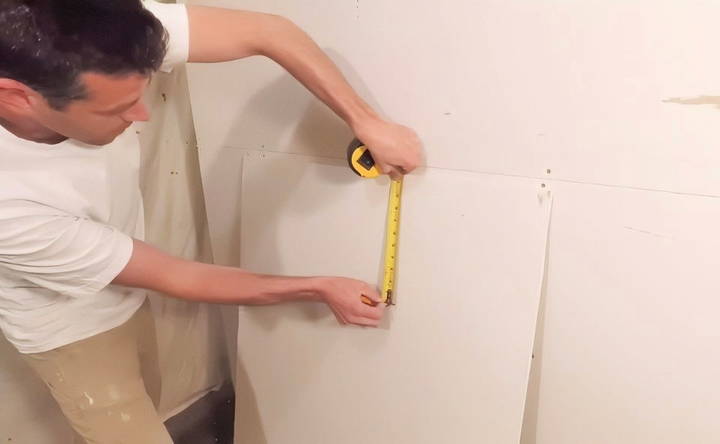
Measure the area where the drywall will go. Use a tape measure for exact numbers.
Mark the cut lines with a pencil or chalk. Straight lines help make clean cuts.
- Measure twice to avoid mistakes
- Use a straightedge or T-square for straight lines
- Mark both sides of the drywall if needed
- Double-check measurements before cutting
Securing The Drywall Sheet
Place the drywall on a flat surface before cutting. This prevents bending or cracking.
Secure the drywall with clamps or weights. This stops it from moving while you cut.
- Use sawhorses or a sturdy table
- Clamp the drywall at the edges
- Keep your work area clean and clear
- Wear safety gear like gloves and goggles
Cutting Techniques For Different Shapes
Cutting drywall is a key skill in renovation projects. Different shapes need different cutting methods.
Using the right technique helps you get clean cuts and saves time. Let’s look at how to cut various shapes.
Straight Cuts
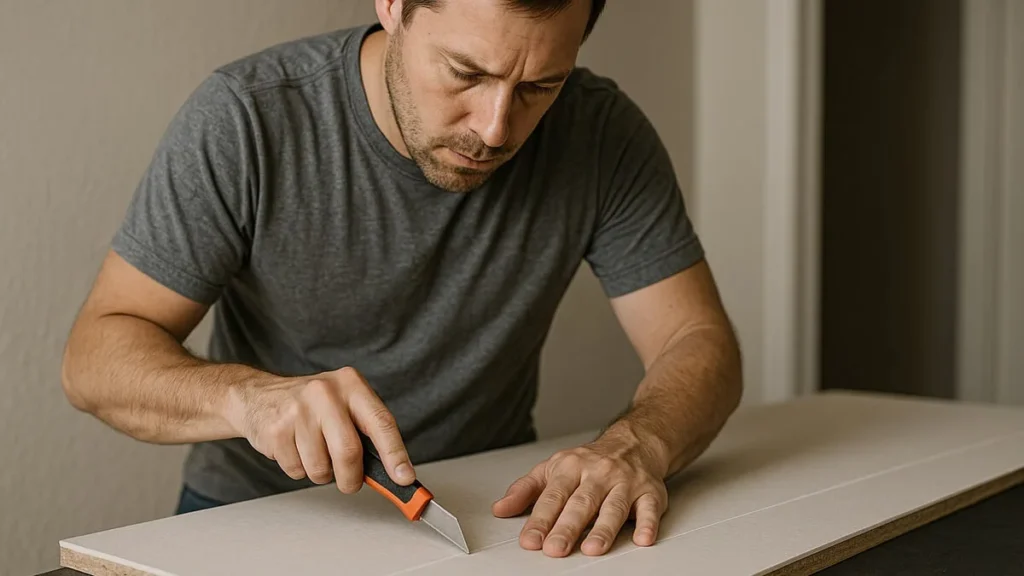
Straight cuts are the most common in drywall work. Use a straightedge or T-square to guide your cut.
Score the drywall paper with a utility knife along the guide. Then snap the drywall at the score line.
- Place drywall on a flat surface
- Mark the cut line clearly
- Use a sharp utility knife to score
- Snap the drywall by lifting it up
- Cut the paper on the back side to finish
Curved And Circular Cuts
Curved or circular cuts require a flexible approach. Use a keyhole saw or jab saw for best results.
First, draw the curve or circle on the drywall. Then carefully cut along the line using the saw.
- Draw the shape clearly on drywall
- Start by poking a hole with a utility knife
- Insert the saw blade into the hole
- Follow the drawn line slowly and steadily
- Sand the edges for a smooth finish
Cutting Out Openings
Openings for windows, doors, or outlets need careful measuring. Mark the exact size on drywall.
Score the outline with a utility knife. Use a drywall saw to cut inside the scored lines for accuracy.
- Measure the opening accurately
- Transfer measurements to drywall
- Score the outline with a sharp knife
- Cut with a drywall saw inside the lines
- Check the fit before installation
Credit: www.diycraftsy.com
Common Mistakes To Avoid
Cutting drywall may seem simple but many make common errors. These mistakes can cause poor fitting and waste material. Avoid these to save time and effort during renovation.
This guide highlights key mistakes and how to prevent them for a smooth drywall cutting process.
Overcutting And Undercutting
Cutting drywall too large or too small creates fitting problems. Overcutting leaves gaps, while undercutting means extra trimming.
- Measure twice before cutting to ensure correct size.
- Use a straightedge to guide your cuts for accuracy.
- Mark cut lines clearly with a pencil.
- Test fit pieces before fixing them permanently.
- Avoid rushing to prevent uneven edges.
Ignoring Safety Precautions
Drywall dust and tools can cause injury. Ignoring safety rules risks health and accidents.
| Safety Tip | Reason |
| Wear a dust mask | Protect lungs from fine dust |
| Use safety glasses | Shield eyes from debris |
| Cut on a stable surface | Prevent slips and mistakes |
| Keep tools sharp and clean | Easier and safer cuts |
| Work in a well-ventilated area | Reduce dust buildup |
Finishing Touches After Cutting
Cutting drywall is only part of the job. Finishing touches make the wall look smooth and ready for painting. Proper care after cutting helps avoid cracks and rough spots.
Pay attention to edges and fitting pieces. These steps improve strength and appearance. Taking your time now saves work later.
Smoothing Edges
Edges of cut drywall are often rough or uneven. Use a sanding block or drywall rasp to smooth them out. This helps the pieces fit better and look cleaner.
Remove any loose paper or dust from the edges. Smooth edges reduce the chance of cracking or breaking when handling the drywall.
- Use medium-grit sandpaper for rough edges
- Sand gently to avoid damaging the drywall
- Clean dust off edges before fitting
- Check for straight and even edges
Fitting Drywall Pieces Properly
Drywall pieces must fit tightly without big gaps. Measure carefully before cutting. Test fit the pieces before attaching them.
Use a utility knife to trim small areas if needed. Avoid forcing pieces together. Proper fitting prevents weak spots and helps finish smoothly.
- Check corners and edges for tight fit
- Trim edges slightly for better fit
- Leave a small gap near floor or ceiling for expansion
- Hold pieces steady while attaching

Credit: www.youtube.com
Tips For Efficient Drywall Cutting
Cutting drywall is a key skill in renovation work. Doing it right saves time and reduces waste.
Using the right tools and techniques helps you make clean, accurate cuts on drywall sheets.
Working With Large Sheets
Drywall sheets are big and can be hard to handle alone. Support them well to avoid bending.
Cutting large sheets on a flat surface helps keep your lines straight and your cuts clean.
- Use sawhorses or a sturdy table to hold the sheet steady
- Score the drywall with a utility knife before snapping it
- Make sure your workspace is clear and well-lit
- Wear gloves and goggles for safety
Using Templates And Guides
Templates help you cut shapes and openings accurately on drywall. Guides keep your cuts straight.
Using a straightedge or a drywall T-square gives you a firm edge to score against.
- Trace around electrical boxes with a template for perfect holes
- Use a drywall square for right-angle cuts
- Mark your lines clearly before cutting
- Measure twice to avoid mistakes
Frequently Asked Questions
How Do You Measure Drywall Before Cutting?
Measure the area carefully using a tape measure. Mark the dimensions on the drywall sheet with a pencil for accuracy. Double-check measurements to avoid mistakes. Proper measuring ensures a precise fit during installation.
What Tools Are Best For Cutting Drywall?
Use a utility knife or drywall saw for clean cuts. A straightedge helps guide your cuts accurately. For curved cuts, a keyhole saw works well. These tools ensure smooth, precise drywall cutting.
Can I Cut Drywall Without Damaging It?
Yes, use a sharp utility knife and score deeply. Snap the drywall gently along the scored line. Cut the backing paper with the knife for a clean edge. This method prevents cracking or damaging the drywall.
How Do I Cut Drywall Around Electrical Outlets?
Measure and mark the outlet location on drywall. Use a drywall saw or rotary tool for precise cuts. Cut carefully to avoid damaging wiring inside the wall. Accurate cuts ensure proper fitting around outlets.
Conclusion
Cutting drywall for renovation is simple with the right tools. Measure twice, cut once. Take your time to make straight cuts. Always wear safety gear to protect yourself. Practice on scrap pieces if you feel unsure. Clean edges help drywall fit better and look neat.
Following these steps saves time and frustration. Soon, you will handle drywall cuts with confidence. Ready to improve your renovation skills? Keep practicing and enjoy your project results.