If you use rotary tools regularly, you know how important your tool bits are. But are you taking the right steps to keep them sharp and lasting longer?
How you maintain your rotary tool bits can save you time, money, and frustration. Imagine finishing your project faster because your bits cut smoothly every time. You’ll discover simple, practical tips to care for your rotary tool bits so they stay in top shape.
Keep reading to unlock the secrets that will make your work easier and more efficient.
Choosing The Right Bits
Selecting the right rotary tool bits is important for good results. Different bits work best on different materials and tasks.
Using the correct bit helps protect your tool and makes your work easier and faster.
Material Types And Uses
Rotary tool bits come in many materials. Each type suits certain jobs and materials.
Choosing the right material helps the bit last longer and perform better.
- High-Speed Steel (HSS):Good for wood and soft metals.
- Tungsten Carbide:Best for hard metals and tough materials.
- Diamond-Coated:Ideal for glass, ceramics, and stone.
- Aluminum Oxide:Used for grinding and sharpening.
- Silicon Carbide:Works well on non-metal materials.
Matching Bits To Tasks
Different tasks need specific bits for best results. Using the right bit keeps the work clean and safe.
Choosing bits by task helps protect the tool and the material.
- Cutting:Use cutting wheels or saw blades for precise cuts.
- Grinding:Use grinding stones to smooth rough surfaces.
- Carving:Use engraving or carving bits for detailed work.
- Polishing:Use polishing pads or felt wheels for shine.
- Drilling:Use small drill bits for holes in wood or metal.
Credit: www.familyhandyman.com
Cleaning And Storage
Keeping rotary tool bits clean and stored properly helps them last longer. Dirt and residue can damage the bits and affect their performance.
Learn how to remove debris safely and store bits to avoid damage and rust.
Removing Debris And Residue
After using rotary tool bits, small bits of material often stick to them. Removing this debris keeps the bits sharp and safe to use.
- Use a soft brush to clean dust and particles off the bit.
- Soak bits in warm, soapy water to loosen stuck-on residue.
- Use a toothpick or small tool to remove material from tight spaces.
- Rinse bits with clean water and dry them fully to stop rust.
- Avoid harsh chemicals that can damage the metal or coating.
Proper Storage Techniques
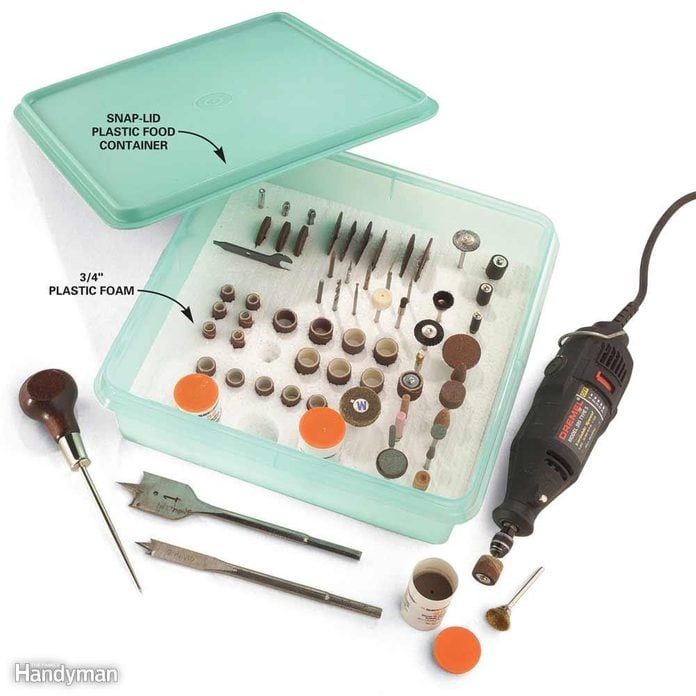
Storing rotary tool bits correctly protects them from damage and keeps them organized.
| Storage Method | Benefits | Tips |
| Bit holder case | Keeps bits secure and easy to find | Choose one with foam inserts for extra protection |
| Magnetic strip | Quick access and space saving | Make sure bits are clean before attaching |
| Small containers | Protect bits from dust and moisture | Label containers by bit type or size |
| Toolbox compartments | Organizes bits with other tools | Use dividers to avoid mixing bits |
Sharpening And Reconditioning
Rotary tool bits lose sharpness after use. Keeping them sharp helps with better cutting and longer life. Reconditioning worn bits restores their shape and function.
This guide explains when to sharpen bits and the tools and methods to do it right.
When To Sharpen Bits
Check bits regularly for dullness or damage. Sharpen bits if they cut slowly or require more pressure. Also sharpen when edges look rounded or chipped.
- Bits that smoke or burn the material need sharpening
- Vibrations or wobbling during use may mean the bit is worn
- Rough or uneven cuts show the bit is dull
- Bits with visible chips or cracks should be reconditioned or replaced
Tools And Methods For Sharpening
Use the right tools for sharpening rotary bits. A bench grinder, diamond file, or sharpening stone can work well. Match the tool to the bit material and size.
| Tool | Use | Best For |
| Bench Grinder | Quick reshaping and sharpening | Steel and hard metal bits |
| Diamond File | Fine sharpening and edge refinement | Carbide and small bits |
| Sharpening Stone | Manual sharpening with control | HSS and softer metals |
Sharpen bits at the original angle. Use light pressure and keep the bit cool by dipping it in water often. Avoid removing too much material.
Safety tips:
- Wear safety glasses and gloves
- Work in a well-lit and ventilated area
- Secure the bit firmly before sharpening
- Check bit balance after sharpening
Credit: www.familyhandyman.com
Handling And Usage Tips
Rotary tool bits need proper handling to last long. Using them carefully helps keep their shape and sharpness.
This guide covers how to avoid damage by using the right pressure and speed during work.
Avoiding Excessive Pressure
Applying too much pressure can wear bits fast and cause breakage. It also strains your tool’s motor.
- Let the bit do the work without pushing hard
- Use gentle, steady pressure for smooth cuts
- Stop if you feel the tool slowing down or vibrating
- Replace worn bits to prevent damage to your project
Maintaining Correct Speed
Using the right speed keeps bits sharp and avoids overheating. Different materials need different speeds.
| Material | Recommended Speed (RPM) |
| Soft Wood | 15,000 – 20,000 |
| Hard Wood | 10,000 – 15,000 |
| Metal | 5,000 – 10,000 |
| Plastic | 10,000 – 20,000 |
Safety Precautions
Using rotary tool bits requires care to avoid injuries. Proper safety steps protect you and your tools.
Follow safety rules to keep your workspace safe and your rotary bits in good condition.
Protective Gear Recommendations
Wear the right gear to protect your eyes, hands, and ears while using rotary tools.
- Safety goggles to shield your eyes from flying debris
- Gloves to protect your hands from sharp bits and hot surfaces
- Earplugs or earmuffs to reduce noise exposure
- A dust mask to avoid inhaling fine particles
Safe Bit Replacement Practices
Replace bits carefully to avoid damage and injury. Follow these steps every time.
| Action | Reason |
| Turn off and unplug the rotary tool | Prevents accidental start |
| Allow the tool to cool down | Prevents burns from hot bits |
| Use the correct wrench or tool to loosen the collet | Protects the tool and bits |
| Replace the bit firmly but do not overtighten | Ensures bit stays secure without damage |
| Check bit alignment before starting | Prevents wobbling and tool damage |
Credit: www.familyhandyman.com
Signs Of Wear And Replacement
Rotary tool bits wear down over time and need checking. Spotting signs early keeps your work safe and precise.
Learn how to identify dull or damaged bits and know when to replace them.
Identifying Dull Or Damaged Bits
Dull bits lose cutting power and cause rough finishes. Damage like chips or bends can break your project or tool.
- Look for rounded or worn edges on cutting surfaces.
- Check for cracks, chips, or missing pieces on the bit.
- Notice if the bit vibrates more than usual during use.
- Feel if the bit heats up quickly, indicating friction.
- Watch for slower cutting or drilling progress.
When To Replace Your Bits
Replace bits to keep your rotary tool working well. Using bad bits risks damage and poor results.
| Condition | Action |
| Bit edges rounded or dull | Replace to restore cutting quality |
| Visible cracks or chips | Stop use and replace immediately |
| Bit bends or warps | Discard and use a new bit |
| Bit overheats quickly | Replace to avoid tool damage |
| Cutting slows down noticeably | Replace for better performance |
Frequently Asked Questions
How Often Should I Clean Rotary Tool Bits?
Clean your rotary tool bits after every use to prevent debris buildup. Regular cleaning ensures optimal performance and extends the lifespan of the bits. Use a small brush or compressed air to remove any residue. Proper maintenance can help avoid tool malfunctions and improve efficiency during tasks.
Can Rotary Tool Bits Be Sharpened?
Yes, rotary tool bits can be sharpened to maintain their effectiveness. Use a sharpening stone or rotary sharpening attachment for best results. Always follow the manufacturer’s guidelines for sharpening to avoid damaging the bits. Regular sharpening ensures precise cutting and prolongs the life of your tools.
What’s The Best Way To Store Rotary Tool Bits?
Store rotary tool bits in a dedicated case or organizer to prevent damage. Ensure they are kept dry and away from moisture to avoid rust. Proper storage helps maintain their condition and ensures easy access when needed. Organizing by type or size can also enhance efficiency during use.
Are All Rotary Tool Bits Interchangeable?
Not all rotary tool bits are interchangeable; compatibility depends on the tool model. Check the manufacturer’s specifications to ensure the bits fit your rotary tool. Using incompatible bits may cause damage or reduce efficiency. Always verify compatibility before purchasing new bits for your tool.
Conclusion
Maintaining rotary tool bits keeps them sharp and lasts longer. Clean bits after each use to avoid build-up. Store them in a dry, safe place to stop rust. Check bits often for wear and replace when needed. Simple care saves money and improves your work quality.
Keep your tools ready for any project ahead. Small habits make a big difference in tool life. Stay consistent and enjoy smoother, safer tool use every time.