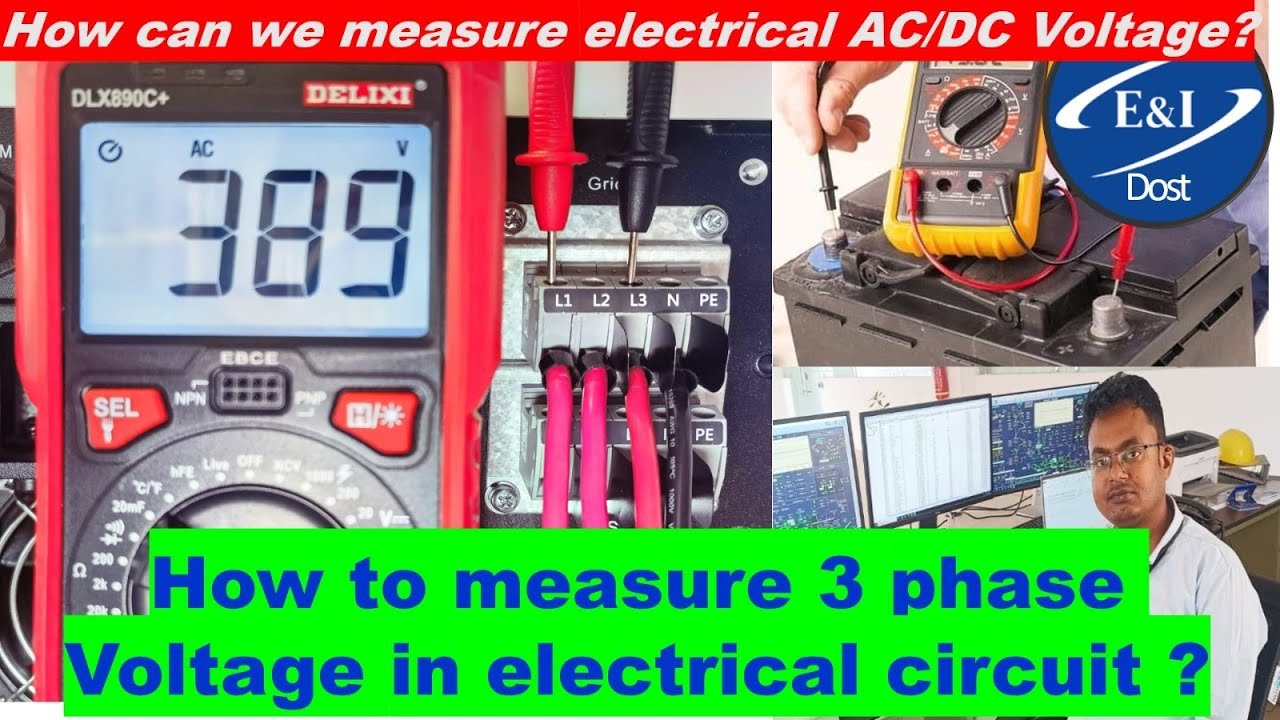
Are you curious about how to measure AC and DC voltage safely and accurately? Whether you’re fixing a circuit or just want to understand your electrical devices better, knowing how to measure voltage is a key skill.
In this guide, you’ll discover simple steps and tips that make measuring both AC and DC voltage easy—even if you’re a beginner. By the end, you’ll feel confident handling your multimeter and reading voltage like a pro. Ready to get started?
Let’s dive in!
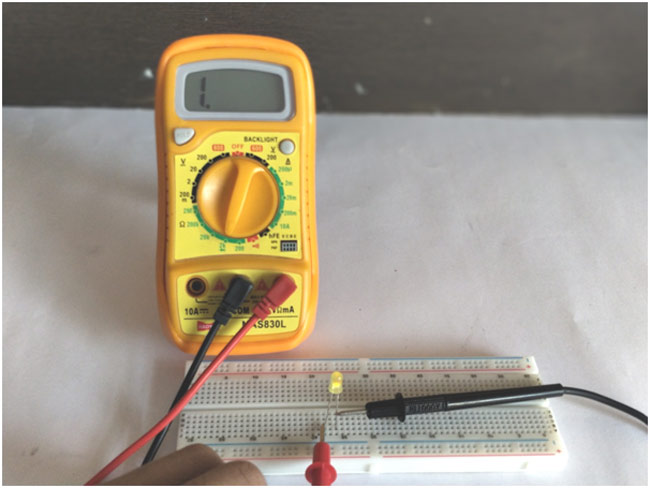
Credit: circuitdigest.com
Basics Of Ac And Dc Voltage
Voltage is the force that pushes electric current through a circuit. It comes in two main types: AC and DC.
AC stands for alternating current, and DC means direct current. Each type has unique properties and uses.
Differences Between Ac And Dc
AC voltage changes direction and strength over time, while DC voltage flows in one direction steadily.
- AC Voltage:Changes direction periodically, usually in a sine wave.
- DC Voltage:Flows in a single direction with constant strength.
- Frequency:AC has frequency measured in hertz; DC has zero frequency.
- Source:AC comes from power outlets; DC comes from batteries.
Common Applications
AC and DC voltages serve different roles in daily life and technology.
| Type | Common Uses | Example Devices |
| AC Voltage | Power homes and businesses | Lights, refrigerators, TVs |
| DC Voltage | Power small electronics and vehicles | Smartphones, laptops, electric cars |
Essential Tools For Voltage Measurement
Measuring AC and DC voltage requires specific tools to ensure accuracy and safety. Using the right device helps you check electrical circuits properly.
This guide covers the main tools used for voltage measurement. Learn about multimeters, oscilloscopes, and voltage testers.
Multimeter Types
A multimeter measures voltage, current, and resistance. There are two main types: analog and digital.
- Analog Multimetersuse a needle and dial to show readings.
- Digital Multimetersdisplay numbers on a screen for easy reading.
- Auto-ranging Multimetersselect the correct range automatically.
- Manual-ranging Multimetersrequire you to set the range before measuring.
Oscilloscope Use
An oscilloscope shows voltage as a wave on a screen. It helps see changes over time in AC and DC signals.
| Feature | Purpose |
| Waveform Display | Shows voltage changes visually |
| Time Base | Sets how fast the wave moves across the screen |
| Voltage Scale | Adjusts the size of the wave |
| Trigger | Keeps the wave stable for easy reading |
Voltage Testers
Voltage testers quickly check if voltage is present in a circuit. They are simple and safe to use.
- Non-contact voltage testers detect voltage without touching wires.
- Neon voltage testers light up when voltage is found.
- Logic voltage testers check voltage in digital circuits.
Preparing For Measurement
Measuring AC and DC voltage requires careful preparation. Proper setup helps get accurate results and keeps you safe.
Before starting, you should know what tools to use and how to set up your equipment correctly. This guide explains the key steps.
Safety Precautions
Safety is the most important part of measuring voltage. Always protect yourself and your tools from harm.
Wear insulated gloves and safety glasses. Avoid touching live wires with bare hands. Work in a dry area to prevent shocks.
- Check for damaged wires or equipment
- Turn off power before connecting devices
- Use tools with proper insulation
- Keep hands and tools away from moving parts
Equipment Calibration
Calibrate your multimeter or voltmeter before measuring voltage. Proper calibration ensures your readings are correct.
Follow the manufacturer’s instructions to set the meter for AC or DC voltage. Check the meter’s zero reading before use.
- Set the meter to the correct voltage type (AC or DC)
- Select the right voltage range for your measurement
- Test the meter on a known voltage source
- Replace batteries if the meter shows weak signals
Setting Up The Circuit
Prepare the circuit by identifying where to measure voltage. Connect the meter leads properly to avoid damage.
For DC voltage, connect the positive lead to the positive terminal. For AC voltage, polarity does not matter, but follow safe wiring practices.
- Turn off power before connecting meter leads
- Attach the black lead to the circuit ground or negative terminal
- Attach the red lead to the point where voltage is measured
- Ensure all connections are secure and insulated
- Turn on power and observe the meter reading

Credit: www.youtube.com
Measuring Dc Voltage
Measuring DC voltage helps check batteries, circuits, and electronic devices. It tells how much electric power flows in one direction.
You use a multimeter or voltmeter to measure DC voltage safely and accurately.
Selecting The Right Range
Choose the correct voltage range on your meter before measuring. This prevents damage and gives a clear reading.
If you expect a low voltage, pick a low range. For higher voltage, select a higher range.
- Start with the highest range if unsure
- Lower the range to get a precise reading
- Never exceed the maximum voltage limit
Connecting Probes Correctly
Connect the red probe to the positive terminal of the source. Connect the black probe to the negative terminal.
Make sure probes have a firm contact with the terminals to avoid errors.
- Red probe: positive (+) side
- Black probe: negative (−) side or ground
- Do not touch the metal parts of the probes
Interpreting Readings
Read the number on the meter display to know the DC voltage. Positive readings show correct probe placement.
Negative readings mean the probes are reversed. Switch the probes to get a positive number.
- Positive value means correct polarity
- Negative value means reverse probes
- Zero or very low value means no voltage or bad connection
Measuring Ac Voltage
Measuring alternating current (AC) voltage requires specific settings on your meter. AC voltage changes direction and value constantly, unlike direct current (DC) voltage.
Using the right tools and techniques helps ensure accurate readings and protects your equipment.
Choosing Ac Mode
Select the AC voltage mode on your multimeter before measuring. This mode is usually marked as “V~” or “ACV”.
Choosing the correct mode prevents damage to the meter and gives a correct reading.
Handling Fluctuating Signals
AC voltage often varies quickly. To get a stable reading, hold the meter steady and watch the display for changes.
- Keep meter leads firmly connected to the test points.
- Avoid moving the leads during measurement.
- Take multiple readings to confirm consistency.
- Use a meter with a hold feature to freeze the display.
Using True Rms Meters
True RMS meters measure the real value of AC voltage, even if the waveform is not smooth.
| Meter Type | Best For | Accuracy |
| Standard RMS | Pure sine waves | Good |
| True RMS | Non-sinusoidal or fluctuating signals | High |
Common Measurement Errors
Measuring AC and DC voltage can be tricky. Errors happen often and affect results.
Knowing common errors helps you get accurate readings every time.
Avoiding False Readings
False readings occur when your tools or setup cause wrong values. Check your meter before use.
Use the right settings on your multimeter for AC or DC voltage. Wrong mode causes errors.
- Check meter batteries to avoid weak power errors
- Use proper probe placement on the circuit
- Avoid touching metal parts of probes
- Keep leads away from strong magnetic fields
- Make sure meter range fits the voltage level
Troubleshooting Issues
If your readings look wrong, start by checking your equipment. Faulty meters cause many problems.
Look for loose wires or bad connections in your test setup. These can give unstable readings.
- Inspect meter probes for damage or dirt
- Test the meter on a known voltage source
- Replace blown fuses inside the meter if needed
- Check if the circuit is powered and safe to test
- Reset or recalibrate your meter if possible
Advanced Measurement Techniques
Measuring AC and DC voltage accurately requires more than just a basic multimeter. Advanced techniques help improve safety and precision.
This guide covers two important methods: using clamp meters and data logging techniques.
Using Clamp Meters
Clamp meters measure current without direct contact with wires. They use magnetic fields to detect current flow.
Many clamp meters also measure AC and DC voltage with added probes. This makes them versatile tools for electrical testing.
- Place the clamp around a single conductor to measure current safely.
- Use voltage probes for direct voltage readings.
- Select the correct mode for AC or DC voltage measurement.
- Ensure the meter’s range fits the expected voltage.
Data Logging Methods
Data logging captures voltage readings over time. This helps analyze electrical systems under different conditions.
| Method | Description | Use Case |
| Manual Logging | Record readings by hand at set intervals | Simple tests with few points |
| Digital Data Loggers | Automatic recording using dedicated devices | Long-term monitoring |
| Multimeter with Logging | Multimeters that store readings internally | Portable and flexible use |
Choose a method based on test duration and required data detail. Digital devices reduce errors and save time.

Credit: www.ventronchip.com
Frequently Asked Questions
What Tools Are Needed To Measure Ac And Dc Voltage?
To measure AC and DC voltage, you need a digital or analog multimeter. Ensure the multimeter has voltage measurement settings for both AC (V~) and DC (V–).
How Do I Measure Dc Voltage Safely?
Set your multimeter to DC voltage mode. Connect the red probe to the positive terminal and the black probe to the negative. Avoid touching metal parts during measurement to ensure safety.
Can I Use One Meter To Measure Both Ac And Dc Voltage?
Yes, most modern multimeters can measure both AC and DC voltage. Switch the dial to the appropriate setting before measuring to get accurate readings.
What Is The Difference Between Ac And Dc Voltage Measurement?
AC voltage fluctuates and requires RMS measurement. DC voltage is steady, measured as a constant value. Multimeters have separate modes for these two types.
Conclusion
Measuring AC and DC voltage is simple with the right tools. Use a multimeter and set it to the correct mode. Always connect the probes carefully to avoid mistakes. Reading the values helps you understand your circuit’s condition. Practice often to build confidence and skill.
Safety matters—never touch live wires with bare hands. Clear steps make voltage measurement easy for everyone. Keep learning to handle different electrical tasks safely.