Are you ready to make precise angled cuts with your miter saw but don’t know where to start? You’re in the right place.
Learning how to operate a miter saw for angled cuts can save you time, reduce mistakes, and make your projects look professional. Whether you’re a beginner or just need a quick refresher, this guide will walk you through every step.
By the end, you’ll feel confident using your saw to create clean, accurate angles every time. Keep reading to unlock the secrets to perfect angled cuts that will elevate your woodworking skills.

Credit: benchmarkabrasives.com
Choosing The Right Miter Saw
Using the correct miter saw helps you make clean angled cuts. It saves time and improves your work quality.
Before buying, consider the types, blades, and safety features. These factors affect how well the saw fits your needs.
Types Of Miter Saws
Miter saws come in three main types. Each type suits different cutting tasks and project sizes.
- Standard Miter Saw:Makes straight and angled cuts. Good for basic wood projects.
- Compound Miter Saw:Cuts at both miter and bevel angles. Ideal for crown molding and trim work.
- Sliding Compound Miter Saw:Has a sliding arm to cut wider boards. Perfect for larger lumber and flooring.
Blade Selection
Choosing the right blade improves cut quality. Blade size and teeth count affect the smoothness and speed of cuts.
| Blade Size | Common Uses |
| 8 to 10 inches | Small projects, light wood cutting |
| 12 inches | Most general wood cutting tasks |
| 14 inches and above | Heavy-duty and wide materials |
| Teeth Count | Effect |
| 24-40 teeth | Fast, rough cuts |
| 60-80 teeth | Smoother, finer cuts |
| 100+ teeth | Very smooth, finish cuts |
Safety Features To Look For
Safety features protect you while working with a miter saw. Look for these before buying.
- Blade Guard:Covers the blade when not cutting.
- Electric Brake:Stops the blade quickly after release.
- Safety Switch:Prevents accidental starts.
- Clamps and Fences:Hold the material steady during cuts.
Credit: www.vevor.ca
Setting Up Your Miter Saw
Setting up your miter saw properly is important for safe and accurate angled cuts. Follow these steps before you start cutting.
Each part of the setup helps you work better and reduces mistakes. Pay close attention to the details below.
Securing The Work Area
Clear the space around your saw to avoid accidents. Make sure the saw is on a stable surface. Remove any objects that might get in the way.
- Keep the floor clean and dry
- Set up good lighting for better visibility
- Keep cords and tools organized
- Wear safety gear like goggles and gloves
Adjusting The Saw Fence
The saw fence supports your material during cuts. Adjust it so the board rests flat and steady. This helps you make straight and precise angled cuts.
| Fence Part | Adjustment Tip |
| Left side | Align flush with the blade for left angle cuts |
| Right side | Align flush for right angle cuts |
| Center | Keep square for straight cuts |
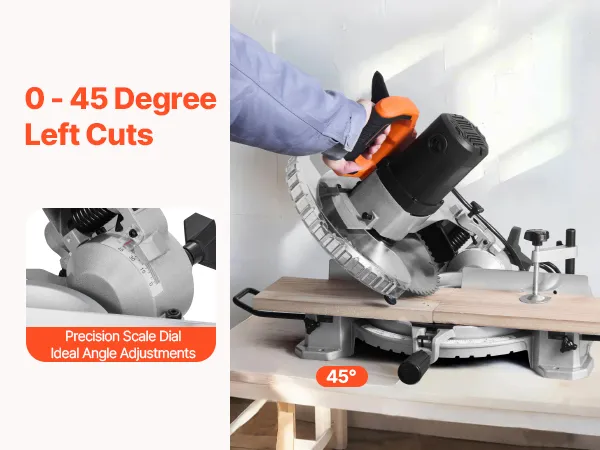
Calibrating The Angle Settings
Check the miter saw’s angle settings before cutting. Use the built-in scale or a protractor to set the exact angle. This ensures your cuts match your project needs.
Follow these tips for angle calibration:
- Unlock the angle adjustment lever.
- Turn the saw base to the desired angle.
- Lock the lever to secure the setting.
- Test the cut on scrap wood to confirm accuracy.
Preparing For Angled Cuts
Making angled cuts with a miter saw needs careful preparation. This helps you cut wood accurately and safely.
Before cutting, you must measure, mark, and secure the wood properly. These steps make the cut clean and precise.
Measuring And Marking Angles
Use a protractor or angle finder to measure the exact angle. Mark the wood clearly with a pencil.
Draw a straight line on the wood where the blade will cut. Double-check the angle before starting the saw.
- Place the angle tool firmly on the wood edge
- Mark the angle line with a sharp pencil
- Use a square to confirm the mark is straight
- Recheck measurements to avoid mistakes
Clamping Techniques
Clamping holds the wood steady during the cut. This keeps the wood from moving and prevents accidents.
Use clamps that fit the size of your wood. Tighten them enough to hold the wood but not damage it.
- Place the clamp near the cut line
- Make sure the clamp does not block the blade
- Test stability by trying to move the wood slightly
- Use multiple clamps for larger pieces
Choosing The Cut Direction
Decide which side of the line the blade will cut. This affects the size and shape of the final piece.
Cut on the waste side of the line to keep your piece the right size. Check the miter saw blade direction before cutting.
- Identify the waste side of the wood
- Align the blade with the waste side line
- Adjust the saw angle to match your mark
- Make a slow and steady cut
Executing Accurate Angled Cuts
Making precise angled cuts with a miter saw requires careful setup and control. Small errors can cause the cut to be off angle or uneven.
Focus on positioning the material correctly, controlling the saw speed, and keeping steady pressure for the best results.
Positioning The Material
Place the material flat against the saw’s fence to keep it stable. This prevents the wood from moving during the cut.
Align the cut mark with the saw blade carefully. Double-check the angle setting before you start cutting.
- Use clamps to hold small or thin pieces firmly.
- Make sure the material is fully supported on the saw base.
- Check that the angle gauge matches your desired cut angle.
Controlling The Saw Speed
Turn on the saw and let the blade reach full speed before cutting. This helps reduce splintering and uneven edges.
Move the saw blade slowly and steadily through the material. Avoid forcing the blade to prevent rough cuts.
- Start cutting at a consistent speed.
- Keep the blade speed steady throughout the cut.
- Stop if the saw slows down or struggles and check the blade condition.
Maintaining Steady Pressure
Apply even pressure on the saw handle to guide the blade smoothly. Sudden pressure changes can cause inaccurate cuts.
Do not press too hard. Let the saw blade do the cutting work while you keep control.
- Hold the saw firmly but gently.
- Guide the blade straight through the wood.
- Release pressure slowly after the cut is complete.
Common Mistakes To Avoid
Using a miter saw for angled cuts can be tricky. Many people make simple mistakes that affect their results.
Knowing what to avoid helps you cut safely and accurately every time.
Incorrect Angle Settings
Setting the wrong angle is a common error. This causes cuts that do not fit together well.
Always double-check the angle before cutting. Use the saw’s angle gauge and adjust carefully.
- Measure the angle needed for your project
- Set the saw to that exact angle
- Test on a scrap piece before cutting the final piece
Improper Clamping
Failing to clamp the wood firmly can cause movement during the cut. This leads to uneven or unsafe cuts.
Always secure the wood with clamps or hold it tightly against the fence to keep it steady.
- Use clamps suited for your workpiece size
- Check that the wood is pressed against the fence
- Do not hold the wood by hand if you can clamp it
Rushing The Cut
Cutting too fast causes rough edges and can damage the saw blade. It also increases the risk of accidents.
Take your time and let the saw blade do the work. Move the saw smoothly through the wood.
- Start the saw before touching the wood
- Push the saw down slowly and steadily
- Wait for the blade to stop before lifting it up
Advanced Tips And Tricks
Using a miter saw for angled cuts can be tricky. These tips help you work smarter. You can improve your cut accuracy and save time.
Learn how to make compound cuts, use stop blocks, and keep your saw in top shape. These skills help you handle complex projects with ease.
Making Compound Cuts
Compound cuts combine bevel and miter angles. Adjust the saw’s bevel and miter settings before cutting. Always measure twice to avoid mistakes.
- Lock the bevel angle securely to prevent movement.
- Use a sharp blade designed for angled cuts.
- Test your settings on scrap wood first.
- Hold the material firmly against the fence to reduce vibration.
Using Stop Blocks For Repetitive Cuts
Stop blocks help you make the same cut length many times. Clamp a block to the fence or base of your saw. This saves time and keeps cuts consistent.
- Measure and mark the first cut length on your workpiece.
- Position the stop block at that length on the fence.
- Clamp the stop block securely so it does not move.
- Make your cuts by pushing the wood against the stop block.
- Check each cut to ensure the length is accurate.
Maintaining Your Miter Saw
Regular maintenance keeps your saw safe and accurate. Clean dust and debris after each use. Check the blade for sharpness and replace if dull.
| Maintenance Task | Frequency | Notes |
| Clean dust and debris | After every use | Use a brush or air compressor |
| Inspect blade sharpness | Monthly | Replace dull blades promptly |
| Lubricate moving parts | Every 3 months | Use machine oil sparingly |
| Check fence alignment | Every 6 months | Adjust if cuts are off |

Credit: www.reddit.com
Frequently Asked Questions
How Do You Set Angles On A Miter Saw?
To set angles on a miter saw, unlock the miter table. Rotate it to your desired angle using the angle gauge. Lock it in place securely before cutting. Always double-check the angle setting for accuracy. This ensures precise angled cuts every time you use the saw.
What Safety Gear Is Needed For Miter Saw Use?
When using a miter saw, wear safety goggles to protect your eyes. Use ear protection to guard against noise. A dust mask is essential to prevent inhaling sawdust. Gloves can offer additional protection but ensure they fit well to avoid accidents.
How Can Beginners Make Accurate Angled Cuts?
Beginners should start with a clear plan and precise measurements. Use the miter saw’s angle guide for accuracy. Practice on scrap wood before cutting the final piece. Secure the wood firmly to prevent movement. Double-check all settings and measurements before starting the cut.
What Type Of Wood Is Best For Angled Cuts?
For angled cuts, choose straight-grained, defect-free wood. Hardwood like oak or maple offers stability and precision. Ensure the wood is properly dried to avoid warping. Avoid using warped or knotty wood as it can affect the accuracy of your cuts.
Conclusion
Operating a miter saw for angled cuts takes practice and care. Always measure twice and cut once to avoid mistakes. Keep your hands clear of the blade and wear safety gear. Adjust the saw’s angle slowly and check your settings before cutting.
With patience, you can create clean, precise cuts every time. Remember, safety and accuracy go hand in hand. Enjoy your woodworking projects with confidence and skill.