Are you tired of rummaging through cluttered drawers every time you need a utility knife? Imagine the peace of mind and efficiency you’ll gain by having all your utility knives neatly organized in holders.
Not only does this make your tools easily accessible, but it also enhances safety and prolongs the life of your knives. By the end of this article, you’ll discover simple yet effective ways to transform your workspace into a haven of order.
Get ready to unlock the secrets of streamlined organization that will save you time, boost your productivity, and give your workspace a professional edge. Keep reading to learn how to effortlessly organize your utility knives in holders and revolutionize the way you work.
Choosing The Right Holder
Organizing utility knives keeps your workspace safe and neat. Picking the right holder helps you store knives properly.
Different holders suit different needs. Consider the type, material, and size before buying one.
Types Of Utility Knife Holders
Utility knife holders come in many styles. Some hold knives on walls, while others keep them in drawers.
- Magnetic holders attach to metal surfaces for quick access
- Wall-mounted racks keep knives visible and organized
- Drawer trays hold knives flat and safe inside drawers
- Belt holsters allow carrying knives for mobile work
Material And Durability
Choose a holder made of strong material. It should last long and protect your knives.
- Plastic holders are lightweight but may wear out fast
- Metal holders offer high durability and strength
- Wooden holders look good but need careful maintenance
- Rubber or silicone holders can prevent slipping and damage
Size And Capacity
Pick a holder size that fits your collection. It should hold all knives without crowding.
| Holder Feature | Why It Matters |
|---|---|
| Length | Long enough for bigger knives |
| Slot size | Fits knives securely without damage |
| Number of slots | Holds all your knives in one place |
| Compactness | Saves space in your workspace |

Credit: www.reddit.com
Preparing Your Knives
Organizing utility knives starts with preparing them properly. Taking care of your knives helps keep them safe and ready to use.
Clean and check each knife before placing it in a holder. This prevents damage and keeps your workspace neat.
Cleaning And Inspecting
Always clean your utility knives after use. Dirt and residue can cause the blade to rust or stick.
Look closely at the blade and handle for any damage. Replace blades that are dull or broken to avoid accidents.
- Wipe blades with a damp cloth
- Dry knives completely to stop rust
- Check blade edges for sharpness
- Inspect handles for cracks or loose parts
Labeling For Easy Access
Label each knife or its holder to find the right one fast. This saves time and keeps your work organized.
Use clear labels with knife size or type. Stick labels on holders or near the storage spot.
- Write blade size on each label
- Use waterproof labels for durability
- Group knives by use or size
- Place labels where they are easy to see
Organizing Techniques
Keeping utility knives neat makes work easier and safer. Proper holders can protect blades and hands.
Try different ways to store knives based on size, use, and space. This helps you find the right knife fast.
Grouping By Size And Use
Sort knives by how big they are and what you use them for. Small knives stay separate from large ones.
- Keep heavy-duty knives for cutting thick materials in one area
- Store fine blades for crafts in another spot
- Place frequently used knives in easy-to-reach holders
- Label holders to show the knife type or use
Using Magnetic Strips
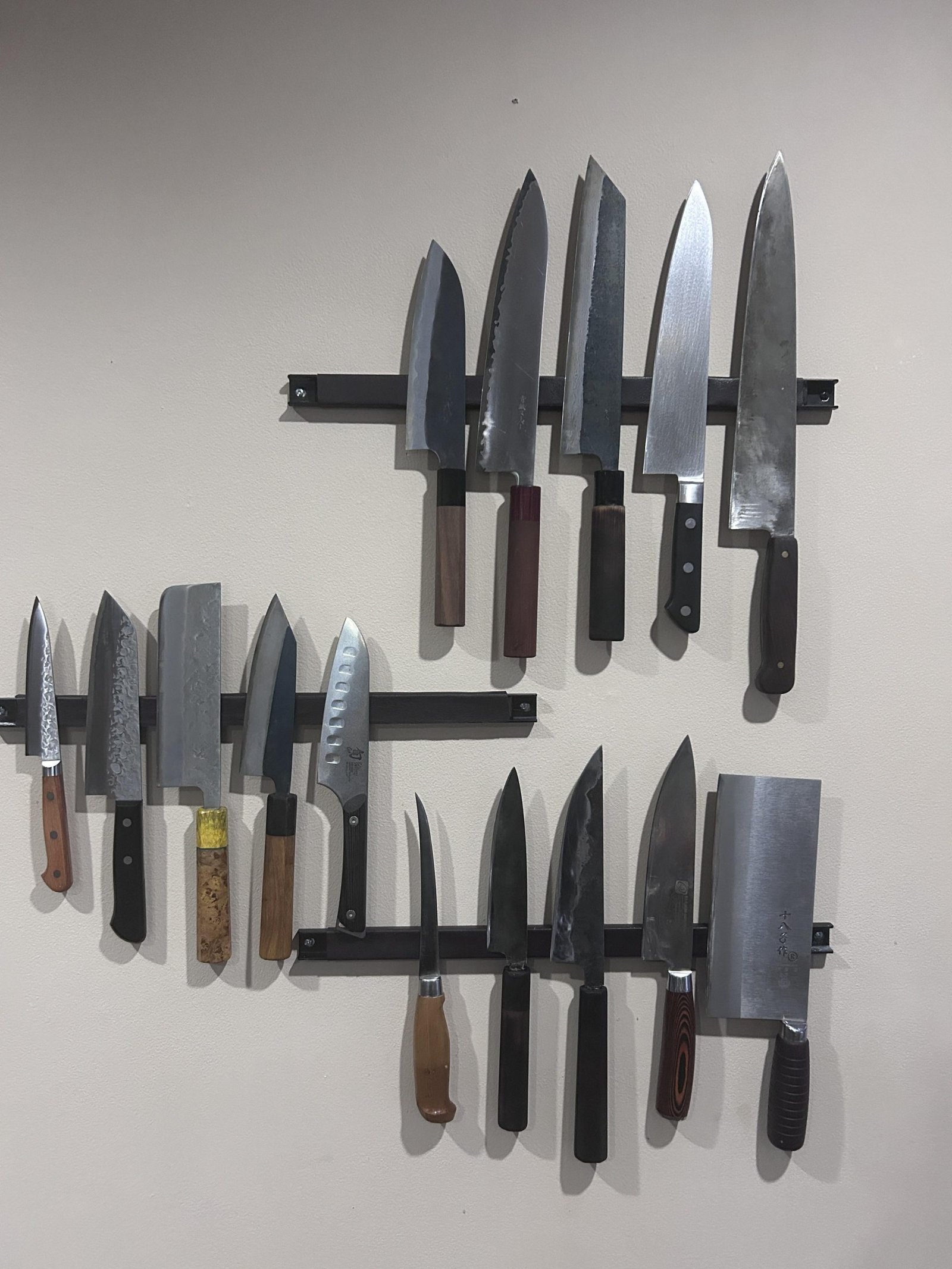
Magnetic strips stick to walls and hold knives safely by the blade. This saves drawer space.
| Benefit | Description |
| Easy access | Knives are visible and quick to grab |
| Space saver | Frees up countertop and drawer space |
| Blade protection | Prevents dulling from drawer contact |
| Customizable | Arrange knives by size or frequency of use |
Incorporating Drawer Inserts
Drawer inserts keep knives in place inside drawers. They stop blades from sliding and clashing.
Use inserts made from these materials for best results:
- Wood – sturdy and gentle on blades
- Foam – soft and customizable
- Plastic – easy to clean and affordable
Choose inserts with slots that match your knives’ shapes and sizes.

Credit: shopping.yahoo.com
Safety Tips
Utility knives are useful tools but can be dangerous if not stored right. Organizing them safely helps avoid cuts and accidents.
Using holders to keep knives in place is smart. Follow safety tips to keep your space safe for everyone.
Proper Storage To Prevent Injuries
Store utility knives in holders designed to keep blades covered. This stops accidental cuts when reaching for a knife.
Keep knives upright and secure in the holder. Avoid loose blades that can fall out or cause harm.
- Use holders with blade covers or slots
- Store knives away from edges or high traffic areas
- Check holders regularly for damage or wear
- Clean knives before placing them in holders
Childproofing Your Holder
Keep utility knives out of reach of children by using childproof holders. These holders lock or cover blades securely.
Place holders in high or locked cabinets if possible. This adds extra protection against accidental access.
- Choose holders with safety locks or covers
- Store holders in locked or high cabinets
- Teach children about knife safety and dangers
- Check holders regularly to keep locks working
Maintenance And Upkeep
Keeping utility knives in holders clean and sharp helps them last longer. Regular care prevents rust and dull edges.
Good upkeep also keeps your workspace safe and organized. Follow simple steps to maintain your knives well.
Regular Cleaning
Clean your utility knives often to remove dirt and debris. This stops rust and keeps blades sharp.
Use a soft cloth and mild soap to wipe down the blade and handle. Dry thoroughly before placing back in the holder.
- Remove blades carefully before cleaning
- Use warm water and mild detergent
- Dry all parts completely to prevent rust
- Clean the holder to avoid dirt buildup
Sharpening And Replacing Blades
Keep blades sharp for safe and easy cutting. Dull blades can cause accidents and damage materials.
Replace blades when they become too worn or damaged. Always use the right blade type for your knife holder.
- Sharpen blades with a proper sharpening tool
- Check blades for chips or cracks before use
- Replace blades regularly to maintain cutting quality
- Store spare blades safely in the holder or a case

Credit: www.reddit.com
Maximizing Space Efficiency
Organizing utility knives properly saves space and keeps your tools ready. Good storage helps protect blades and reduces clutter.
Choosing the right holder and placement can make your workspace safer and more efficient. Let’s look at two common methods.
Vertical Vs Horizontal Storage
Vertical storage holds knives upright, while horizontal storage lays them flat. Each way uses space differently and fits certain needs.
- Vertical Storage:Saves counter space and shows blade tips for easy access.
- Horizontal Storage:Protects blades more by keeping them flat and stable.
- Vertical holders:Often slim, good for tight spots but may expose blade edges.
- Horizontal holders:Bulkier but safer for sharp knives and better for stacking.
Utilizing Wall Space
Wall space is often free and unused. Mounting knife holders on walls keeps counters clear and tools visible.
| Wall Storage Type | Benefits | Best Use |
| Magnetic strips | Saves space, easy to grab knives | Quick access, small kitchens |
| Mounted racks | Holds multiple knives, protects blades | Workshops, garages |
| Hanging holders | Flexible placement, uses vertical height | Areas with limited counter space |
Frequently Asked Questions
What Are The Best Holders For Utility Knives?
The best holders are magnetic strips, wall-mounted racks, or drawer organizers. These options keep knives secure and accessible. Choose holders that fit your workspace size and knife types for optimal organization.
How Do I Safely Store Utility Knives In Holders?
Store utility knives with blades retracted or covered. Use holders with slots or compartments to prevent blade exposure. This reduces injury risks and keeps knives in good condition.
Can I Organize Utility Knives By Size Or Type?
Yes, organizing by size or type improves efficiency. Group similar knives together for easy access. Labeling compartments helps quickly find the right knife for each task.
How Often Should I Clean Utility Knife Holders?
Clean holders monthly to prevent dust and debris buildup. Use a damp cloth and mild cleaner for best results. Keeping holders clean maintains knife condition and workspace hygiene.
Conclusion
Organizing utility knives in holders keeps your workspace neat and safe. It saves time by making knives easy to find. Proper storage protects blades from damage and prevents accidents. Simple holders fit in drawers or hang on walls. Choose a holder that suits your space and needs.
Regularly check and clean the knives and holders. This small step helps keep your tools ready for use. A tidy area makes work smoother and more enjoyable. Try organizing your utility knives today for a better workspace.