Choosing the right table saw for your home workshop can feel overwhelming. You want a tool that’s powerful, safe, and fits your space—but with so many options, where do you start?
This guide will help you cut through the confusion and find the perfect table saw that matches your needs and skill level. By the end, you’ll feel confident making a choice that saves you time, money, and frustration. Ready to build better projects with the right saw?
Let’s dive in.

Credit: www.workshop.bunnings.com.au
Key Features To Consider
Choosing the right table saw for your home workshop needs careful thought. Several features affect how well the saw performs and fits your projects.
Focus on important parts like blade size, motor power, fence quality, and dust control. These details help you pick a saw that works best for your space and tasks.
Blade Size And Type
The blade size affects the thickness and depth of cuts you can make. Common sizes are 8, 10, and 12 inches. Choose a size based on the wood you usually work with.
- 8-inch blades are good for small projects and light materials.
- 10-inch blades handle most home workshop needs well.
- 12-inch blades cut thick wood and large boards easily.
- Blade type matters too: ripping blades cut along the grain, crosscut blades cut across it.
Motor Power And Speed
The motor power shows how strong the saw is. More power means the saw can cut harder wood without slowing down. Speed is how fast the blade spins, usually measured in RPM.
| Motor Power (HP) | Best Use | Typical RPM |
| 1.5 – 2 HP | Light wood, hobby projects | 3000 – 4000 |
| 2.5 – 3 HP | General home workshop use | 4000 – 5000 |
| 3+ HP | Heavy-duty and thick materials | 4500 – 5500 |
Fence And Miter Gauge
A good fence keeps your wood straight while cutting. It should be easy to adjust and lock firmly. The miter gauge helps you cut at angles. Both should be strong and accurate for safe work.
- Look for fences that slide smoothly and lock tightly.
- Choose miter gauges with clear angle markings.
- Check if accessories are easy to replace or upgrade.
Dust Collection System
Dust can harm your health and make your workshop dirty. A dust collection system captures sawdust as you cut. This keeps the air clean and your work area safe.
- Choose a saw with a built-in dust port.
- Use a shop vacuum or dust collector for best results.
- Check how easy it is to connect and empty the system.
Types Of Table Saws
Table saws come in different types. Each type fits certain workshop needs.
Knowing the types helps you pick the right saw for your home workshop.
Benchtop Saws
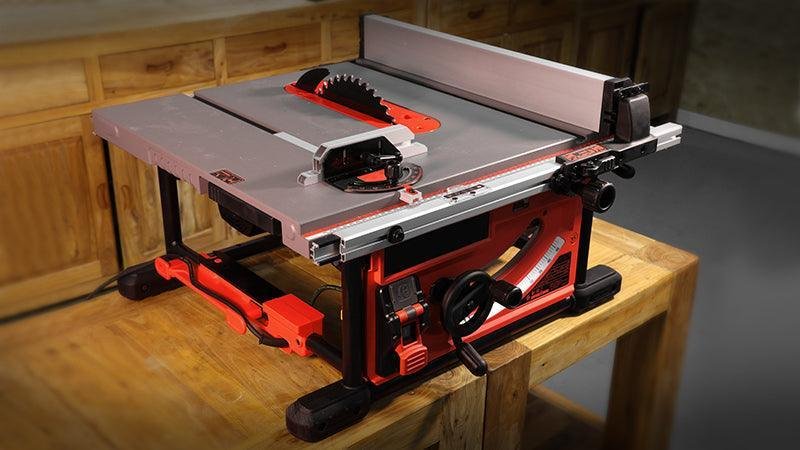
Benchtop saws are small and light. You can place them on a table or bench.
They are easy to move and store. Good for small projects and light work.
- Compact and portable
- Lower power and size
- Best for hobbyists and small tasks
Jobsite Saws
Jobsite saws are built tough for work sites. They handle rough conditions well.
They are heavier than benchtop saws but still portable. Power is higher for bigger cuts.
- Durable and strong frame
- Medium weight for moving
- Good for outdoor and on-site work
Contractor Saws
Contractor saws are heavier and larger. They offer more power than jobsite saws.
These saws are often used in home workshops. They need a fixed place to work.
- Strong motor and solid table
- Usually portable with wheels
- Good for serious woodworking projects
Cabinet Saws
Cabinet saws are large and heavy. They have powerful motors inside a closed cabinet.
These saws give very smooth and precise cuts. They are best for professional workshops.
- Heavy and stationary
- Powerful motor for big projects
- Offers high accuracy and safety
Safety Features To Look For
Choosing a table saw for your home workshop means thinking about safety first. Good safety features protect you while you work.
Look for key safety parts that reduce accidents. These parts help keep your hands and fingers safe.
Blade Guards
Blade guards cover the saw blade during use. They stop accidental contact with the sharp teeth.
Most blade guards are clear plastic. This lets you see the cutting line while staying protected.
- Prevents fingers from touching the blade
- Reduces flying wood chips and dust
- Usually easy to remove for special cuts
Anti-kickback Pawls
Anti-kickback pawls grip the wood to stop it from jumping back. This helps prevent injuries.
They work by biting into the wood if it tries to move backward quickly. This keeps the wood under control.
- Stops wood from kicking back toward you
- Improves control during ripping cuts
- Works best with a riving knife
Riving Knife
A riving knife sits behind the blade. It keeps the cut wood from pinching the blade.
This reduces the chance of kickback and helps make cleaner cuts. It moves with the blade for safety.
- Prevents wood from closing on the blade
- Reduces kickback risk
- Works with anti-kickback pawls for better safety
Emergency Stop Switch
The emergency stop switch lets you turn off the saw fast. It helps if something goes wrong.
Look for a big, easy-to-reach button. It should stop the motor quickly to avoid accidents.
- Shuts off power immediately
- Easy to find and press
- Essential for quick response in emergencies

Credit: www.reddit.com
Budget And Price Ranges
Choosing the right table saw depends a lot on your budget. Table saws come in many price ranges. Knowing what fits your budget helps you pick the best saw.
Prices reflect the size, power, and features of the saw. This guide breaks down options into three main groups. Each group fits different needs and budgets.
Entry-level Options
Entry-level table saws are good for beginners and small jobs. They usually have less power but are easier to move around. These saws are best for light woodworking tasks.
Most entry-level saws cost between $150 and $400. They often have smaller blades and fewer features. These saws work well in home workshops with limited space.
- Lightweight and portable
- Less powerful motors (around 10 amps)
- Basic safety features
- Limited cutting capacity
Mid-range Models
Mid-range table saws offer more power and features. They suit hobbyists and serious DIYers. These saws handle bigger projects and last longer.
Prices range from $400 to $1,000. These models have stronger motors and better accuracy. They often include advanced safety tools and easier adjustments.
- Motors with 15 to 20 amps
- Larger blade sizes (10 to 12 inches)
- Improved dust collection
- More precise fences and guides
Professional Grade Saws
Professional grade table saws are built for heavy use and high precision. They suit experienced woodworkers and small businesses. These saws offer the best power and durability.
These saws usually cost over $1,000. They have powerful motors and large tables. You get advanced features like digital readouts and strong safety systems.
- Motors with 20 amps or more
- Large cutting surfaces
- Advanced safety features
- High precision and stability
Space And Portability
Choosing the right table saw for a home workshop depends greatly on space and portability. Small workshops need compact tools that do not crowd the area. Portability helps move the saw around easily for different projects or storage.
This guide covers how to consider your workshop size, portability features, and storage solutions. Each factor ensures your table saw fits your workspace and needs well.
Workshop Size Considerations
Measure your workshop to know how much room you have for a table saw. Leave space to move safely around the saw and for larger workpieces. A big saw may not fit or could make your workspace cramped.
- Check the floor space available for the saw and work area.
- Consider extra space for outfeed and side tables if needed.
- Plan space for dust collection and power cords.
- Think about future tool additions when planning space.
Portability Features
Look for table saws with wheels or folding stands for easy movement. Lightweight models help if you need to carry the saw between places. Portability lets you use the saw inside and outside your workshop.
| Feature | Benefit |
| Wheels or Casters | Move saw without lifting |
| Folding Stand | Saves space when stored |
| Compact Size | Easier to carry and fit small spaces |
| Lightweight Frame | Less effort to transport |
Storage Solutions
Proper storage keeps your table saw safe and your workshop tidy. Choose models with built-in storage for blades and accessories. Good storage options help protect your tools and save space.
- Look for saws with blade guards and cover cases.
- Use wall mounts or shelves to store accessories nearby.
- Keep power cords and push sticks organized for safety.
- Consider foldable or collapsible stands to save floor space.
Maintenance And Durability
Choosing a table saw for your home workshop means thinking about how to keep it working well. Maintenance helps your saw last longer and stay safe.
Simple care steps can protect your saw’s parts and improve performance. Let’s look at key areas to maintain for durability.
Blade Maintenance
Keeping the blade sharp is important for clean cuts and safety. A dull blade makes your saw work harder and can cause accidents.
Clean the blade often to remove pitch and resin build-up. Check for any damage or missing teeth before each use.
- Use a blade cleaner or mild solvent for cleaning
- Sharpen or replace the blade when it becomes dull
- Check blade alignment regularly for accurate cuts
Motor Care
The motor powers your table saw. Regular care keeps it running smoothly and stops overheating.
Keep the motor vents clear from dust and debris. Lubricate moving parts as the manual suggests. Listen for odd noises that may mean problems.
- Clean dust from motor vents with compressed air
- Check brushes and replace if worn out
- Follow the manufacturer’s oiling schedule
Wear And Tear Components
Some parts wear out faster than others. Regular checks help you spot these before they break.
Look at belts, gears, and adjustment knobs. Tighten loose screws and replace worn parts to keep your saw safe and accurate.
- Inspect belts for cracks or fraying
- Test gears for smooth operation
- Lubricate adjustment mechanisms as needed
- Replace damaged or worn components promptly
Top Brands And Models
Choosing a table saw for your home workshop can be confusing. Many brands offer different features and prices.
This guide covers popular manufacturers, recommended models, and what customers say about them.
Popular Manufacturers
Some brands are well-known for quality and reliability. They make saws that fit home workshops well.
- DeWalt: Known for durable and powerful saws.
- Bosch: Offers precise and easy-to-use models.
- Makita: Focuses on smooth operation and safety.
- Ridgid: Provides solid build quality and value.
- Craftsman: Popular for beginner-friendly saws.
Recommended Models
These models are often chosen for home use. They balance price, power, and features.
| Brand | Model | Power | Price Range |
|---|---|---|---|
| DeWalt | DWE7491RS | 15 Amp | High |
| Bosch | 4100-10 | 15 Amp | High |
| Makita | 2705X1 | 15 Amp | High |
| Ridgid | R4512 | 13 Amp | Medium |
| Craftsman | CCS010 | 10 Amp | Low |
Customer Reviews
Customer feedback helps you understand real use. Many users rate saws on power, ease, and safety.
- DeWalt DWE7491RS: Users like its strong motor and easy fence adjustment.
- Bosch 4100-10: Praised for smooth cuts and portability.
- Makita 2705X1: Noted for accuracy and quiet operation.
- Ridgid R4512: Valued for sturdy design and price.
- Craftsman CCS010: Good for beginners but less powerful.

Credit: www.findbuytool.com
Accessories And Upgrades
Choosing the right table saw includes thinking about extra parts. Accessories can make your saw safer and more useful. Upgrades help improve performance and accuracy.
Here are some key accessories and upgrades to consider for your home workshop table saw.
Additional Blades
Different blades cut different materials better. Using the right blade gives cleaner cuts and lasts longer. You might want blades for wood, plywood, or metal.
- Ripping blades for cutting along the grain
- Crosscut blades for cutting across the grain
- Combination blades for general use
- Fine-tooth blades for smooth finishes
Push Sticks And Jigs
Push sticks keep your hands safe while cutting small or narrow pieces. Jigs help hold wood steady and guide cuts precisely. Both improve safety and accuracy.
| Accessory | Use | Benefit |
| Push Stick | Push wood through blade | Protects fingers from blade |
| Crosscut Jig | Hold wood at angles | Makes angled cuts easier |
| Table Insert Jig | Supports small pieces | Prevents kickback and mistakes |
Extended Fences
Extended fences give extra support for wide or long cuts. They help keep your workpiece straight and stable. This upgrade is good for bigger projects.
Types of extended fences:
- Telescoping fences that adjust in length
- Aluminum fences for light weight and strength
- Magnetic fences that attach easily
Frequently Asked Questions
What Size Table Saw Is Best For A Home Workshop?
A 10-inch table saw is ideal for most home workshops. It balances power and portability. This size handles a variety of cuts and materials efficiently. It is versatile for both beginners and experienced woodworkers.
How Much Power Do I Need In A Table Saw?
For home use, a 1. 5 to 2 horsepower motor is sufficient. This power level cuts through hardwood and softwood smoothly. It ensures consistent performance without excessive noise or energy use.
Should I Choose A Portable Or Stationary Table Saw?
Choose based on your workspace and project needs. Portable saws offer flexibility and easy storage. Stationary saws provide stability and power for larger projects. Consider your workshop size and frequency of use.
What Safety Features Should A Home Table Saw Have?
Look for blade guards, riving knives, and anti-kickback pawls. These features reduce the risk of accidents. Also, ensure the saw has a reliable emergency stop switch. Safety is crucial for home workshop environments.
Conclusion
Selecting the right table saw is crucial for your home workshop. Consider factors like size, power, and safety features. Always match the saw with your specific needs and projects. Budget is important too, so find a balance. Research thoroughly and read user reviews for real insights.
Visit stores to see models firsthand. Feel the weight, check the build quality. Trust your instincts and experience. Choosing wisely ensures efficiency and safety in your woodworking tasks. Happy crafting!