
Are you ready to take your woodworking skills to the next level? Learning how to use a circular saw for curves might sound tricky, but it’s easier than you think.
Imagine creating smooth, precise curves that make your projects stand out. This guide will show you simple tips and tricks to cut curves safely and accurately with your circular saw. Keep reading, and you’ll gain the confidence to transform straight cuts into stunning curved designs.
Your next project is about to get a lot more creative!

Credit: www.youtube.com
Choosing The Right Blade
Using a circular saw to cut curves needs the right blade. The blade affects how smooth and accurate your cuts are. Choosing the correct blade helps you work safely and efficiently.
This guide explains important points to consider when picking a blade for curved cuts. Focus on blade types, tooth design, and material compatibility for best results.
Blade Types For Curves
Blades for curved cuts differ from straight-cut blades. They are thinner and more flexible to follow curves better. Look for blades labeled for fine or curved cuts. These blades reduce tear-out and make smoother curves.
Tooth Count And Design
Tooth count and shape affect how the blade cuts wood. Blades with fewer teeth cut faster but rougher. More teeth give smoother cuts but cut slower. For curves, a lower tooth count helps you turn the saw easily.
- Low tooth count (20-40 teeth) for faster, rough cuts
- Medium tooth count (40-60 teeth) for balance of speed and smoothness
- Tooth design like alternate top bevel (ATB) cuts cleaner on curves
- Triple chip grind (TCG) teeth last longer on hard materials
Material Compatibility
Pick a blade that matches the material you cut. Wood needs different blades than plastics or laminates. Using the wrong blade can cause rough edges or damage the material.
| Material | Recommended Blade Type | Tooth Count |
|---|---|---|
| Softwood | Thin kerf, ATB blade | 24-40 |
| Hardwood | Thin kerf, ATB or TCG blade | 40-60 |
| Plywood | Fine tooth, ATB blade | 60+ |
| Laminates | Fine tooth, TCG blade | 60+ |
Preparing The Saw And Workspace
Using a circular saw for curves needs careful setup. Prepare your saw and workspace before cutting.
Good preparation helps you cut smooth curves safely and accurately.
Adjusting The Saw Settings
Set your circular saw to the right depth. The blade should just clear the wood thickness.
Check the blade type. Use a fine-tooth blade for smoother cuts on curves.
- Set blade depth about 1/8 inch deeper than wood thickness
- Use a fine-tooth or plywood blade for curved cuts
- Ensure the blade guard moves freely and safely
Securing The Workpiece
Clamp your wood firmly to a stable surface. This stops movement during cutting.
Use multiple clamps if needed. Make sure clamps do not block your saw path.
- Clamp wood on a flat workbench or sawhorses
- Check that clamps hold the wood tight without gaps
- Keep clamps clear of the saw blade area
Marking The Curve Line
Draw the curve clearly on the wood with a pencil. Use a flexible curve ruler if possible.
Double-check your markings before cutting. Clear lines help guide the saw accurately.
- Use a pencil for visible but erasable lines
- Try a flexible curve ruler or stencil for smooth shapes
- Mark both sides if cutting through thick wood
Cutting Techniques For Curves
Cutting curves with a circular saw takes patience and care. You need to guide the saw smoothly to follow the shape.
Using the right techniques helps you make clean and accurate curved cuts safely.
Starting The Cut
Begin your cut by marking the curve clearly on the wood. Use a pencil or chalk to draw the line.
Place the saw blade next to the edge of the wood, not on the curve line. Turn on the saw and slowly push it forward to meet the curve.
Controlling The Saw Movement
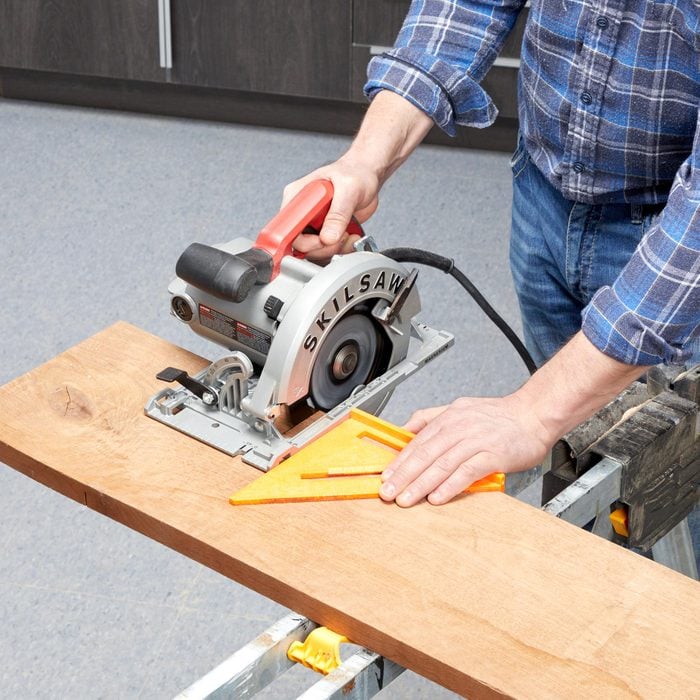
Keep a steady grip on the saw handle with both hands. Move the saw slowly along the curve to avoid mistakes.
- Look ahead to see the path of the curve.
- Use your body to guide the saw, not just your arms.
- Keep the base plate flat on the wood for stability.
- Adjust speed to match the curve’s tightness.
Managing Tight Turns
Tight turns can be tricky with a circular saw. You can make small relief cuts near the curve to help the saw turn.
| Tip | Reason |
|---|---|
| Make relief cuts | Prevents binding of the blade |
| Use a smaller blade | Easier to follow sharp curves |
| Slow down near turns | Improves accuracy and safety |
| Support the wood well | Reduces vibrations and slips |
Credit: www.familyhandyman.com
Safety Measures To Follow
Using a circular saw for curves needs careful attention to safety. Following safety measures helps prevent accidents.
Wear the right gear and keep control of the saw. Stay balanced and watch for dangers like kickback.
Protective Gear
Always wear protective gear before you start cutting. This keeps you safe from flying debris and dust.
- Wear safety goggles to protect your eyes.
- Use ear protection to guard against loud noise.
- Put on a dust mask to avoid inhaling sawdust.
- Wear gloves to protect your hands from cuts.
- Use sturdy footwear to keep your feet safe.
Avoiding Kickback
Kickback happens when the saw blade catches the wood suddenly. It can cause the saw to jump back toward you.
To avoid kickback, follow these tips:
- Keep the blade sharp and clean.
- Do not force the saw; let it cut at its own speed.
- Hold the saw firmly with both hands.
- Keep the wood stable and supported.
- Never cut warped or twisted wood without support.
Maintaining Stable Stance
Standing correctly helps you control the saw better. It also keeps you safe if the saw moves suddenly.
| Tip | Reason |
| Keep feet shoulder-width apart | Provides balance and stability |
| Bend knees slightly | Absorbs movement and keeps steady |
| Face the cut directly | Improves control and accuracy |
| Do not overreach | Prevents losing balance |
Finishing And Smoothing The Edges
After cutting curves with a circular saw, the edges may feel rough or uneven. Smoothing these edges is important for safety and appearance. This step gives your project a clean, polished look.
You can use simple hand tools to finish the edges. Taking time to check your work helps ensure the curves are smooth and accurate.
Using Sandpaper And Files
Sandpaper and files help smooth rough edges left by the saw. Start with coarse sandpaper to remove big bumps. Then use finer sandpaper for a smooth finish.
Files are good for tight curves and small areas. Use a round file for inside curves and a flat file for outside edges. Move the file in one direction for best results.
- Use 80-grit sandpaper to remove rough spots
- Switch to 120-grit for a smoother surface
- Use a round file for concave curves
- Use a flat file for convex edges
- Sand or file with gentle, even strokes
Checking For Accuracy
Check the shape of your curves after sanding or filing. Use a template or flexible curve ruler to compare the edge. Make sure the curve is smooth and matches your design.
Run your hand along the edge to feel for rough spots or bumps. Fix any uneven areas by sanding or filing again. Repeat this process until the edge is even and smooth.
- Compare edges to your curve template
- Feel for bumps or rough spots with your hand
- Fix uneven areas with sandpaper or files
- Check curves from different angles
- Take your time for best accuracy
Tips For A Clean Finish
Wear a dust mask to protect yourself from sanding dust. Work in a well-ventilated area. Clean the edges with a soft brush or cloth after sanding.
Use light pressure when sanding to avoid removing too much material. Finish with fine-grit sandpaper for a smooth touch. Take breaks to check your progress and avoid mistakes.
- Wear a dust mask and work in fresh air
- Brush off dust after sanding
- Use light pressure to avoid damage
- Finish with fine-grit sandpaper
- Check edges often while working
Common Mistakes To Avoid
Using a circular saw for curves can be tricky. Avoiding common mistakes helps you cut smoothly and safely.
Knowing what not to do saves time and prevents damage to your workpiece and saw.
Forcing The Saw
Do not push the saw too hard when cutting curves. Forcing it can make the blade bend or bind.
Let the saw do the work by moving it slowly and steadily along the curve line.
- Keep a firm but gentle grip on the saw
- Follow the curve without rushing
- Use multiple shallow passes for tight curves
Ignoring Blade Maintenance
A dull or dirty blade makes cutting curves harder. It can cause rough edges and unsafe cuts.
Regularly check the blade for sharpness and clean any resin or debris.
- Sharpen or replace dull blades
- Clean resin build-up often
- Use the right blade type for curves
Poor Workpiece Support
Not supporting your workpiece well can cause it to move or vibrate. This makes cutting curves unsafe.
Use clamps or a stable surface to keep the wood steady while you cut.
- Clamp the workpiece firmly
- Use a flat, sturdy workbench
- Check for any wobbling before cutting
Advanced Tips For Complex Curves
Cutting complex curves with a circular saw takes skill and the right tools. Simple straight cuts are easy, but curves need more control.
These tips will help you handle tricky curves safely and accurately using your circular saw.
Using Jigs And Guides
Jigs and guides help keep your circular saw on the right path. They make cutting smooth curves easier and safer.
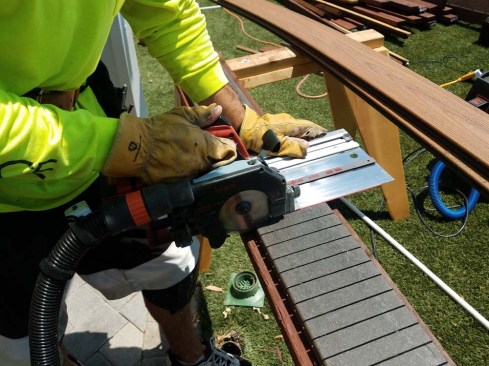
You can build a simple jig from scrap wood or use flexible guide strips. Clamp them firmly to your workpiece before cutting.
- Use a flexible guide for gentle curves
- Build a plywood jig for tight or repeated shapes
- Clamp guides firmly to prevent movement
- Test the jig on scrap wood first
Combining Tools
Sometimes a circular saw alone cannot cut very tight curves. Use other tools to finish the job cleanly.
Start with the circular saw for rough cuts. Then use a jigsaw or coping saw to follow the curve precisely.
- Cut outside the line with the circular saw
- Switch to a jigsaw for detailed curve work
- Use a coping saw for very tight or small curves
- Sand edges smooth after cutting
Practice Drills
Practice is key to cutting curves well. Start with simple shapes on scrap wood before working on your project.
Try cutting circles, waves, and irregular shapes to improve your control and confidence.
- Draw practice curves on scrap wood
- Cut slowly and follow the lines closely
- Try different speeds and blade depths
- Review your cuts and adjust technique
Credit: www.jlconline.com
Frequently Asked Questions
How Do I Cut Curves With A Circular Saw Safely?
To cut curves safely, use a sharp blade designed for curves. Keep a steady hand and cut slowly. Always wear protective gear and clamp your workpiece securely to avoid movement during cutting.
What Type Of Blade Is Best For Curved Cuts?
A fine-toothed or scroll-cut blade works best for curves. These blades provide smoother, more precise cuts. Avoid using rough blades that can splinter or damage the wood.
Can A Circular Saw Handle Tight Curves Effectively?
Circular saws handle gentle curves well but struggle with tight curves. For very tight curves, consider a jigsaw or coping saw. Circular saws are better for broader, sweeping curved cuts.
How Do I Prepare Wood For Curved Cutting With A Circular Saw?
Mark the curve clearly with a pencil and use painter’s tape along the cut line. This reduces splintering. Secure the wood firmly and plan your cuts in shallow passes.
Conclusion
Mastering curved cuts with a circular saw can be simple. Practice makes progress. Start with small projects to build confidence. Always prioritize safety with protective gear. Use the right blade for smoother cuts. Keep your workspace organized to avoid accidents.
Remember, patience is key. Expect some trial and error at first. Don’t rush the process. With time, you’ll make cleaner curves. Enjoy the craft and creativity. Happy cutting!
