Are you ready to transform your DIY projects with the power of precision? Whether you’re a seasoned woodworker or a curious beginner, mastering the use of a circular saw can elevate your craftsmanship to new heights.
Imagine effortlessly making straight cuts that fit perfectly into your project, or achieving those tricky angled cuts with confidence and ease. The good news? You don’t need to be an expert to achieve professional results. This guide will show you how to harness the full potential of your circular saw, ensuring your cuts are not only accurate but also safe and efficient.
Dive in to unlock the secrets that will make your next woodworking project a resounding success!

Credit: www.youtube.com
Choosing The Right Circular Saw
Choosing the right circular saw is key for making straight and angled cuts. The saw you pick affects your work quality and safety.
This guide covers types of circular saws, blade choices, and important safety features to look for.
Types Of Circular Saws
There are several types of circular saws to fit different tasks. Each saw suits certain cuts and materials.
- Sidewinder saws:Compact and light. Good for quick, straight cuts.
- Worm drive saws:More torque and power. Better for heavy-duty cutting.
- Mini circular saws:Small and easy to control. Ideal for detailed or angled cuts.
- Track saws:Provide very straight cuts using a guide rail.
Blade Selection
Choosing the right blade affects the cut quality and speed. Blade size and teeth count matter.
| Blade Type | Best For | Teeth Count |
| Crosscut blades | Cutting across wood grain | 60 to 80 |
| Rip blades | Cutting along wood grain | 24 to 30 |
| Combination blades | General purpose cutting | 40 to 50 |
| Metal cutting blades | Cutting metal or plastic | Varies |
Safety Features To Consider
Safety features protect you during cutting. Look for these when choosing a saw.
- Blade guard:Covers the blade when not in use.
- Electric brake:Stops the blade quickly after release.
- Anti-kickback:Reduces sudden saw movement.
- Ergonomic handles:Provide a firm grip and reduce fatigue.
- Adjustable depth and angle:Helps control cut precision and safety.

Credit: www.findbuytool.com
Preparing For The Cut
Using a circular saw needs careful preparation. You must get ready before starting any cut.
Proper setup helps you make straight and angled cuts safely and accurately.
Marking Straight And Angled Lines
Mark clear lines on your workpiece before cutting. Use a pencil and a straight edge or protractor.
For straight cuts, draw a line using a ruler or a carpenter’s square. For angled cuts, measure the angle carefully.
- Use a carpenter’s square for 90-degree lines
- Use a protractor or angle finder for angled lines
- Draw lines dark enough to see clearly
Setting The Depth And Angle
Adjust the saw blade depth to match the thickness of the material. The blade should extend slightly below the workpiece.
Set the saw’s angle if you need an angled cut. Use the angle scale on the saw base and lock it in place.
- Check blade depth by holding saw next to material
- Adjust bevel angle using the saw’s tilt mechanism
- Lock adjustments firmly before starting
Securing The Workpiece
Hold the workpiece firmly to stop it from moving. Use clamps or a workbench to secure it.
Make sure the piece is stable before you begin cutting. Movement can cause mistakes or accidents.
- Use clamps to hold the wood on a flat surface
- Check that the workpiece does not wobble
- Keep your hands away from the cutting line
Making Straight Cuts
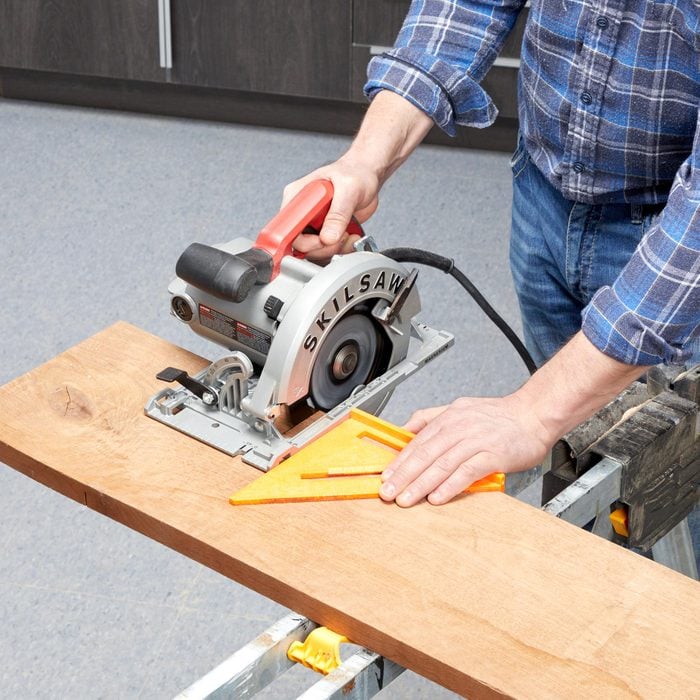
Using a circular saw for straight cuts needs focus and care. You must prepare and guide the saw carefully to get a clean, straight line.
This guide covers key points to help you cut straight with your circular saw safely and accurately.
Aligning The Saw
Proper alignment is the first step for a straight cut. Line up the saw blade with your cut mark before you start the saw.
- Use a straight edge or guide to mark the cut line clearly.
- Place the saw’s base plate flat against the wood surface.
- Adjust the blade depth to just pass through the wood thickness.
- Check that the blade guard moves freely before cutting.
- Hold the saw so the blade follows the mark without shifting.
Maintaining A Steady Hand
Keep your hands steady and your body balanced during the cut. This helps prevent the saw from drifting off line.
- Grip the saw firmly with both hands.
- Stand with feet shoulder-width apart for good balance.
- Keep your eyes on the cut line, not on the blade.
- Move the saw slowly and smoothly along the line.
- Do not force the saw; let the blade do the work.
Common Mistakes To Avoid
Watch out for these errors to keep your cuts clean and safe.
| Mistake | Effect | How to Fix |
| Starting cut off the line | Blade wanders, uneven cut | Align carefully before turning on saw |
| Too deep blade setting | More splintering, harder to control | Set blade depth slightly deeper than wood thickness |
| Forcing the saw | Blade binding, rough cut | Push saw steadily without extra pressure |
| Loose grip or unbalanced stance | Loss of control, unsafe cut | Hold saw firmly, stand with stable posture |
Credit: www.familyhandyman.com
Executing Angled Cuts
Angled cuts give your wood projects a professional look. Using a circular saw for these cuts requires careful setup and control.
Knowing how to adjust your saw and use helpful tools will make your angled cuts precise and clean.
Adjusting The Bevel Angle
The bevel angle controls how much your blade tilts for angled cuts. Most circular saws have a bevel adjustment knob.
Loosen the knob, tilt the blade to the needed angle, then tighten the knob. Check the angle with a protractor or angle guide.
- Start at zero degrees for straight cuts
- Most saws adjust from 0° to 45° or more
- Lock the bevel tightly to avoid movement
Using Guides And Jigs
Guides and jigs keep your saw steady and straight during angled cuts. They help you follow a precise line.
You can buy or make simple guides from wood or metal to clamp onto your workpiece. Use a speed square to mark angles.
- Clamp a straight edge to guide the saw base
- Use a speed square to mark your cut line
- Build a jig to hold small pieces safely
Tips For Accuracy
Accuracy depends on steady hands and careful setup. Take your time and double-check measurements before cutting.
Keep your saw blade sharp and use proper safety gear to maintain control and see your cut line clearly.
- Measure twice, cut once
- Hold the saw firmly and move slowly
- Follow the guide or marked line closely
- Keep blade depth just below wood thickness
Finishing And Safety Tips
Using a circular saw for straight and angled cuts needs care. Finishing your cuts well improves your project look.
Safety is very important. Follow safety tips to avoid injuries while working with the saw.
Cleaning And Maintaining The Saw
Clean your circular saw after each use. Dust and debris can cause the saw to work poorly or break.
Keep the blade sharp and check for damage. A dull blade makes rough cuts and can be dangerous.
- Remove sawdust with a brush or compressed air
- Wipe the saw with a dry cloth
- Lubricate moving parts as the manual says
- Check and tighten screws and bolts
- Replace blades if they are dull or damaged
Protective Gear Recommendations
Wear safety gear before starting your work. This helps protect your body from flying debris and accidents.
Use the right gear every time you operate a circular saw for safety and comfort.
- Safety glasses or goggles to protect your eyes
- Ear protection like earplugs or earmuffs
- Gloves to protect your hands from cuts
- Dust mask to avoid breathing sawdust
- Wear sturdy shoes with good grip
Troubleshooting Cut Issues
If your saw cuts are not straight or clean, check a few things. Fixing small problems can improve your results.
Watch for common cut problems and use these tips to solve them.
- If the saw wanders, check that the blade is sharp and the base plate is tight
- For burning marks, reduce the cutting speed or use a sharper blade
- If the saw struggles, check the power source and blade condition
- Adjust the angle guide if cuts are not at the right angle
- Make sure the workpiece is clamped firmly before cutting
Frequently Asked Questions
How Do I Make Straight Cuts With A Circular Saw?
To make straight cuts, use a guide or straight edge. Secure your material firmly. Align the saw blade with the cut line before starting. Keep a steady pace and maintain consistent pressure for clean, straight cuts.
What Is The Best Blade For Angled Cuts?
Use a blade with fewer teeth designed for smooth cuts on plywood or softwood. Ensure the blade is sharp. Adjust the saw’s bevel angle accurately to match the desired cut angle. This ensures precise and clean angled cuts.
How Do I Adjust The Bevel Angle On A Circular Saw?
Locate the bevel adjustment lever or knob near the base plate. Loosen it, tilt the base plate to the desired angle using the angle markings, then tighten it securely. Always double-check the angle before cutting.
What Safety Tips Should I Follow When Using A Circular Saw?
Always wear safety goggles and ear protection. Keep your hands clear of the blade path. Secure your workpiece. Check blade guard function before use. Avoid loose clothing and maintain a firm grip on the saw.
Conclusion
Using a circular saw for straight and angled cuts becomes easier with practice. Always measure twice to cut once. Keep the saw steady and follow the guide line carefully. Wear safety gear to protect yourself. Start with simple cuts before trying complex angles.
Take your time and stay focused. Soon, you will feel more confident using the saw. Remember, safety and precision matter most in every project. Keep these tips in mind, and your cutting skills will improve.