
Are you ready to make your rafter cuts faster and more precise? Learning how to use a speed square can transform your woodworking skills and save you hours of frustration.
Whether you’re building a simple roof or tackling a complex project, mastering this tool will give you confidence and accuracy every time. You’ll discover step-by-step tips that anyone can follow to cut rafters like a pro. Keep reading, and you’ll never look at your speed square the same way again.
Credit: www.jlconline.com
Speed Square Basics
A speed square is a simple tool used by builders and carpenters. It helps measure and mark angles quickly. This tool is very useful for cutting rafters accurately.
Understanding the basics of a speed square makes your work easier and more precise. Let’s look at its key features and the types available.
Key Features
A speed square has several important parts. Each part helps you mark and measure different angles and cuts.
- Body:The main flat part, usually made of metal or plastic.
- Fence:The raised edge that sits against the wood for stability.
- Pivot Point:The corner where the ruler and body meet.
- Degree Scale:Marks angles from 0 to 90 degrees.
- Common and Hip/Val Markings:Help measure roof pitches.
Types Of Speed Squares
Speed squares come in different styles and materials. Choose one that fits your needs and budget.
| Type | Material | Common Use |
| Standard Speed Square | Aluminum | General carpentry and roofing |
| Plastic Speed Square | Durable plastic | Lightweight tasks, beginner use |
| Combination Square | Steel or aluminum | More precise measurements, metalwork |
| Digital Speed Square | Metal with digital display | Quick angle readings, advanced work |

Credit: www.wikihow.com
Preparing For Rafter Cuts
Cutting rafters accurately is important for a strong roof. Using a speed square helps you make precise measurements and marks. This guide shows how to prepare for cutting rafters using a speed square.
Before cutting, you must measure rafter lengths carefully and mark cut lines clearly. These steps ensure your rafters fit correctly and support the roof well.
Measuring Rafter Lengths
Measure the rafter length from the ridge board to the wall plate. The speed square helps find the correct angles and lengths quickly. Always double-check your measurements before cutting.
- Place the speed square on the edge of the board at the starting point.
- Use the pivot point to mark the desired angle, often 45 or 60 degrees.
- Measure along the board to the point where the rafter will rest on the wall plate.
- Mark the length on the board clearly with a pencil.
- Repeat for each rafter, as lengths may vary slightly.
Marking Cut Lines
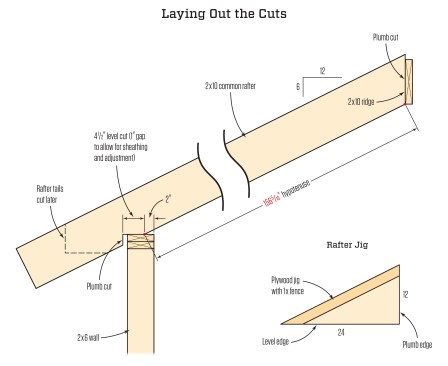
After measuring, mark the cut lines for the birdsmouth and ridge cuts. Use the speed square to draw straight, accurate lines at the correct angles.
| Cut Type | Purpose | How to Mark |
| Birdsmouth Cut | Fits rafter on wall plate | Use speed square to mark horizontal and vertical lines |
| Ridge Cut | Joins rafters at roof peak | Set speed square to roof pitch angle and draw cut line |
| Plumb Cut | Vertical cut at rafter end | Align speed square edge vertically and mark |
Using The Speed Square For Angled Cuts
A speed square is a simple tool for making angled cuts on rafters. It helps mark precise angles quickly and easily. Using it properly ensures your cuts fit well in roof framing.
This guide explains how to set the angle, align the square, and make accurate cuts using a speed square.
Setting The Angle
First, decide the angle for your cut based on your roof’s pitch. The speed square has degree markings along its edge. Move the pivot point to the correct angle number.
- Place the pivot at the corner of the rafter edge.
- Rotate the square until the desired angle lines up with the rafter.
- Hold the square steady to mark the cut line.
Aligning The Square
Next, position the square on the rafter to guide your saw. The square’s lip should rest against the rafter edge. This keeps the tool from slipping.
- Ensure the pivot point stays at the rafter’s corner.
- Check that the body of the square is flat on the wood.
- Make sure the angle line is clear and visible.
Making Accurate Cuts
Once aligned, mark the cut line with a pencil. Use the square as a guide for your saw blade. Keep the saw steady and follow the line carefully.
| Tip | Reason |
| Clamp the rafter | Prevents movement during cutting |
| Use a sharp saw blade | Ensures clean and precise cuts |
| Check the angle twice | Avoids mistakes before cutting |
Common Rafter Cuts With A Speed Square
Using a speed square helps you make accurate rafter cuts. It is a simple tool that saves time and effort.
Common rafter cuts include plumb cuts, birdsmouth cuts, and seat cuts. Each cut has its purpose in framing.
Plumb Cuts
Plumb cuts are vertical cuts at the top of the rafter. They allow the rafter to sit flush against the ridge board.
To make a plumb cut, place the speed square on the rafter edge. Align the desired angle on the square and mark the cut line.
- Hold the speed square tightly against the rafter
- Use the pivot point on the square for accurate angles
- Mark the cut clearly before sawing
Birdsmouth Cuts
Birdsmouth cuts help the rafter sit properly on the wall plate. This cut has two parts: the seat cut and the plumb cut.
Use the speed square to mark where the rafter meets the wall. The birdsmouth cut creates a notch that fits securely.
- Mark the plumb cut angle on the rafter
- Measure the seat cut length on the speed square
- Cut along the marks to form the notch
Seat Cuts
Seat cuts are horizontal cuts that create the flat surface of the birdsmouth notch. They rest on the wall plate.
Place the speed square on the rafter edge. Use the ruler side to measure the seat cut length. Mark a straight line to cut.
- Measure the exact length needed for the seat cut
- Mark a clear horizontal line with the speed square
- Cut carefully to keep the seat flat and level
Safety Tips When Cutting Rafters
Cutting rafters with a speed square is common in roofing and carpentry. It is important to work safely to avoid injuries.
Using the right tools and protective gear helps keep you safe while making precise cuts.
Tool Handling
Hold the speed square firmly to keep it from slipping. Keep your hands away from the blade while cutting.
Always check that your saw and speed square are in good condition before starting your work.
- Secure the rafter piece before cutting
- Use a sharp saw blade for cleaner cuts
- Keep your cutting line visible and clear
- Cut slowly and steadily without rushing
Personal Protective Equipment
Wear safety gear to protect yourself from flying debris and accidents. Goggles shield your eyes from sawdust.
Use gloves to protect your hands and ear protection to reduce noise from power tools.
- Wear safety goggles or glasses
- Use sturdy work gloves
- Wear earplugs or earmuffs for noise
- Use a dust mask if needed
- Wear appropriate footwear for stability
Maintenance And Care For Your Speed Square
Taking care of your speed square keeps it accurate and reliable. Simple maintenance helps it last longer.
Regular cleaning and proper storage protect your tool from damage and wear.
Cleaning
Clean your speed square after each use to remove dirt and debris. Use a soft cloth or brush to wipe it down.
- Remove sawdust with a dry brush
- Wipe with a damp cloth if needed
- Dry thoroughly to prevent rust
- Avoid harsh chemicals that can damage markings
Storage Tips
Store your speed square in a dry place. Keep it away from moisture and heavy tools that can scratch it.
| Storage Method | Benefits |
| Toolbox | Protects from dust and damage |
| Hanging on a pegboard | Keeps it visible and easy to grab |
| Drawer with padding | Prevents scratches and bending |
Credit: www.jlconline.com
Frequently Asked Questions
What Is A Speed Square Used For In Roofing?
A speed square helps mark accurate angles and cuts for rafters. It ensures precise measurements and quick layout work. Roofers use it to speed up the cutting process and improve accuracy.
How Do You Measure Angles With A Speed Square?
Place the speed square’s pivot at the rafter’s edge. Rotate the tool to the desired degree on the protractor scale. Mark the angle line for precise cuts and fitting.
Can A Speed Square Replace A Framing Square?
A speed square is quicker and more compact for angle marking. It’s ideal for rafters but may not replace a framing square’s full layout functions. Both tools complement each other in roofing tasks.
How Do You Mark Common Rafters Using A Speed Square?
Align the speed square’s pivot at the rafter edge. Use the common rafter scale to mark the cut angle. This ensures rafters fit correctly on the roof frame.
Conclusion
Mastering the use of a speed square simplifies cutting rafters. This tool guides you with precision and ease. Practice ensures accuracy and confidence. Remember, safety comes first when cutting. Always wear protective gear to prevent accidents. Follow instructions carefully for best results.
A speed square is a valuable tool in your toolkit. It saves time and reduces mistakes. Whether you’re a beginner or seasoned carpenter, its benefits are clear. With practice, you’ll find it indispensable. Keep honing your skills, and soon rafter cutting will be second nature.
Happy building!
